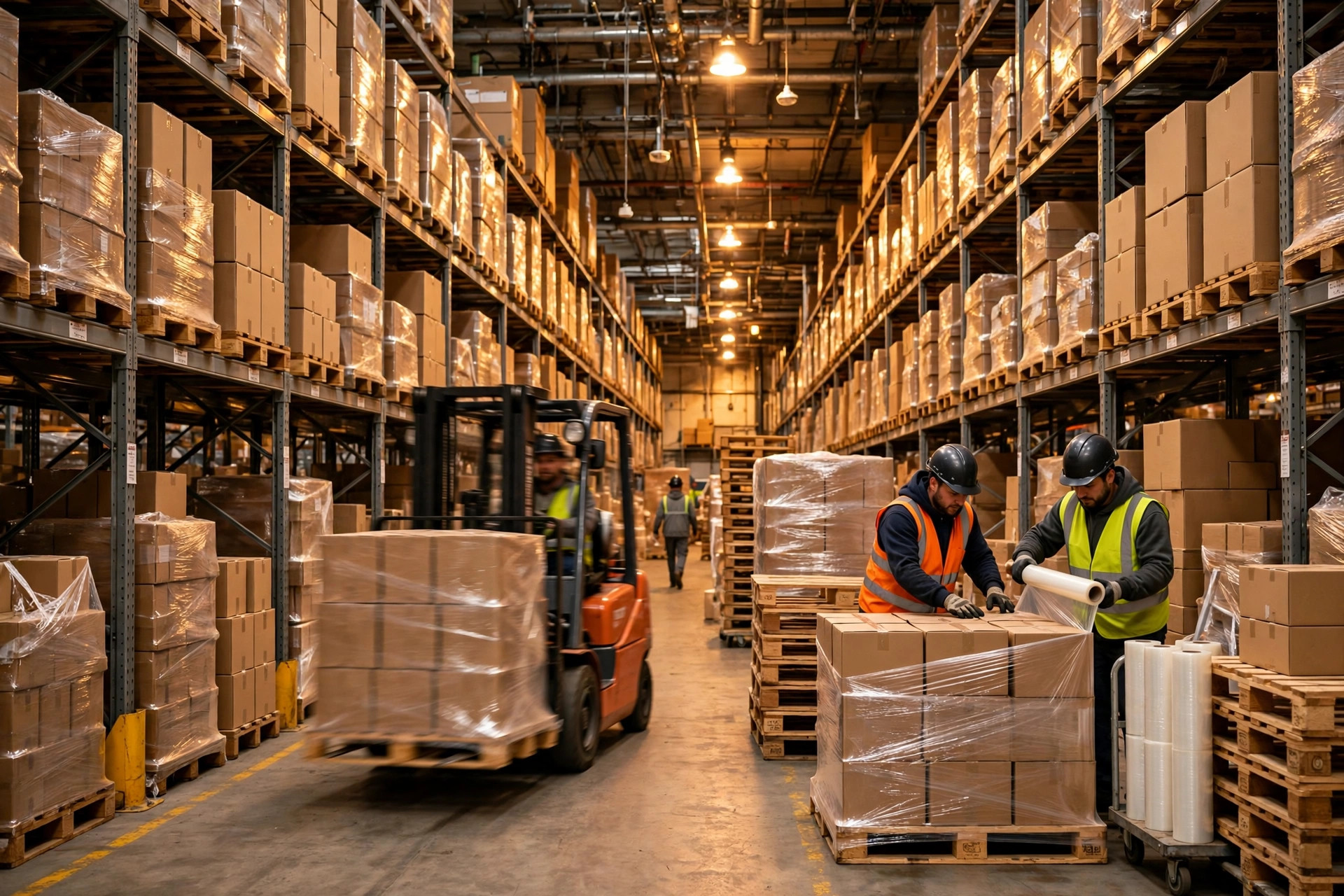
Every late October, I get anxious. Not about traffic — about my warehouse falling apart. Five years selling cross-border e-commerce taught me one thing: peak season is won or lost in the warehouse, not in the ad console. So I built myself a peak season warehouse readiness checklist, a 30-day countdown from demand forecasting to labor scheduling, with every step pinned to a date. I ran it last year: zero stockouts during Black Friday week, on-time ship rate above 99%. This year's countdown starts October 28.
First, the rant: Amazon changed the rules again. Every year before peak season there's some new twist. This year, booking FBA inbound appointments felt noticeably harder than last year — by the time I got around to it, the good mid-November slots at the popular fulfillment centers were gone. Platform policies shift every year, so always check the official site for the latest. But one thing never changes: if you don't prep, peak season means working for the carriers and the platform.
Black Friday 2023, I took a beating. I sold a desktop humidifier doing 120 units a day normally, so I stocked 45 days' worth — 5,400 units — and figured I was safe. Then the week before Black Friday, traffic surged and daily sales hit 380. I was cleaned out in 9 days. I air-freighted 2,000 units at 6x the ocean freight cost, torched all my margin, and still went out of stock for 3 days right on Black Friday. Listing conversion crashed from 14% to 6%, my ranking dropped two pages, and it took over a month to climb back.
Lesson learned the expensive way: your everyday sales numbers mean nothing for peak season.
Forecasting: Forget Your Average Daily Sales
My method is crude, but it works. Pull last year's Black Friday week numbers, take that week's daily average, and multiply by this year's growth rate. I usually use 1.2 to 1.5, depending on how traffic has trended in recent months. Traffic booming this year? Use 1.5. Flat? Use 1.2.
Then calculate cover days with one formula:
Cover days = transit days + FBA check-in delay + selling days + safety buffer
Here's my humidifier math for this year, forecasted at 400 units a day during Black Friday week:
| Item | Days | Notes |
|---|---|---|
| Ocean transit | 25 days | US West Coast port to warehouse, padded for peak congestion |
| FBA check-in delay | 7 days | Check-in slows in peak season, 7 is conservative |
| Selling coverage | 21 days | Three weeks across Black Friday and Cyber Monday |
| Safety buffer | 7 days | Paid for with real money in 2023 |
| Total | 60 days | Need 24,000 units on hand |
I have 8,000 in stock and 6,000 in transit, so I'm 10,000 short — purchase orders go out before October 28 or ocean freight won't make it. I build this table for every hero SKU at the end of October. Ten minutes in a spreadsheet.
The 30-Day Countdown: My Peak Season Warehouse Readiness Checklist
T-30 (Oct 28): Forecast locked, all POs placed. Start talking to temp workers now, not later.
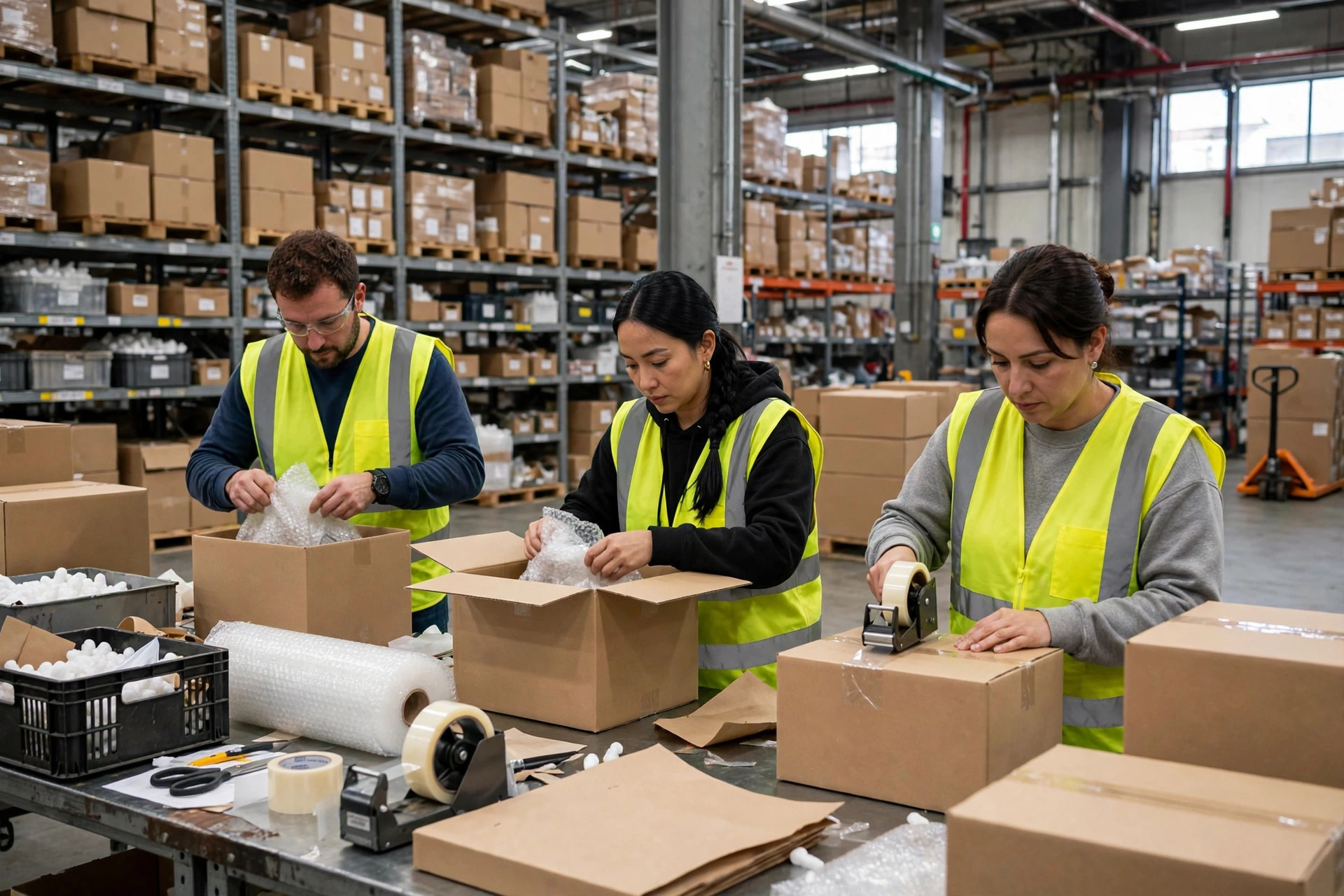
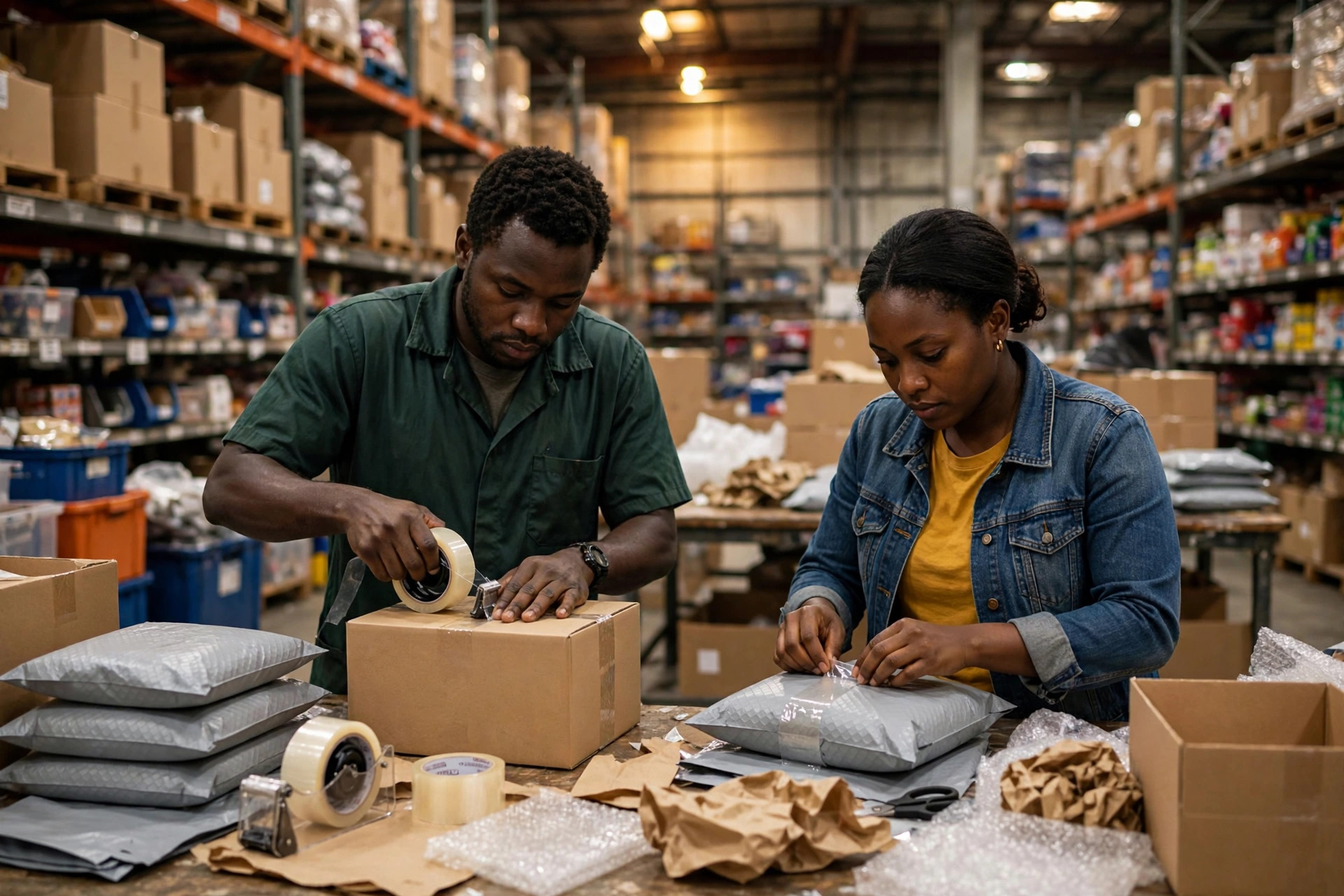
T-21: All FBA inbound appointments booked — earlier is always better. Order packaging: cartons, bubble wrap, and label stock at 1.3x normal usage.
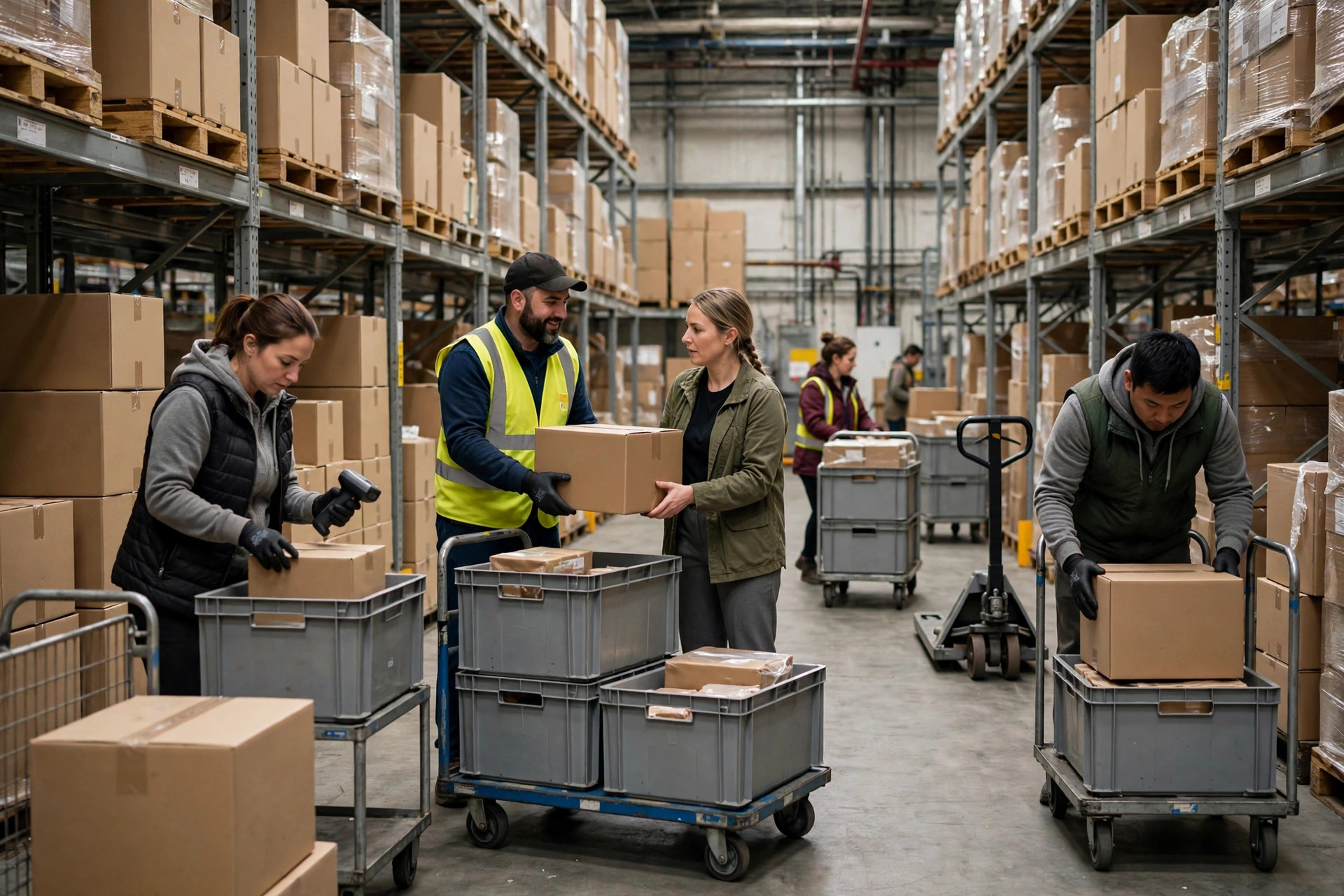
T-14: Temps start training. Reslot the warehouse: bestsellers move to the golden pick zone with the shortest travel paths, slow movers go up high and to the back.
T-7: Everything must be received and put away. Shift schedule finalized and taped to the wall. Write the contingency plan: who to call if we stock out, how overtime works if orders explode, how manual orders flow if the system goes down.
T-3: Final hardware check — printers, label stock, pack stations, scanners. One broken printer on Black Friday will ruin your day. Confirm holiday pickup times with your carrier driver.
T-1: Go to bed early. Seriously. Being rested beats everything.
Staffing Checklist: Temps, Shifts, and Units-Per-Hour Math
Staffing math is one formula: peak daily orders ÷ units picked per person per hour ÷ working hours = headcount needed.
Don't guess the units-per-hour number — measure it in your own warehouse. My numbers: experienced pickers do 90-110 units an hour, newbies do 50-60. For a peak day of 4,000 orders, I run 9 people across two shifts, and it covers.
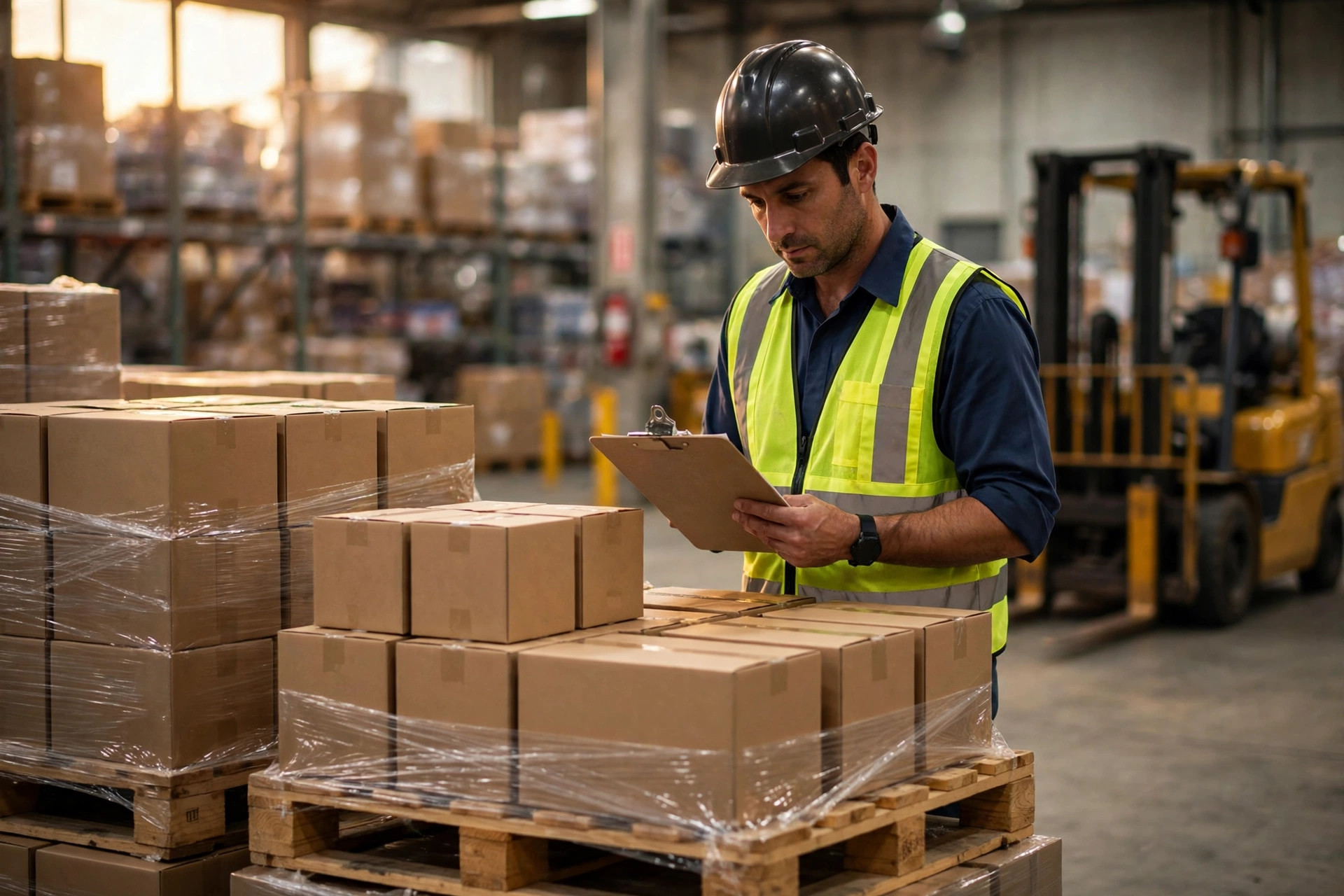
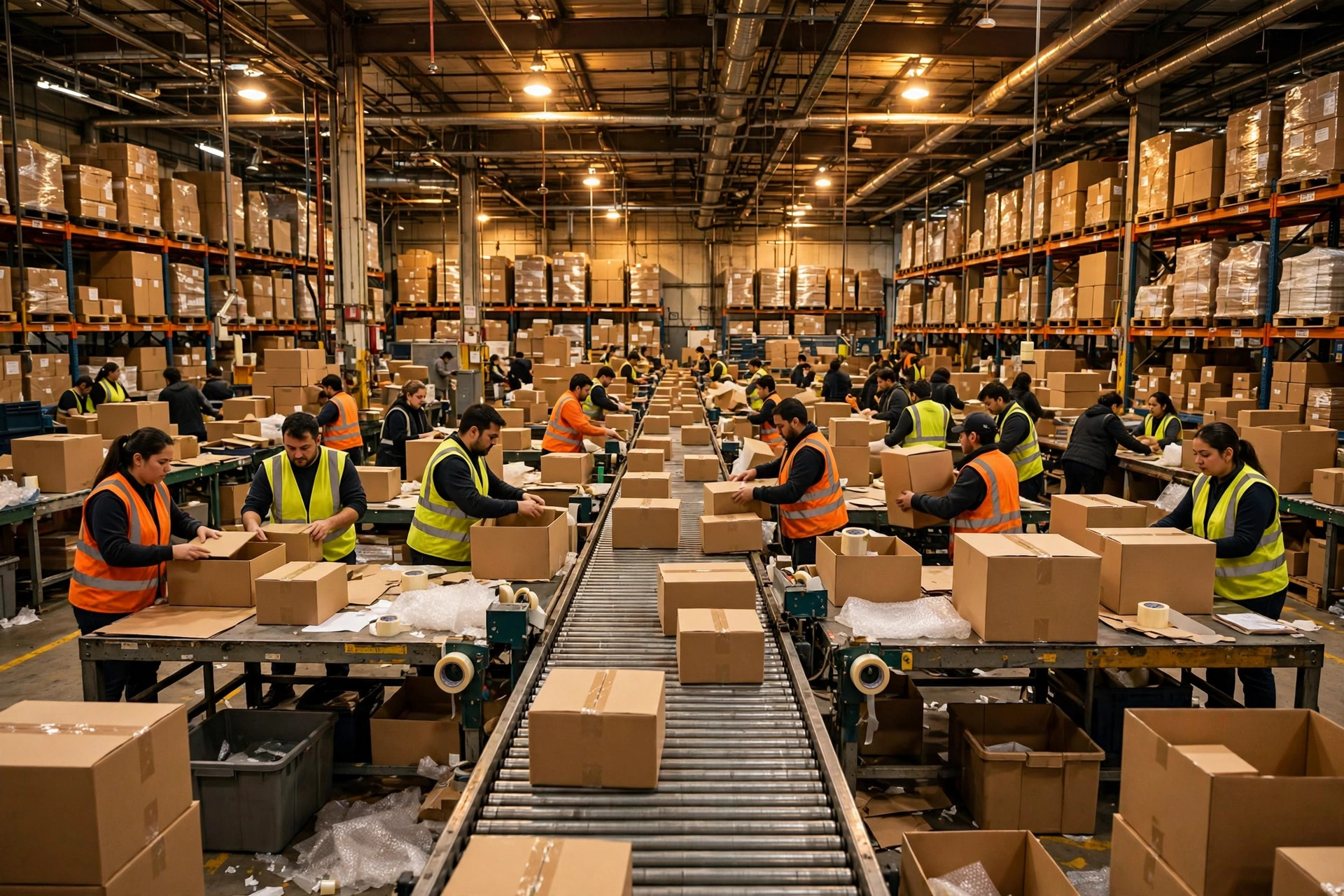
In 2024 I signed 6 temps 30 days out and ran two shifts. Black Friday volume hit 4.2x a normal day — 3 full-timers became 9 people. On-time ship rate for the week: 99.3%. Returns were actually lower than usual, because I spent half a day of training on one topic: how to pack so it doesn't come back. Best half-day I ever spent.
Pitfall to avoid: don't start hiring temps at T-7. Lock them in at T-30. A seller friend of mine started at T-10 last year, came up short, and ended up packing boxes himself until 3 AM on Black Friday while his ads kept running — orders coming in, nothing going out, ACoS through the roof.
The Counterintuitive Bet: Keep 30% Out of FBA
Most sellers think the more inventory in FBA, the better. My split is 70% FBA, 30% in my own warehouse as flex capacity. Why? When FBA stocks out, replenishing means rebooking appointments and waiting on check-in — easily one to two weeks. Inventory in my own warehouse ships in 2 days.
On Cyber Monday 2024, one of my SKUs sold out in FBA, and the 3,000 units in my own warehouse carried me through 4 more days — right into the second traffic wave. Big extra profit. Yes, the extra warehouse space costs money, but it's nothing compared to a stockout. I ran the numbers: one day of stockout during Black Friday costs me more than a month of my own warehouse rent.
Three more things people forget. First, don't cheap out on packaging — returns already spike during the holidays, and flimsy packaging just creates more of them. Second, tie your ads to your inventory. The moment a SKU goes out of stock, cut the budget or pause — orders you can't fulfill are just burned ad spend. I usually tighten my ACoS cap from 30% to 22% before Black Friday to protect margin. Third, audit your main images and A+ content a week early. Holiday clicks are expensive; don't waste them on a blurry hero image.
I've pulled out this readiness checklist every late October for five years now. It won't guarantee a record quarter, but it guarantees you won't drop the ball in the most profitable month of the year. This playbook has worked for me five years running.
By Ah K, E-commerce Seller (5 yrs)