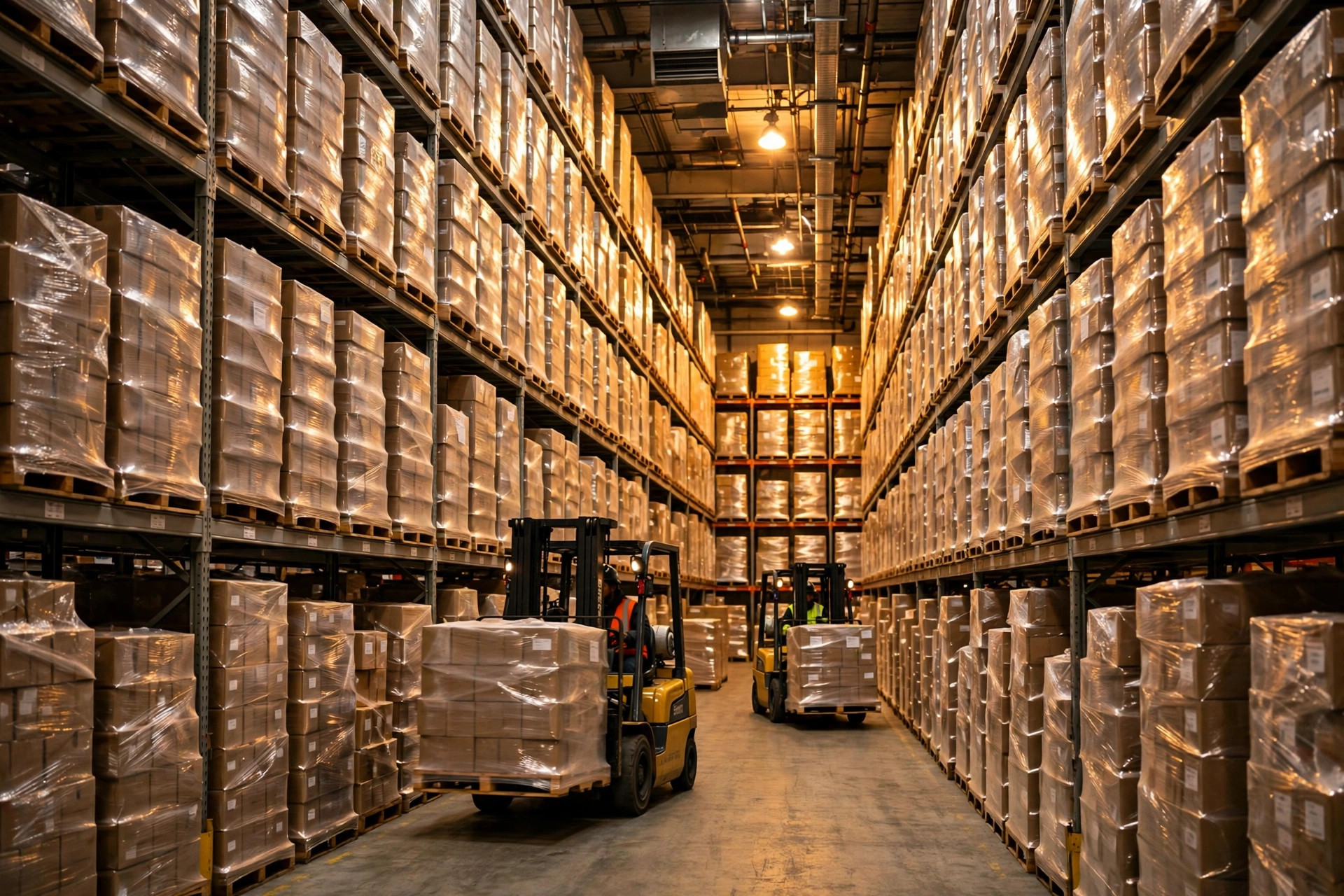
Every October, my phone rings with the same call. A seller's containers are already on the water, their 3PL just told them the warehouse is full, and they're asking whether I know anyone who can "squeeze in" a few dozen pallets.
My answer never changes: you're asking three months too late. Peak-season capacity isn't found in October. It's negotiated in July. In this business, warehouse space is a scarce good in Q4 and a liability in March — and which side of that calendar you negotiate on decides whether you're the buyer or the beggar.
October Prices Are Set in July
Let me put some public numbers on the table so you can feel what Q4 warehousing actually costs.
The U.S. industrial vacancy rate sat at about 7.0% in the first quarter of 2026, according to Cushman & Wakefield. Sounds comfortable — until you remember that's a national, all-property-type average. E-commerce fulfillment in Q4 is a different planet. Amazon's FBA storage fee for standard-size inventory runs $0.78 per cubic foot from January through September, then jumps to $2.40 from October through December. Flexport Fulfillment goes from $0.81 to $2.40 per cubic foot per 30 days in peak season — a 2.96x multiplier. Walmart's WFS charges $0.75 most of the year but $2.25 for inventory held beyond 30 days in Q4 — a clean 3.0x. When the giants publish a 3x peak multiplier in black and white, imagine what an independent 3PL feels entitled to charge once October hits.
Then there's the industry's own pulse check. WarehousingAndFulfillment.com's 2025 survey of more than 600 3PL warehouses across the U.S. found average pallet storage holding steady at $20.17 per pallet per month — but the minimum monthly spend warehouses demand jumped from $337.50 in 2024 to $517 in 2025, and 48.6% of warehouses now charge long-term storage fees, up from 23.33% a year earlier. Translation: warehouses are less afraid of losing you and more willing to choose their customers. The price hike is the part you can see. "No space available" is the part that kills you.
So here's my first judgment call: in peak-season negotiations, you're not negotiating price. You're negotiating existence. A 20% rate premium can be baked into your landed cost. Zero available pallet positions means your freight never gets a roof over its head.
Five Sentences That Belong in Your Contract
Too many sellers run their 3PL relationship on a one-page rate card and a handshake. That works in February. In October, handshakes are the first thing to evaporate. These are the five things I believe must be written into the contract in plain language — every one you skip is leverage you hand back.
First, guaranteed capacity in a defined unit. Pallet positions or square feet, the peak window spelled out (October 1 through December 31, for example), the number locked in. A vague "priority handling" clause is worth exactly nothing.
Second, an inbound appointment SLA. What blows up in peak season usually isn't storage — it's receiving. Trucks arrive and sit for days waiting for a dock door. Put it in writing: appointments honored within 48 hours of booking, for example, with a defined remedy when the warehouse misses — a storage credit, demurrage coverage, something with a number attached.
Third, the overflow math. Peak sales beat forecasts — that's the good problem. Agree now what the overage rate is and where overflow freight sits in the queue. Otherwise you'll be sending hundreds of extra pallets in November and hearing "peak spot rate," and you'll have no choice but to nod.
Fourth, a cap on the peak uplift. The market precedent is public: FBA, Flexport, and WFS all run roughly 3x storage multipliers in Q4. Walk in with those numbers and get the uplift ceiling written down. Don't let "peak surcharge" become a blank check.
Fifth, a remedy when the guarantee fails. If the warehouse can't deliver the promised positions, who pays for the transload, the temp space, the rate difference? Without a consequence, a guarantee is a wish.
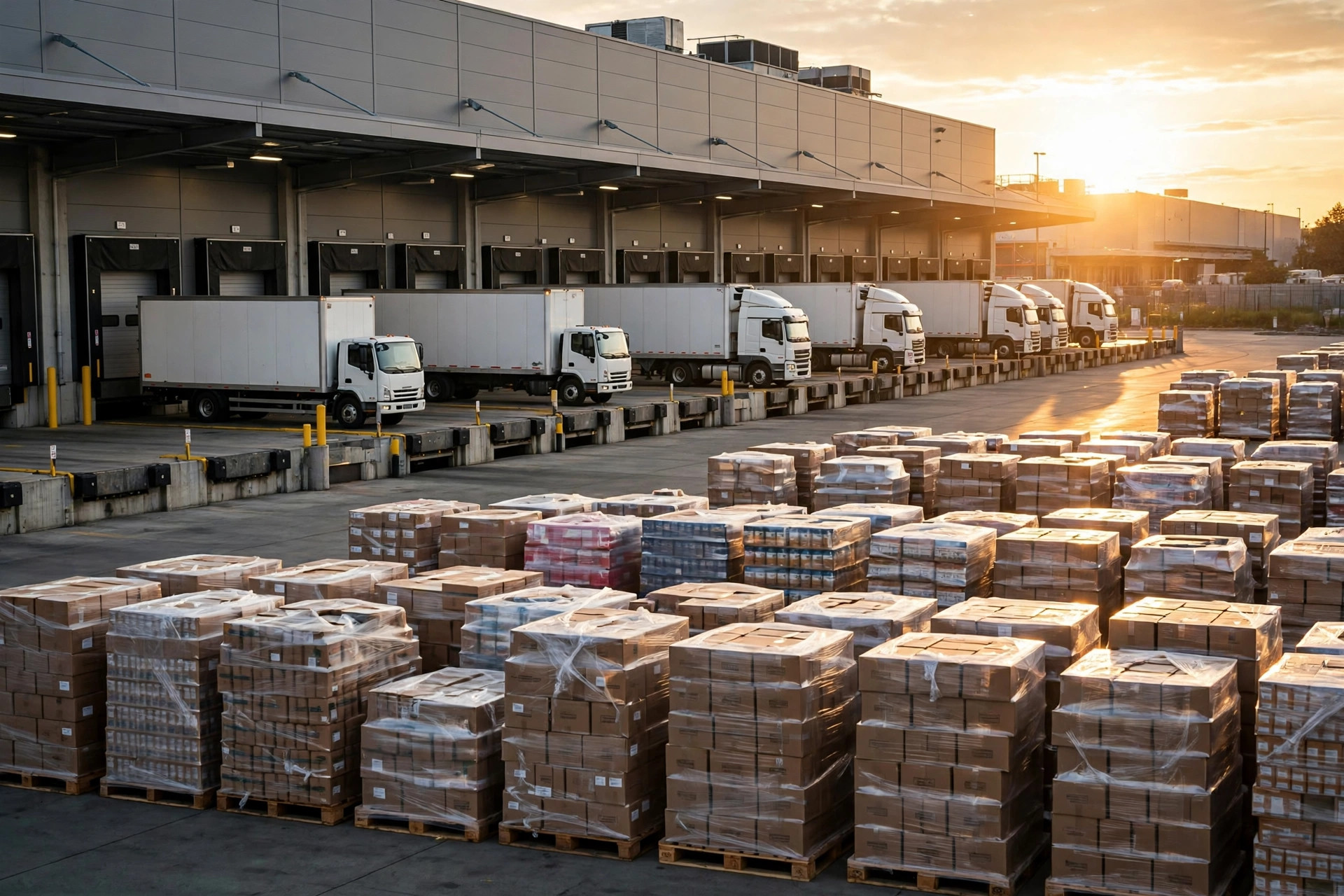
And negotiate it like a trade, not a favor. You're offering steady off-peak volume in exchange for peak certainty. That's business.
Your Off-Peak Volume Is Your Only Leverage
Here's the thing most sellers miss: the warehouse's pain is the mirror image of yours. You fear October with no space; they fear March with an empty building. That survey number again — minimum monthly spend up more than 50% in a single year, from $337.50 to $517 — tells you 3PLs now prize predictable revenue more than ever. That's your chip.
The structure that works best at the table is a straight trade: you commit to steady monthly pallet counts and a minimum spend from January through September, and in return you get guaranteed Q4 positions, inbound priority, and a capped uplift — all in the same contract, each side enforceable against the other.
One trap to avoid: don't inflate your off-peak commitment to win the peak terms. Promise 500 pallets a month, ship 300, and you'll pay the minimum on the phantom 200 — off-peak margins are thin enough without you handcuffing yourself before peak season even starts. Commit to roughly 80% of your actual off-peak usage. Leaving headroom isn't weakness; it's arithmetic.
Also, commit at the operational level, not just pallet counts. The warehouse's biggest cost is labor, and your order volume is what lets them schedule it. A customer whose freight just sits — dead stock, no turns — is the customer every warehouse dreads, which is exactly why nearly half of them now charge long-term storage fees. Moving freight earns you goodwill that static freight never will.
When the Talks Stall: Plan B and the 90-Day Clock
Not every 3PL will sign a capacity guarantee. Small operators can't afford to; big ones may not think your volume is worth the paperwork. When the talks stall, don't force it — execute Plan B, and start now, not in October.
Plan B one: temp space. Line up a short-term warehouse option before September — walk it, check the fire suppression, the racking, the forklift clearances, before your freight needs it. Temp space is expensive. It's insurance, not a strategy.
Plan B two: split your inventory across regions. One warehouse on the West Coast, one on the East Coast — California and New Jersey is the classic pair. Splitting naturally hedges a single-site blowout and shortens transit times to both coasts. The cost is systems complexity: multi-warehouse logic in your WMS, split safety stock, duplicated inbound planning. Smaller sellers should take an honest look at their IT before trying this.
Plan B three: mix FBA with your 3PL. FBA's Q4 storage at $2.40 per cubic foot is expensive, but its capacity logic is simple — if you'll pay, there's space. Put your fast-turning hero SKUs in FBA and your slow-moving long tail in the 3PL. Use the expensive-but-certain channel to hedge the cheap-but-uncertain one.
All three plans share one deadline: locked in before September. Go shopping for temp space in October and you'll discover every seller in town is touring the same building.
It's October 6 as I write this, so this year's peak negotiation window has already closed — but next year's is open right now. Here's the countdown I give every client:
T-minus 90 (July): size your SKUs, forecast peak pallet demand, and split it into "must-have" and "flex" tiers. Walk into negotiations carrying numbers.
T-minus 60 (August): get quotes from at least two 3PLs, negotiate the terms, sign the contract. Guaranteed positions, inbound SLA, uplift cap, remedy clause — all four, no exceptions.
T-minus 30 (September): land your inventory. Watch the parcel peak windows too: for 2026, UPS peak surcharges start September 27 and FedEx September 28, running into mid-January — the earlier your freight is under a roof, the cleaner your math.
T-minus 0 (October): execute only. Anyone still negotiating in October is accepting the other side's terms.
I'll leave you with the question I ask every seller who calls me in October: open your 3PL contract, search for the word "guarantee," and count the hits. If it's zero, then where your freight sleeps this peak season depends on somebody else's mood.