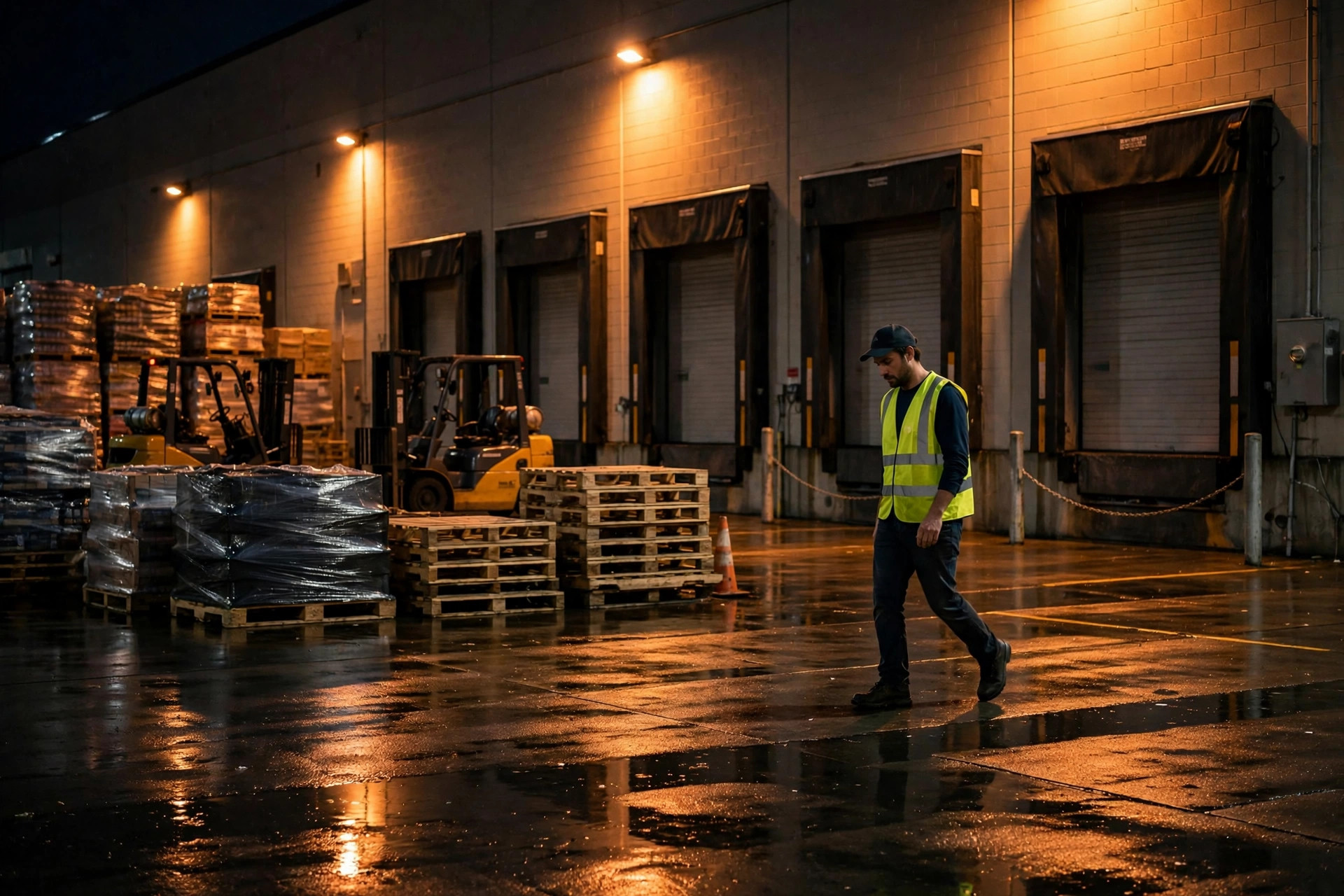
November, peak season. 2:40 in the morning, our Fontana DC.
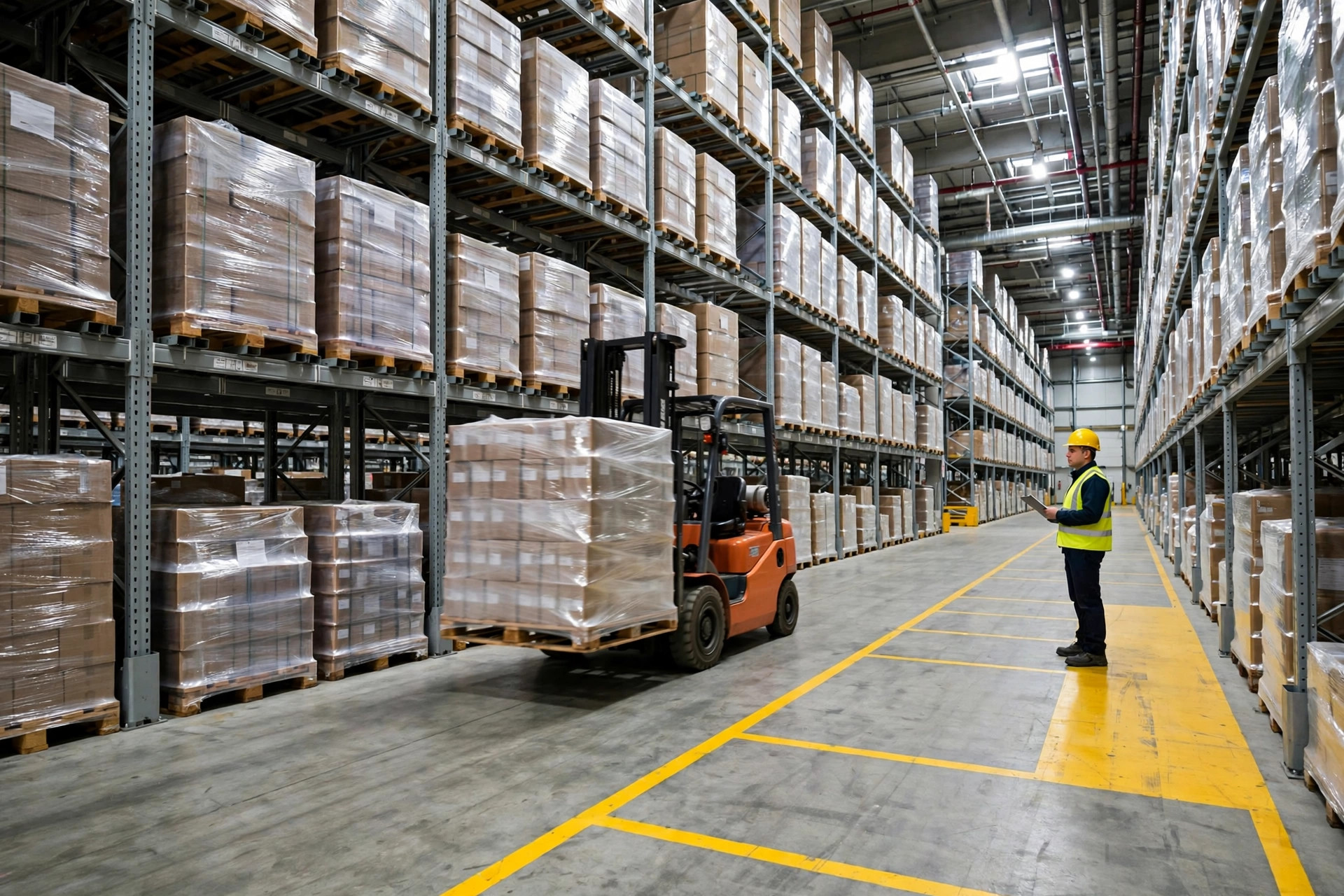
I'm walking the night shift through Zone B when a forklift backs out of an aisle, beeper going. A picker kid is crouched at the mouth of the aisle, picking up a fallen label. The driver, Luis, cranks the wheel hard. The forklift clips past the racking and smashes into an empty pallet. Wood splinters everywhere.
The kid sits on the floor, white as a sheet. Luis jumps down. First thing he says: "Bro, you okay?" Second thing: "Don't report this. Please."
Real talk: I've been hearing that sentence for over a decade.
Nobody got hurt. One pallet died. Happy ending — except it wasn't. Three months later, February 2025, same aisle mouth, a new hire three weeks on the job steps on leftover wood splinters nobody cleaned up. Slips. Ankle swells up like a bun. An OSHA recordable. The kid missed 6 days, the shift paid overtime to cover him, HR spent three weeks hiring and training a replacement, and our safety lead and I lost two days writing reports and answering OSHA's questions.
Two incidents. Same spot. Same "almost." The first one went unreported, so the second one became a real accident.
Guys, that's what I want to talk about today: near-miss reporting. Catching the "almosts" before they turn into actuals.
Why nobody reports
Here's my verdict: it's not that people don't care about safety. It's that the reporting process itself is designed against human nature.
When I first became a supervisor, we had a reporting system. Here's how it worked: see a hazard, find your shift lead, fill out a full A4 form, hand it to me, I hand it to the safety guy. Time, location, people involved, narrative, root cause analysis, signature. Twenty minutes per form. During peak, when you're working ten-hour days, who has twenty minutes for paperwork?
Worse: after you report, nothing happens. Silence. Nobody tells you what got fixed or when. Report once, you're a good citizen. Report three times into a black hole, you're an idiot.
And then there's fear. Fear of being labeled a troublemaker. Fear of killing the shift's safety bonus. Fear that your supervisor thinks you're "difficult." The first lesson veteran workers teach new hires is often "don't make waves." Luis saying "don't report this" wasn't him being a bad guy. It was him protecting himself in the system he'd learned to survive in.
Real talk: a warehouse with zero near-miss reports isn't the safest warehouse. It's the quietest one. Back in 1931, investigator Heinrich analyzed 75,000 accident reports and proposed the famous 1:29:300 ratio — one serious injury hiding behind 29 minor injuries and 300 near misses. Later research debates the exact numbers, but the core logic stands: before the big one, there are always warning signs.
Three dead ends we tried
Dead end number one: punishment. When I took over this building in 2023, I made a rule: "fail to report a hazard you spotted, lose performance points." Result? Hazards didn't decrease. Reports stayed at zero. People just got better at hiding things. Punishment produces silence, not safety. Took me three months to figure that out.
Dead end number two: the big safety meeting. We brought in a consultant, full-team training, OSHA regulations, gruesome case studies, a very dramatic PowerPoint. Everybody clapped. Everybody went back to the floor and changed nothing. Big speeches don't change behavior. Making it easy does. Training isn't useless, but it can't fix "reporting is a pain in the neck."
Dead end number three: the suggestion box. A shiny red box by the cafeteria door. One month, three notes: two complaining about the food, one asking about the year-end bonus. A box is dead. People are alive. Nobody pours their heart out to a metal box.
After all three dead ends, I finally got it: workers aren't unwilling to speak up. You just haven't given them a reason to, or a way that doesn't cost them twenty minutes.
What we do now — and it works
The turnaround came in mid-2024. We rebuilt reporting into something that takes 30 seconds.
First: scan a QR code, no typing required. Every aisle entrance, forklift charging area, and pack station has one. Scan it, and the page asks three things: what kind (person / vehicle / goods / equipment), where (tap the aisle number), and one line of description — voice-to-text works, or just snap a photo. Thirty seconds, done. We timed it: a picker can file one on the way to the restroom. Remember this: any process longer than a minute, floor workers won't use.
Second: anonymous or named, your choice. Anonymous reports get handled exactly the same. Named reporters qualify for our monthly "Sharp Eyes" award — and note, we reward the most and best reports, not "zero incidents." We killed the zero-incident bonus years ago. Real talk: a zero-incident bonus is the mortal enemy of reporting. Reward zero incidents and people will hide incidents to hand you a zero.
Third: we talk about what got fixed, never about whose fault it was. Every Friday, ten minutes at the morning huddle, a standing segment called "This Week's Almosts." I cover four things: how many reports came in, what got fixed, what hasn't been fixed yet, and why. I never name who reported, and I never name who "caused" it. Last month one shift filed 14 reports in a week — the most in the building — and I praised their lead in front of everyone. Somebody muttered: doesn't that mean your shift is the least safe? I said on the spot: wrong. The shift that reports the most is the shift with the most eyes.
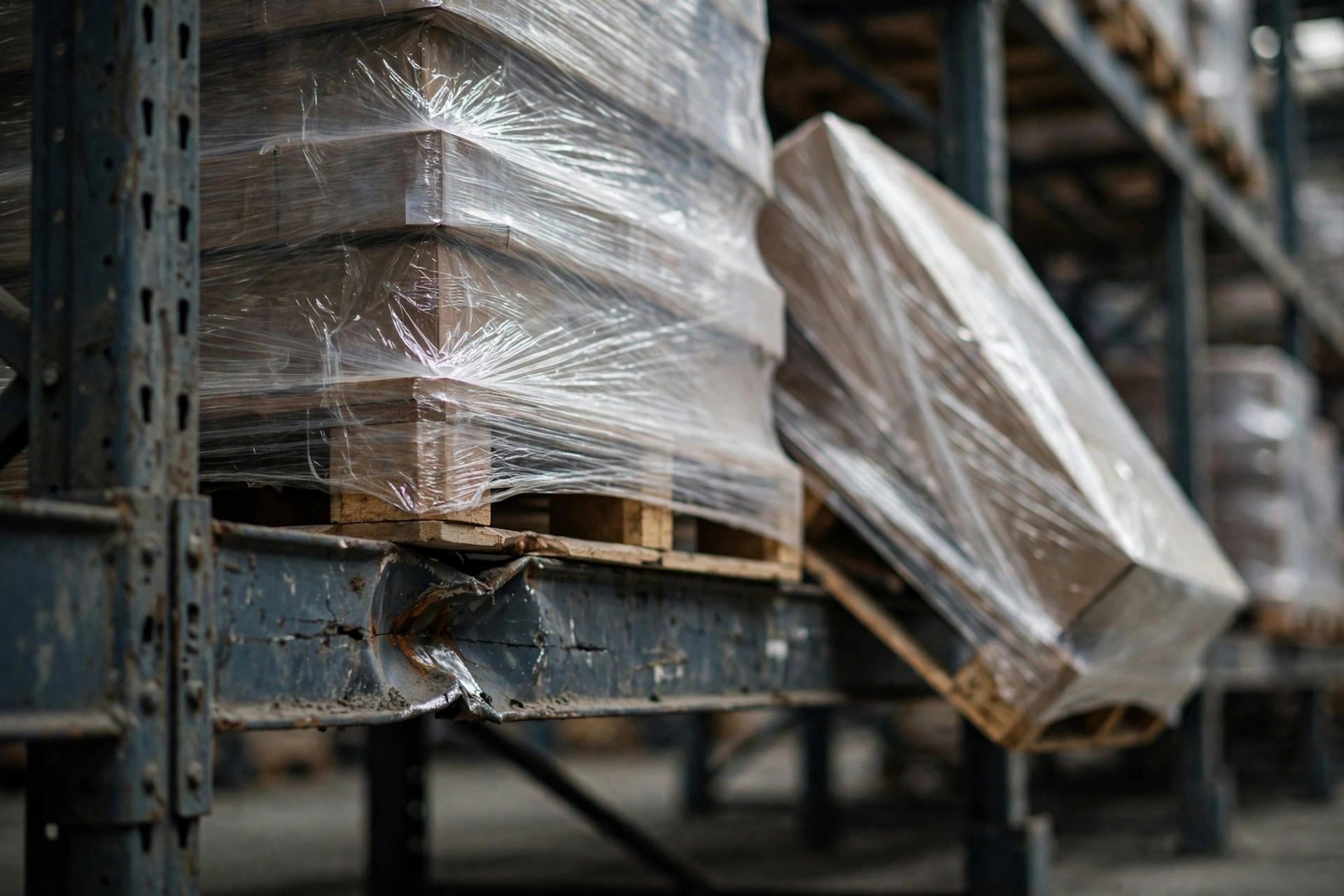
Fourth: tiered response, 48-hour closeout. Our house rule: if it can be fixed on the spot (wood on the floor, a leaning pallet, a blocked walkway), whoever sees it fixes it, uploads a before-and-after photo, done. If it needs money or engineering work (like that blind corner in Zone B), I owe a reply within 48 hours: we're fixing it, or we're not, and if not, here's why. The killer is "received, under review" for three months. When a worker trusts you with something they saw, that's one unit of trust. Dodge it once, and it's gone.
Look at our own numbers: first half of 2024, we logged 11 near misses — all found by the safety lead on patrol, zero from workers. After the new system launched, the second half of 2024 brought 147 reports, 120 of them from floor workers. Recordables dropped from 5 the previous year to 1 so far in 2025. I won't claim reporting did all of it — peak staffing and schedule changes mattered too — but after we added a convex mirror and painted a pedestrian walkway at that Zone B corner, nothing has happened there since. That's visible.
The math: what reporting is actually worth
Here's our own ledger. That February slip: medical deductible, six days of overtime coverage, three weeks of hiring and training a replacement, two days of my and the safety lead's time on reports and OSHA questions. Several thousand dollars, easy. And none of it bought back that kid's ankle or the two nights of sleep I lost waiting on OSHA's follow-up.
Now the cost of one report: 30 seconds of a worker's time, basically zero. Fifteen minutes average to resolve. Twenty reports a month is half a day of one person's time. Which side of that trade do you want to be on?
And there's a bigger number: OSHA fines. Under the penalties effective January 15, 2026, per OSHA's official schedule, a serious violation runs up to $16,550 per violation, and a willful or repeated violation up to $165,514 per violation — adjusted annually for inflation, subject to the latest official policy on OSHA's website. One citation buys you a part-time safety person for a year. Fines don't go easy on you just because it "almost" happened.
Here's the counterintuitive part: a warehouse with a lot of near-miss reports should make the boss happy. Low reporting means one of two things: either you're a miracle and the building genuinely has no hazards, or nobody's talking anymore. Which one is your building?
One reminder for my fellow managers: don't wait for Monday, don't wait for the big meeting. Tomorrow's huddle, three minutes, one sentence to the crew: "From now on, when something almost goes wrong, scan the code and tell me. No names required, no punishment, and I promise you'll hear back within 48 hours." Then you must deliver. Do it three times, and the reports will come. Miss it once, and nothing you say afterward will matter. Safety, in the end, runs on the supervisor's credibility.
By Chen Feng, Warehouse Operations Manager