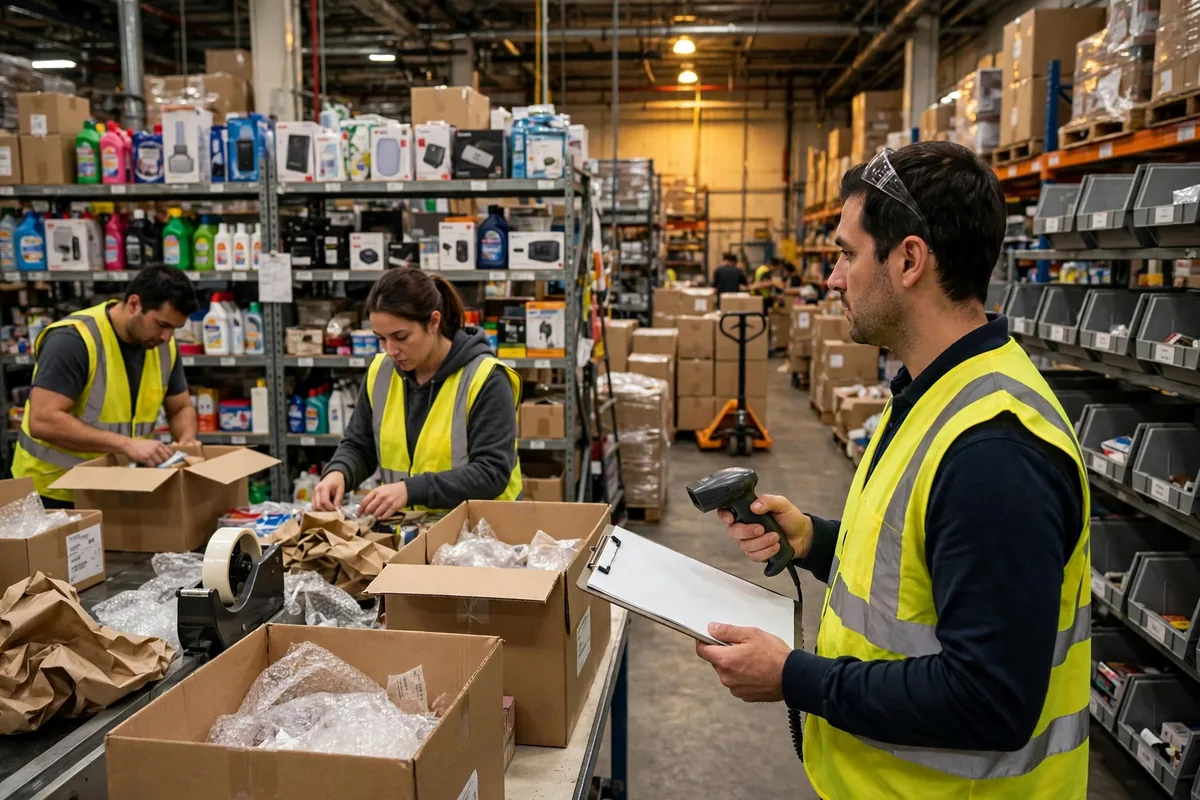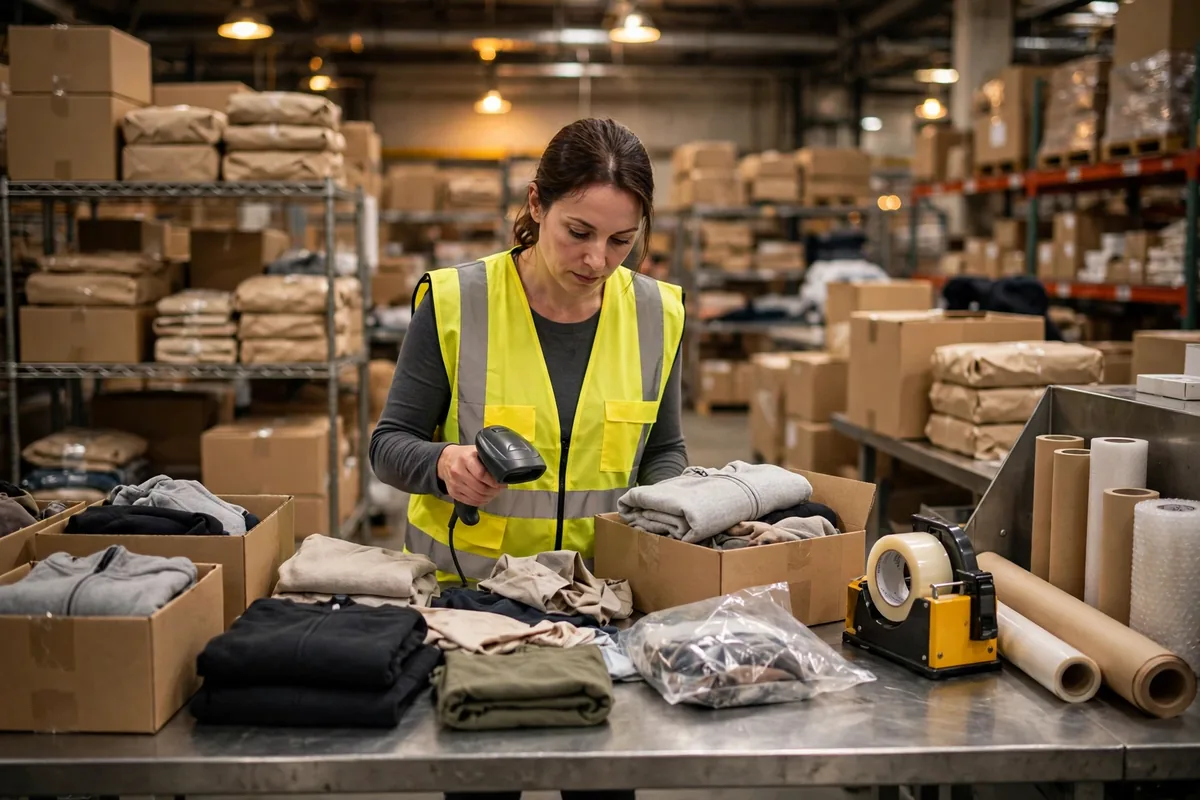
We have a client, a mid-range women's apparel brand, who called me right after Black Friday last year, furious. Their warehouse had taken in over a thousand returns in two weeks, and their OMS returns exchange process was already coming apart at the seams. The return orders were all in the OMS, quality checks were done, and yet customers waiting on an exchange had heard nothing for a full week. Customer service was getting shouted at, the warehouse was getting shouted at, and the 3PL was getting shouted at. The client asked me one question on the phone: the return is in the system, so where did the exchange order go?
I spent two days in their warehouse, and the answer was almost funny. Their OMS returns exchange process was split in two: returns ran on one track, exchanges on another, and the bridge between them was a customer service rep copying order numbers into a spreadsheet by hand. The return order finished its journey in the OMS while the exchange order sat in a to-do list nobody owned. The goods were on the shelf, the order was in a spreadsheet, and the customer was on the phone waiting. I have seen this more times than I can count. Everyone pays for a returns flow; the exchange gets treated as a free add-on that will just happen. The things supposed to just happen are exactly the things nobody manages.
Where the exchange order dies in the OMS returns exchange process
That same apparel client had a second trap waiting. Their returns went through quality check in three grades: resalable as-is, needs rework, or scrap. The grading was fine. The problem was what triggered the exchange order. The system would only release an exchange once the return had completed putaway. One coat needed two days for inspection and another day for steaming and rework, so the exchange order sat frozen for three days. The customer only wanted a different size, and the new size was sitting on the shelf in stock. The system refused to move until the old garment had finished its entire journey.
We changed one rule: the exchange order is no longer tied to return putaway, it is tied to the inspection verdict. The moment inspection confirms the exchange is valid, the exchange order is created and the new size is reserved in inventory. The old item takes its own slow path through putaway on a parallel track. In the first month after the change, their average exchange ship time fell from more than four days to about a day and a half. Their operations manager gave me that number at month end. The exchange was never waiting on the goods, only on a release condition inside the system.
Another trap hid in size and color mapping. A customer returns a black medium and wants a black large. It sounds simple. But in their OMS the return order only recorded the original order line, and the exchange required picking a product again from scratch. Customer service picked the wrong variant once, the warehouse shipped the wrong item, and the whole round trip started over with two more shipping legs and another complaint. Our fix was blunt: an exchange order must be derived directly from the original return line, and size or color can only change within the variants of the original order. Anything outside that range goes through a new order, not an exchange. No hand-typing products on an exchange order. That rule went into the operating manual and into the service agreement with the 3PL.
The client who treated exchanges as new orders
The second story comes from a small home appliance brand, in a warehouse in Ontario, California, in the summer of 2025. Their OMS treated every exchange as a brand-new order, repriced at the current selling price. One air fryer happened to be on promotion when the exchange went through, so the system repriced it more than twenty dollars below the original order and refunded the difference automatically. Finance found the gap at month end: several thousand dollars refunded that should never have left the account. Worse, exchanges counted as new orders in the sales reports, so the month looked like a great sales month. It was not.
The lesson is about price lock. An exchange is not a new purchase. Price, discounts, and shipping terms should be frozen at the moment of the original order. If the promotional price moved, the exchange price should not move with it. If the original order shipped free, the exchange should not charge shipping again unless the contract says so explicitly. We fixed the rule and added one more: any price difference above a set threshold needs a human review before a refund goes out. The system is not allowed to refund on its own. Finance loved that rule. Customer service grumbled about the extra step for a month, then noticed complaints had dropped. A complaint about a wrong price is much harder to fix than a complaint about waiting one more day.
Here is the counterintuitive part: in returns and exchanges, faster is not always better. Plenty of clients walk in demanding that every exchange ship within 24 hours of the return, and they want it in the contract as a service metric. It sounds impressive. In practice it is expensive. Ship before inspection finishes and, if the old item turns out customer-damaged and ineligible for a free exchange, the new goods are already gone. One client learned this during peak season, shipping first and inspecting later, and gave away dozens of units in a single month that should never have been exchanged. We moved them to two service tiers: exchanges with a clear inspection verdict ship the same day, and exchanges needing assessment go in a 48-hour tier. The service numbers look less shiny on paper. The losses went down, and customer service found the trade-off much easier to explain.
Run the numbers on the OMS returns exchange process before you sign the contract
Most people cost a return as freight only. A real exchange order has at least four cost blocks: return freight, inspection and rework labor, exchange fulfillment and outbound freight, and the customer service and system time to process it. This is the costing framework we use with clients before they negotiate a 3PL contract. Fill in your own rates; the structure is the part worth keeping.
| Cost block | Return only | Return plus exchange | What usually gets missed |
|---|---|---|---|
| Return freight | Yes | Yes | Who pays return freight must be in the contract |
| Inspection and rework | Yes | Yes | Steaming, repacking, and relabeling labor is routinely underestimated |
| Exchange fulfillment and freight | No | Yes | Whether an exchange bills as a new order or a continuation changes the rate a lot |
| Service and system handling | Low | High | The manual time to create exchange orders is the easiest cost to overlook |
The most valuable question to take from that table into a negotiation is how exchange fulfillment is billed. Some 3PLs charge a full new-order fulfillment fee for an exchange. Others bill it as a continuation of the original order and charge freight only. The gap can be around a third of the total handling cost of the order. Then ask about inspection fees: per unit or per hour, does rework sit inside the inspection fee, and who pays for disposal of scrapped goods. If those items are not nailed down in the contract, the peak-season invoice arrives with nothing solid to argue with.
One more thing to settle before go-live: reporting. Return rate, exchange rate, and exchange timeliness are three separate numbers. Bury the exchange rate inside the return rate and the owner never sees how much volume exchanges really are. Leave exchange timeliness unmeasured and nobody notices when exchange orders die halfway. Our standing advice for a healthy OMS returns exchange process: any exchange order unshipped 48 hours after creation lands on an exception list emailed to the operations manager every morning. It does not need to be long. It needs to exist.
So next time you sit down to negotiate a contract, ask these three questions. First, what triggers the exchange order, return putaway or the inspection verdict, and put the trigger in an appendix to the service agreement. Second, how is exchange fulfillment billed, new-order price or continuation price, and above what difference does the price get requoted. Third, are price and shipping terms locked to the original order, and does a price difference refund automatically or go through a human review. Get those three answers in writing and the exchange order will stop dying halfway.
By Susan, 3PL Sales Director