
Bottom line up front: when one buyer places several orders in a day and they all ship from the same warehouse, combine multiple orders into one shipment instead of sending three parcels. But consolidation is not "the addresses look alike, merge them." Three hard rules have to hold at the same time: identical ship-to address, same origin warehouse, and no delivery-promise conflict. Miss one, ship separately. I have watched this exact failure three times: rules written too loosely, and every dollar saved on freight gets paid back in customer service and reshipments.
Why consolidation pays, and how most warehouses get it backwards
Last-mile cost has a simple structure: every parcel carries a fixed cost you cannot dodge - pickup, label, base postage - and then weight stacks on top. Ship three orders separately and you pay that fixed cost three times. Merge them into one box and you pay it once. Everyone understands the logic, yet in my implementation projects I keep finding consolidation features either switched off entirely or configured like a sieve. The worst one I saw: the OMS had consolidation enabled, but the only matching rule was "same recipient name." Nobody was checking the address lines.
Fall 2024, an e-commerce client in Ontario selling small home goods, running about 1,500 orders a day. They had zero consolidation: a customer ordering in the morning and again in the afternoon got two parcels. After we turned on consolidation rules - same recipient, same calendar day, same origin warehouse, all before the daily cutoff - their consolidation rate landed around 18%, and total last-mile spend dropped by a double-digit percentage. The savings came entirely from amortizing that fixed cost, and the effect compounds with volume. Rates differ by carrier, so check the latest published rate cards, but the "pay the fixed cost once" structure is universal.
Here is the counterintuitive part: consolidation saves freight but destroys certainty. Once orders share a box, one lost item means the whole shipment is compromised - damage claims, support tickets, and reship costs all double. My position has always been clear: consolidate conditionally, never consolidate everything.
The three hard rules for merged shipments: read before you touch anything
Rule one: identical ship-to address, and I mean the complete address. Matching on recipient name alone is not enough - a name like "Zhang Wei" collides constantly in the US. You must validate recipient name plus street address plus ZIP, all three, no exceptions. Different apartment or suite numbers count as different addresses. No merge.
Rule two: same origin warehouse. Transferring stock between warehouses just to consolidate usually eats the freight savings in transfer cost and time. Unless your OMS can prove the transfer costs less than the price of shipping separately, cross-warehouse orders never merge.
Rule three: no delivery-promise conflict. Holding an early order to wait for a later one means making your first customer subsidize your freight bill. Set a hard maximum wait: release everything at the daily cutoff no matter what, no infinite waiting. Work backwards from your delivery promise - if you promise three-day delivery, the wait window cannot exceed most of a day.
Step-by-step, just follow it:
- Pull a week of order data from your OMS and measure what share of buyers place multiple orders within 24 hours. That is your consolidation ceiling. Below 5%, do not build the feature yet - go ask marketing why they are encouraging customers to split orders.
- Configure the three hard rules in a test environment and run shadow tests against historical orders. Watch the consolidation rate, but more importantly watch for false merges, especially same-name-different-address cases.
- Upgrade the pack bench process: a consolidated parcel must be instantly recognizable on the label, the packing slip must list every item, and the scanner must verify each piece before the box seals.
- Run a one-week pilot on a single category or channel. Only go fleet-wide after support ticket volume stays flat.
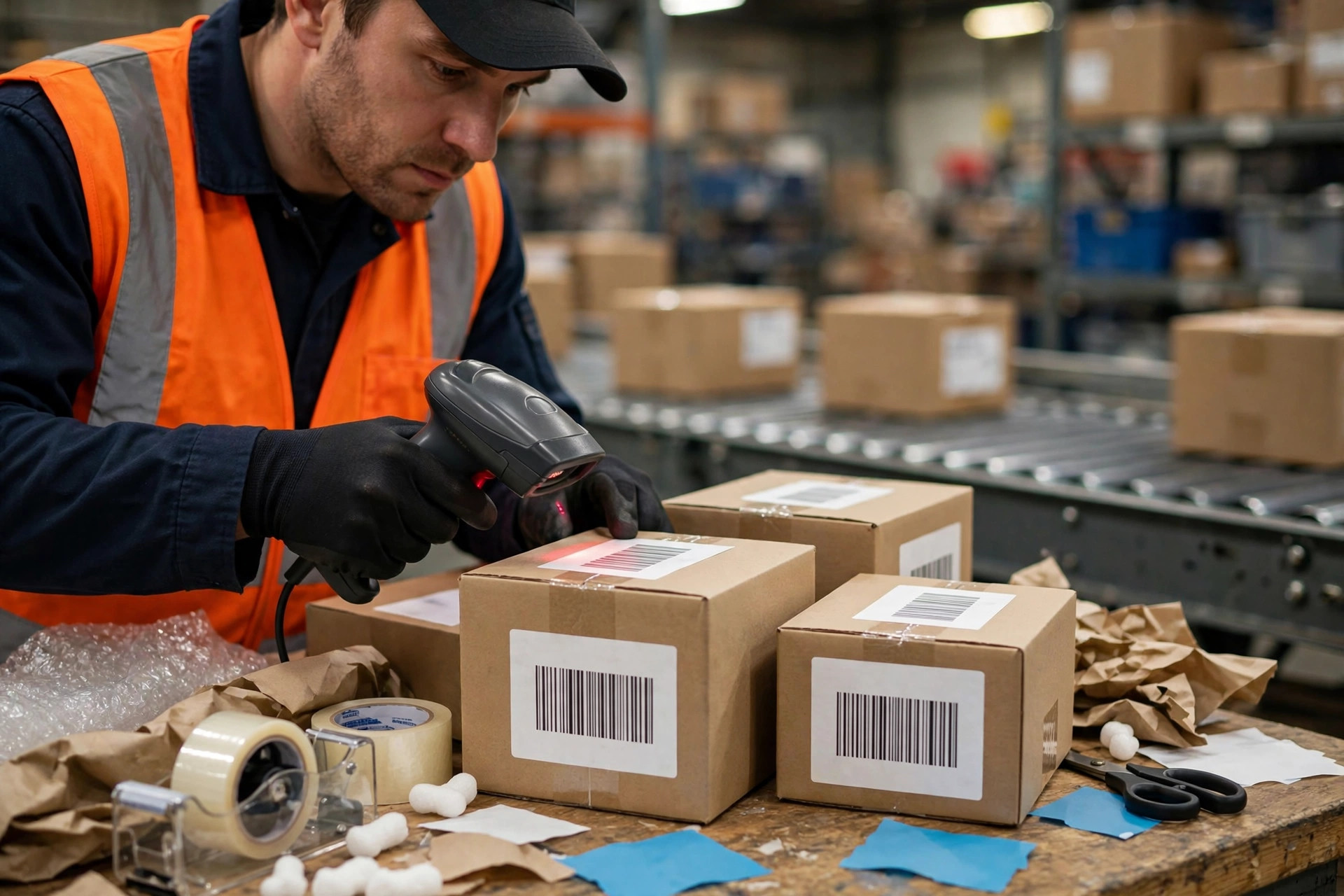
The math behind order consolidation: one box versus three
| Factor | Ship separately | Consolidate |
|---|---|---|
| Freight structure | Fixed cost paid on every parcel | Fixed cost paid once |
| Delivery speed | Each order moves on its own | The latest order can drag the rest |
| Exception cost | One lost item affects one order | One lost item compromises the whole shipment, claims double |
| Operational complexity | Simple, no rules needed | Rules plus pack-bench verification required |
Here is the formula I hand to every client: net consolidation gain = (fixed cost saved x consolidated parcels) - (late-delivery refunds caused by waiting) - (reship and support cost from false merges). The last two terms must be zero for consolidation to pay. Most projects only calculate the first term, and that is where every disaster starts.
Three ways order consolidation goes wrong
Failure one: same name, different address. Early 2025, a 3PL in the Inland Empire ran consolidation on recipient name only. Two customers both named "Li Wei" - one in Los Angeles, one in Seattle - got merged into a single parcel sent to Los Angeles. The Seattle order was refunded as lost and reshipped. I have seen this exact pit three times, and after the third I wrote "name plus street plus ZIP, all three" into my go-live-night checklist. One item missing, the checklist does not get signed.
Failure two: waiting forever to build the perfect box. One client set the wait window to 48 hours to make their consolidation rate look impressive. Early-order customers received their parcels on day four against a three-day promise, and the bad reviews and refunds arrived together. Remember my rule of thumb: when the consolidation rate climbs past 25%, I do not call to celebrate - I ask whether the cutoff and wave schedule are misconfigured. In my projects, a healthy rate sits between 15% and 25%. Above that, you are almost certainly trading delivery speed for it.
Failure three: the system consolidates, the pack bench does not. The OMS merged the orders, the packers kept their one-item-one-box habit, labels went on the wrong boxes, items went missing, and support tickets doubled. System rules and floor procedures must go live the same day. One day apart is still a pit.
One thing you can do tomorrow: pull seven days of orders from your OMS, group by recipient plus ZIP, and measure the repeat-order rate within 24 hours. Above 10%, you can start configuring rules next week. Below 5%, forward this article to whoever runs marketing and ask why they are encouraging customers to split their orders.
By Lin Xiao, WMS Implementation Consultant