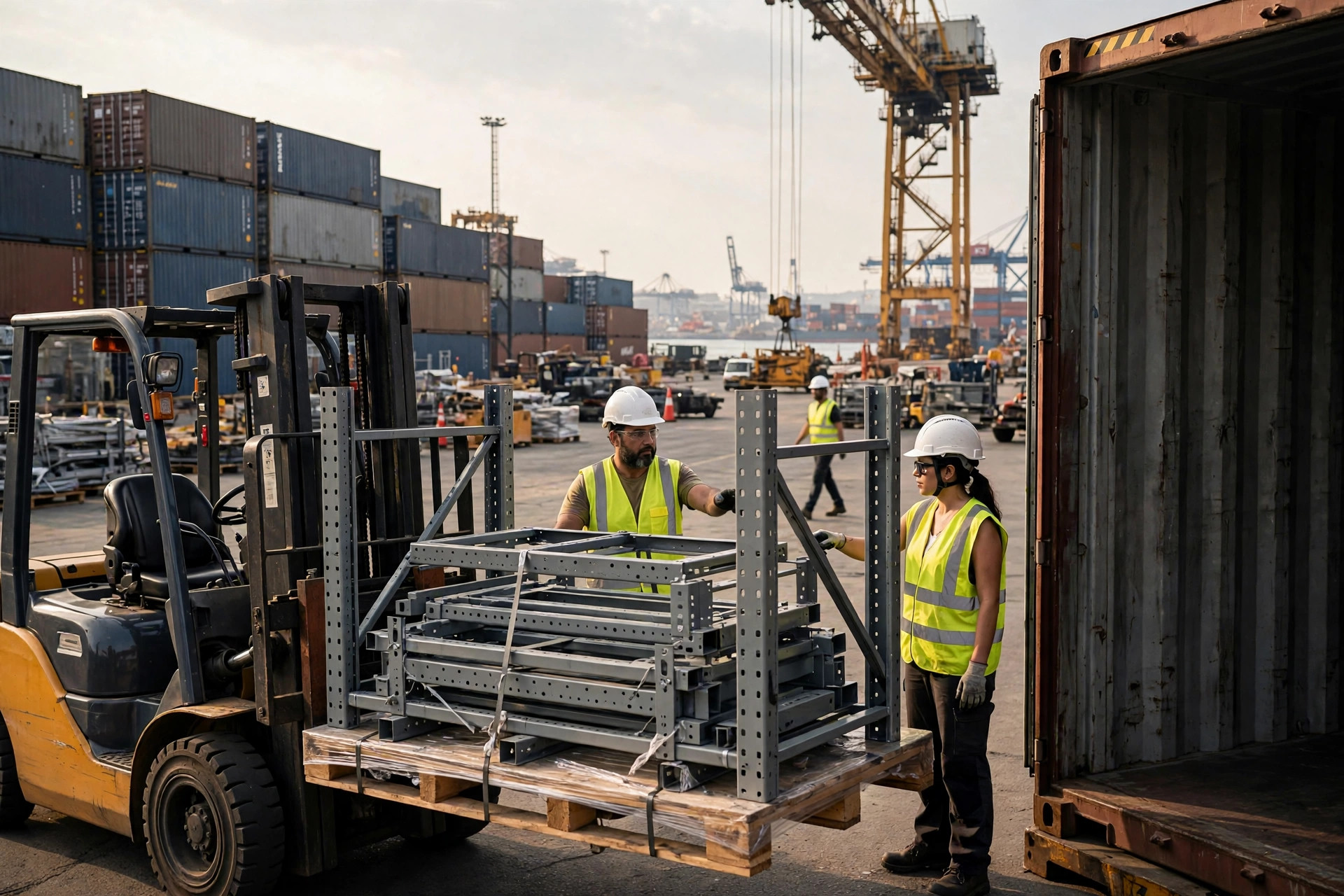
Let me tell you something from the road. After all these years behind the wheel, I have learned that the worst delay is not a traffic jam. It is a container sitting at the port, the ship about to sail, and someone telling you the paperwork is not right. I once hauled a load to a port in eastern China and watched the crew next to me get stuck. A fellow driver, Old Chen, had forklifts and racking ready to ship, but the inspection step failed him. His container sat in the yard for the better part of two weeks. Parking fees kept burning, the buyer kept calling, and Old Chen just walked circles around the yard. That is when I started to understand Nigeria's SONCAP system properly, and why it trips up so many first-time exporters of warehouse equipment.
SONCAP is Nigeria's pre-shipment verification system for imported goods. In plain language, it checks the goods before they are loaded on the ship. For warehouse equipment heading to Nigeria, there are two steps that matter most. First comes the Product Certificate, or PC, which says this product model meets the requirements. Then comes the SONCAP Certificate, or SC, which covers the specific shipment you are actually sending. Miss either one, and the cargo does not move. Too many factories assume that passing a domestic quality check and getting paid means the job is done, only to discover at the inspection stage that the product certificate was never applied for, or that the shipment certificate does not match what is really in the container.
Two Jobs I Watched Go Wrong
Old Chen's load was good cargo. The forklifts were new, the racking was built to order, and the problem was timing. The product certificate took weeks to come through, and the shipment inspection was booked right up against the loading date. When the inspector arrived, a few accessory models in the container did not match the wording on the declaration. The container could not be sealed, and the sailing date slipped. Old Chen later told me that the extra yard fees, the amended documents, and the apologies to his customer cost him more, in spirit and in money, than the freight itself. Nothing was wrong with the goods. The schedule was wrong, and a profitable order turned into a lesson he did not want to repeat.
The second story came to me at a warehouse gate in southern China. A maker of conveyors and sorting equipment had just won its first order from Lagos. The customer was in a hurry, and the factory wanted to catch the moment. Production started right after the contract was signed, and only when the line was nearly finished did someone mention SONCAP. The product certificate still had to go through its full process, and the shipment certificate could only be arranged once the goods were complete. The factory rushed the build while patching up documents, and on loading day the inspector found that the nameplates on two machines did not line up with the certificate wording. Rework followed. The goods did ship in the end, but nearly a month later than the customer's warehouse opening date. The new warehouse opened without its racking in place. The order survived, but the factory's reputation took a hit, and the next time it quoted, the customer asked one question first: can you get the paperwork done early this time?
Both stories point to the same truth. SONCAP is not a stamp you collect on shipping day. It is a timeline, and you have to work backwards from it. Start the product certificate when you are still negotiating price. Book the shipment inspection before the goods are complete. Loading day is only the final check. Treat inspection as a last-day task, and you will very likely miss the ship.
Counting the Real Cost
Let me tell you, the real cost of SONCAP is not just the inspection fee. Fees depend on the product and the shipment, and the latest official policy is the only reliable guide, so I will not quote a figure here. The bigger costs hide elsewhere. There is the time cost: while the certificate is pending, you cannot run production at full speed, and the warehouse has to hold space for that order. There is the rework cost: one wrong model number on a declaration, one extra or missing item in the container, and you are paying for a new inspection appointment and a new sailing date. And there is the trust cost: miss a customer's opening date, and the next order may go to someone else.
Here is a rough comparison I have worked out with shippers, using one container of common warehouse equipment as an example:
| Where the money goes | Paperwork started early | Paperwork left to loading day |
|---|---|---|
| Certificates and inspection | Planned, costs predictable | Rush changes, repeat bookings, costs climb |
| Warehousing and yard fees | Goods ship when ready, space turns over fast | Container stuck in the yard, space blocked |
| Sailing date and delivery | Arrives for the customer's opening | Missed sailing, opening pushed back |
| The next order | Customer trusts you, repeat business is easy | Customer asks about paperwork first, price second |
The table looks simple, but every row is real money. The early column is controllable. The late column can double on you. Exporters fear the inspection fee the least; what hurts is cargo stuck in hand while the calendar runs out.
Straight Advice for Shippers and Warehouses
Before you take a Nigeria order, settle three questions. One, has the product certificate for this model been applied for, and if not, can it start now rather than after the contract is signed? Two, can this shipment's list match the certificate item by item, model numbers, quantities, and nameplate wording, checked by the warehouse before dispatch? Three, when is the inspection booked, and is there slack in the loading, sealing, and customs timetable for it? Warehouses have their own part to play. Set aside a separate pre-inspection area for Nigeria-bound goods. Do not seal the container in a rush; let the inspector check first, then seal. Sealing, opening, and resealing wastes a day you may not have.
Here is the counterintuitive part, and plenty of people dislike hearing it: the fastest exporters through this system are usually not the ones who push the inspection body hardest. They are the ones whose documents are the most honest. Leaving one item off a declaration, or writing a model number approximately, looks like saving trouble, but the inspector checks on site and everything comes back for rework. The more truthful the documents, the faster the check goes, and the steadier the sailing date. People looking for a shortcut usually end up taking the longest road. With inspection, slow is fast.
Before dispatch, I also suggest one last check of your own in the warehouse. Put the delivery note, the packing list, and the certificate side by side, have two people cross-check the model numbers, and take a photo of the load before sealing. It takes little time, yet any mismatch found at the port takes many times longer to explain. Shippers should not pile all the pressure into the final week either. Put the certificate start date, the inspection booking, and responsibility for a missed sailing into the contract in writing, so that if something goes wrong, there is something to stand on instead of blame going back and forth.
After all these years on the road, I believe one old saying: getting the goods out the door is not the skill. Getting them to the customer on time, as ordered, and without a mess, is the skill. Nigeria's SONCAP is that kind of gate. Walk through it early, and walk through it honestly, and it is not hard. Leave it to the last minute, and even the best equipment will sit waiting in the yard. Check the latest official policy before you act, because fees, timelines, and requirements change, and old experience is no substitute for a fresh check.
By Shifu Zhao, Trucking Veteran (15 yrs)