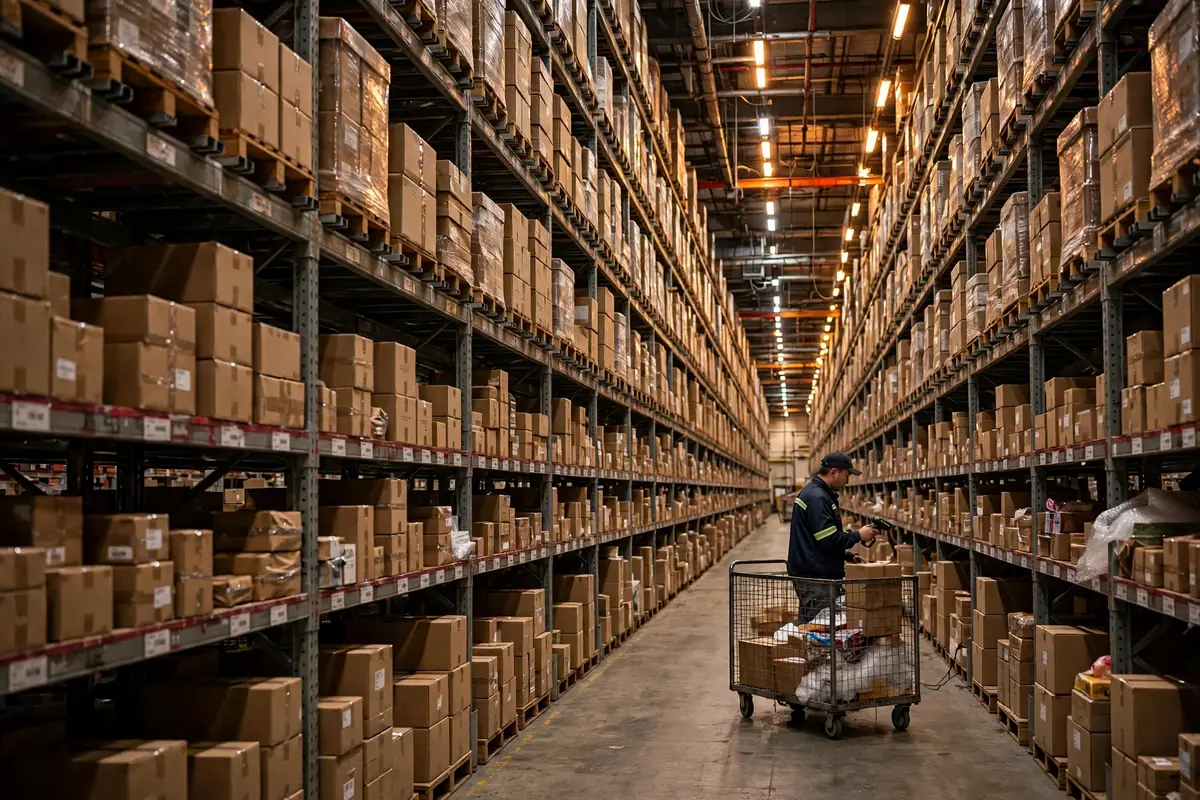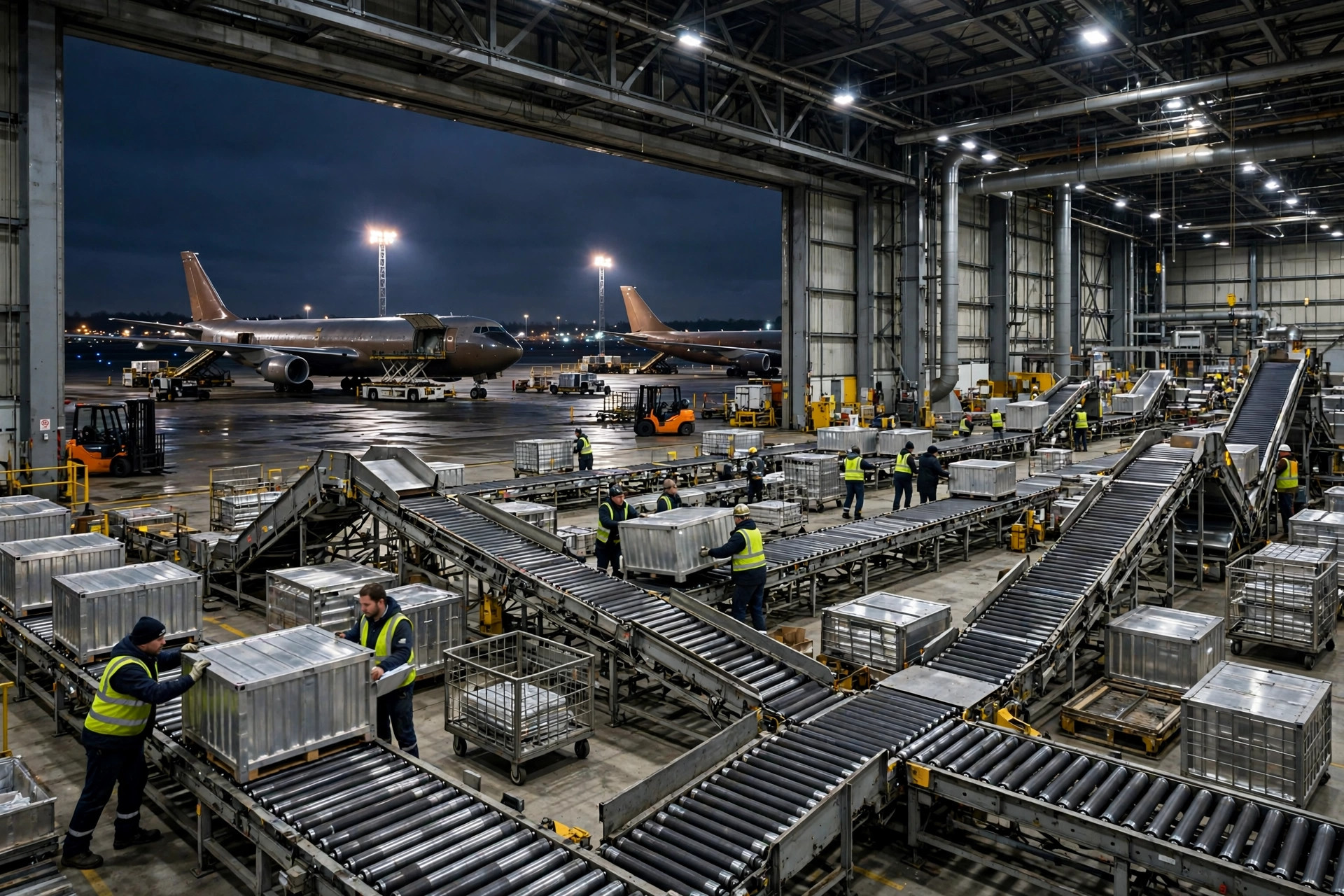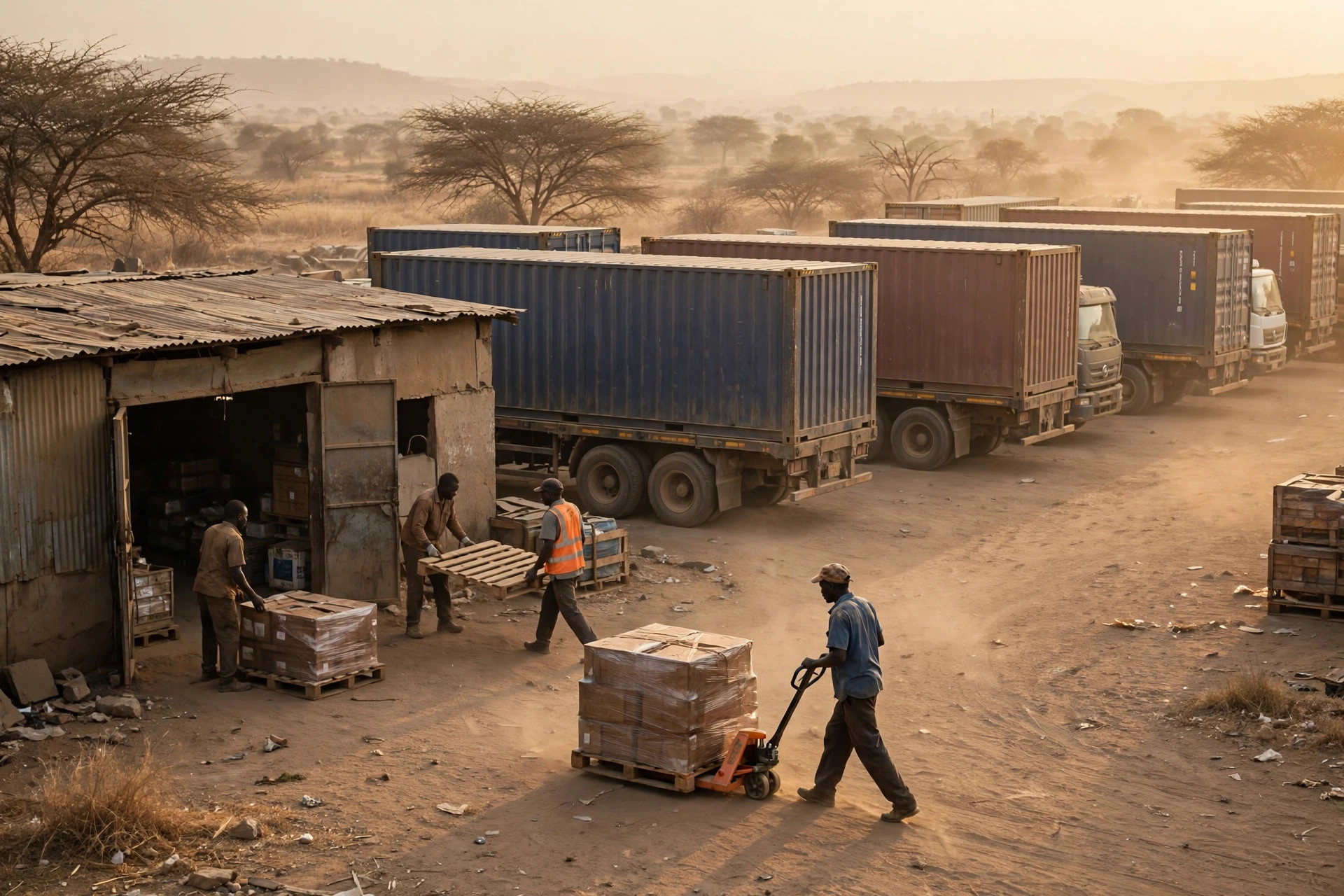
Niamey is a city that punishes sloppy warehouse math. It is the capital of Niger, but it has no coastline. Every imported pallet first lands at a foreign port and then travels a land corridor on the order of a thousand kilometers before it reaches a shelf in Niamey. When a port congests, when rains wreck a road, or when border paperwork stalls, freight simply sits somewhere in between. The real question for anyone setting up storage here is not whether the rent is affordable. It is whether your warehouse can hold the line while freight is stuck in transit. Think of it the way an automation engineer thinks about a system: the corridor is a pipeline with high latency and high jitter, and the warehouse is the only buffer you control. Size the buffer too small and you stock out. Size it too big and your cash is buried in inventory.
Niamey Storage Starts With Three Lines
I break the Niamey storage problem into three lines: the port corridor, the suburban warehouse, and Sahel distribution. Start with the principle, then work out the trade-off. The corridor sets your replenishment cycle. The suburban warehouse sets your cost floor. Distribution sets your service radius. Get any one of them wrong and the warehouse will spend its life firefighting.
Start with the corridor. Niger's imports mainly come through two directions: Cotonou in Benin and Lome in Togo. Treat them as two parallel pipes. On a normal day each carries its own flow. When one fails, the other can only take over if your forwarder, customs clearance, and transport arrangements were prepared in advance. A shipper betting everything on a single corridor has handed the fate of the whole warehouse to one road. My advice is blunt: run your regular volume on the main corridor, but keep small, regular shipments moving on the second one too. Keep the channel warm and the relationships alive, so a switch is possible when it matters. The cost of keeping that second channel warm looks like waste on a quiet month. It pays for itself the first time the main route breaks.
Here is a case I have seen play out. A consumer-goods distributor rented a warehouse of roughly two thousand square meters on the outskirts of Niamey a couple of years ago, bringing goods in through the Cotonou direction. He planned his safety stock around an average transit time of about a week. Then one rainy-season convoy lost several extra days on the road, his best-selling lines stocked out, and customers went elsewhere. He changed the math afterward: safety stock is no longer set by average transit time, but by the worst realistic transit time, and fast movers now carry roughly two extra weeks of cover. On paper the inventory looks heavier. Over a full year, the lost sales he avoided more than paid for it. That is buffer logic, and it cannot be negotiated away: the bigger the jitter, the bigger the buffer has to be.
Niamey Site Selection: Suburban Warehouse Versus a Small City Unit
My dividing line for site selection is drawn on the order profile, not on the rent per square meter. A small unit inside the city sits close to customers and suits high-frequency, small-drop delivery, such as restocking supermarkets and convenience stores. A suburban warehouse offers space and easy truck access, which suits a regional distribution center and bulk stockholding. People who pick a site on rent alone usually hand the savings straight back in delivery costs.
A second case makes the point. A food distributor set up a small unit near the edge of Niamey city purely for same-day and next-day city delivery. Its stock turns fast and its orders are fragmented. The value of that city unit is not storage, it is proximity: trucks can turn around quickly. Bulk stock never sits there. It sits in a suburban warehouse, and the city unit is replenished from it every day on a fixed schedule. That is a classic two-tier structure: the suburban warehouse is the buffer, the city unit is the forward point. Once the daily replenishment run is fixed, the whole system stabilizes. Anyone who works with equipment knows the word for this: takt. It is not about being fast. It is about being steady.
Site selection also turns on something unglamorous: truck access. Can a large truck turn around at the gate? Can trucks queue without blocking the street? Will city restrictions catch you at the wrong hour? Does the yard flood in the rains? These details cost money every single day. Before signing a lease, send your transport people to the site twice, once in the morning and once in the evening. That beats studying a floor plan ten times. Floor loading, clear height, and fire access are hard constraints: check each one against the latest local requirements before signing, never on gut feel.
| Option | Best for | Advantage | Cost |
|---|---|---|---|
| Small city unit | High-frequency, small-drop city delivery | Close to customers, fast response | Small footprint, higher rent magnitude, truck access constrained |
| Suburban warehouse | Regional distribution, bulk stockholding | Space, easy truck access, works as the upstream tier | Farther from city customers, needs a fixed replenishment run |
| Direct corridor shipment plus a small Niamey buffer | Stable orders, manageable value per shipment | One less transfer, fewer inventory stages | Any corridor disruption means a stockout, total dependence on the corridor |
The table is meant to be used in this order: look at your order profile first, then at whether your goods turn fast or need bulk cover, and only then at rent. Reverse the order and the math goes wrong.
Niamey Distribution Into the Sahel: Leave Slack in the Schedule
Distribution into the Sahel interior is the leg most people underestimate. Inland routes are long, nodes are few, and return loads are hard to find. A truck goes out full and often comes back empty, which means the quoted freight rate quietly includes the empty return. When you negotiate with carriers, do not compare one-way quotes. Negotiate the round trip as a package. A lane where you can secure return freight has a completely different cost structure.
Now the counterintuitive judgment, and it sounds strange coming from an automation engineer: in Niamey, do not start with automation. Racking, conveyors, and automated sorting earn their keep on volume that is large and stable. Many warehouses in Niamey face volatile order volumes, mixed product profiles, and corridor jitter. Run the takt math and the equipment often never reaches full utilization, while maintenance and spare parts add another bill on top. Get the manual process plus simple racking running smoothly first. Measure the takt of picking, checking, and loading. When volume genuinely and steadily exceeds what a full manual shift can handle, then talk about equipment. Is the money worth it? Look at one number: your average daily orders multiplied by handling time per order, against the capacity of a fully loaded manual team. If you have not passed that threshold, automation is a pseudo-requirement, and it will sit there as an expensive decoration.
For scheduling distribution, I use three rules. First, dispatch by route waves, not as orders trickle in, so loads can be consolidated and return freight can be planned. Second, hold one unit of spare capacity or one spare departure day on each lane, so corridor disruption has somewhere to go instead of breaking the plan. Third, build safety stock ahead of peak seasons and holidays, because inland replenishment cycles are far longer than city ones and last-minute fixes always arrive too late. Customs duties, fees, and procedures should be confirmed against the latest policies of Niger and the transit countries before any quote or contract is signed; never apply last year's experience to this year's rules.
One action you can take tomorrow: list every lane you run in three columns, average transit time, worst realistic transit time, and how many orders a single stockout costs you. Once that table is done, you will know how big your warehouse should be, whether it belongs in the suburbs or the city, and whether you need a second corridor. In the end, the Niamey warehouse calculation is not about rent. It is about how many days you can hold out when the corridor shakes.
By Da Liu, Automation Engineer