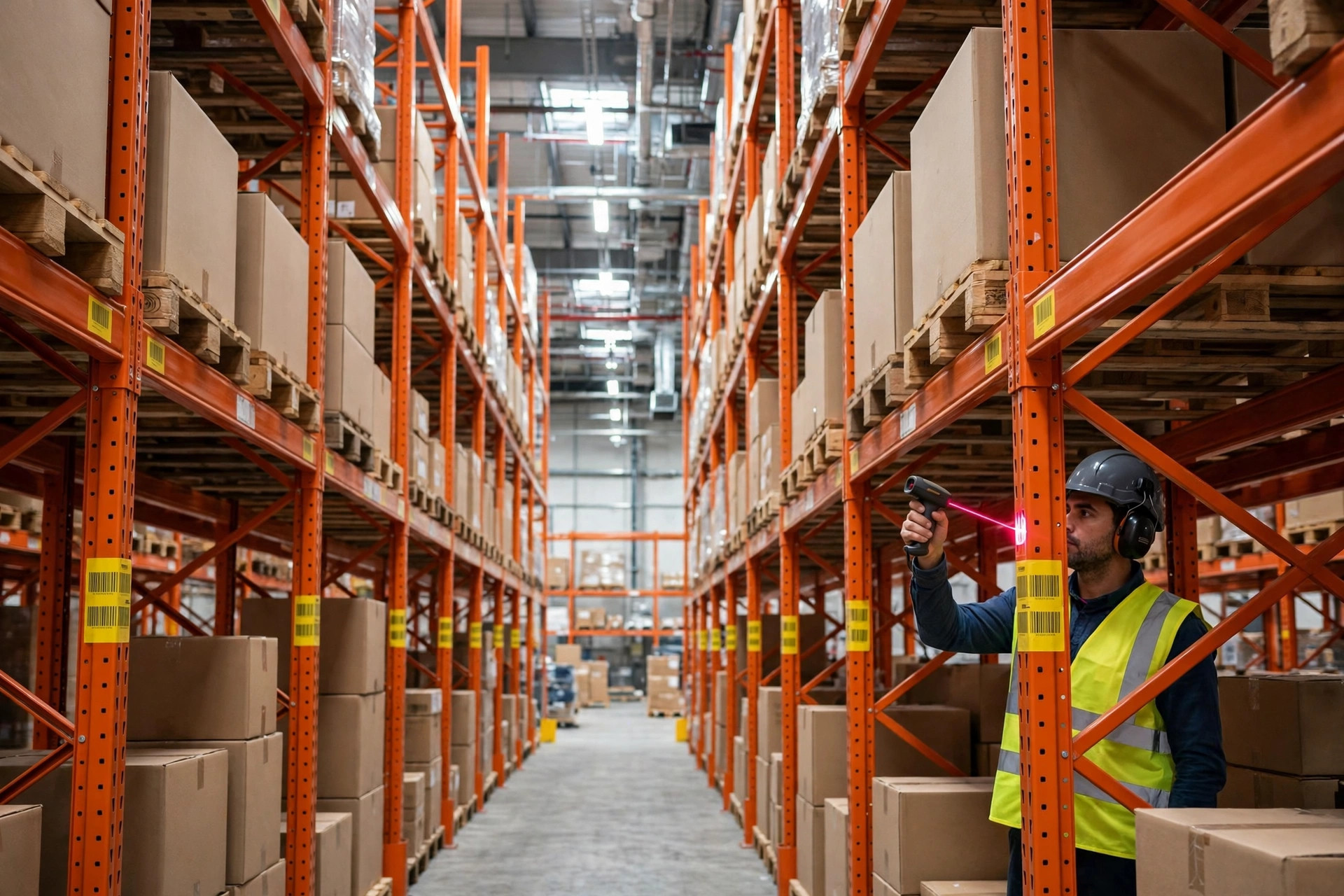
A single location label costs somewhere between twenty and fifty cents wholesale — that's the price range I've seen across suppliers over the years, and I want to be upfront that it's an experienced-based estimate, not a quote. When one fails, a picker loses 30 to 60 seconds on a single scan attempt. Sounds trivial until you scale it.
In 2023, I was inside a 3PL warehouse in Ontario, California — about 60,000 square feet, roughly 80 pickers, 6,000 pick lines a day. Their location-scan failure rate sat around 1.5 percent. Ninety failures a day, forty seconds each. That's a full hour of labor burned daily on nothing but dead labels. And that number doesn't include mispicks or the second round of verification those failures trigger.
Here's my verdict, and I'll stand behind it: location labels are the highest-ROI consumable in all of warehousing. A full building re-label with laminated stock runs one to two thousand dollars and lasts two to three years. Skip it, and the labor you leak in a single year costs several times that. Most operators never do this math because labels are too cheap to take seriously.
What Actually Happens When the Beep Doesn't Come
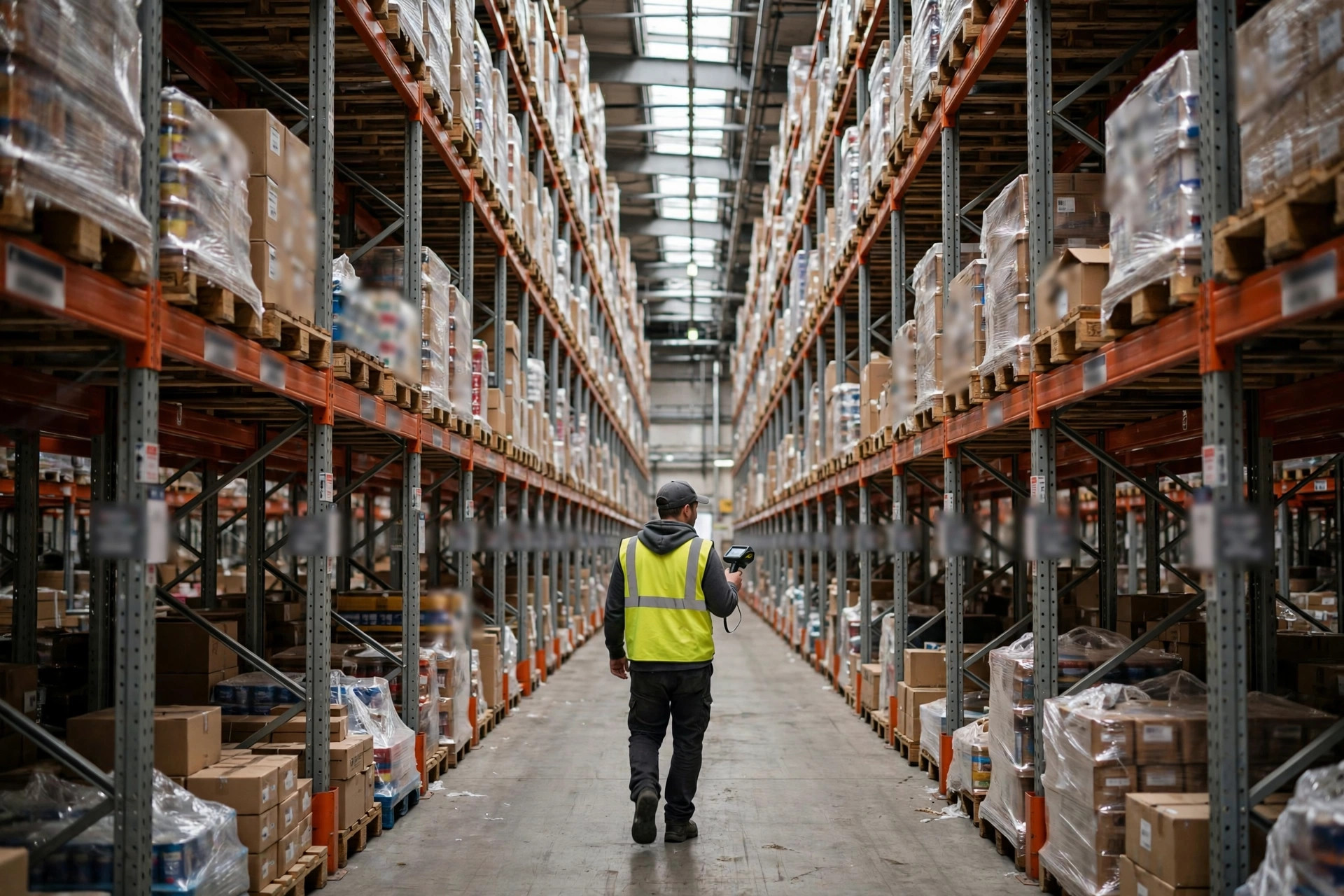
The scanner chirps its error tone. What follows is a forty-second ritual I've watched thousands of times.
First, the picker tries again. Different angle, closer, farther, wipe the label with a thumb. That trick works on dust. It does nothing for faded ink or a scratched laminate. I once watched a picker scan the same label seven or eight times and burn over a minute before giving up.
Then comes manual entry. Location codes run eight to twelve alphanumeric characters. The picker squints at a half-faded label, guesses at the unreadable characters, keys it in wrong, gets rejected by the WMS, and keys it again. Call it thirty seconds minimum — double that on a high bay with bad lighting.
The worst case is escalation. The picker parks the cart, radios or walks over to a supervisor, who comes out, eyeballs the location, and reads the code aloud. That's three to five minutes gone, and the whole pick line stutters behind them.
And then there's the workaround nobody wants to admit: picking from memory. "I know what's in that slot." Forty seconds saved, one big risk planted. A single mispick costs five to ten times a correct pick to unwind once you count customer service, returns, and reshipping. That's an industry rule of thumb, not a precise figure — but nobody who has run a floor would argue with the direction.
Running the Numbers on a Real Building
Back to that Ontario operation. Six thousand pick lines a day, at least one location scan per line, 1.5 percent failing. Ninety failures. Forty seconds each — my field-observed average, covering rescans, manual entry, and short confirmations, but not the supervisor-escalation cases.
Ninety times forty seconds is 3,600 seconds. One hour a day, gone.
At a fully loaded California warehouse wage of roughly $22 an hour, that's $22 a day, or about $6,600 across 300 working days. That one number would pay for a full re-label of the building twice over, with change.
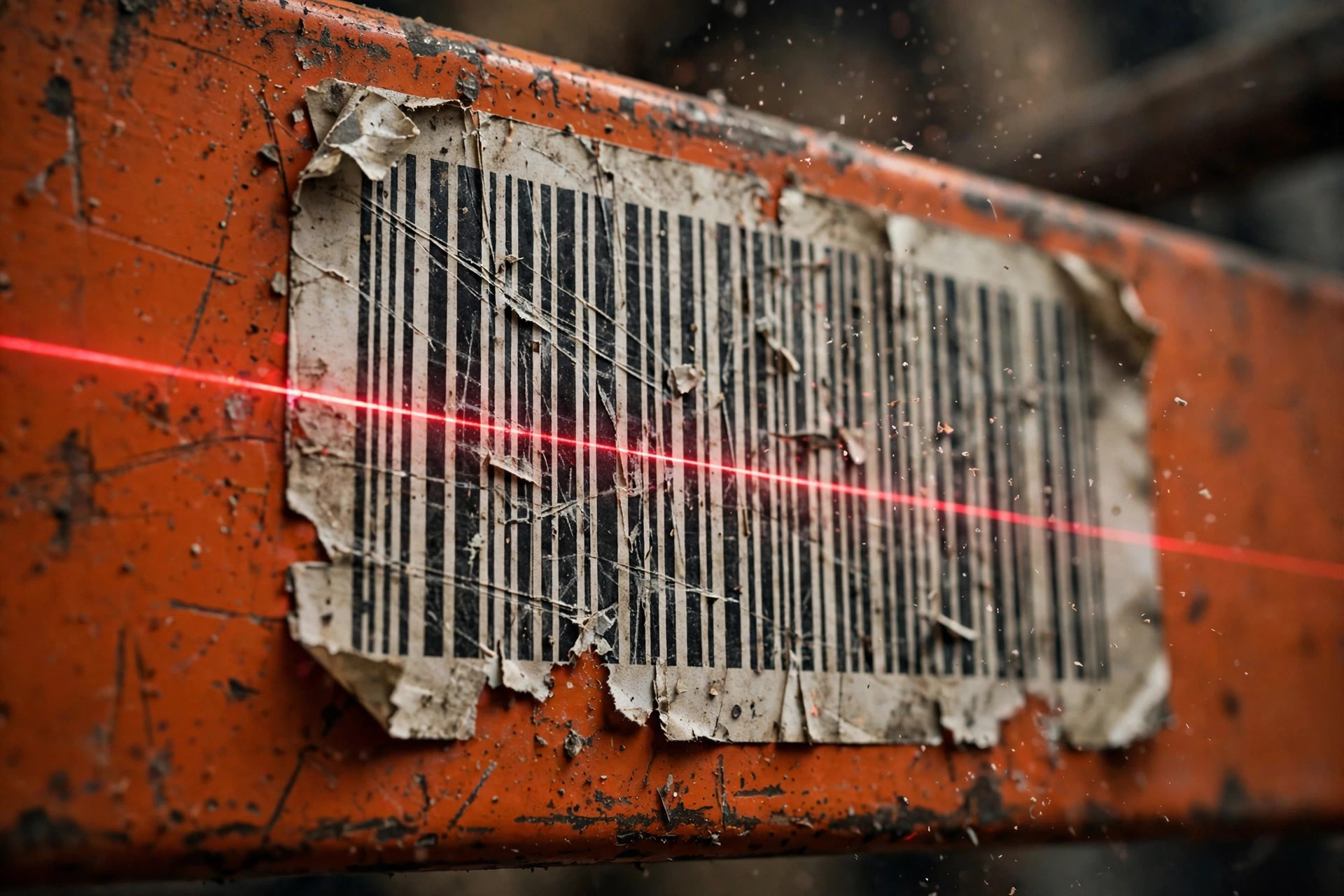
But the ledger doesn't capture the real damage. Pick rhythm breaks during peak waves. Pickers grow demoralized — in high-turnover buildings, dead labels show up in exit complaints more often than you'd expect. And mispicks are the killer: one bad pick costs more in service recovery and lost trust than a few thousand labels.
Here's the comparison that usually ends the argument. Sixty thousand square feet means roughly 8,000 to 12,000 locations. Laminated labels at under fifty cents each puts a full re-label at $4,000 to $6,000 in materials, good for two to three years. That's a few dollars a day. Label failure, meanwhile, was costing that building $22 a day at minimum. The math isn't close.
Why Labels Keep Dying: Three Real Causes
The first killer is the forklift. When pallets slide into high bays, a fork tip drifting slightly off-line scrapes the label on the upright. In one audit I ran, labels below 1.5 meters off the floor failed at more than three times the rate of higher ones. Nobody's doing it on purpose — a pallet is 1.2 meters wide and the aisle is only so forgiving.
The second killer is cheap material. Plenty of buildings buy unlaminated paper labels to save a few cents. A warehouse is not an office: dust, humidity, exhaust, summer heat well above 35°C. Paper yellows and curls within months, barcode contrast fades, and scan rates fall off a cliff. In 2021 I took over an operation in Phoenix where the previous manager had bought bare-paper labels; within a year, around 30 percent of them wouldn't scan. The re-labeling job cost five times what the "savings" had been.
The third killer is placement. Labels centered on the front face of the beam look standard, but that's exactly where pallets rub. The right spot is the side of the upright, or tucked five to ten centimeters inward under the beam — outside the fork's travel path. Many label vendors won't volunteer this, and I'll be blunt about why: they sell by the label, so faster attrition is good for business.
The Fix: Prevention Plus a Fast Response
On prevention, my advice is simple: buy laminated polyester labels, not bare paper. The premium is ten to twenty cents a label — maybe one or two thousand dollars across a building — and it stretches label life from one year to three, shrugs off moisture and light scrapes. I consider it the single best small spend in warehousing.
Move labels to upright sides or recessed beam positions, out of the fork path. Add corner guards or rub strips on low-level locations — a few dollars each, and they solve the forklift scrape problem directly. And don't over-densify the barcode when printing. Tighter modules die faster from scratches; a medium density scanned from 30 to 50 centimeters is the scanner's comfort zone.
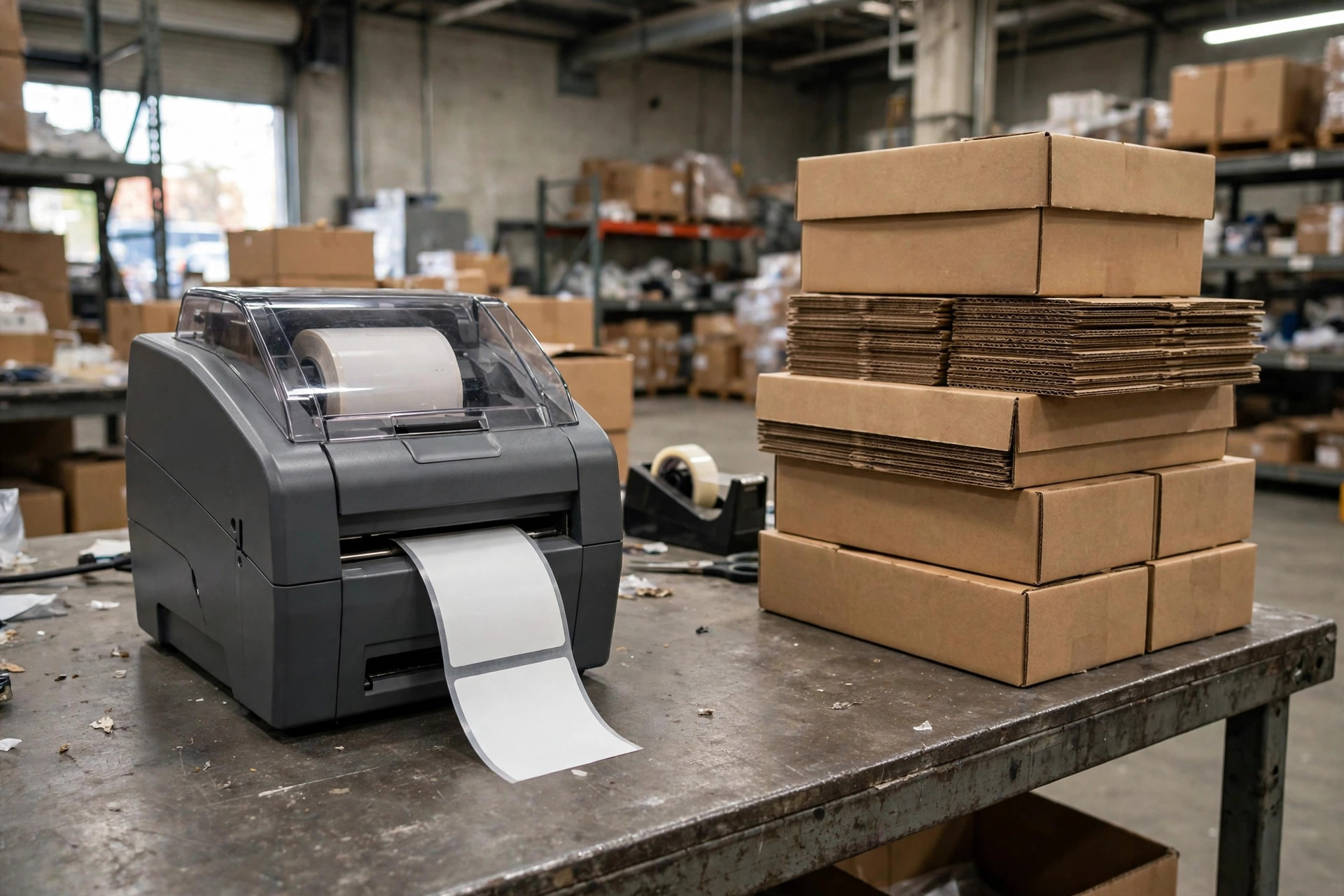
For response, keep a mobile label printer on the floor. Label dead or peeling? A supervisor prints and replaces it in two minutes instead of routing a work order through procurement. I've seen too many buildings run a two-week process — report, purchase, print, schedule — for a single label, while that location causes trouble every single day. A mobile printer costs one to two thousand dollars. Buy one and keep it on the floor.
I close with the monthly inspection checklist I've used for years. Two people, half a day, once a month:
- Audit 200 location labels, count the unscannable ones, and compute your damage rate. Above 2 percent, start a bulk replacement — don't wait.
- Focus on low labels under 1.5 meters and uprights along main travel aisles. Those two spots fail fastest.
- Check label surfaces: yellowing, curling, bubbling laminate all go on the replacement list.
- Shadow twenty picks and watch for anyone skipping scans and picking from memory. If you see it, the label problem has already infected behavior.
- Pull this month's manual-entry events from the WMS log. A rising trend is your early warning.
- Check the mobile printer's label and ribbon stock. Finding out you're out of media when you need it is a rookie failure.
Nobody looks at location labels when things are fine. When they fail, the whole building feels it. Of all the small money you can spend in a warehouse, this one pays back first.