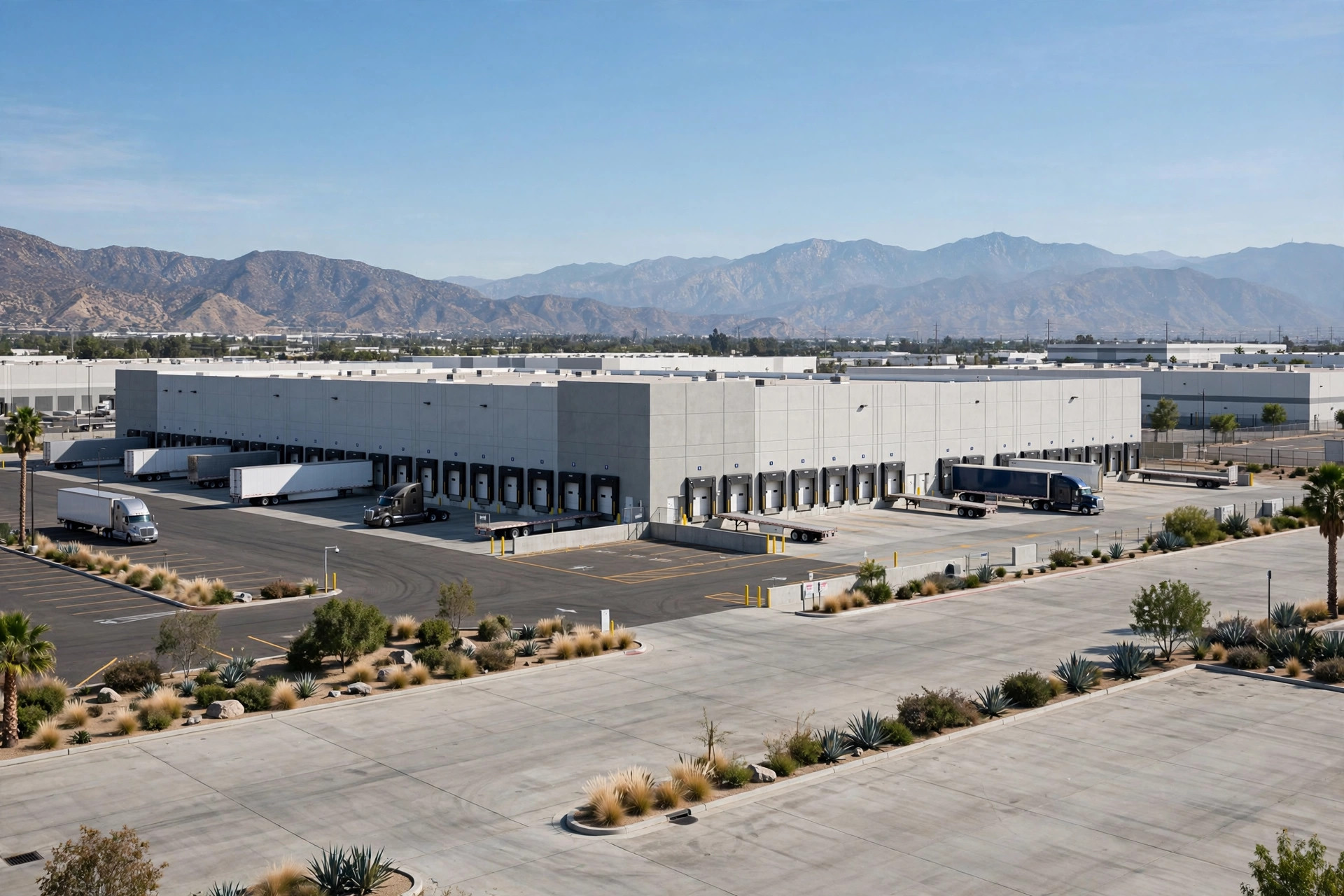
Let me open with an unfriendly truth: a LEED green warehouse certification plaque is 90% for the landlord, not for the people working inside the building. And yet — as an automation engineer, I'll tell you warehouses are one of the best-value building types in the entire LEED system. The catch is knowing where the points hide and where the money actually goes.
LEED, run by the U.S. Green Building Council (USGBC), scores buildings on a 110-point scale under v4.1: 40 points gets you Certified, 50 Silver, 60 Gold, 80-plus Platinum. Warehouses go through the "Warehouses and Distribution Centers" track inside BD+C, with scoring quirks that don't apply to office towers. Same exam paper — but warehouses are the lopsided students with their own bonus questions and trap questions.
Where a Warehouse's LEED Points Actually Hide
First, the mechanics. Energy & Atmosphere (EA) is the heavyweight category, and "Optimize Energy Performance" alone is worth up to 18 points. For a warehouse, that credit is both the biggest free lunch and the biggest trap. More on that in a minute.
The cheapest points a warehouse can grab, ranked by bang for buck:
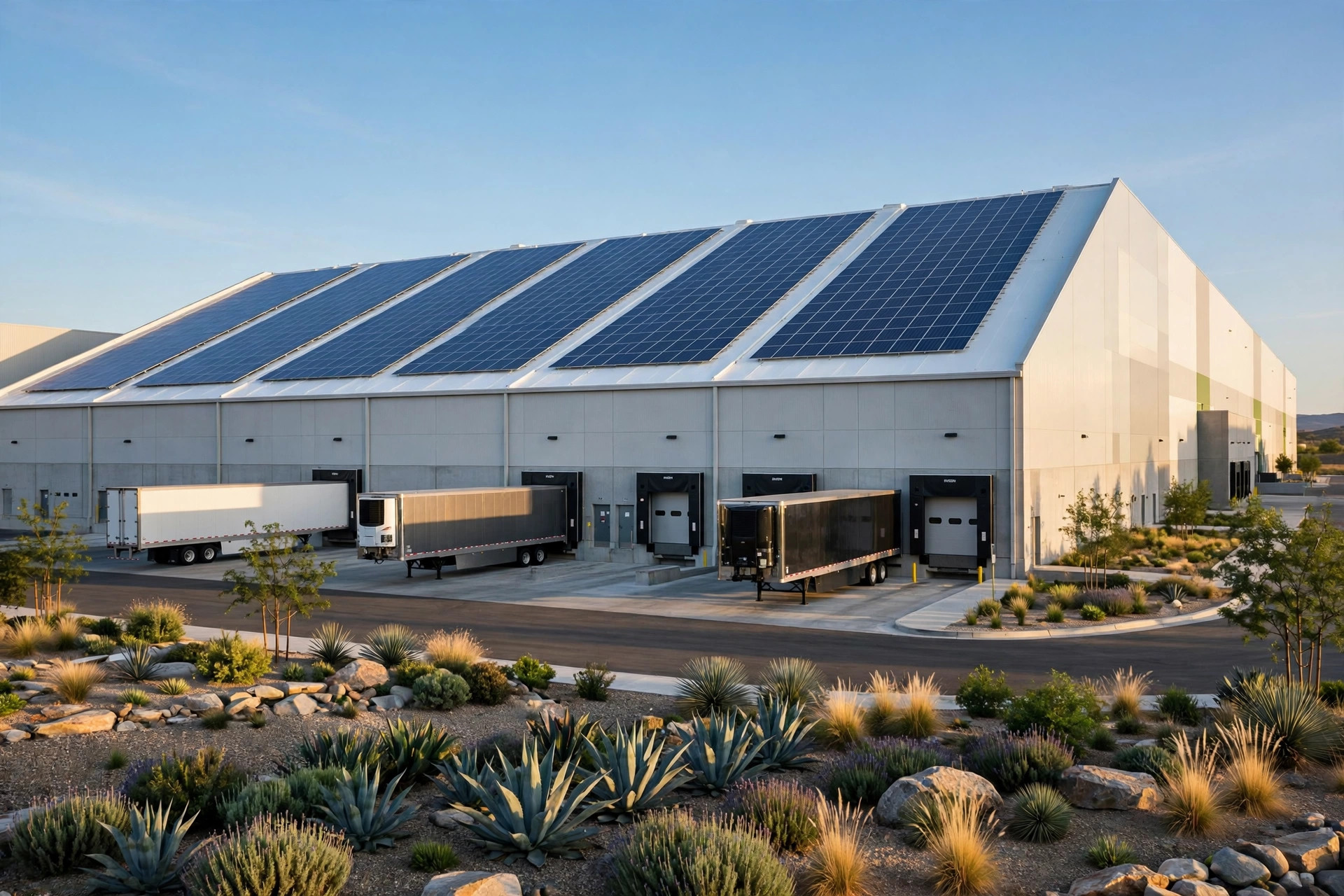
First, the roof. Lay down a high-reflectance white TPO membrane and the "Heat Island Reduction" credit (1–4 points) is basically yours, plus a small cut in cooling load. Think of it as a sun hat for the building — LEED gives you points, and the power bill gives you a discount.
Second, water. A warehouse barely uses water — restrooms and a patch of landscaping. Low-flow fixtures and drought-tolerant planting check the "Indoor Water Use Reduction" box without breaking a sweat. Don't dismiss it: the Hanesbrands distribution center in Perris, California — 1.3 million square feet, opened January 2009, at the time the largest single LEED-certified warehouse/distribution building in the world — cut water use by nearly 40% and ran 19% below typical warehouse energy use.
Third, construction waste. Warehouse construction is concrete slabs and steel columns — a short, predictable waste stream. Diverting 75%+ of it is routine, and "Construction Waste Management" hands you more points. Fourth, parking: LEED gives warehouses special treatment on parking baselines, nothing like the office standard. Fewer stalls, a handful of EV and bike spots, and the points show up.
Now the hard ones. "Indoor Environmental Quality" — daylight, ventilation, acoustics — is designed for people, and 95% of a warehouse is boxes. Big spending on daylight modeling for a 40-foot clear-height storage area buys fewer points than upgrading the office HVAC. Rainwater management is brutal when your site is one giant slab. And renewables: the roof is huge, but the solar business case is a separate spreadsheet entirely.
An Engineer's View: The Three Heavy Hitters
Here's the crossover part — my home turf. The three most lethal point-earners in LEED's energy category for warehouses are all old friends of any equipment engineer:
Number one: LED high-bays with occupancy and daylight sensing. Warehouses used to live under 400-watt metal halides; a 150-watt LED high-bay delivers better light. Add motion sensors and daylight dimming — empty aisle, lights drop to 20%. Cutting lighting energy in half is the conservative estimate. LEED's energy model measures improvement against an ASHRAE 90.1 baseline, and a warehouse baseline has no fancy equipment to game — one LED retrofit can pull 6–10 points under "Optimize Energy Performance."
Number two: variable-frequency drives. Warehouse HVAC, fans, and pumps spend 80% of the year nowhere near full load. A VFD lets fans follow demand, and the fan laws are unforgiving math: drop speed 20%, power drops nearly 50%. Think of it as swapping a car with the throttle welded open for one with cruise control. The energy model rewards it directly.
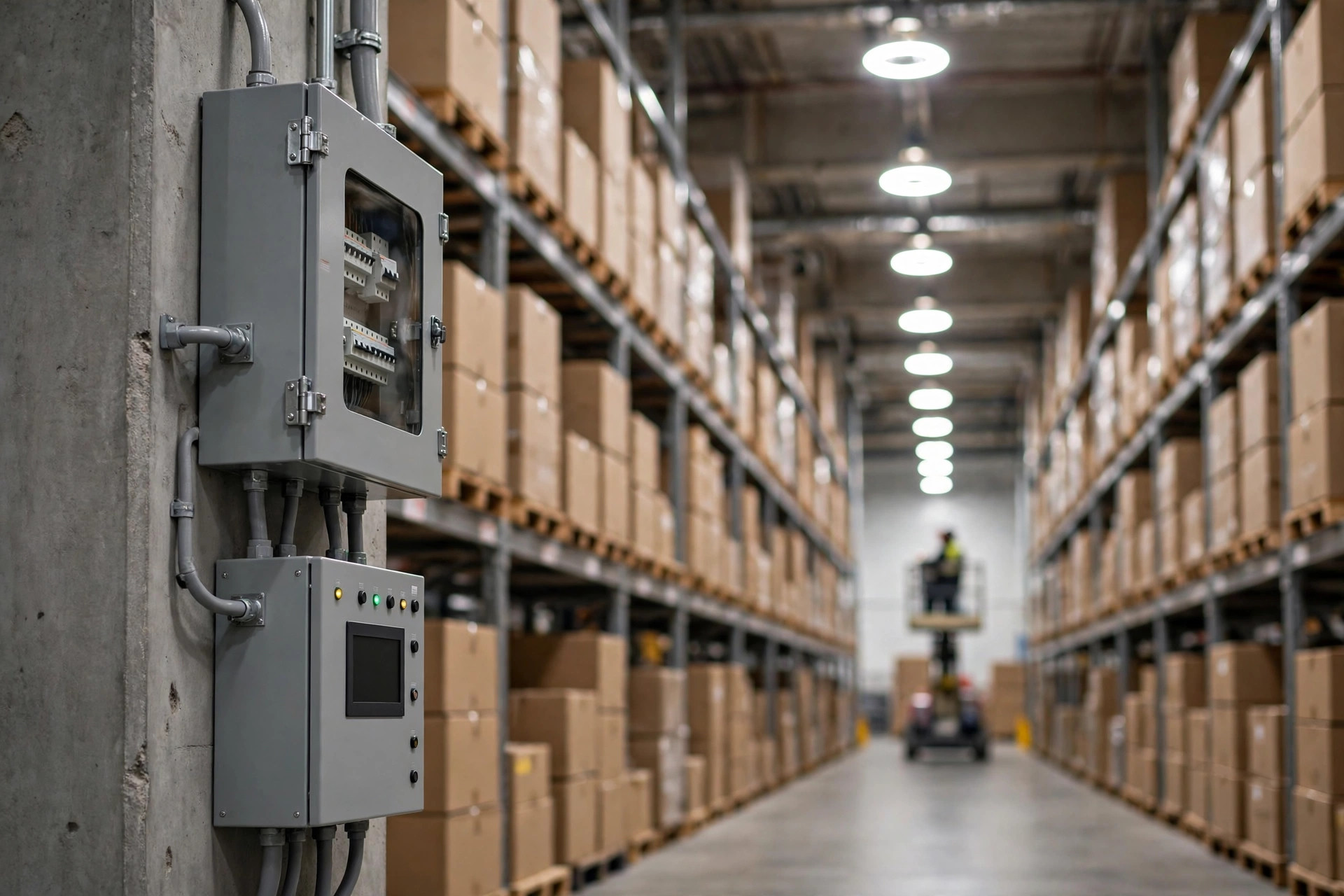
Number three: commissioning plus advanced energy metering. "Fundamental Commissioning" is a prerequisite — miss it and you're disqualified, period; "Enhanced Commissioning" earns more points. In plain English: hire a third party to verify every mechanical and electrical system end to end, so design, installation, and operation actually agree. I've walked too many warehouses with a beautiful BMS dashboard and a valve installed backwards — commissioning exists for exactly that. Submeter lighting, plug loads, and HVAC separately, and there are more points.
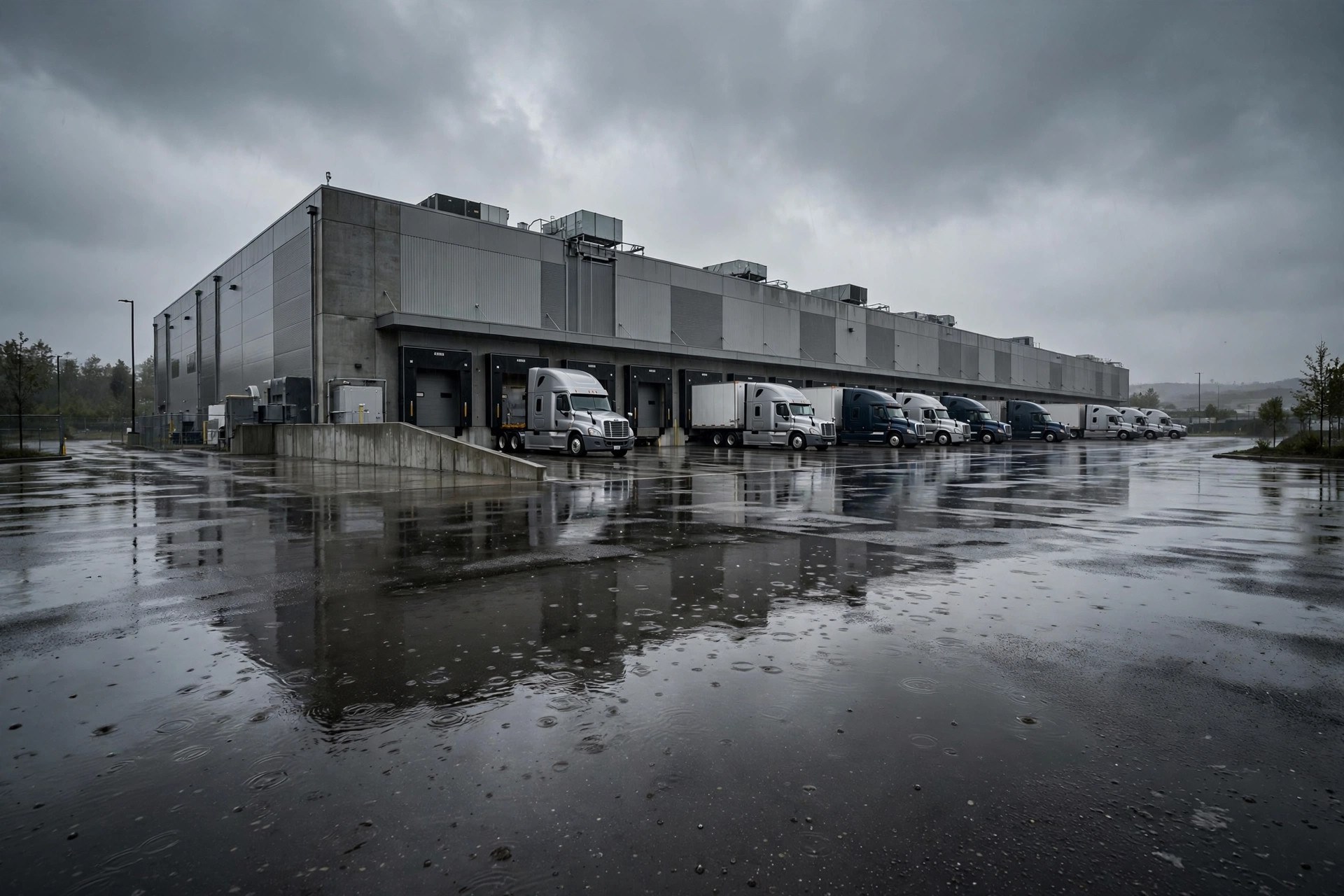
But here's the trade-off nobody puts in the brochure: warehouses gain energy points easily and lose them just as easily. The dock door is the assassin — dozens of doors cycling hundreds of times a day in peak season, bleeding conditioned air like it's free. Infiltration in the energy model can eat most of what your LEDs saved. That's why insulated high-speed doors and dock seals beat a fancy BMS dashboard on LEED cost-effectiveness every time. Seal the leaks first, then optimize. That's the equipment engineer's iron rule.
The Money Question: What the Plaque Costs and How Fast It Pays Back
Principles done. Now the main course. Let's price a 200,000-square-foot new distribution warehouse targeting LEED Silver. Ground rules: USGBC's official fees are fixed and published; consulting and retrofit costs are ranges from industry experience.
The cost stack has three layers:
| Cost item | Amount (USD) | Notes |
|---|---|---|
| USGBC registration + review | ~13,900 | Registration $1,700 + review at $0.076/sf; warehouse projects get 20% off review fees |
| LEED consultant + documentation + energy model | 50,000–100,000 | Full-service consultant, typical range |
| Hard-cost premium for Silver | 150,000–300,000 | LED, VFDs, cool roof, low-flow fixtures, commissioning — roughly 1–1.5% of construction cost |
| Total | ~220,000–410,000 | Using $300,000 as the working number |
Notice something? The $13,900 in USGBC fees is a rounding error in the total. Any consultant who tells you "certification just costs the review fee" — blacklist them. The real money goes to the consultant and the hard retrofit.
Revenue has two layers. First, rent premium: JLL's 2024 guide cites research showing LEED buildings command 3.7% higher rents and 4 points higher occupancy. CBRE's 2024 big-box report put average North American big-box rent at $8.08 per square foot per year — our 200,000-square-foot building grosses about $1.616 million a year, so the premium is roughly $60,000 a year. Second, energy savings: LED-plus-controls-plus-VFD savings run about $0.45–$0.65 per square foot per year — roughly $100,000 a year here.
That's ~$160,000 a year against a $300,000 investment: a simple payback of about 1.9 years. Under two years.
But let me sharpen that math, because it flatters LEED too much. You were going to install LEDs anyway — is anyone still building a new warehouse with metal halides? VFDs and cool roofs are increasingly standard practice too. The truly incremental "spent it only because of LEED" money might be just over $100,000, which drags payback under a year. If your LEDs are already in and your roof is already white, certification is pure found money, and the consultant fee is the biggest line item.
One more data point: Prologis launched its LEED Volume Program in 2014 — the world's first volume certification program built specifically for industrial real estate — and has pushed 80-plus projects through it, compressing both USGBC fees and review timelines through batch submittals. Its Pozzuolo Martesana DC1 near Milan earned LEED Gold in November 2018 with the standard playbook: rooftop PV, LED, low-flow fixtures. The big landlords turned LEED into a standardized production line years ago, which tells you the math works for them.
Owner-Occupied vs. 3PL Lease: Who Should Actually Certify
This is the section that matters most — the selection line.
Owner-occupied, holding 10-plus years: certify. The energy savings are yours, the rent premium (on future lease or sale) is yours, and a sub-two-year payback means everything after that is gravy. Gold or Silver depends on budget; at minimum, get Silver.
3PL on a 3–5-year lease: don't certify — make the landlord do it. This is the classic split incentive: the owner pays for certification, you pocket the power savings, and the owner collects the rent premium. Spending $300,000 to appreciate someone else's asset, then walking away at lease end? Make "landlord delivers LEED Silver" a lease clause, or just lease an already-certified building and enjoy the energy savings and the ESG slide. Let the market absorb the cost.
Big-customer RFP with a hard ESG requirement: certify. The plaque isn't a cost line then — it's a ticket to play. Plenty of Western brands make LEED or equivalent a threshold criterion in 3PL bids. No plaque, no bid. Worth depends on the contract, not the payback period.
Finally, the maintenance pit — the part engineers care about most. A BD+C plaque never expires, which sounds great until you meet LEED's O+M (Operations and Maintenance) track: recertification demands continuous, real operating data. I've seen warehouses three years post-certification where nobody remembers the BMS password and a submeter has been dead for six months. The plaque is still on the wall; the savings left years earlier. Certification is the starting line, not the finish. If you won't maintain the data stream, don't chase a high score — take Silver and spend the money on LED and VFDs, hardware that saves energy just by existing.
And the pet-peeve segment: two token solar panels to scrape a point, EV chargers nobody uses, a "green education corner" with a nice sign — the more of these your consultant proposes, the worse your consultant is. LEED points belong on equipment, on meters, and in the monthly power bill.
Whether the money is worth it comes down to one number: does your hold period — or your lease term — cover the payback period? If yes, certify without blinking. If no, let the landlord certify. Meeting adjourned.
By Da Liu, Automation Engineer