Do not start with how big the Korean market is. Start with the ledger. For a piece of warehouse equipment entering Korea, Korea KC certification cost is never just the line on the certificate quote. Test samples, document preparation, rework, freight in both directions, and inventory held back while certification runs all belong in the same total. Manufacturers keep asking me whether it is worth it. My answer does not change: fill in the ledger first, then decide. A feeling is not an answer.
Whether that money was wasted has nothing to do with whether the certificate itself looks expensive. It depends on whether every cost trigger was priced before the project started. A quote treated as the full price will always break at the rework stage, and by then the budget conversation is already lost.
Korea KC Certification, First Pass: Total Cost, Not Certificate Price
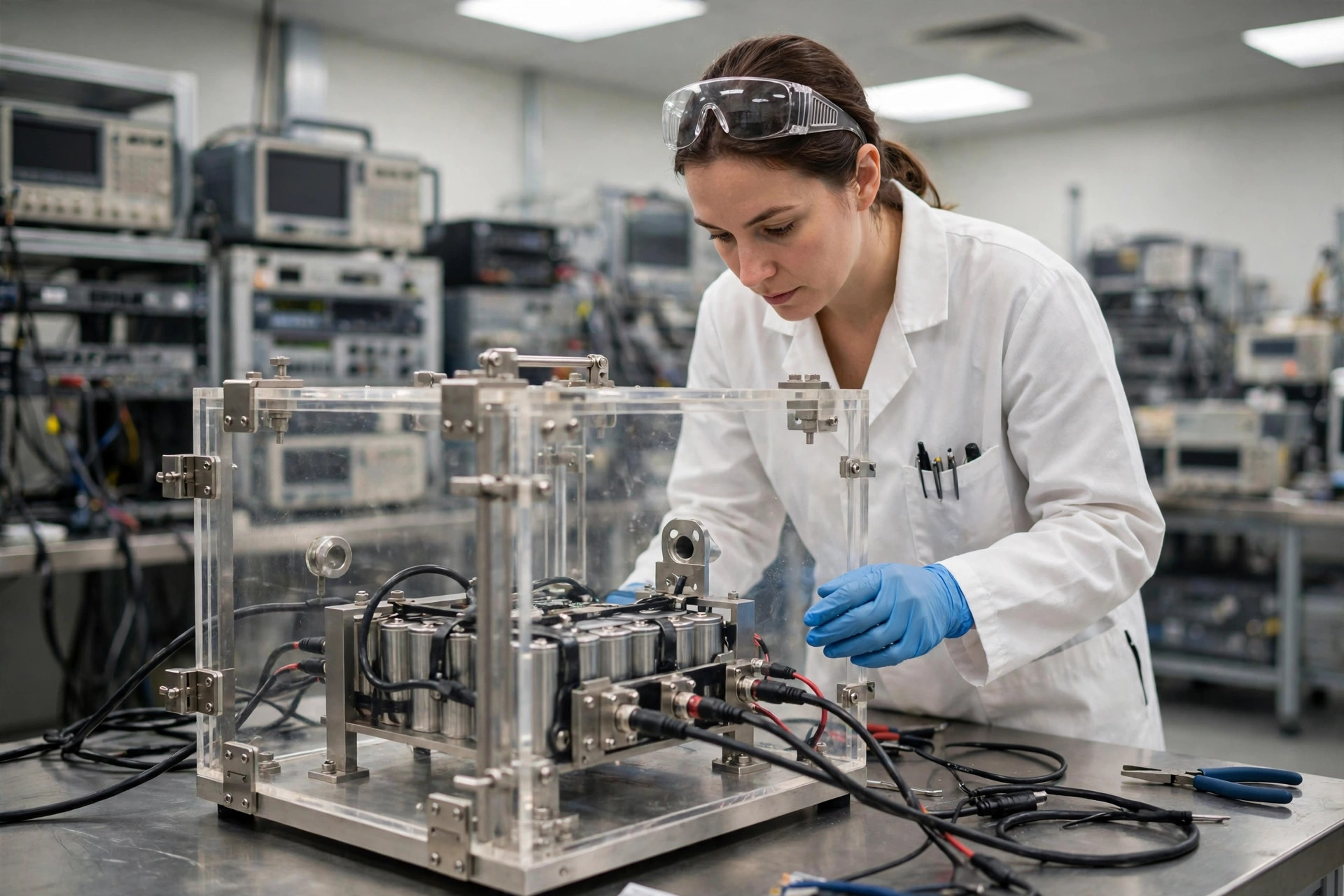
A warehouse equipment maker in Ningbo ran into exactly this in 2024. It was preparing an electric handling unit for Korea, and the kickoff meeting focused only on the certification quote. Everyone assumed one payment would open the market. Once the work began, the reality was wider: samples had to be built and shipped separately, technical documents had to be reorganized to Korean requirements, and test reports already accepted elsewhere did not automatically replace every Korean step. The first submission came back with a structural detail that needed correction, so the team revised the part, retested, and resubmitted. The sample stayed in Korea for an extra cycle while all of that happened.
When the company finally added up the project, the certificate fee was only the first row. Behind it stood sample manufacturing cost, freight, document labor, rework material and labor, and the opportunity cost of inventory that could not be sold during certification. No single row looked alarming. Together, they were a serious market-entry investment. This is not a criticism of spending the money. It is a warning about budgeting: a plan built on the certificate quote alone will overrun halfway through execution.
Breaking Down Korea KC Certification Cost: Where the Savings Actually Live
Split the cost into a table, and the levers become obvious:
| Cost item | How to calculate it | Where it usually runs out of control |
|---|---|---|
| Certification and testing fees | By model and test item; confirm against the latest official policy | Models split poorly, so one product family is charged as several models |
| Test samples | Number of samples multiplied by unit manufacturing cost | Samples prepared late, so rush production adds another charge |
| Documents and translation | By document volume and preparation hours | Conflicting document versions, forcing repeated resubmission |
| Rework | Number of rework rounds multiplied by material and labor per round | No internal pre-check before the first submission |
| Freight and storage | Round-trip freight plus storage while samples are held | Sample holding time left out of the plan |
| Held-inventory opportunity cost | Expected units unsold during certification multiplied by margin per unit | Timeline estimated at the shortest case, so the sales plan is wrong too |
I am deliberately not printing fixed fee rates or timelines here. Korea KC certification fees and timelines vary by product category and change with policy, so any hard-coded number would mislead the next reader. Confirm the current figures against the latest official policy and get written quotes and timeline ranges from the certification body before budgeting. The table's value is structural: every row has a trigger, and controlling the trigger controls the cost.
Three levers matter most. First, model consolidation: before shipping, confirm which models can share test results and which must be submitted separately. The more finely models are split, the faster the fees multiply. Second, internal pre-checks: run through the Korean requirements item by item before submission, because fixing a problem at home is far cheaper than fixing it after the sample has arrived in Korea. Third, frozen documents: lock the versions of technical files, drawings, and manuals before submitting. Submitting while still editing is the most expensive way to submit anything.
The Rework Ledger: Why a Failed First Submission Costs More Than the Test
A second case, from the first half of 2025, shows how rework compounds. A maker of sorting-assist equipment failed its first submission on a single structural component. The fix itself was small. The bill grew the way these bills always grow: a small batch of revised parts had to be produced, the unit had to be reassembled and retested, the sample had to be scheduled for resubmission, the counterpart contact changed once, and another round of documents went in. Each step was affordable. Strung together, they became a material extra cost, and the stretched timeline pushed every planned Korean delivery date backward.
Here is the counterintuitive point: the most expensive part of certification is often not the test itself. It is the waiting that rework creates. A test fee is paid once. Waiting is priced by the week: samples held, staff idle, customers waiting. Reducing the number of rework rounds matters more than negotiating a slightly lower test quote. The gap between passing first time and passing second time does not sit in the certificate row. It sits across the whole project timeline.
The comparison with CB transfer deserves the same arithmetic. Some manufacturers hold international test reports and assume CB transfer will save time. Whether it saves anything depends on two measurable facts: how much the existing reports overlap with Korean requirements, and how many items still need supplementary work after transfer. High overlap makes transfer attractive. Low overlap makes transfer more convoluted than direct submission, because the supplementary list grows until it outweighs the saving. The test is not “I heard transfer is cheaper.” It is a line-by-line comparison of test items: choose transfer only when the supplementary work is smaller than the direct-submission workload.
A Calculable Verdict: Is Korea KC Certification Worth It?
Here is a formula you can apply directly, without relying on gut feeling:
Total certification cost = certification and testing fees + sample cost + document cost + rework cost + freight and storage cost + held-inventory opportunity cost
Break-even units = total certification cost ÷ margin per unit
Fill in the six items from written quotes and internal labor records, calculate the break-even unit count, and compare it with a realistic first-year sales forecast for Korea. If forecast sales clear the break-even count, certification is worth doing. If they fall short, pause — or first consolidate models and reduce rework risk, then restart. Fees and timelines must be confirmed against the latest official policy; the formula does not go stale, but the numbers you put into it must come from written quotes, never from a guess.
One line to close on: Korea is a market worth entering, but enter it only after this table is filled in and your break-even unit count is on paper, before anyone signs.
By Lao Zhou, Logistics Cost Analyst