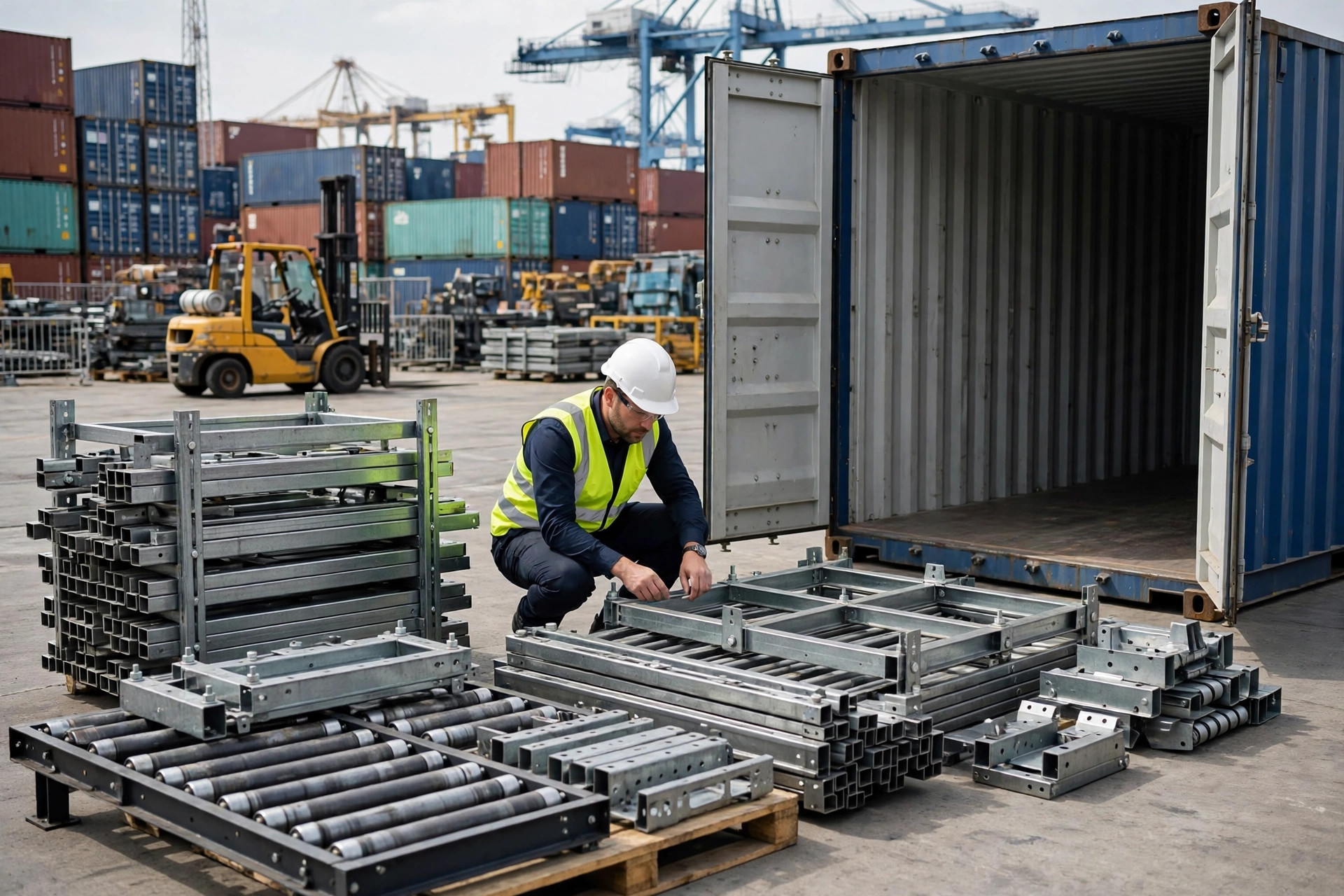
Let me be blunt: when you ship warehouse equipment to Kenya, the first gate is not the port, and it is not your customer's warehouse. It is a piece of paper you need before the container ever leaves your factory — the pre-shipment verification of conformity run by the Kenya Bureau of Standards, known as KEBS, under its PVOC program. Without that certificate of conformity, your goods can reach Mombasa and still sit there uncleared. That is the whole game, and too many exporters learn it the expensive way.
There are two sides to this. Yes, the procedure adds a step, a cost, and several weeks to your lead time. But that money and time spent up front is the cheapest money in the entire deal. Skip it, and you will pay for it at the destination port, at a multiple, with your customer's schedule as collateral damage. I have watched this play out too many times to treat it as a footnote.
Kenya is not a giant market, but demand for warehousing equipment there is real and growing — racking, conveyors, and sortation gear flowing through Mombasa into distribution centers around Nairobi and beyond. If you want a share of that market, getting the KEBS process right matters more than shaving a few points off your price.
Kenya KEBS First: No Certificate, No Shipment
The logic of PVOC is straightforward. Kenya does not want to discover non-conforming products after they land, so regulated products must be inspected before shipment and issued a certificate of conformity, or CoC. A good share of warehouse equipment falls under the regulated list, but the list changes, so check the current scope on the KEBS official website before you sign a contract. Do not rely on what worked for your last shipment, and do not rely on memory.
Count the cost honestly before you quote. You will need a full technical file, an inspection visit at your factory, and waiting time for the certificate — a few weeks at best, sometimes more than a month. For a tight delivery schedule, that is a real cost. The payoff is equally real: with the certificate in hand, port clearance follows the normal channel. Without it, your container racks up storage charges and shipping line fees while it waits, your customer's installation crew stands idle, and your reputation takes a hit that no discount can repair.
Here is the counterintuitive part: passing inspection is not the finish line. The CoC gets you through the pre-shipment gate, but Kenyan customs can still examine the shipment on arrival. If the documents, the labels, and the actual goods do not match each other, the cargo can be held anyway. Think of the certificate as an entry ticket, not a shield. The real work is getting every detail right before the goods leave your dock.
A Mistake I Watched Happen: One Wrong Letter, Three Weeks Lost
In the first half of 2024, a racking manufacturer in Guangdong won an order for a distribution center outside Nairobi. The order was not huge — a mid-five-figure sum in US dollars — but the schedule was tight. The goods were packed and ready when the inspector arrived at the factory and stopped the job cold: the shipping marks on the outer cartons did not match the packing list. One model code was off by a single letter.
It sounds trivial. It was not. Re-checking, re-labeling, re-packing, and booking a second inspection visit ate more than three weeks. The booked sailing had to be changed, which cost more money. Worse, the customer's installation team had already been scheduled, and the whole fit-out slipped. That supplier nearly lost the two follow-up phases of the project over a labeling error.
A second case, from a conveyor maker in Zhejiang in 2023, failed on paperwork rather than labels. The product test report was three years old, and the inspection body required a report against the current standard. The factory had to arrange fresh testing, which took another two weeks.
Both cases teach the same lesson: PVOC inspectors are not really judging whether your equipment is good. They are judging whether your evidence chain is complete. Documents, labels, and goods must line up exactly. Any mismatch stops the process. My advice has not changed in years: treat inspection as part of your shipping workflow, not as an afterthought bolted on at the end. Prepare the file a month ahead, send label proofs to the inspection body for confirmation before printing, and keep someone at the factory on inspection day who knows both the product and enough English to answer questions on the spot.
What Kenya KEBS Actually Checks: The Process in One Table
The PVOC flow runs in five steps, and the order matters: apply to a KEBS-recognized inspection body, pass the document review, host the on-site factory inspection, receive the certificate of conformity, and then clear customs at the destination port with that certificate. If any step stalls, nothing downstream moves. That is why document preparation belongs at the front of the schedule, not the week you book the inspection.
| Stage | What is checked | Where exporters usually fail |
|---|---|---|
| Application and document review | Product data, technical file, test reports | Expired reports, wrong standard version, missing pages |
| Factory inspection | Goods against documents, appearance, packing | Label errors, model mismatch, damaged packing |
| Sample testing | Samples tested when required | Samples that differ from the bulk shipment |
| Certification | Certificate details against goods and documents | Wrong quantity or model on the certificate |
| Port clearance | Certificate, bill of lading, and invoice in agreement | Certificate errors discovered only on arrival |
Ranked by how often I see them, the causes of failure are: incomplete or expired documents first, label and marking errors second, goods that do not match the declared model third, and packing that does not meet requirements fourth. None of these is a technology problem. Every one of them is a process discipline problem. Put differently, the Kenya KEBS gate does not test how advanced your equipment is. It tests how disciplined your shipping operation is.
On fees and timelines, I will give you one rule only: confirm the current fee schedule, inspection charges, and re-inspection costs on the KEBS official website, and treat any number quoted verbally by a forwarder or found in an old forum post as unreliable until verified there. Build the inspection cost into your quotation as its own line item, agreed before shipment, so nobody is arguing about who pays for it when the container is already booked.
Counting the Real Cost: Money Spent Early Is the Cheapest
Do not count only the inspection fee. Count the total cost of each scenario, and the gap speaks for itself:
| Scenario | Time cost | Money cost | Collateral damage |
|---|---|---|---|
| Pass first time at the factory | A few weeks of preparation, normal shipment | One inspection fee | None |
| Fix and pass at the factory | One to two extra weeks | Inspection fee plus minor rework and re-inspection | Sailing may need to change |
| Problem found only at destination | Weeks stuck at the port, at minimum | Storage, amendment, and re-inspection charges stacking up | Customer schedule slips, repeat orders at risk |
Look at it from both sides. On one side, compliance costs real money and real calendar time, and your quotation has to carry both. On the other side, compliance is itself a competitive edge. Kenyan buyers have seen too many suppliers whose cargo stalls at the port. A Chinese exporter who clears customs on time, shipment after shipment, builds a reputation fast. In the long run, the KEBS gate is not a roadblock. It is a filter, and it filters out exporters whose shipping discipline is sloppy.
So here is my closing advice, in the form of three questions to answer before you book any sailing to Kenya: Is your product on the regulated list? Is your test report current against the standard in force? Do your labels, your packing list, and your actual goods match each other word for word? If you can answer all three, the order is basically safe. If any one of them is a blank, fix that one first, then book the vessel. Never let the container sail while the certificate is still an afterthought.
By Lao Mi, Supply Chain Veteran (20 yrs)