
When I took over a 50,000-square-foot e-commerce warehouse in Fontana last year, the books said inventory accuracy was 91%. Not catastrophic on paper. But the complaint pile told a different story: the system showed stock on hand, the picker walked to the slot and found air. Meanwhile, real product sat orphaned at the end of an aisle while the system screamed "out of stock." The owner asked me: "How hard is it to get from 90 to 98?" My answer: "The eight points aren't the hard part. The hard part is having 90 days of patience, and knowing exactly what you're doing on each of them."
Inventory accuracy is the most deceptive number in a warehouse. Ninety percent sounds like a passing grade, but it means one in ten SKUs doesn't match the books. In a building shipping 3,000 orders a day, that's dozens of oversells, short-ships, and angry customer service calls — every single day. Ninety-eight percent is where the number becomes trustworthy enough to actually run replenishment logic on.
Here's the plan I used. Three phases, 90 days, each with a clear definition of "done." No magic involved — just dirty work, done in order.
Weeks 1-2: Don't Touch the Process Yet. Get a Baseline First.
The instinct is always to start fixing things on day one — add headcount, buy scanners, launch cycle counts. I learned this lesson the hard way at a 3PL in Ontario sitting at 88%: the owner rushed into cycle counting, and three months later accuracy hadn't budged, because nobody knew where the bleeding was actually coming from.
Phase one does exactly one thing: establish an honest baseline. That means a blind sample count — 200 to 300 SKUs across A, B, and C classes, physical versus system, item by item. Whatever the variance rate comes out to, that's your number. Write it down without flinching.
Two traps here. First, never let people count their own stock. A receiver auditing their own receipts is a test of human nature, and human nature fails. Cross-count, or pull one or two people off to do it full-time. Second, keep the receipts: which SKU, which slot, how much off, and a timestamp of the system snapshot. That spreadsheet becomes your medical chart for the next 90 days.
The pass criterion is simple: you hold a baseline report that says something like "current accuracy about 90% (260 SKUs sampled, about 10% variance measured)" with the ten worst-offending SKUs listed. Without this, everything after is guesswork.
The classic way to quit here: counting 50 SKUs and deciding you "get the picture." Or the owner seeing the ugly number and asking the team to "make it presentable." I'll say it plainly: a faked baseline kills the 90-day plan on day one.
Weeks 3-6: Build the Cycle Count Engine, Then Plug the Four Leaks
With a baseline in hand, build the mechanism. The core is ABC-tiered cycle counting: A-class SKUs (roughly the top 20% by pick frequency) counted weekly, B-class every two weeks, C-class monthly. Scale the cadence to your headcount — in a 30-person building, two people spending two hours a day on counting can usually cover it. If you're short-staffed, A-class every two weeks is acceptable. Any slower than that and you're kidding yourself.
But counting doesn't fix anything. It's a thermometer. What matters is where the variances come from. In every warehouse I've touched, inventory leaks through the same four holes:
Receiving. A 500-unit delivery comes in, the receiver counts 480, and the last 20 "get put away tomorrow." Tomorrow never comes. The system says 500; the shelf says 480. The fix is boring but works: receiving must be fully counted and put away the same day, with photo evidence for any tail-end shortage. If you can't finish a receipt, hold the receipt — never book it in and "fix the numbers later."
Putaway. The product lands in slot A-03-2, but the system still shows it in the receiving staging area. This one is infuriating because the product is right there in the building — it's just invisible. The fix: scan-to-confirm at the slot, and tear up the paper putaway sheet on the spot. I've seen putaway operators scan the first carton of a batch and "go from memory" on the rest. That habit has to die on day one.
Picking. Over-picks, wrong picks, picks without confirmation. E-commerce operations are the worst for this: an order needs three units, the picker grabs four, and the extra one gets shoved back onto a random shelf — into the wrong slot. The fix is a pick verification step, at minimum for high-value SKUs. The labor cost is real — one verification station can check a few hundred orders a day — but do the math: verifier wages versus returns and customer service costs from mispicks. In any building shipping over 2,000 orders a day, the verification role pays for itself.
System lag. The easiest to overlook: the WMS updates inventory on a T+1 basis, or a return gets physically received but doesn't hit the system until the next day. Half your "variances" during a count are timing differences, not real discrepancies. The fix: freeze activity in the slots being counted, or at minimum capture a system snapshot at count time and strip out timing differences during variance analysis.
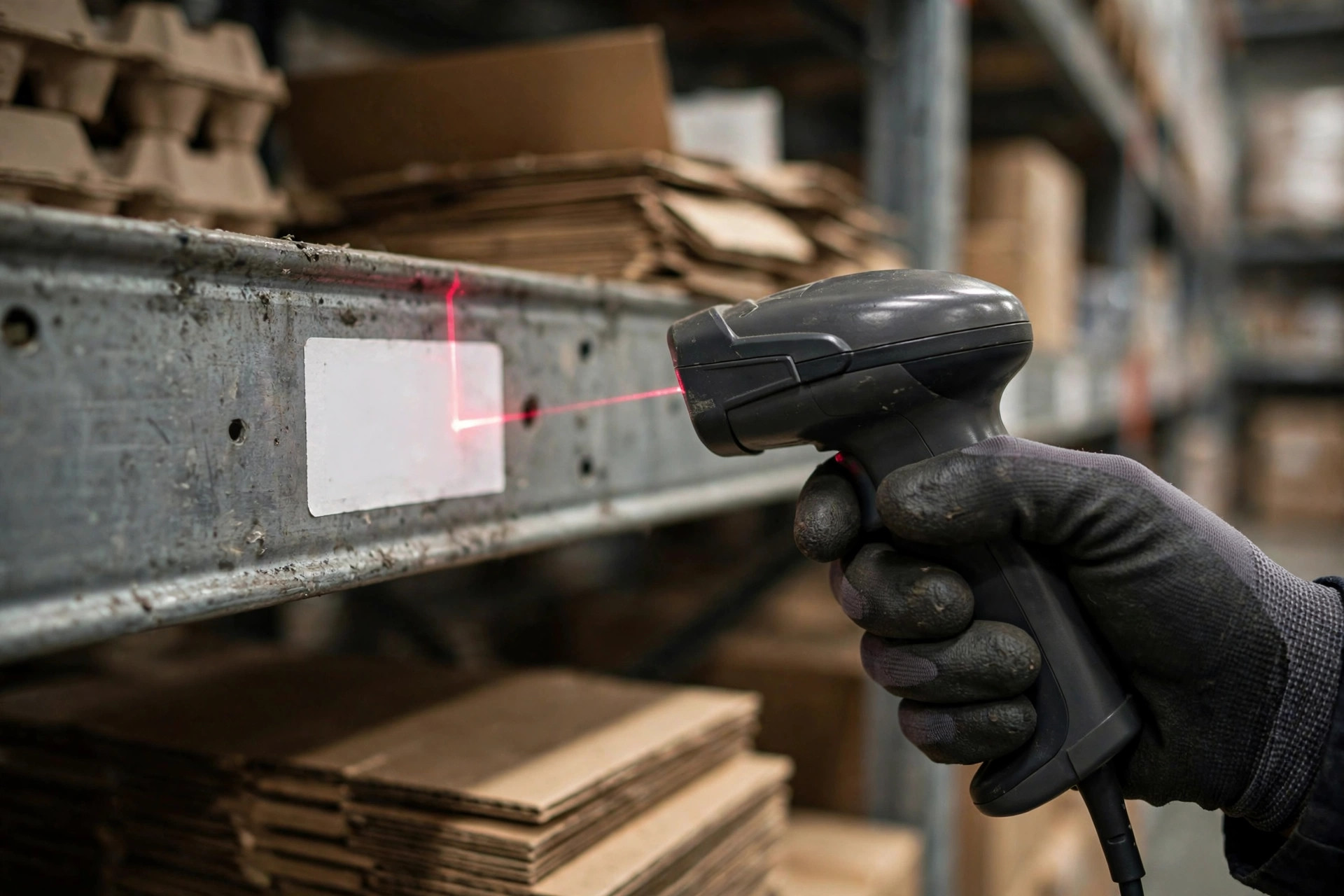
Phase two's pass criteria: the cycle count schedule runs four straight weeks without interruption. Every week produces a variance analysis showing what share came from each of the four holes. Accuracy climbs 2-3 points off the baseline. One warning: accuracy may dip before it rises, because counting more aggressively surfaces variances that were hiding. Don't panic — that's progress.
The classic quit looks like this: two weeks of counting, then peak season hits and "we'll pause counting and focus on shipping." Once counting stops for more than two weeks, you're starting from zero. Better to halve the frequency than to stop.
Weeks 7-12: Make the Building Hard to Get Wrong
The first six weeks were about finding problems. The last six are about making them hard to repeat. Three jobs.
First, fix the slotting. Plenty of warehouses still run on slot codes somebody made up at go-live five years ago, and nobody's dared touch them since. The result: lookalike SKUs stored side by side (pickers grab the wrong one), fast movers buried at the end of the aisle. Re-slot by ABC velocity — A-class into the golden pick zone, physically separate SKUs that look alike. The re-slot itself takes a weekend or two of overtime. It's a one-time investment.
Second, kill the verbal agreements. Every warehouse runs on unwritten rules: returns pile up in a corner until month-end, damaged goods get tossed with no write-off, borrowing stock for the neighboring building is "just a phone call." Verbal agreements are variance factories. Write each one down as a one-page SOP and tape it to the work area. Not a manual — one page: who, at which step, scans what.
Third, stand up a dead-simple variance board. Every Friday afternoon, 15 minutes, the ops lead looks at three numbers: this week's accuracy, the five SKUs with the worst variance, and the split across the four leak categories. No fancy BI needed — a whiteboard works. The point is the ritual. The board's job isn't punishment; it's making sure everyone knows somebody's watching.
Pass criteria at the end of week 12: two consecutive weeks of sample counts holding around 98% (97.5-98.5% is fine); the cycle count schedule runs without you pushing it — the shift lead builds it themselves; the variance board has met six weeks in a row.
Should You Shut Down for a Full Physical Count? My Take
People always ask whether the 90 days should include a wall-to-wall count to get it over with. My verdict: no — unless your WMS just went live or you inherited a disaster through an acquisition. The cost of a full shutdown — a day of lost shipments, overtime, morale damage — dwarfs the benefit. Cycle counting plus periodic sampling gets you from 90 to 98 in 90 days.
One exception: if accuracy hasn't moved at all by the end of week six, or it's going the wrong way, your baseline or your root-cause analysis is wrong. Then a half-day focused count of the problem zones is worth it to recalibrate. Don't keep marching down a broken road.
One Question to Take With You
When was your last wall-to-wall physical count, and what was the variance rate? If the answer is "last year" or "I can't remember," your 90% is probably a paper number too. The real baseline only exists once someone's actually counted it by hand.