Amazon changed its rules again this month, and every seller group I'm in is complaining about the same thing: fees up, patience down. That's exactly why more of us built independent stores — and then ran straight into the next question. When is it worth it for an independent ecommerce seller to own a warehouse? I asked myself the same thing for two years before I finally did the math, and the answer has almost nothing to do with rent.
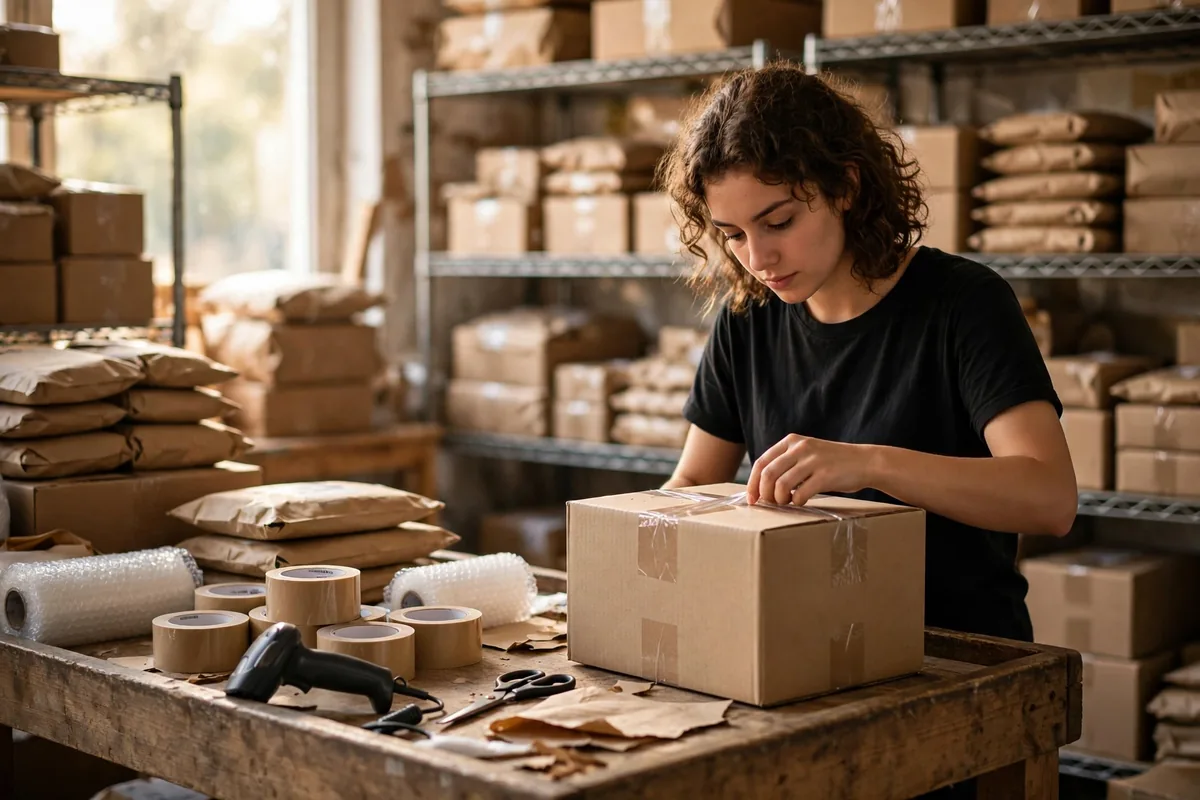
In November 2023, my own store hit Black Friday and daily orders jumped from around 40 to more than 90. My third-party warehouse raised its per-order fees and couldn't find packers fast enough in peak season. For three days, shipments went out half a day late and my support inbox filled up with "where's my order" messages. In early December I rented a 45-square-meter unit in Longgang, Shenzhen, for about $390 a month, put in two rows of shelving and one packing bench, and hired a part-time packer. At 80 orders a day, my all-in cost per order came out about $0.25 lower than the third-party warehouse — roughly $600 a month saved. That sounds small. The bigger win was the error rate: mis-shipments fell from 3% to under 0.5%, and the refund arguments mostly disappeared.
Here's the counterintuitive part: your own small warehouse doesn't save you money on rent. It saves you money on mistakes. Anyone can add up rent, shelving, and packing materials. What actually burns cash is the wrong item in the box, the missing item, the late shipment — the refund, the return shipping, the support time, and the customer who never comes back. In my own unit, I decide how the shelves are laid out, how labels get checked, and how many times an order is verified before it leaves. At 80 orders a day, I spent 40 minutes each evening checking the outbound list against the orders. That one habit caught plenty of bad shipments before they left the building.
Under 30 Orders a Day, Your Own Warehouse Is a Night Shift You Gave Yourself
When I was doing just over 20 orders a day, I was tempted too. I'm glad I didn't move. For an independent ecommerce seller, the honest numbers look like this: a 30-square-meter unit, plus utilities, packing materials, and shelving spread across the year, costs roughly $420 to $560 a month in fixed costs. At 25 orders a day, that's $0.55 to $0.75 loaded onto every order — more than the roughly $0.42 a third-party warehouse charges per order for pick and pack. And the money isn't even the worst part. Receiving stock, shelving it, packing, labeling, and booking couriers all eat your hours. You're still sticking labels on boxes at 10 p.m., and the next day your ads, your product selection, and your customer service all suffer. You end up doing two jobs badly instead of one job well.
A friend of mine who sells home decor in Yiwu learned this in May 2025. He was doing 26 orders a day and rented a 60-square-meter unit for about $310 a month. It looked cheap. Packing ate three hours of his day, every day. He stopped testing new products and stopped tuning his ads, and within two months his daily orders had dropped to 18. The rent kept coming, and when he gave the unit up he lost a month's deposit as well. His lesson wasn't that the rent was too high — it was that he overestimated his own time.
So my rule is blunt: under 30 orders a day, don't touch your own warehouse. Stay with a third-party warehouse and spend the saved hours testing products and tuning ads. Pushing my ACoS from 28% down to 21% made me far more money than any rent saving ever would.
50 Orders a Day Is the Line: Run Three Numbers First
Around 50 orders a day, running your own small warehouse starts to make sense. Before you sign anything, run three numbers.
The first is cost per order. Add up rent, utilities, packing materials, and part-time wages, then divide by monthly orders. Compare that against your third-party warehouse quote. My rule: your own cost per order needs to beat theirs by at least $0.20. Less than that, and the saving isn't worth the headache.
The second is the error bill. Pull the last three months from your backend: mis-shipment rate, missing-item rate, late-shipment complaints. A third-party warehouse running 2% to 3% mis-shipments is common; run it yourself and getting under 0.5% is very doable. At 60 orders a day with a $17 average order value, a 2-point gap in the error rate is more than $600 a month in direct losses — before you count the bad reviews.
The third is the time bill, and it's the one everyone forgets. Your own warehouse eats at least two to three hours a day. Could those hours earn back the rent if you spent them on product pages, ads, or suppliers instead? If not, don't build it. My own approach: between 50 and 80 orders a day, hire a packer by the hour and keep the small unit. Only when daily orders hold above 100 do you talk about full-time help and a bigger space.
| Daily orders | Recommendation | Why |
|---|---|---|
| Under 30 | Keep using a third-party warehouse | Fixed costs per order beat the third-party price, and packing eats your whole day |
| 30–50 | Hold off, watch the error rate | The saving is too thin; the real question is whether your warehouse is reliable |
| 50–100 | Build a small unit, hire a part-time packer | Your cost per order starts beating third-party, and the error savings are real money |
| Over 100 | Build it, staff it properly | Third-party fees and error losses are both high; your own warehouse is a must |
Three Signs Your Own Small Warehouse Is Worth It
Mis-shipments above 2%. Mis-shipment and missing-item complaints from your third-party warehouse run above 2% of orders for two months in a row, and your support team spends half its time cleaning up after them.
Best sellers always out of stock. Your best sellers keep dropping to three to five days of stock, and the warehouse's replenishment process is two steps slower than you are.
Daily orders holding above 50. Your daily orders have held above 50 for 60 straight days — not a spike from one promotion, but a real baseline.
If two of the three are true, go ahead. If only one is true, wait.
Two warnings before you sign a lease. Don't rent big on day one. Forty-five square meters is plenty to start; build shelving upward instead of spreading outward. And cap your stock cover at 30 to 45 days. Anything past 60 days of stock ties up your cash. In June 2024 I overstocked a seasonal line by 20 days; once summer passed, more than 400 units had to be cleared at a discount and I lost over $1,200. This one I tested myself, and it works: better to stock out for three days than to let inventory fall asleep on your shelves.
Running your own small warehouse isn't a badge of honor. It's a decision the order volume forces on you. For any independent ecommerce seller weighing this decision, the sequence is the same: build too early and you've given yourself a night shift. Wait too long and the third-party warehouse's errors and slow shipping will quietly eat your margin. Do the math on your order volume, and don't decide on gut feeling.
By Ah K, E-commerce Seller (5 yrs)