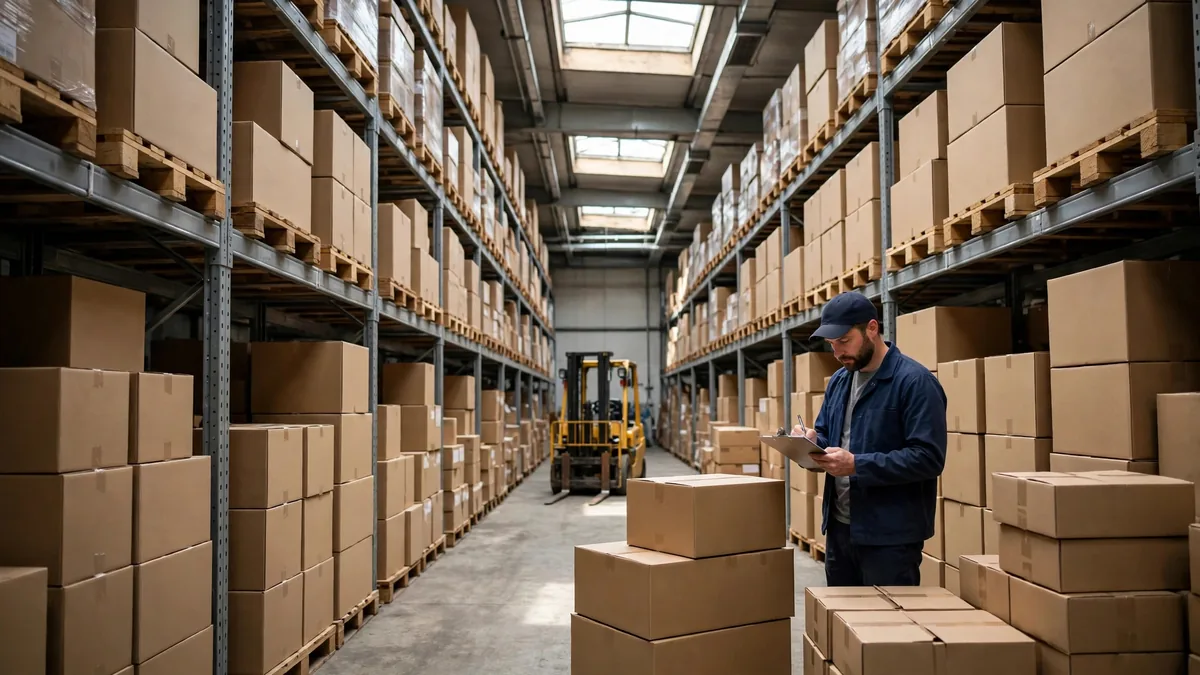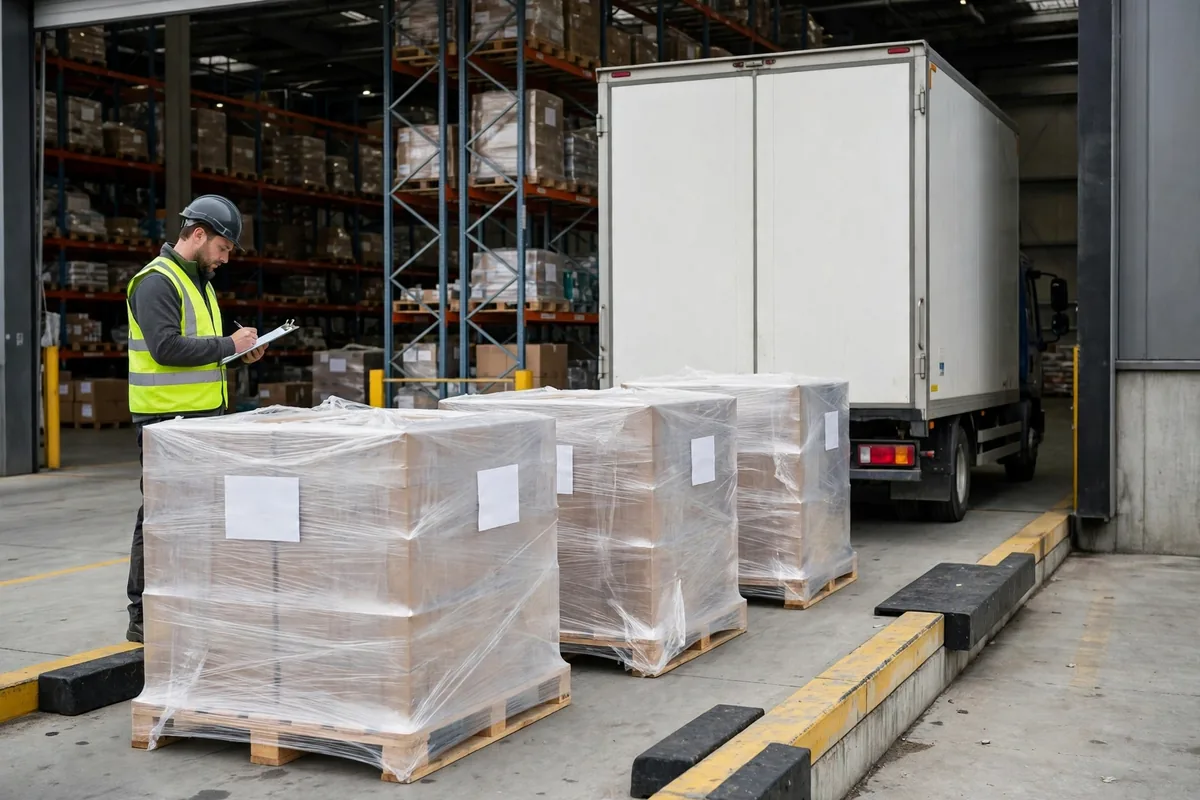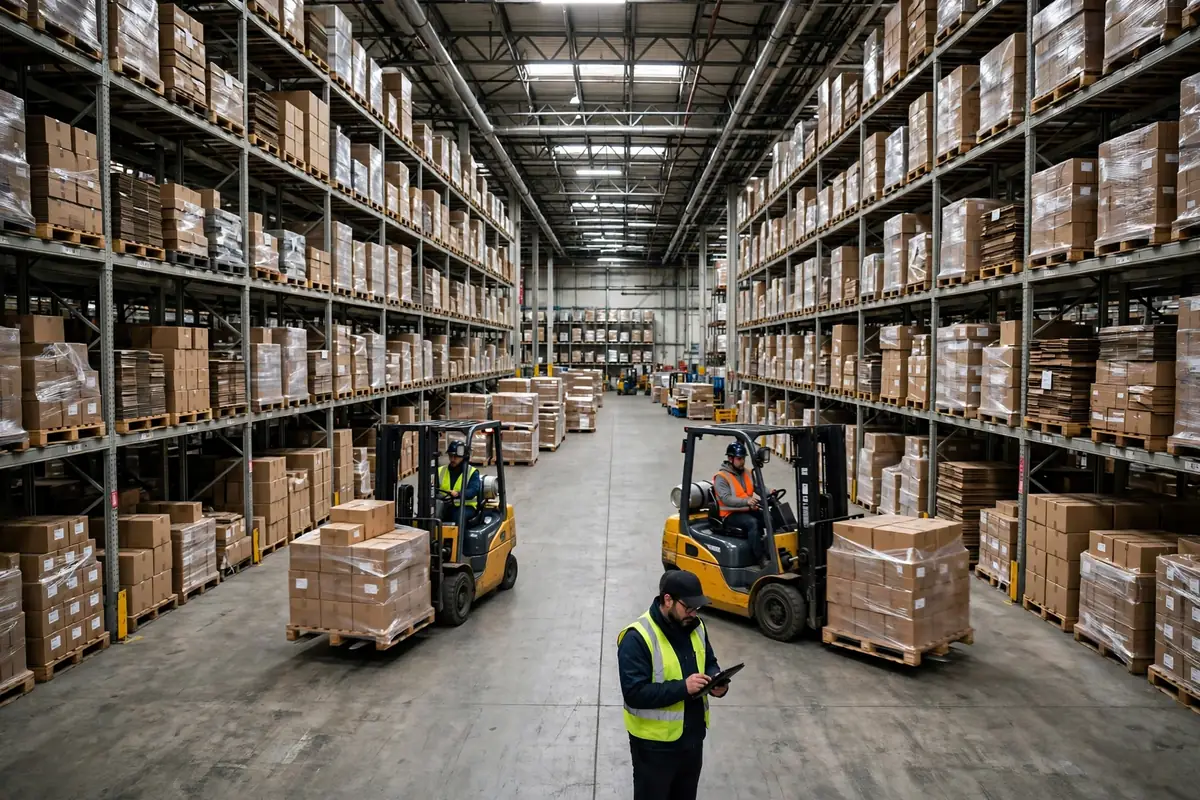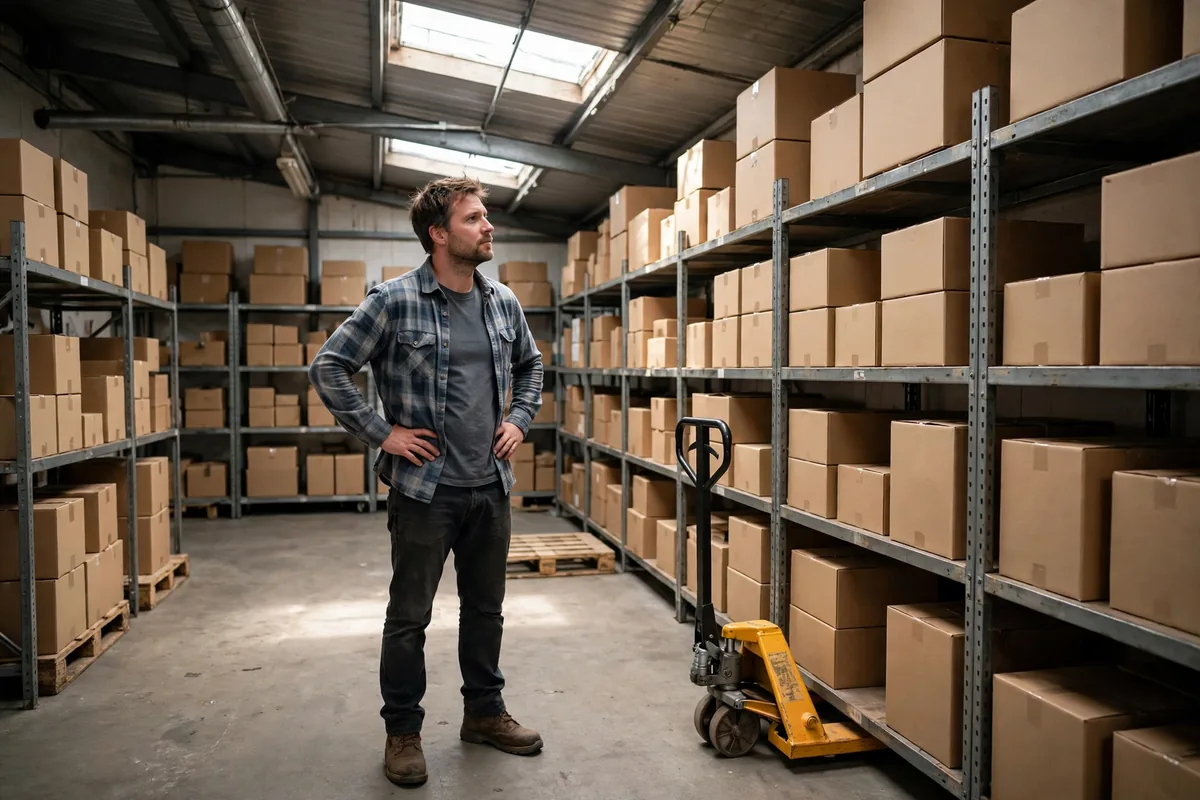
Last fall, a friend came to me with the build own warehouse vs 3PL order volume question I now hear at least twenty times a year: he ships about 900 orders a month, his 3PL invoice keeps hurting more every month, and he wants to know if it is time to rent his own warehouse. Search for build own warehouse vs 3pl order volume and you will get plenty of opinions. Here is mine, from someone running a small 3,000-square-meter warehouse: do not ask anyone else first. Run your own numbers. Below the break-even line, running your own warehouse is not independence. It is a very expensive hobby, and the more orders you ship, the more it costs you.
Build Own Warehouse vs 3PL Order Volume: What the Costs Actually Look Like
Most people compare one number: what the 3PL charges per order. That is the wrong comparison. The real cost of your own warehouse is not per order at all. It is the fixed cost that shows up every month whether you ship zero orders or ten thousand.
Rent is the first mountain. According to Cushman & Wakefield's Q2 2025 industrial market data, the average asking rent for US warehouse space is about $9.12 per square foot per year, and small warehouses under 100,000 square feet run higher, around $9.51. That is before triple-net charges of roughly $1.50 to $3.00 per square foot per year. Do the math on a 30,000-square-foot building and you are looking at roughly $350,000 a year in rent and pass-through charges alone (illustrative example). And we have not hired anyone yet. US Bureau of Labor Statistics data for 2025 puts average hourly earnings in warehousing and storage at about $25.58, with a median of $19.35 an hour for hand laborers and material movers. Four people across two shifts easily costs more than $20,000 a month (illustrative example). Racking, a forklift, insurance, and the monthly WMS fee are all fixed too. They do not care how many orders you shipped.
A 3PL flips the structure upside down: almost no fixed cost, but every order carries a variable price. Industry pricing surveys for 2025 put pick and pack for a single-item B2C order at roughly $2.73 to $3.25, with pallet storage at $20 to $40 a month. But there is one line on the invoice most people never read: the monthly minimum. Surveys show the average 3PL monthly minimum reached $517 in 2025. In a slow month, that line is pure loss, and the fewer orders you ship, the more it costs you per order.
My friend's numbers tell the story. In March 2025 he shipped 900 orders and paid a $4,300 invoice, close to $4.80 per order. He had his eye on a 15,000-square-foot warehouse east of Los Angeles where the rent looked cheap. We spent an afternoon on it: rent plus triple-net, four workers, utilities, insurance, and the WMS subscription added up to about $16,000 a month in fixed cost (illustrative example). Nine hundred orders could not carry that. He would have needed triple the volume just to break even. He renewed with his 3PL the same week.
Where the Break-Even Line Really Sits: The Order Volume That Pays for Your Own Warehouse
The formula is one line: your monthly fixed cost, divided by the difference between the 3PL's per-order cost and your own per-order variable cost, equals the break-even order volume. When people ask about build own warehouse vs 3pl order volume, they usually want a single magic number. There is not one, but there is a number for your business, and the formula finds it. Plug in our small warehouse's numbers. Every figure below is an illustrative example, so swap in your own:
| Cost item | Own warehouse | 3PL | | Monthly fixed cost | $18,000 (illustrative example) | $517 monthly minimum | | Variable cost per order | $1.80 (illustrative example) | $4.50 (illustrative example) | | Total at 3,000 orders/month | $23,400 (illustrative example) | $14,017 (illustrative example) | | Total at 6,500 orders/month | $29,700 (illustrative example) | $29,767 (illustrative example) | | Total at 10,000 orders/month | $36,000 (illustrative example) | $45,517 (illustrative example) |
The break-even point lands near 6,500 orders a month (illustrative example). Below it, the 3PL is cheaper. Above it, your own warehouse starts saving money. But that number rests on three conditions, and if any one of them fails, the math falls apart: volume has to be steady, the order mix has to be steady, and you have to be able to manage people.
Steady is the word that matters most. A business doing 10,000 orders in peak season and 2,000 in the slow season cannot use a break-even line at all, because the fixed cost of the slow months eats everything the peak months saved. Here is the counterintuitive part: bigger volume does not mean you should build your own warehouse. Steadier volume does. A seller doing a rock-steady 5,000 orders every month is a better candidate for their own warehouse than a seller who spikes to 12,000 orders in November and drops to 1,500 in February.
I nearly learned this the expensive way. At the end of 2023, our warehouse ran four straight months at about 5,500 orders, and I was one signature away from a five-year lease. A week before signing, I went back through the previous year's records: three months had dropped below 400 orders, all slow-season gaps between platform promotions. A five-year lease would have meant paying $18,000 a month in fixed cost through every one of those dead months (illustrative example). I renewed for one year instead and watched for another six months. The cheap trick is also the right one: when you are unsure, shorter leases beat cheaper leases, because freedom is worth more than a discount.
Build Own Warehouse vs 3PL: Three Traps I Walked Into So You Do Not Have To
The first trap is comparing pick fees instead of total cost per order. A 3PL invoice is a pile of small line items: returns processing at $3 to $10 apiece, long-term storage surcharges at 1.5 to 3 times the standard rate, plus labeling, reboxing, and photo services. Comparing only the $3 pick fee is like comparing airfares while ignoring baggage fees. The honest way to compare is to take three months of real orders and reprice them line by line against both quotes. Total cost per order is the only number that matters.
The second trap is the lease term and the exit clause. Small operators get seduced by the long lease: five years at 15% less per square foot sounds great. But will your business still be in this city, selling this product category, in five years? Nobody knows. My rule is simple: the first lease should be one to two years, even at a higher rate, with a 90-day early termination clause. Once volume has held above the break-even line for six straight months, then go negotiate the long lease.
The third trap is thinking your own warehouse means freedom. It means being on call twenty-four hours a day. The system goes down at midnight, someone calls in sick, the forklift dies in peak season, and all of it is your problem. With a 3PL, somebody else is awake at 2 a.m. when the building overflows. I know a seller who ran his own warehouse for eight months and moved back to a 3PL. His honest summary: I did not lose on cost. I lost on having to open the door at 6 a.m. every single morning.
So here is my simple advice. Under 3,000 orders a month, do not even think about your own warehouse. Stay with a 3PL and spend your energy on selling. Between 3,000 and 6,500, try the hybrid route: rent a small space for your best sellers and leave the long tail with the 3PL. Above 6,500 orders a month, held steady for six months in a row, sit down and run the numbers properly. Small warehouses have their own way of surviving. Get the math right first, and it is never too late to move.
By Xiao Ma, Small Warehouse Owner