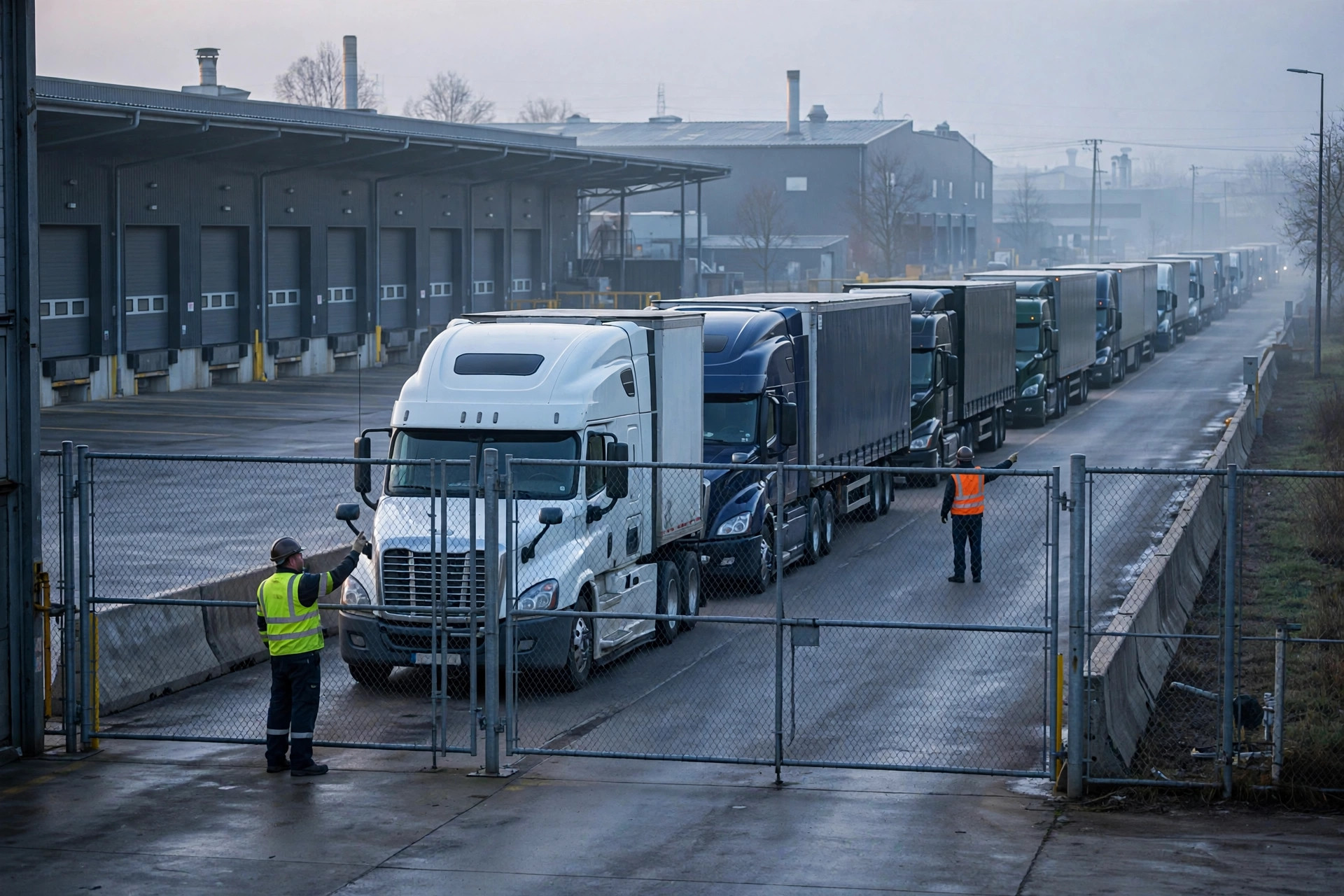
Let me give you the verdict first: trucks lined up at your gate have nothing to do with luck. It's your inbound appointment schedule — the number-one cause of dock congestion I've seen in twenty years. Book every truck for "morning" and no crew on earth can unload them all.
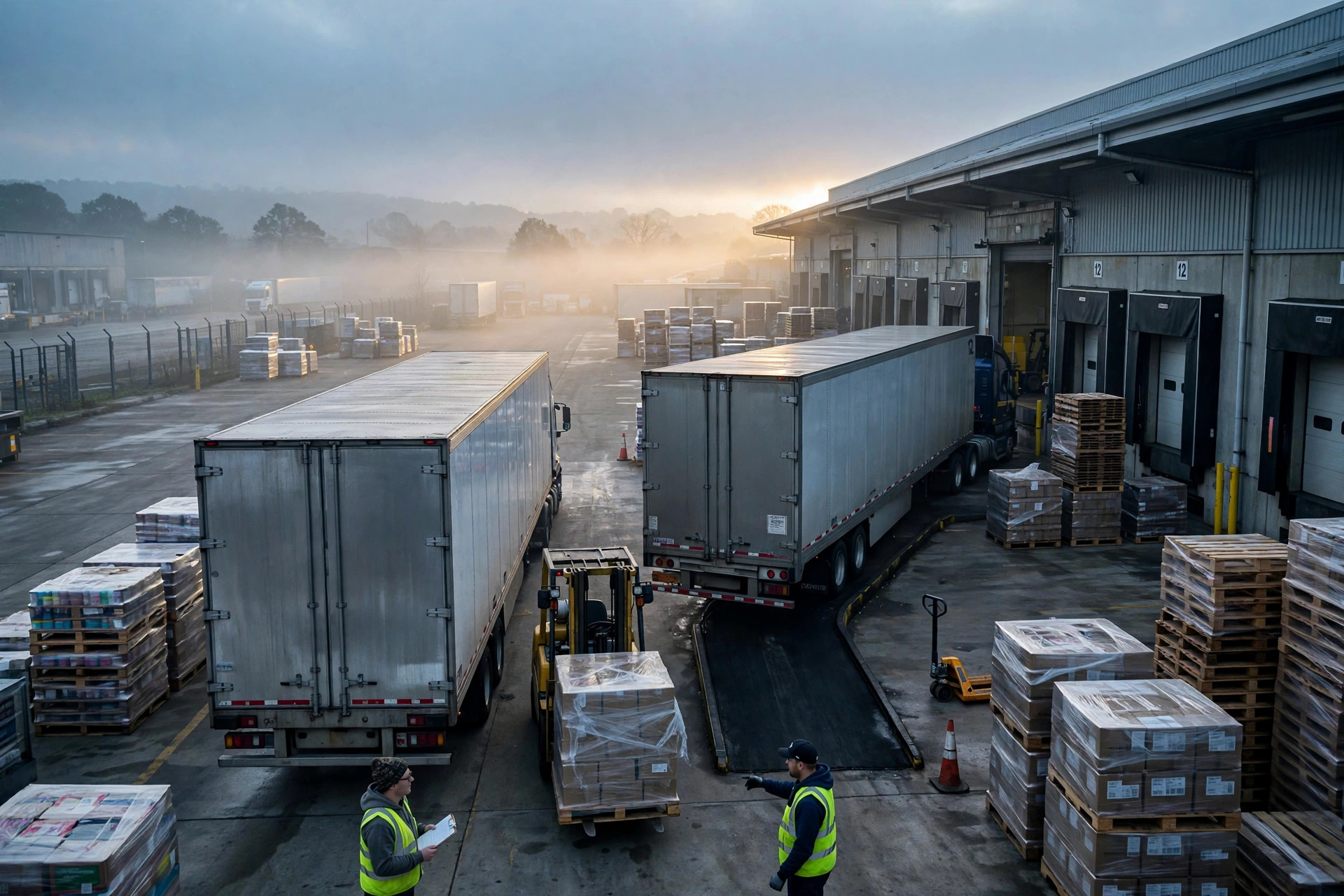
I've watched too many warehouses pay tuition on this one. The week before Thanksgiving in 2019, I was helping a food distributor outside Los Angeles with peak-season coverage. Six dock doors, thirteen trucks booked between 9 and 11 AM — every one of them a "morning arrival." One truck takes about ninety minutes to unload and check in, so do the math: truck number eight wasn't moving before noon. Drivers sat at the gate for close to three hours, the dispatch phones rang off the hook, and two drivers simply left — their freight came back the next day. That load was staged for a supermarket promotion. It nearly went out of stock.
Here's the thing, and there are two sides to it. One side: every truck piles into the morning. The other: after 2 PM the docks sit so empty you could play badminton on them. It was never a shortage of doors. It was the schedule.
I've seen the sequel, too. In 2021 I visited an apparel 3PL in the Inland Empire where twenty trucks showed up at 8 AM sharp every peak-season morning — a scene wilder than a holiday travel rush. The receiving supervisor told me, "We've got enough doors and enough people. I just don't know why every morning feels like a battle." I asked him to pull the appointment log. Eighty percent of the bookings just said "morning." The afternoon slots sat half empty. That wasn't a battle. That was a hole they'd dug themselves.
Splitting Appointment Windows: Chop the Morning Into Slots
Most warehouses offer two booking choices: "morning" and "afternoon." That's not scheduling; that's a suggestion. Cut the day into 45-minute windows — 8 AM to 4 PM gives you ten-plus slots. One or two trucks per window, and keep a buffer window between them to absorb late arrivals and receiving holdups.
Window length follows the freight, not a whim. Full pallet loads with clean packaging: 45 minutes is plenty. Mixed LTL that needs carton-by-carton verification: give it 90. Size the window from your own historical unload times, not from a guess. Start generous, run it for two weeks, then tighten based on the data — a schedule is tuned, not designed.
Tiered Priorities: Queue-Jumping Needs Published Rules
Split windows alone won't save you. There's always freight that can't wait: a line-down component, promotional stock for a key account. My system runs three tiers. Tier A (line-down or stockout risk) can slide into the next buffer window. Tier B (normal replenishment) keeps its appointment. Tier C (returns, samples, anything non-urgent) books the quiet afternoon slots only.
The rules have to be written down and sent to every carrier ahead of time. The problem with queue-jumping is never the delay — it's "why does he go first." Publish the rules and half the arguments vanish. Any customer invoking Tier A more than three times a month gets a separate conversation: either pay for dedicated service or stop crying wolf.
No-Show Penalties for Inbound Appointments: Ghosting Has a Price
Staggered appointment scheduling dies on two things: no-shows (wasted windows) and off-window arrivals (two hours early, blocking the gate). My low-tech fix has three parts:
- Two no-shows, and you lose priority booking rights next month — you take whatever windows are left;
- Arrive within fifteen minutes of your slot, and you unload first. That's the carrot for punctual drivers;
- The first no-show gets a warning only. Drivers are human; traffic happens. One free pass.

Rolling It Out Without a Revolt: One Change Per Week
Don't flip the whole system on a Monday morning. Week one: publish the split windows and let carriers book into them — no penalties yet. Week two: turn on the tier rules, A/B/C in writing. Week three: activate the fifteen-minute early-arrival perk so drivers feel the upside. Week four: no-show penalties go live. Each week gives the loudest complainers time to discover the new system actually works for them. Every warehouse I've seen fail at this made the same mistake: changing everything at once, then spending the next month firefighting the backlash instead of tuning the schedule.
Do the Math: Dock Congestion vs. Staggered Appointments
Using the ranges I see across many warehouses — and to be clear, these are the industry's usual magnitudes, not a precise survey:
| Metric | Everything booked AM | Staggered windows |
|---|---|---|
| Average driver wait | Two to three hours | Under half an hour |
| Dock idle time | Afternoons mostly empty | Fairly balanced all day |
| Peak-season overtime | Frequent | Noticeably less |
| Driver complaints / dropped loads | Happens | Rare |
A truck idling at your gate for two or three hours means that driver won't take your loads next time — or will charge more for the trouble. That hidden cost dwarfs the overtime line. Never mind the dropped peak-season load, and who eats the stockout.
The Other Side of the Trade: Staggering Dock Schedules Annoys Drivers
Let's be honest: the biggest cost of staggered inbound appointments isn't the system change. It's offending veteran drivers who like to roll in at dawn, unload, and go. Three ways to handle it. First, announce two weeks out with a transition period — no ambushes. Second, let drivers pick their own windows instead of assigning them; nobody argues with their own choice. Third, carrots before sticks in month one: early arrivals unload first, so everyone tastes the benefit.
Some carriers will tell you their dispatch "can't do windows" — usually the smaller fleets running on phone calls and habit. For them I use standing weekly windows: the Tuesday/Thursday 10 AM slot is yours every week, no per-load booking needed. Less flexible, but still better than a queue at the gate.
The trade-off, stated plainly: "chaotic mornings, dead afternoons, angry drivers" versus "steady all day, occasional grumbling." I'll take the second one. Ruffling a few old-timers' habits in exchange for a receiving rhythm that doesn't collapse — that's a good trade.
One piece of advice to close: nine times out of ten, dock congestion is a planning problem. Split the appointment windows first, then talk about adding people or doors. Get the order backwards and the money is wasted.
By Lao Mi, Supply Chain Veteran (20 yrs)