Let me tell you something about in-transit inventory: after all these years driving a truck, the thing that gets me isn't the traffic on the road. It's the mess in the books while the freight is still out on the water.
A couple of falls ago, I picked up a container at the Port of Long Beach. The vessel was supposed to dock on a Tuesday. Instead it sat at anchor for over a week — port congestion, no berth available. The shipper was sweating: this container was for a key customer, the orders were already lined up, and his system showed the stock as 'in transit.' But where was the freight, exactly? When would it actually arrive? Nobody could say. By the time I got the box out, it was more than ten days late. To hit his delivery date, the shipper air-freighted a small emergency batch from overseas. When I heard what that cost him, it hurt to listen.
Here's what that tells you: it sounds like an accounting term, but it's a real operational problem. The freight has left the factory and is on the ship, but it hasn't come through your warehouse door yet. During that window, the goods are in nobody's hands — yet they still tie up your cash and your planning.
In-Transit Inventory on the Books: When Does the Clock Start
The moment title transfers decides when the freight shows up on your books. The most common term is FOB: once the goods are loaded and cross the ship's rail, risk and title pass to the buyer. From that moment, in-transit inventory belongs on your books — 'goods in transit' for finance, 'in-transit' quantity for operations.
But plenty of small companies never book it at all. Operations watches 'what's in the warehouse,' finance watches 'when the invoice gets paid,' and the two ledgers never talk. The freight floats on the ocean for a month; operations thinks there's no stock, finance thinks the money hasn't gone out yet. The result: you find out you're short only when the stockout hits, or the money's already paid and the freight is nowhere in sight.
Here's the plain truth: whatever system you use — ERP or a spreadsheet — the day the freight loads, it goes on an in-transit log. You don't need many fields: container number, vessel name, departure date, estimated arrival, carton count. The day it arrives, the log converts to physical inventory. In and out, matched up — books stay clean.
Can Your Warehouse Actually See What's In Transit
Seeing it depends on somebody watching a handful of milestones. After all these years on the road, I've boiled a container's journey down to five: departure, arrival at berth, release and pickup, drayage, warehouse receiving. Break any one link and everything behind it falls apart.
The link that breaks most often is pickup. The vessel arrives, the box comes off — then customs holds it, the terminal is congested, or the drayage carrier can't get an appointment, and the container sits in the port for days. The shipper's system still says 'at port,' but 'at port' and 'releasable' are two different things. During that window, the freight is visible but untouchable.
The other trap is rolled cargo. The vessel is overbooked, your box gets bumped to the next sailing, departure slides a week — and the shipper is usually the last to know. A freight-forwarder friend of mine tells me that in peak season he gets several rolled-cargo calls a week, and every one of them forces the shipper to redo the production plan.
So my advice: don't just watch the vessel schedule — watch until the box clears the port gate. The carrier's tracking page, the forwarder's arrival notice, the drayage carrier's pickup confirmation — when all three line up, the freight is truly 'on its way.'

Should In-Transit Inventory Count Toward Safety Stock
This is a math problem. Safety stock exists to cover demand fluctuation during the replenishment cycle — and in-transit inventory is, by definition, stock already moving through that cycle. The longer the transit time, the more safety stock you need on hand.
A concrete example: you sell about 3,000 units a month, ocean transit runs roughly six weeks, so there's routinely four to five thousand units floating on the water. If those units are on your books and you can track them, you can run safety stock leaner — because you can see the resupply coming before a stockout hits. If the in-transit freight is invisible and unaccounted for, safety stock has to run thicker, using real inventory dollars to hedge against 'can't see it' risk.
Here's the counterintuitive part, and I've said this to plenty of shippers: the biggest trap with goods in transit isn't that you can't see it — it's that you see it and nobody owns it. The 'in-transit' quantity sits in the system every day, but nobody watches the vessel schedule, nobody confirms arrival times with the forwarder, nobody books the warehouse receiving slot in advance. The freight arrives at the port, the warehouse says no appointment, the carrier says no order — you saw it, which is the same as not seeing it.
Three Rules for Shippers, Three for Warehouses
For shippers:
First, book it from the day it loads — don't wait for arrival. The log doesn't need many fields: container number, vessel, departure, ETA. What matters is that somebody looks at it every day.
Second, put a red line on your in-transit freight. If there's no arrival notice from the forwarder three days before ETA, that triggers a warning. If it's more than a week late, start the backup plan — air-freight a small batch, talk to the customer about a delay — don't wait for the stockout.
Third, have a plan for rolled cargo and inspections. Confirm space with your forwarder ahead of peak season, and keep at least a week of buffer on critical orders. Don't schedule as tight as the vessel schedule — the vessel schedule is the carrier's plan, not yours.
For warehouses:
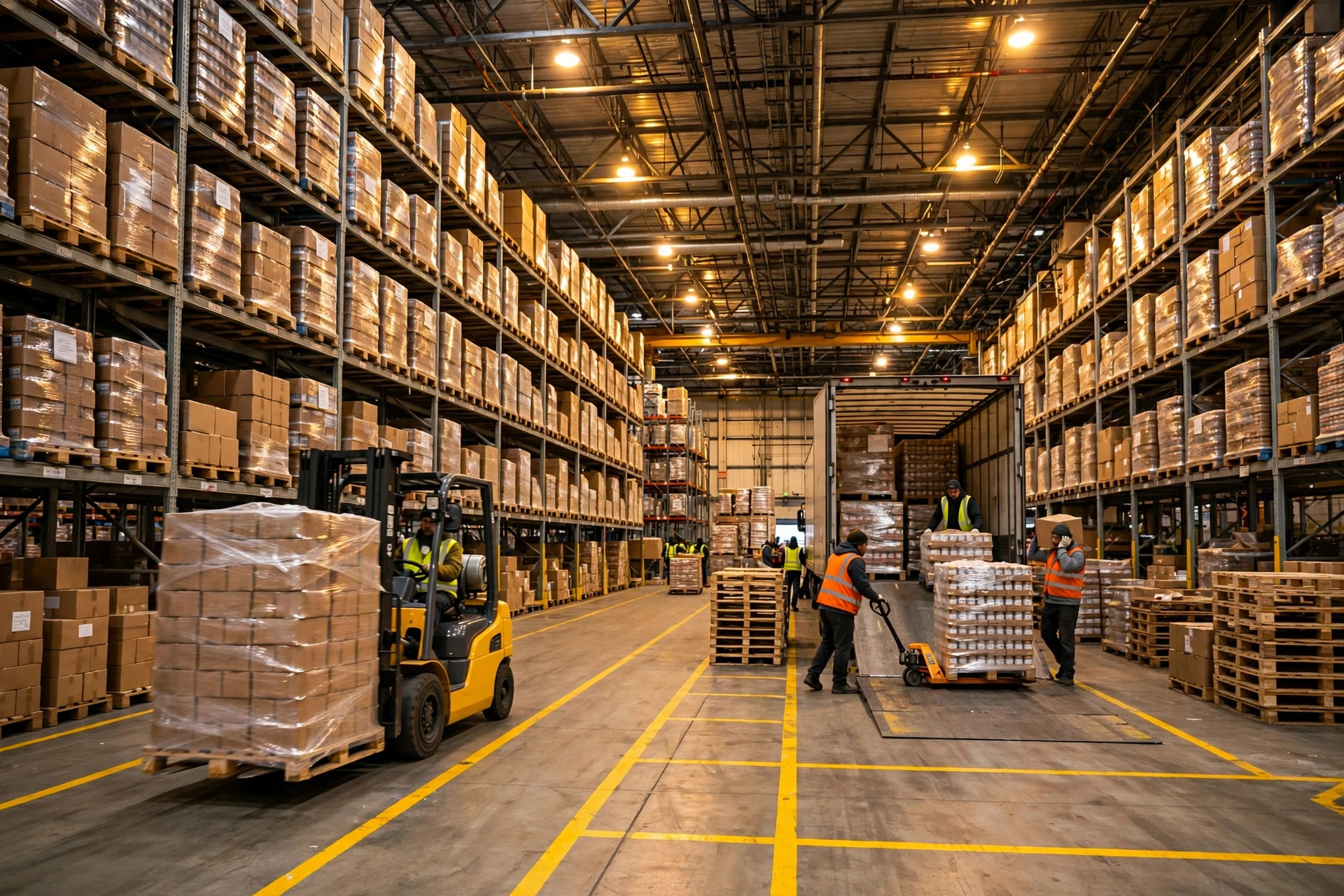
First, book receiving appointments early. Once in-transit freight passes the pickup milestone, get the drayage carrier to book your receiving slot right away. Many warehouses need two to three days' notice for a slot — by the time the box is at your gate, even a miracle can't squeeze it in.
Second, assign somebody to watch for arrival exceptions. One person — even part-time — checking the in-transit log daily: which box is late, which got rolled, which is in inspection. They don't need to be an expert; they just need to be the lookout.
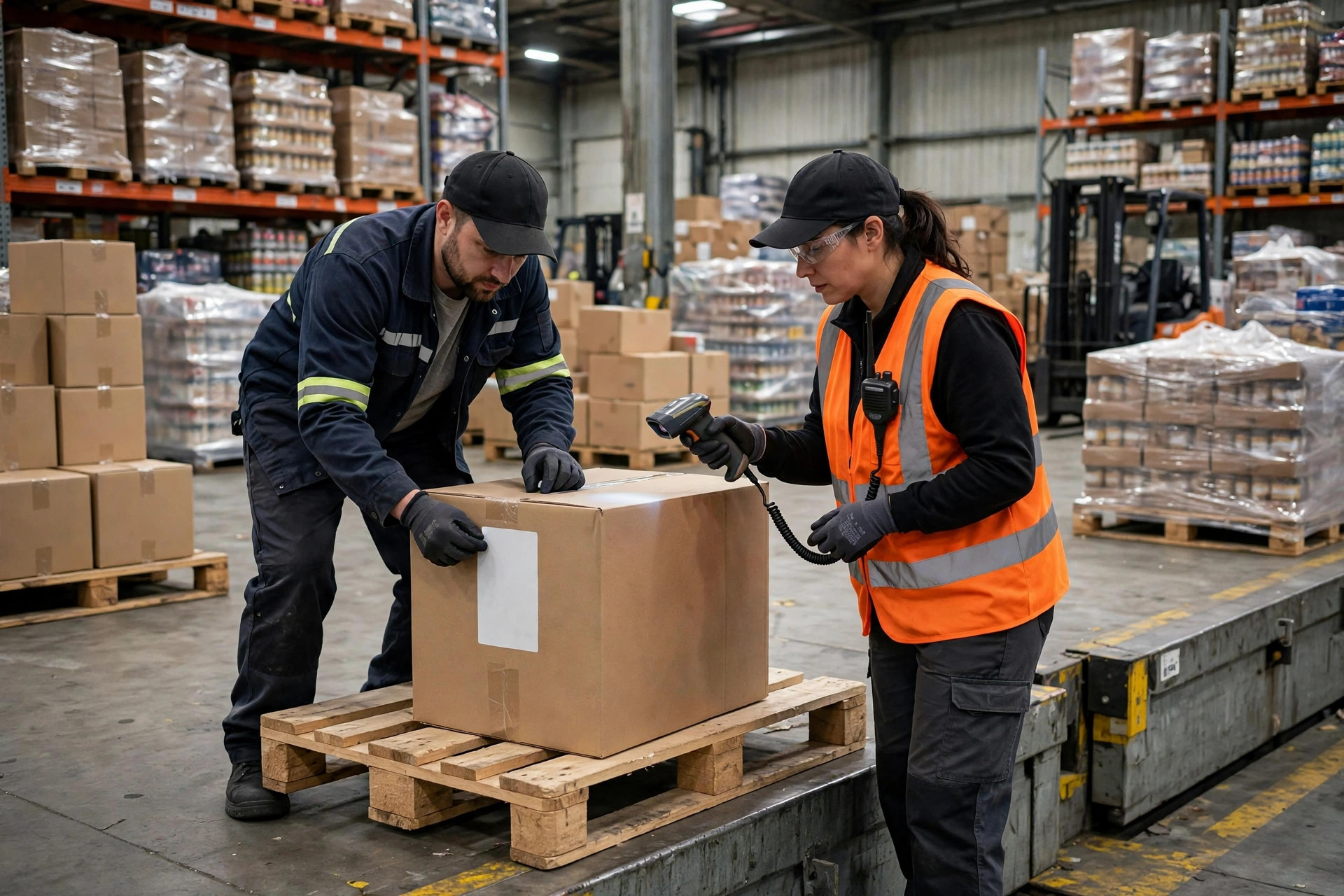
Third, keep the books matched to reality. The day the container is unloaded, clear it off the in-transit log and convert it to physical inventory. Don't let it sit — let it sit a week and the log becomes a mess nobody can untangle.
There's an old saying: don't fear slow, fear standing still. In-transit freight doesn't scare me when it floats a few extra days on the ocean — it scares me when it floats and nobody's watching. Book it clean, watch the milestones, keep a backup plan ready. Then in-transit freight stops being a mess in the books and becomes the most reliable card in your hand.
By Shifu Zhao, Trucking Veteran (15 yrs)