Let me save you some time: if your opening question is "how much does an ASRS system cost per pallet position," you're asking the wrong question — at least for stacker cranes. It's like asking the price per square foot of a building without saying whether you want a warehouse shell or a finished office. The number you get back will be technically correct and completely useless.
I spent years on the integrator side answering RFQs that opened with "we need 5,000 pallet positions, give us a price." My standard reply: tell me what you store, your daily pallet moves, and your clear height — without those, any quote is fiction. So here's the cost teardown for stacker cranes, 4-way shuttles, and pallet shuttles: where the money goes, and how to compute payback honestly.
Where the ASRS Cost Actually Goes: Three Different Machines, Three Different Bills
The cost structure grows straight out of the mechanics, so here's each system in one sentence.
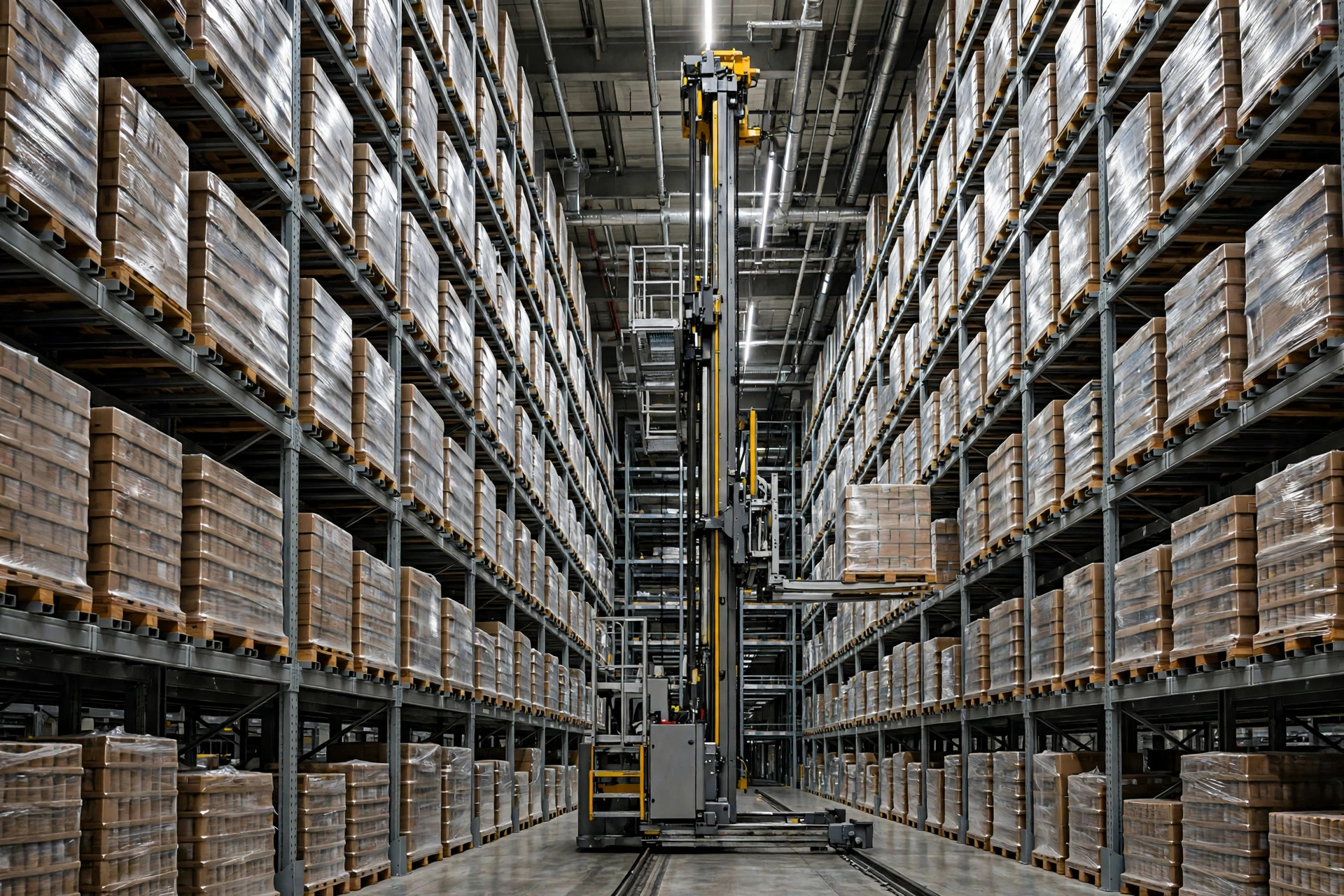
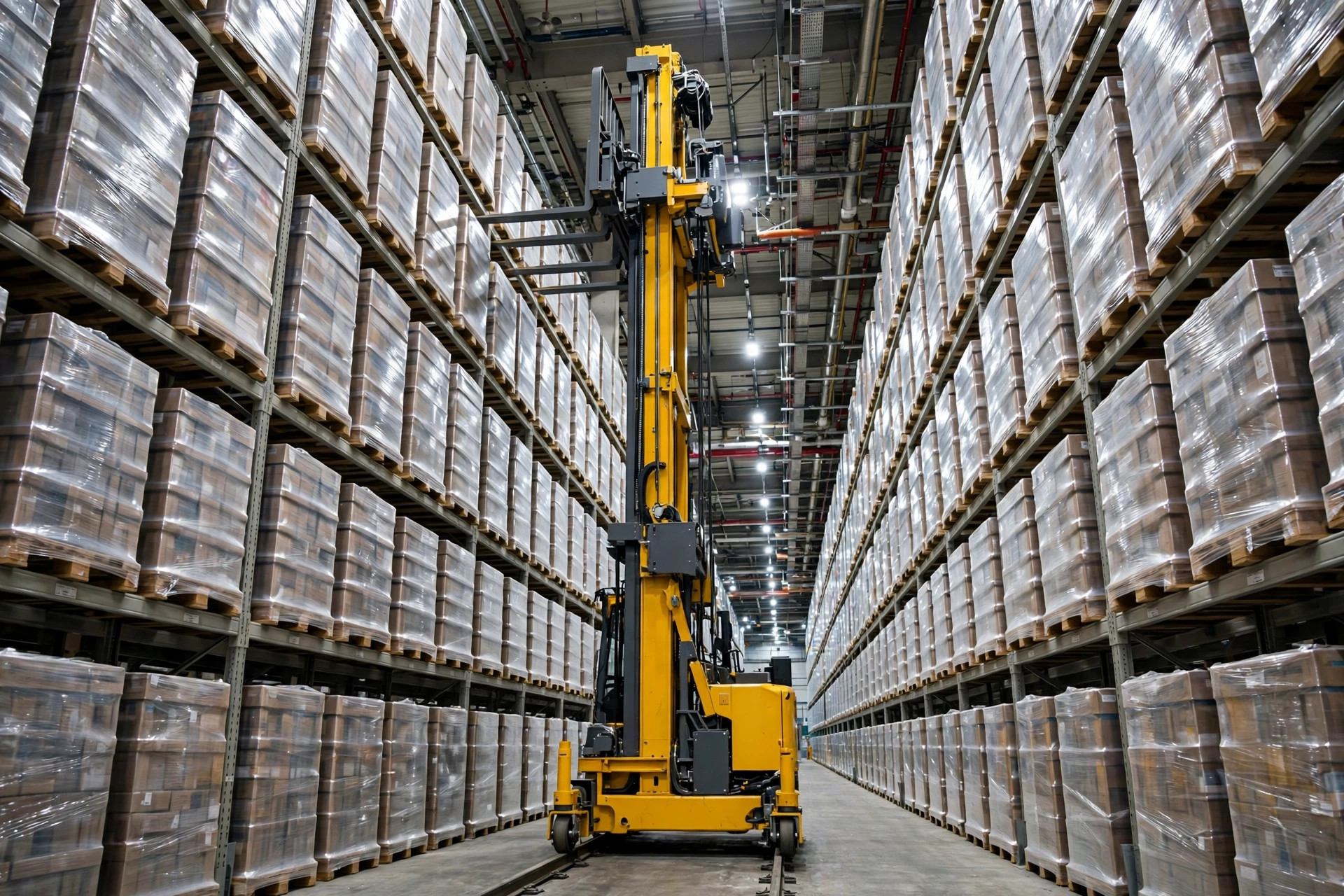
A stacker-crane AS/RS is "one crane per aisle": a tall machine runs up and down a fixed aisle, handling every putaway and retrieval in it. Think of it as a private butler assigned to one hallway — highly predictable service, but the headcount is locked to the floor plan. The money goes into the cranes themselves, the high-bay racking, and the building work: floor load ratings and fire protection (sprinklers and detection for high-bay racking are a different standard). Published market figures put heavy high-bay cold-storage projects at $8M–$45M all-in, with racking reaching 115 feet (about 35 m) — the turnkey price including construction, insulation, and refrigeration.
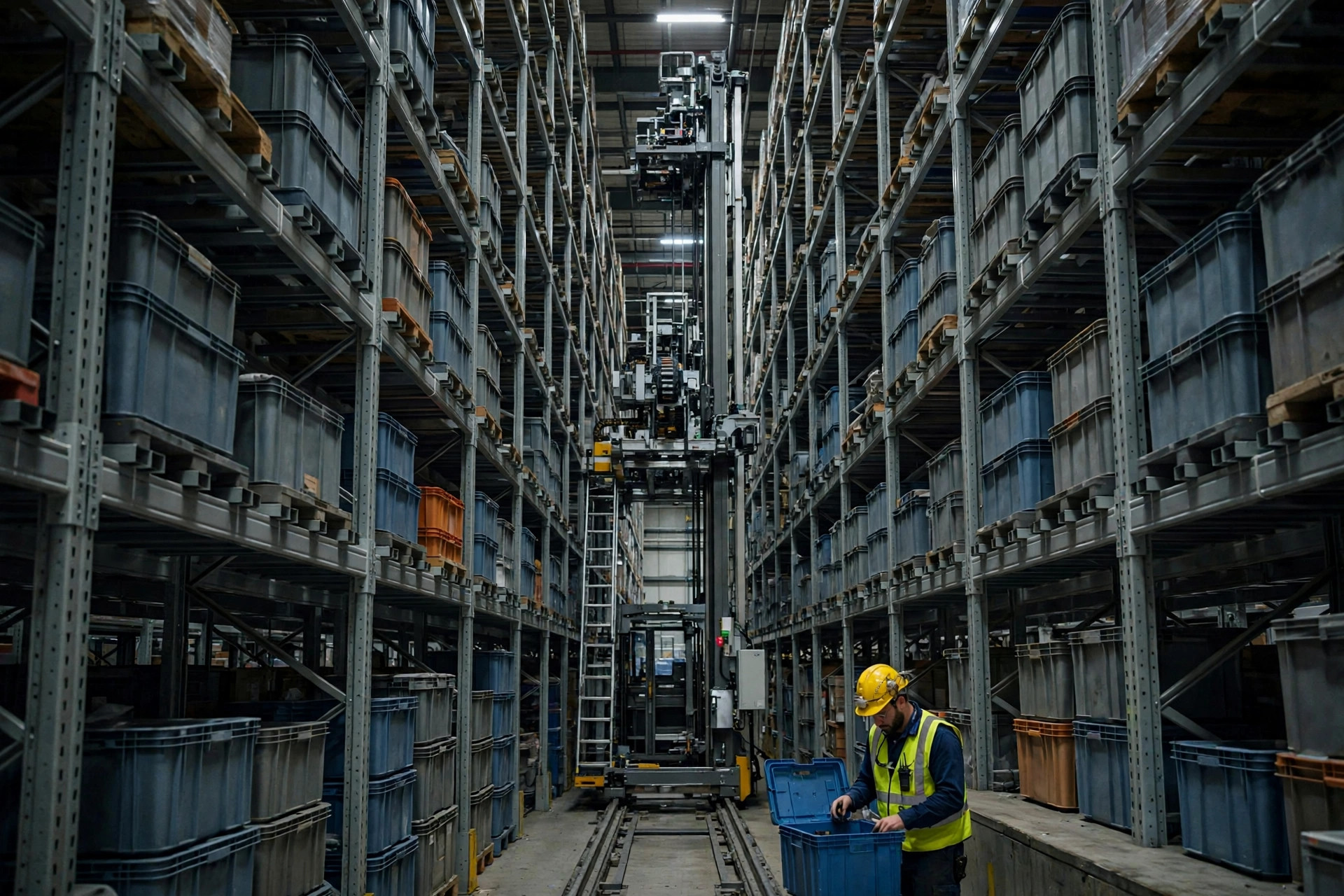
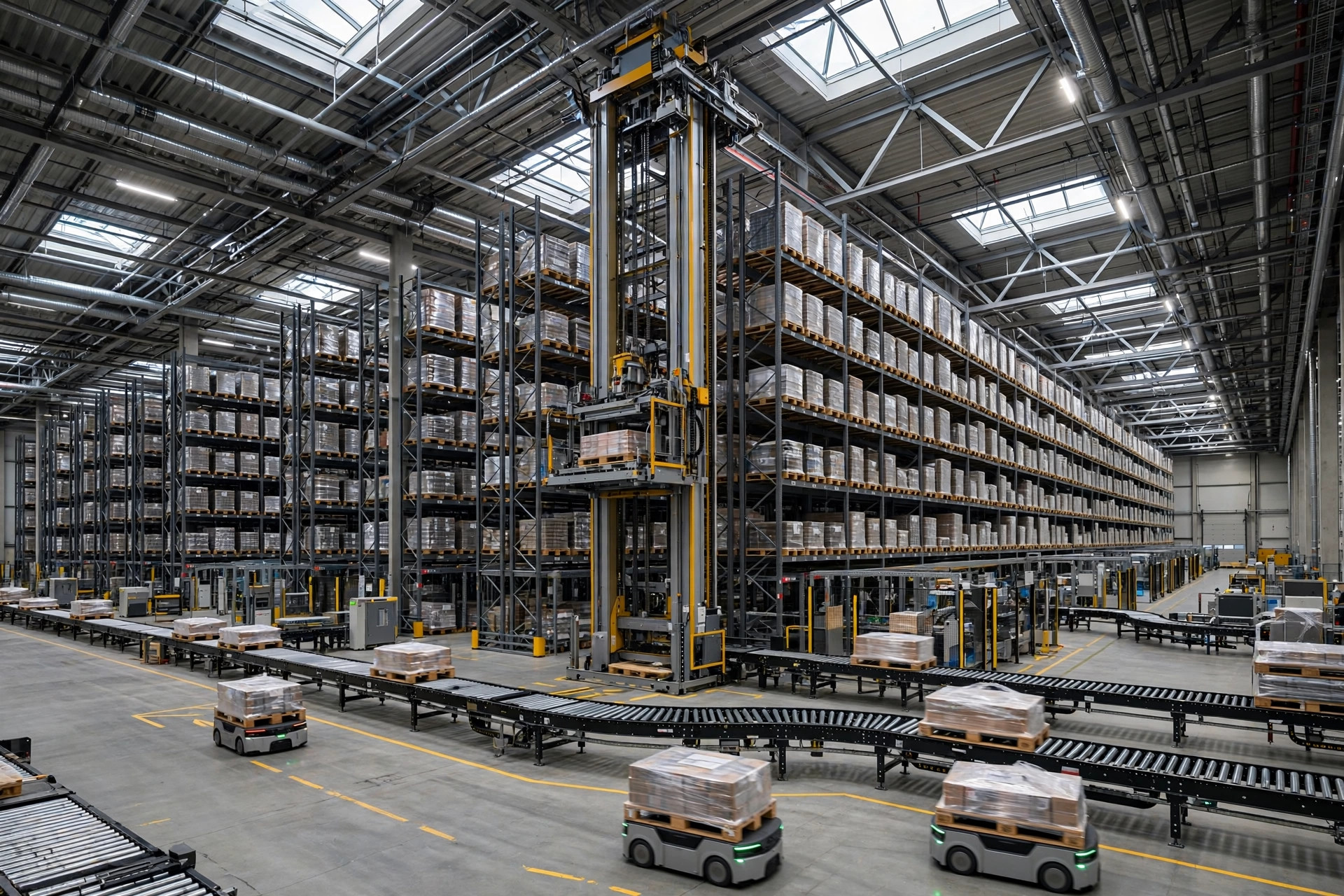
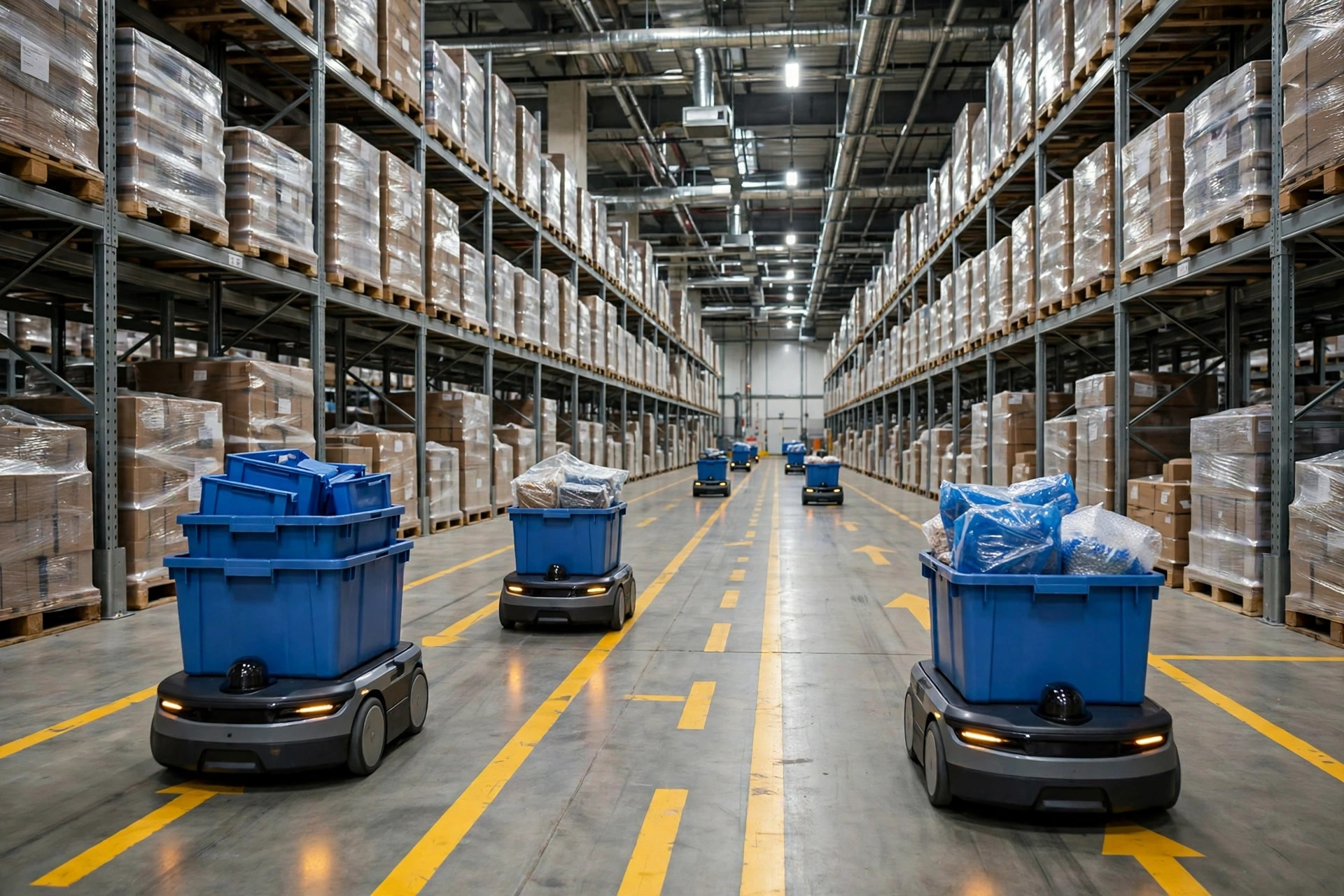
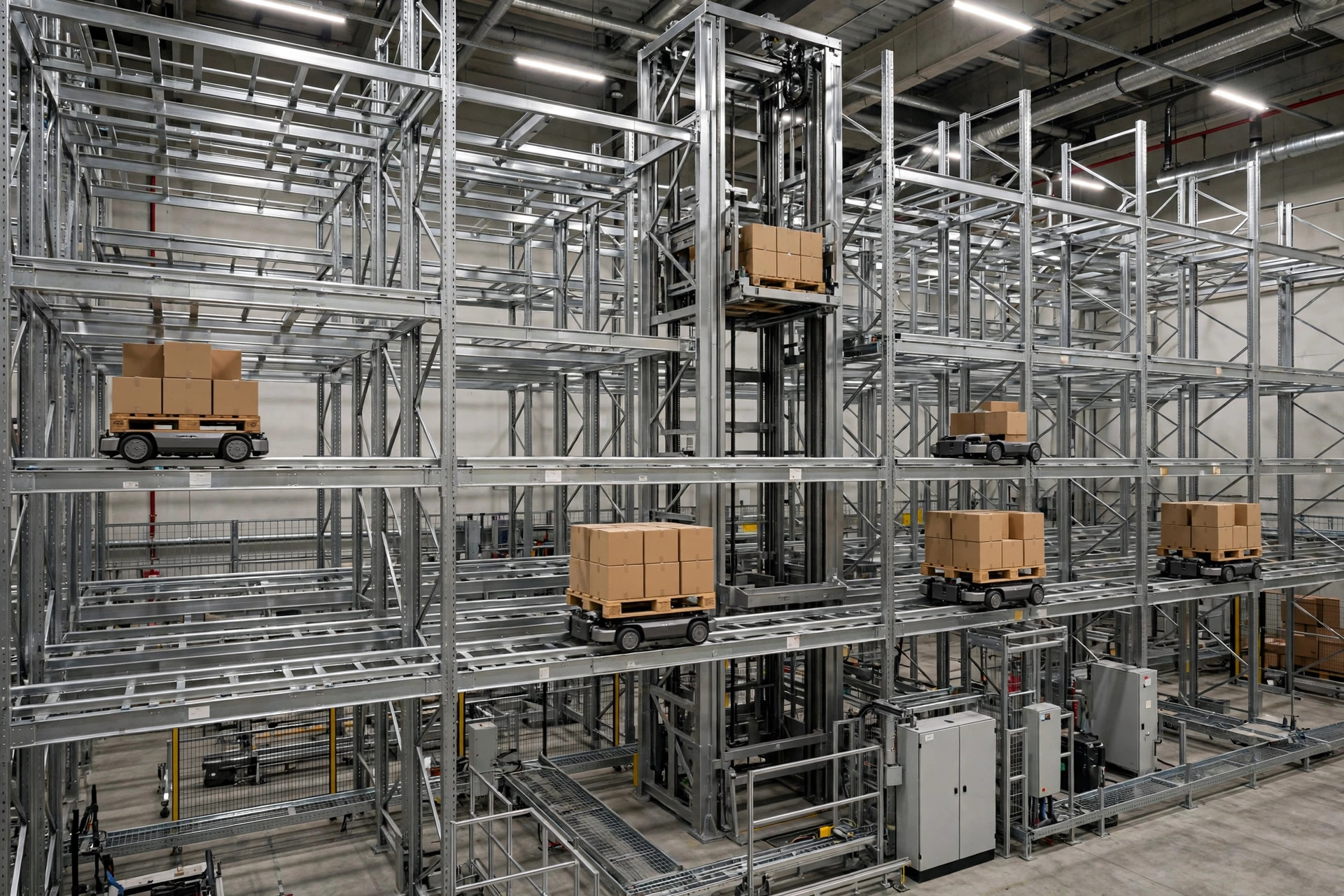
A 4-way shuttle system is a "fleet": dozens of small robots run on rack rails in all four directions, with vertical lifts handling the elevation changes. Think ride-share, not private butler: need throughput, add cars. Redundancy comes free: one dead robot doesn't stop a level. The money goes into fleet size, lift count, railed racking, and the warehouse control software (WCS) that orchestrates traffic. Vendor-published comparisons claim roughly 15%–30% lower equipment investment than stacker cranes at comparable scale, plus higher density — treat that as direction, not gospel.
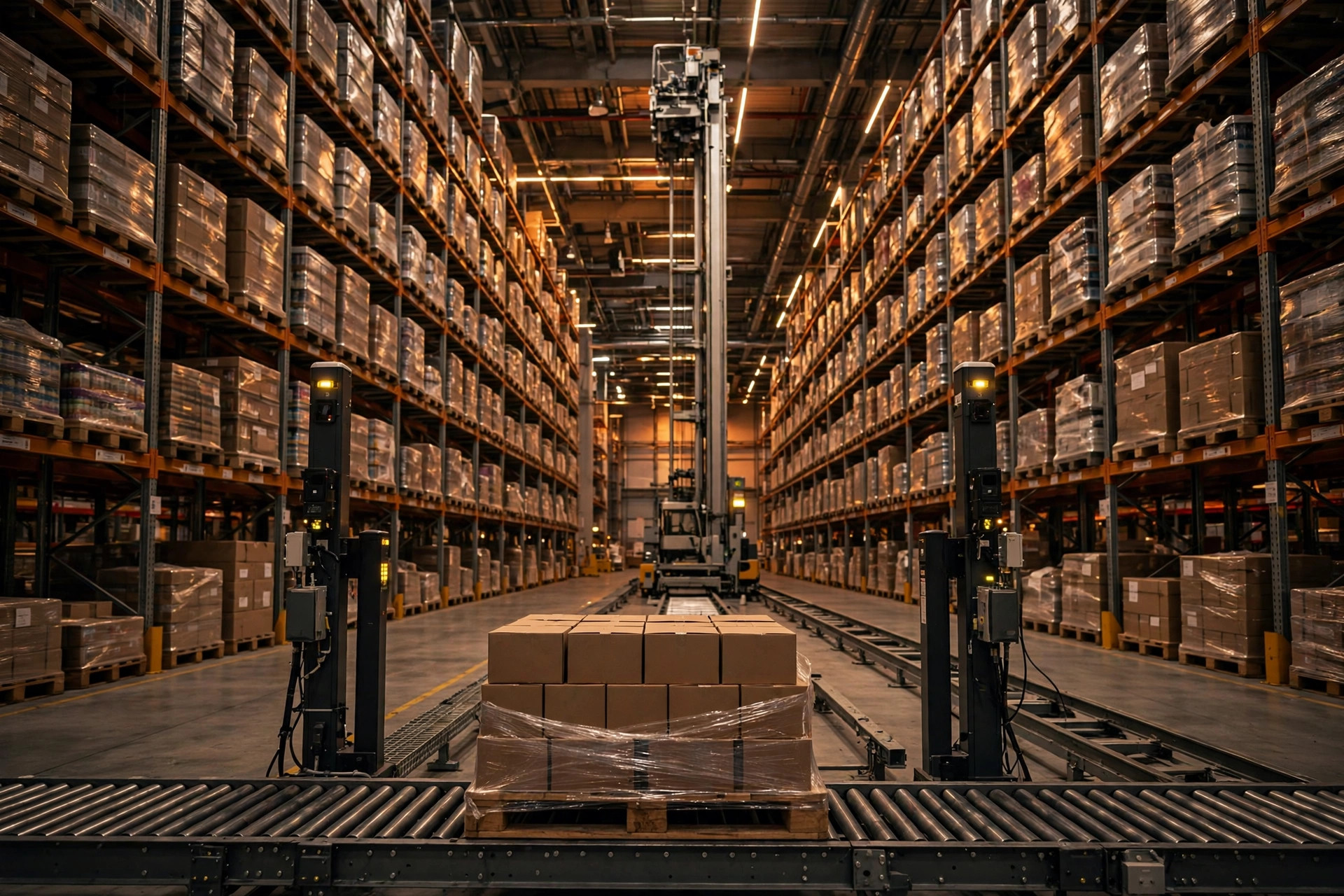
A pallet shuttle (sometimes called a satellite or shuttle-board system) is semi-automatic: a shuttle cart sits deep in the lane, a forklift drops a pallet at the lane entrance, and the cart ferries it inside. Think of a helper who only carries things and never thinks — the forklift driver still does the thinking. The money is mostly racking plus the shuttle carts; 2026 racking vendor quotes put the racking hardware around $200–$400 per pallet position, making it the cheapest entry of the three.
See the pattern? Three different cost structures. So "cost per pallet position" is a meaningful question only for pallet shuttles; for stacker cranes it's close to a pseudo-requirement — crane cost follows aisle count and height, and correlates only weakly with position count.
ASRS Cost Per Pallet Position: Read the Table, Then the Fine Print
| System | Total project range (US turnkey, approx.) | Per-position framing | Where the money goes |
|---|---|---|---|
| Stacker crane | $1.5M–$10M+ | Don't compare per-position; it misleads | Cranes, aisles, high-bay racking, building/fire |
| 4-way shuttle | $0.8M–$6M | Vendor claim: ~15–30% less equipment spend than cranes at equal scale | Robot fleet, lifts, railed racking, WCS software |
| Pallet shuttle | $0.3M–$1.5M | Racking hardware ~$200–$400/position | Racking, shuttle carts, forklift interface |
The table is the skeleton; the devils are in the notes.
First, height is the price multiplier for stacker cranes. A 12-meter crane and a 24-meter crane differ by far more than 2x in equipment cost — mast, rails, motor power, and control precision all step up, and the building and fire systems follow. Same 5,000 positions in a squat building versus a tall one can differ by more than double. Any integrator quoting per-position on day one is either green or fishing.
Second, throughput sets the fleet size for 4-way shuttles, and that's where budgets blow up. Too few robots and peak hours queue up; too many and money sits idle. Lifts are the hidden line item — robots can fly across a level all day, but everyone queues for the elevator, and too few lifts strangle the whole level. Most overruns I've seen came from adding robots and lifts after go-live.
Third, software and integration are chronically underestimated. WCS, integration with your existing WMS, commissioning labor — these routinely exceed ten percent of the total. Comparing equipment prices while ignoring integration is like buying a car and forgetting insurance and maintenance.
Fourth, cold storage is its own universe. A published case: a US ice cream maker installed two stacker cranes from an established vendor in its minus-30°F distribution center in Sylacauga, Alabama, eliminating forklift operators from a brutally cold environment. Market reports peg high-bay frozen AS/RS projects at $8M–$45M total, roughly $25,000–$35,000 per pallet position — absurd until you remember the building and refrigeration were already expensive, and automation is what makes the no-humans space productive. The same reports note refrigerated high-density storage costs about half as much to cool as a conventional warehouse. The savings are in electricity.
The Payback Math: Don't Count Labor Alone
The classic payback mistake: counting only the forklift drivers you eliminate. An AS/RS saves money in three buckets and costs money in two more.
The formula:
Payback (years) = Total investment / (annual labor savings + annual rent savings + annual damage/shrinkage reduction − annual maintenance − added electricity)
A worked example from a project I was on (2021, a 3PL ambient e-commerce warehouse in California's Inland Empire, ~9,000 pallet positions, 4-way shuttle; figures approximate):
- Total investment: ~$3.8M (equipment, racking, WCS, integration)
- Annual labor savings: ~14 forklift and warehouse operators across two shifts, at roughly $55K fully loaded each — ~$770K
- Annual rent savings: ~40% smaller footprint, ~15,000 sq ft avoided at ~$1.40/sq ft/month then — ~$250K
- Annual damage/shrinkage reduction: ~$100K
- Added annual costs: maintenance contract plus spares ~$200K, added electricity ~$40K
Net annual savings ≈ $880K → payback ≈ 4.3 years. Notice the rent line: in a land-expensive market like the Inland Empire, avoided rent alone covered a third of the labor savings. Plenty of buyers compute payback on labor only, get 7 years, and walk away; add rent and it's barely over 4.
And here's the counterintuitive one: the most expensive system isn't always the stacker crane. In ultra-high-throughput scenarios, a 4-way shuttle fleet with lifts stacked on top routinely out-prices a crane system. Cranes are expensive in height; shuttles are expensive in throughput. Figure out which one your operation is short on before comparing totals — pitting a low-throughput crane quote against a high-throughput shuttle quote is a rigged fight.
After the Check Clears: The Maintenance Traps
Capex is the down payment; maintenance is the mortgage. Here's the honest version per system.
Stacker cranes have a single point of failure: one dead crane stops its entire aisle, no redundancy. Power rails, travel motors, and telescopic forks are the wear items, and a crane weighs several tons, so repairs mean downtime plus working at height. For crane projects, the maintenance contract lives or dies on two clauses: guaranteed response time in writing, and whether critical spares sit in your building or "ship from headquarters." That clause decides whether you're down a day or three.
4-way shuttles give you redundancy — one dead robot doesn't stop a level — but the traps are batteries and software. The robots run on lithium batteries, batteries are consumables, and poorly planned charging stations mean a queue of robots at peak hours. Once the fleet grows, the WCS scheduling algorithm becomes the bottleneck — traffic control, task allocation, deadlock avoidance. Weak software wastes good hardware. And software upgrades and expansion licenses are often billed separately; negotiate them up front or bleed later.
Pallet shuttles are cheapest, but the #1 failure source is "got hit by a forklift." The cart waits at the lane entrance for the driver to feed it pallets; one distracted driver and you're paying for repairs and downtime. These systems demand the most from site discipline: semi-automatic equipment needs fully conscientious people. A warehouse with sloppy management turns a pallet shuttle into an expensive static rack.
One universal trap: energy. Vendor-published figures claim a shuttle uses about 0.065 kWh per putaway/retrieval cycle versus about 0.6 kWh for a stacker crane — nearly a 10x gap. The direction is right: cranes are strongmen with strongmen appetites; shuttles are light cavalry.
Whether the money is worth it comes down to one number: total investment divided by net annual savings — how many years to payback. Under 5 years, it's a serious conversation. Over 8, go fix your ABC classification and slotting first — those cost nothing and might save you more than the AS/RS would.
By Da Liu, Automation Engineer