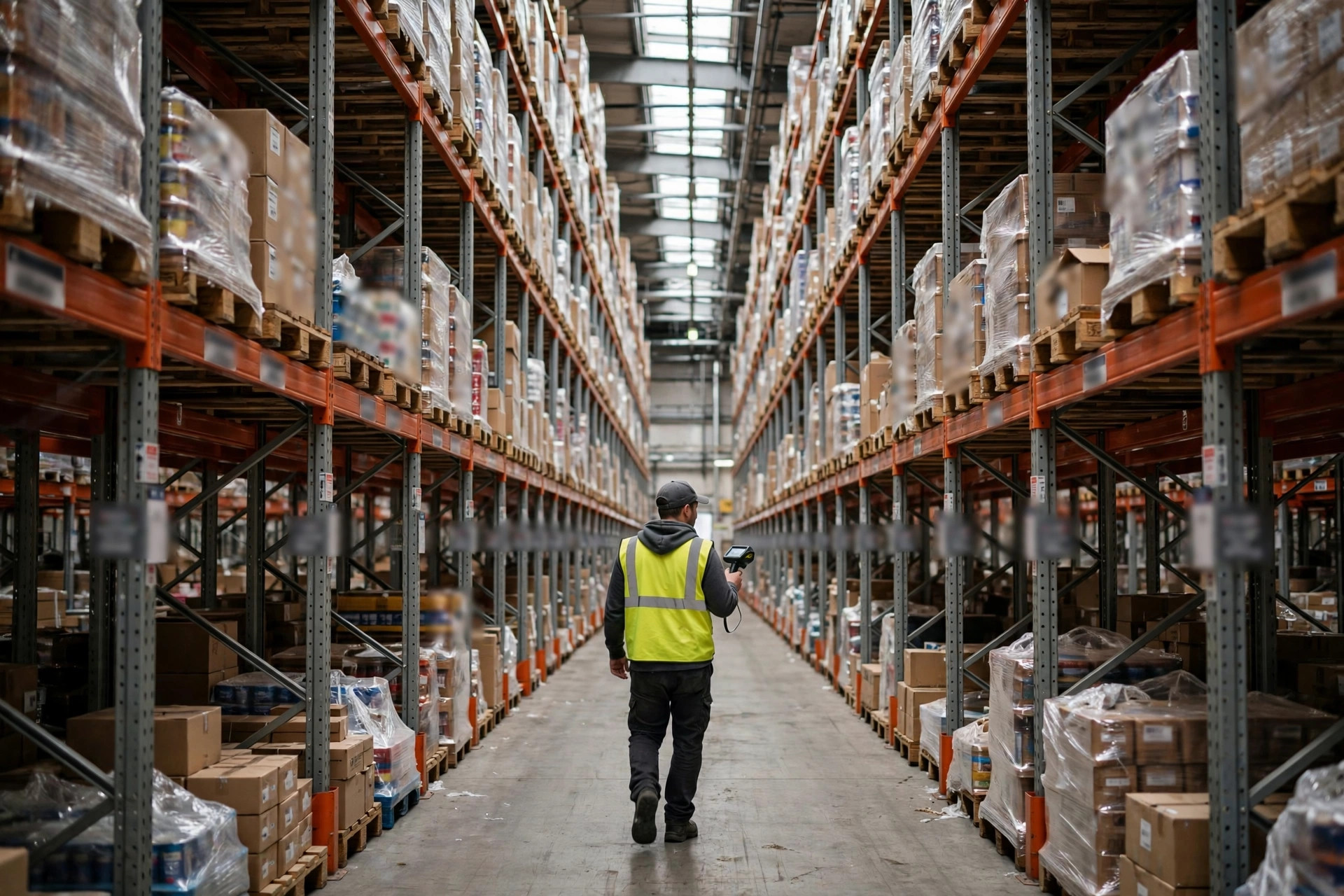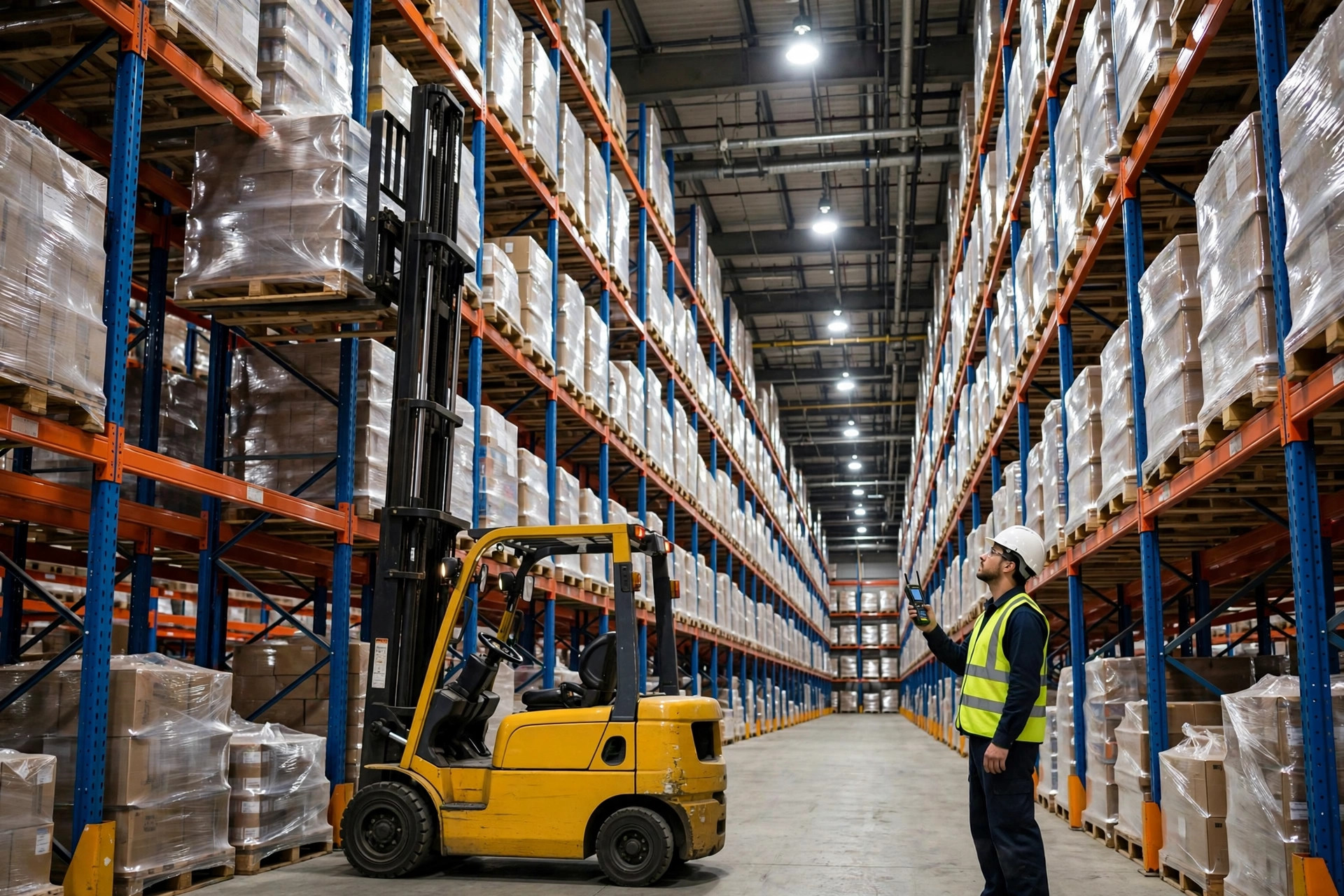
Tuesday morning, September 2025, 6:50 AM, still half dark outside. I walked through the warehouse gate and the night-shift lead, Zhao, was waiting for me. "Feng, we've got a problem. The paper towels in Zone A — bulk floor storage is down to the last pallets, but there's still 40 pallets up in the high-bay racking. The pickers ran up and down a dozen times. The morning e-commerce wave might miss its cutoff."
I said nothing. But in my head I was cursing: the same old problem — where's the switch line for the same SKU between high-bay racking and bulk floor storage?
That Morning: Bulk Floor Storage Ran Dry, High-Bay Racking Still Full
Let me be straight with you: this happens once or twice a month.
The same SKU sits in two places. Bulk floor storage is easy — a forklift scoops it up and goes. High-bay racking saves floor space, but every putaway to level three means hunting for the slot and going up and down. So when should this SKU live on the floor, and when should it go up in the racks?
Three years ago, our switch line was "use your judgment."
Fast movers got stuffed into high-bay racks while pickers climbed all day; slow movers hogged the best bulk spots gathering dust. Peak season: bulk overflowed into aisles, fire inspector wrote us up. Off season: racks half empty, floor half empty, rent paid in full.
Folks, this isn't an equipment problem. It's a people problem. A rules problem.
How the Problem Started: High-Bay Racking and Bulk Floor Storage Each Doing Their Own Thing
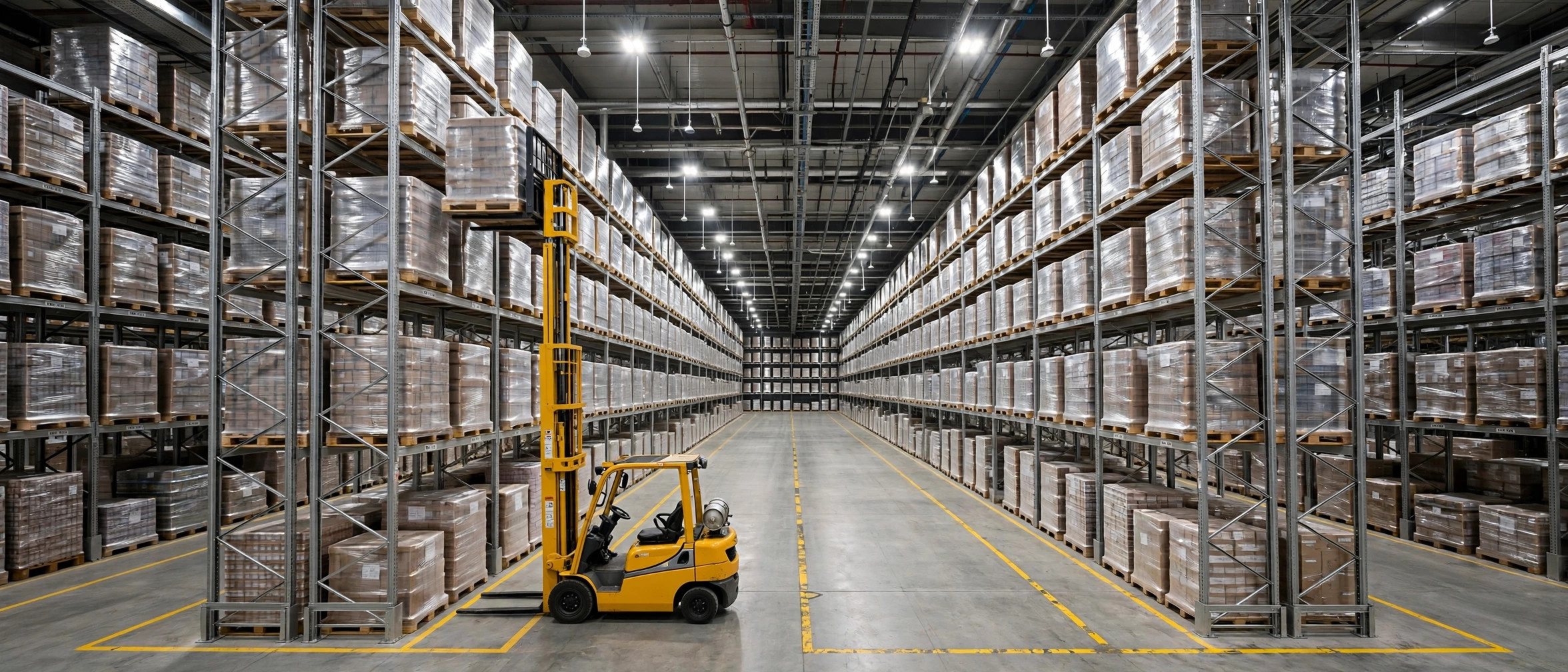
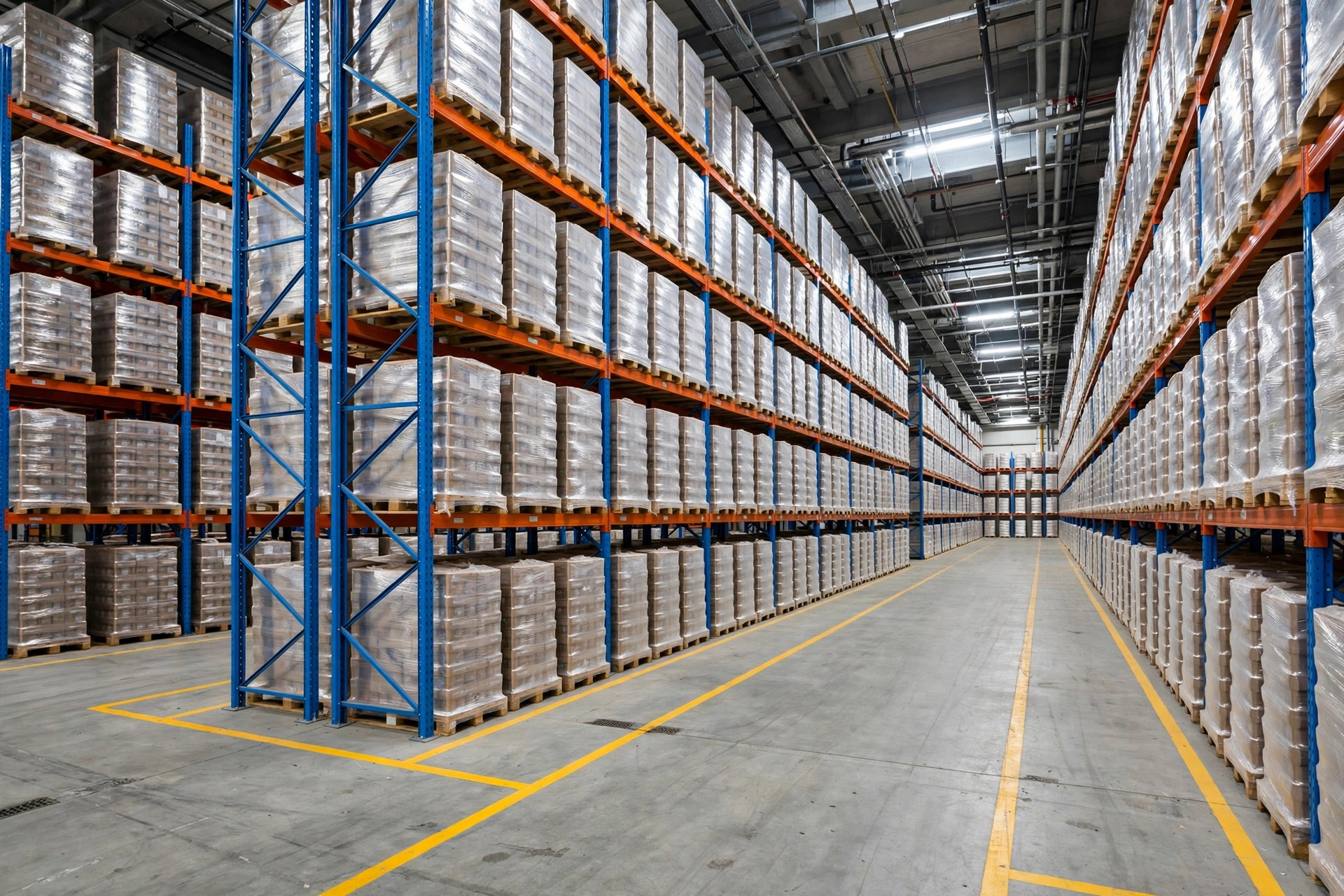
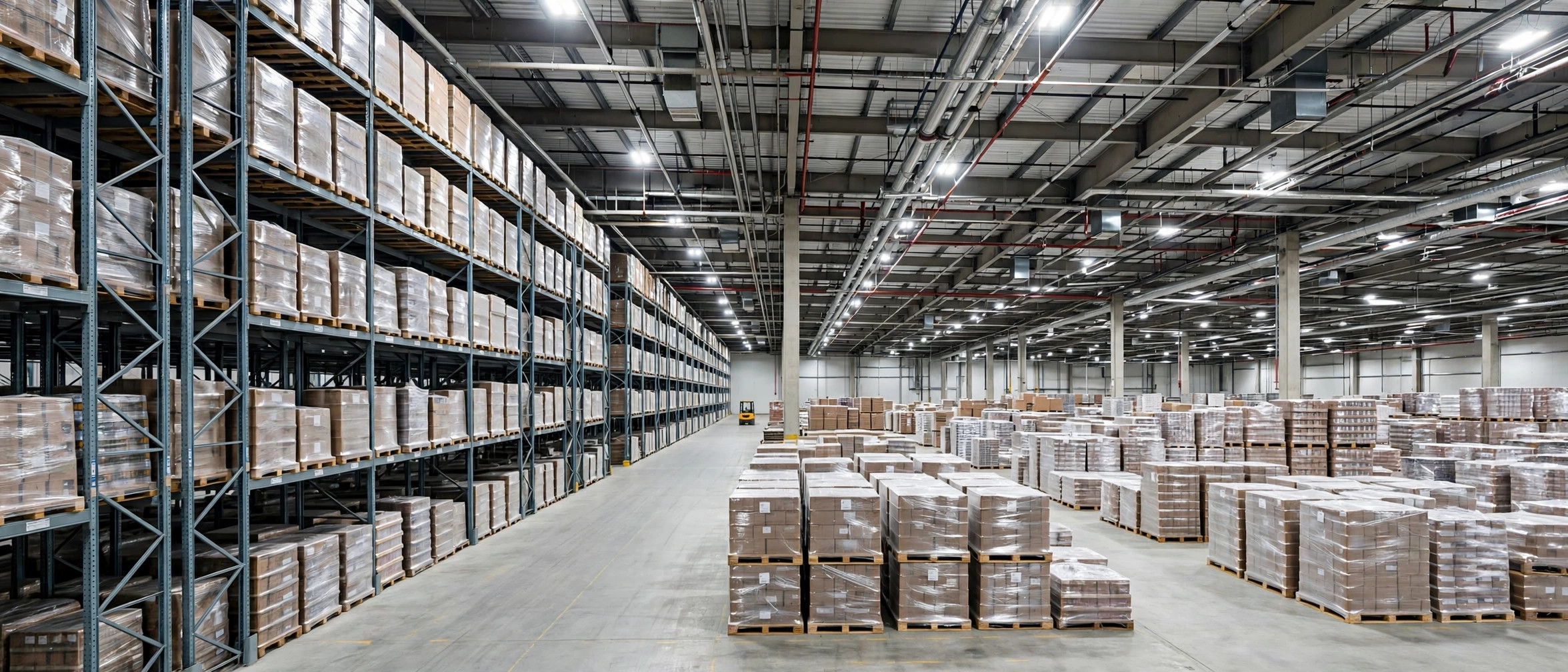
Our warehouse is 12,000 square meters: high-bay racking six levels high, 120 bulk floor slots. Early on, inbound took the easy path — open floor slot, pallet on the floor; floor full, up in the racks. Outbound did the same: floor first, racks only when the floor ran out.
So the same SKU scattered like spilled pepper. Cycle counts meant running three zones. The system said we had stock; nobody could find it — floor pallets buried under later arrivals. In our August 2024 count, 30% of shrinkage was "on the books, nowhere on the floor." Most of it turned up weeks later in bulk-area corners. Embarrassing. Truly embarrassing.
Two Roads We Tried: Two Real Cases
Case one: October 2024, Dongguan warehouse, electric kettles.
Before that year's Singles' Day, one brand's kettle built from 25 pallets to 140. We'd assigned it 8 bulk slots — nowhere near enough. The inbound lead, without asking anyone, stacked the overflow along the main aisle.
October 28: fire inspection, one fine. On promo day the blocked aisle trapped the forklifts. Six people moved cartons by hand; we missed the shipping cutoff by three hours.
The post-mortem was clear: a SKU swinging from 140 pallets to 25 can't run on "judgment." Since then, volatile SKUs expand bulk before peak and move back after — seven days before a big promo, the night shift does the sink-down.
Case two: May 2025, Wuhan warehouse, paper towels.
Off season, about 18 pallets sat on high-bay level two. One pick — up, down, check the ticket — averaged 3 minutes 40 seconds. At 60 pallets a day, nearly four hours burned on up-and-down.
Before the June 18 shopping festival, we sank the whole SKU to the floor: 50 seconds a pick. That freed up two drivers' worth of hours per day. Veteran Zhang said: "Should've done this years ago. My back can't take it anymore."
One lesson from both cases: the switch line isn't drawn on a blueprint. It follows pallet count and velocity.
Running the Numbers: High-Bay Racking vs. Bulk Floor Storage, Per Pallet
Stories are fine, but let's do the math. Measured data from our Dongguan site, first half of 2025 (12,000 sqm — your numbers will differ):
| High-bay racking (per pallet) | Bulk floor storage (per pallet) | |
|---|---|---|
| Floor footprint | about 0.25 sqm (6 levels) | about 1.4 sqm |
| Putaway time | 4 min 20 sec avg | 1 min 10 sec avg |
| Pick time | 3 min 40 sec avg | 50 sec avg |
| Monthly damage rate | 0.3% | 1.1% (crushed cartons, moisture) |
| Fire-code risk | Low | High (overflow blocks aisles) |
| Forklift requirement | Licensed operator | Standard operator |
The math is blunt: fast movers in high-bay racking burn money — nearly 3 extra minutes a pick, 200 pallets a day is 10 hours, two full workers gone. Slow movers on the floor waste rent — 1.4 square meters per pallet sitting still for a month is money paid for nothing. And bulk damage runs nearly 4x the rack rate — crushed bottom cartons, moisture wicking up; half our damage returns come from floor stacks.
So the switch line comes down to one sentence: spend your most expensive resource (floor space) only on the SKUs that earn it (fast movers).
Our Switch Line Now: Three Iron Rules
Two years of trial and error later, here's how our warehouse runs it. Three rules on the slotting board; every new hire memorizes them on day one:
Rule 1: Draw the line by pallet count. Same SKU at 10 pallets or more, expected to clear within 7 days — floor. Below 10 — high-bay. We tested our way to 10: one bulk slot stacks 2 high, so 10 pallets is 5 slots — more starts eating the aisles.
Rule 2: Draw the line by velocity. SKUs turning 2 times a month or more get floor priority; below that, up in the racks, no arguments. Velocity refreshes on the 1st; slots move with it. Skip the refresh and you're paying for last month's mistake.
Rule 3: Peak-season flip — the night shift does it. Seven days before a big promo, the top 20 SKUs sink from high-bay to reserved floor slots; back up within 3 days after. Night shift owns this — days are for picking, flips happen at night. Zhao, our night lead, is the expert; his two rookies know which SKU sinks without checking the list.
Plus one unwritten rule: keep 15% of bulk slots empty. Always. No buffer means pallets in aisles; one blocked aisle stops the warehouse. That 15% was bought with a fire fine.
The Three Rules Only Work Because of the People
Honestly, rules are dead; people are alive. The night sink-down was unpopular at first — 10 PM to 3 AM shuttling between high-bay and floor, mind-numbing. We lost two night-shift workers in the first month.
Zhao told me: "Feng, this won't fly. The night crew needs something in return." So we adjusted: on sink-down nights the premium goes up 20%, the crew gets half a day off next day, and good sink-down work counts toward the quarterly bonus. Complaints stopped. Zhao's apprentices now sink better than the day shift picks.
Folks, without the right scheduling and morale, the best switch line is just paper. Veterans training rookies, rookies covering veterans' shifts — as long as that chain holds, the rules stay alive.
Let Me Be Straight: Bulk Floor Storage Isn't Backward, High-Bay Racking Isn't Always Cheaper
I've noticed an industry bias: floor storage is "backward," high-bay racking is "modern." Honestly? Only half true.
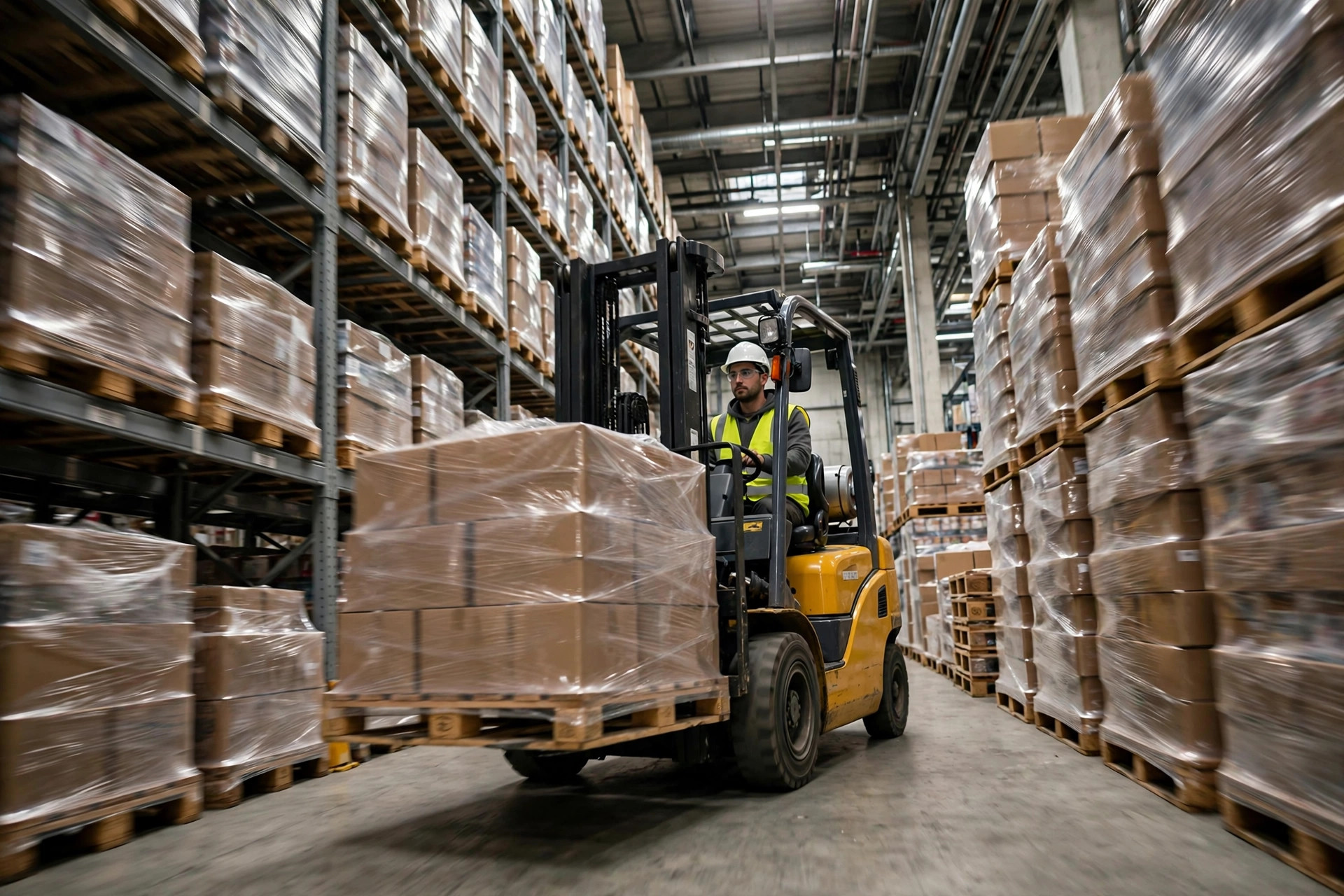
High-bay costs real money to build, needs licensed operators, and every high pick is slow — it pays off only for slow movers. Put a fast mover up there and you're paying for your own punishment. Bulk looks "rustic," but for high-velocity SKUs it's the most economical setup: fast access, less labor, no forklift queues.
One more counter-intuitive one: floor stacks don't need to look perfect. We used to demand bulk stacks as neat as racking — forklifts drove extra loops just to look pretty, and everything slowed. Now: keep the turning radius clear, keep aisles open, "good enough" stacking. A warehouse is a place to work, not a photo shoot.
One Reminder for Fellow Operators
If your warehouse is half high-bay, half bulk, don't rush to buy software. Do three things first:
- Pull your top 30 SKUs — pallet count and monthly turns — and check how many sit in the wrong place. I'd bet at least a third are wrong.
- Draw your own switch line. Your numbers needn't match ours, but the line must exist, must be posted, and must be reviewed monthly.
- Keep 15% of floor slots empty. That's the lifeline.
A switch line on paper is useless — it has to live in the shift briefing, in every worker's head. That's how we run it: two years now, no fire fine since, no missed promo cutoff.
That's all from me. Back to the floor.
By Chen Feng, Warehouse Operations Manager