Let me tell you something. In fifteen years of trucking, the scariest thing I've seen wasn't a blowout or a jackknife. It was a puddle of wrong-colored liquid on a warehouse dock, with a bunch of guys standing around it holding brooms and looking helpless.
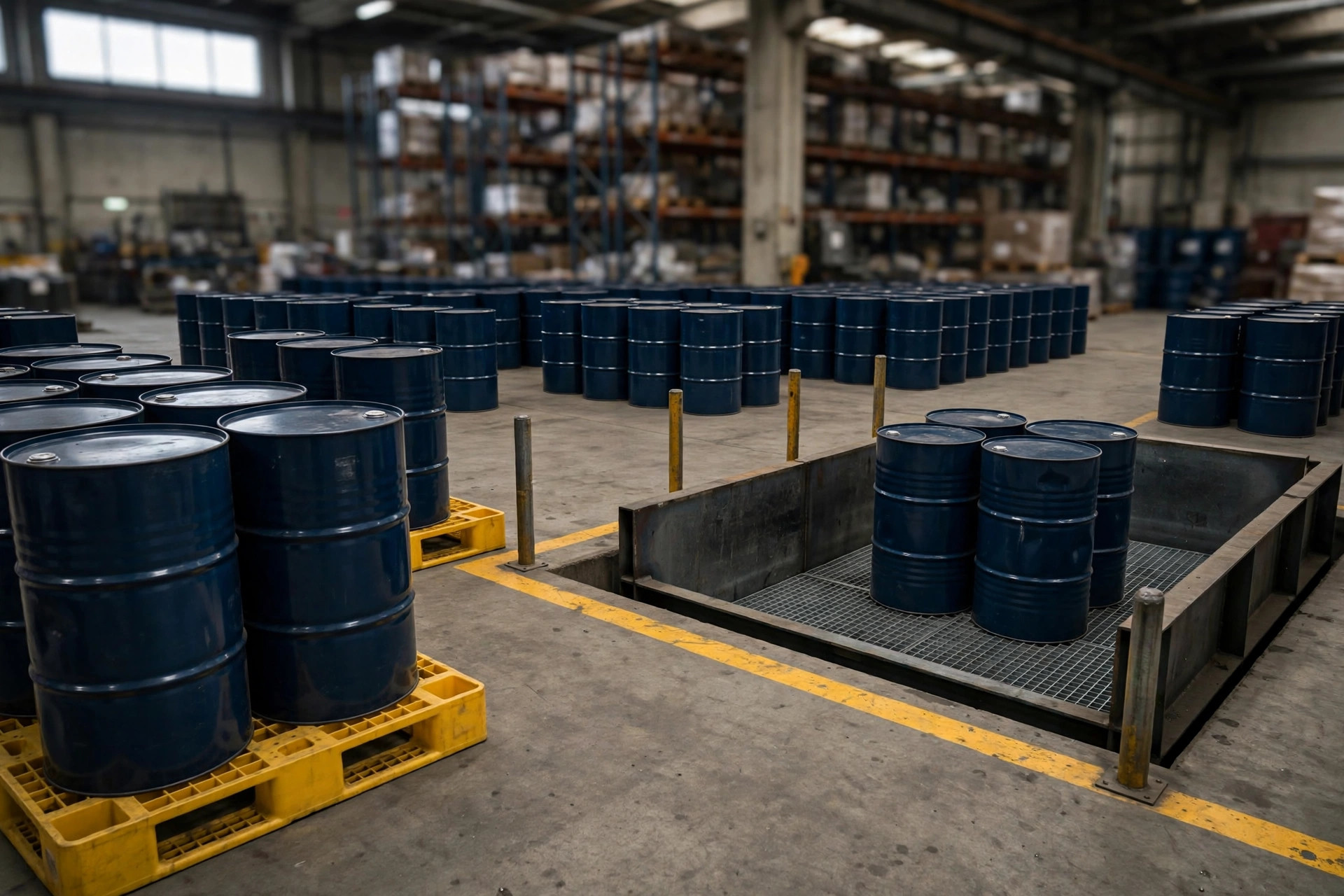
Fall before last, I was picking up a pallet of lubricant additives at a chemical distributor outside Houston. The forklift driver was pulling a 55-gallon drum off a pallet, the pallet tipped, and the drum rolled right off. The lid gasket blew on impact, and half a drum of milky-white liquid spread across the dock in seconds. Glycol-based coolant. Slippery as hell, smelled sweet. The warehouse manager came running out, and the first words out of his mouth were "get the sawdust!" — I'm not kidding, their entire spill response inventory was two bags of garden sawdust in the corner. They threw sawdust on it. It floated. A worker pushed it with a broom and the liquid ran straight through the dock seams toward the storm drain. Someone finally called a cleanup contractor. Three hours from call to truck. By then the liquid was already in the drainage. EPA showed up later. I never found out what the fine was, but I know my truck sat at that gate for a full day and I didn't earn a dime.
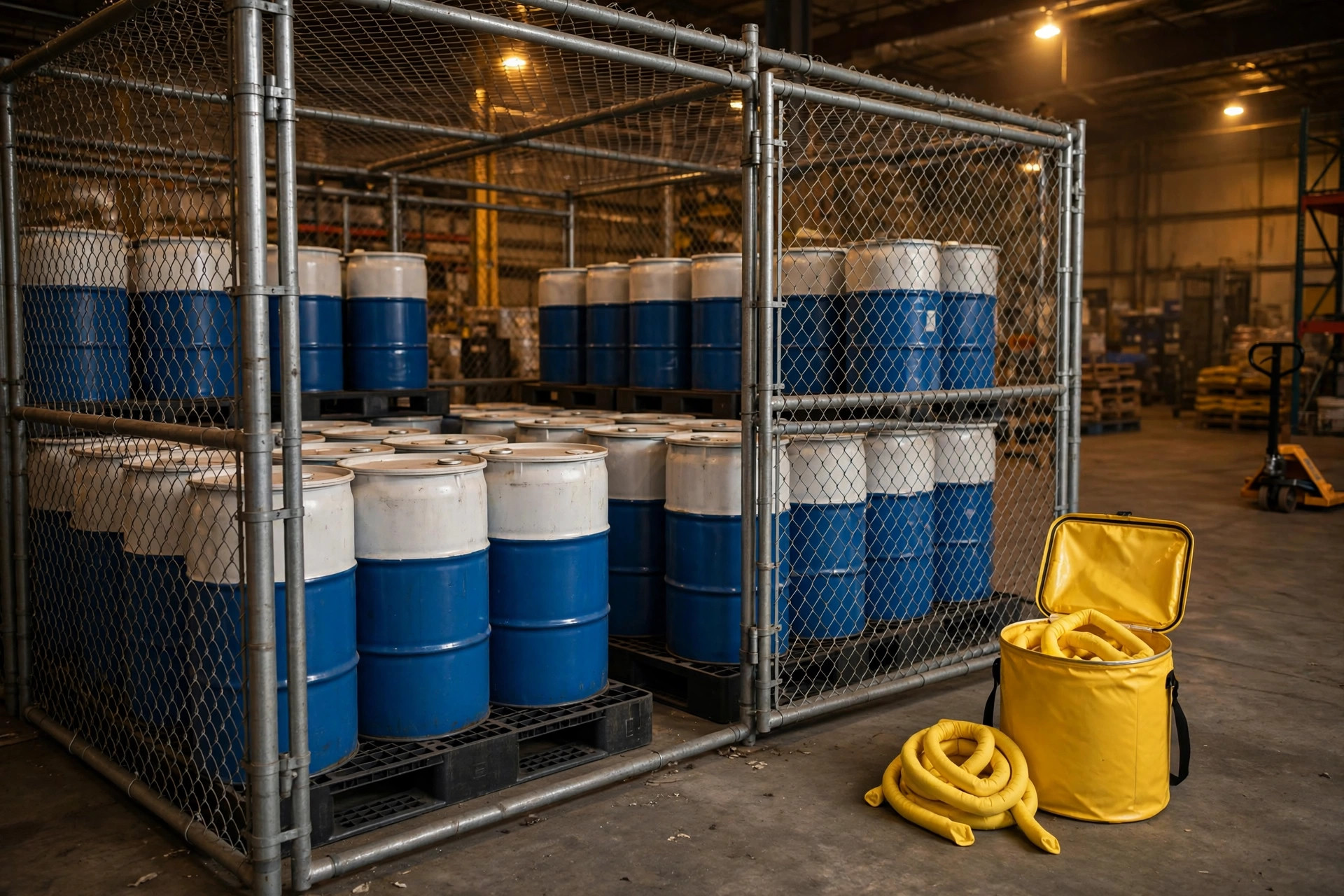
Now the flip side. Last summer I was delivering to a 3PL in Fontana, California — they handle cleaning products and auto care stuff, and they keep a proper hazmat cage. One day a forklift fork speared an IBC tote of surfactant and cracked the bottom seam. I watched it happen from my cab. The crew did three things inside three minutes: grabbed the yellow sorbent socks off the rack and ringed the tote so the liquid couldn't go anywhere, slid sorbent pillows under the crack, then one guy went for the salvage drum while another made the call. From puncture to full containment — under five minutes. Their supervisor told me they run hands-on drills every quarter. Everybody knows where the yellow kit is, what's in it, and what to grab first.
Put those two days side by side and here's what they tell you: a spill doesn't test your luck, it tests your shelves. Plenty of warehouses buy spill gear just to pass inspections. The kit is locked in the office and the key is in the manager's pocket. They bought universal pads for acids that'll eat them alive. The berm they bought can't even circle one drum. When it actually happens, all of that is decoration.
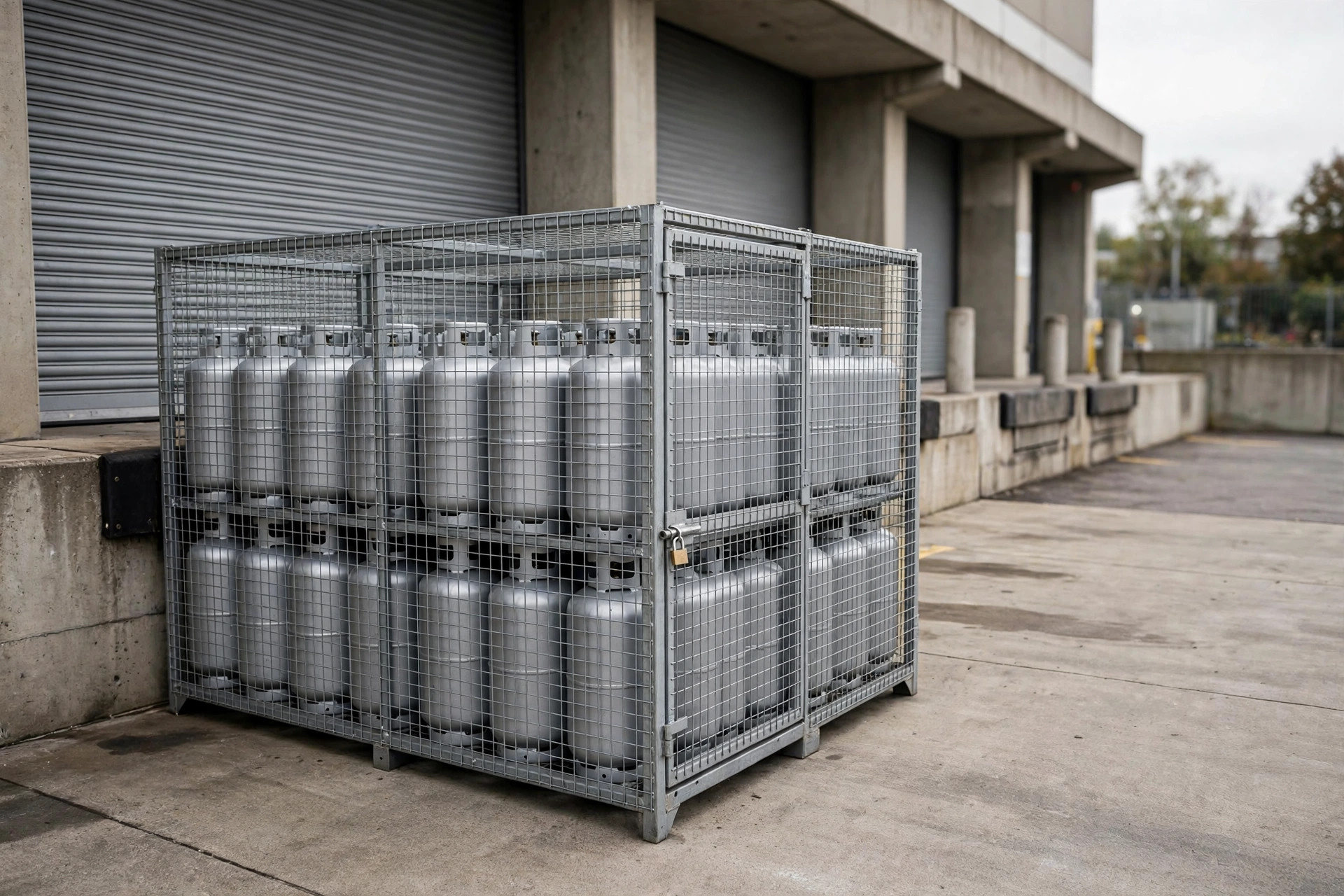
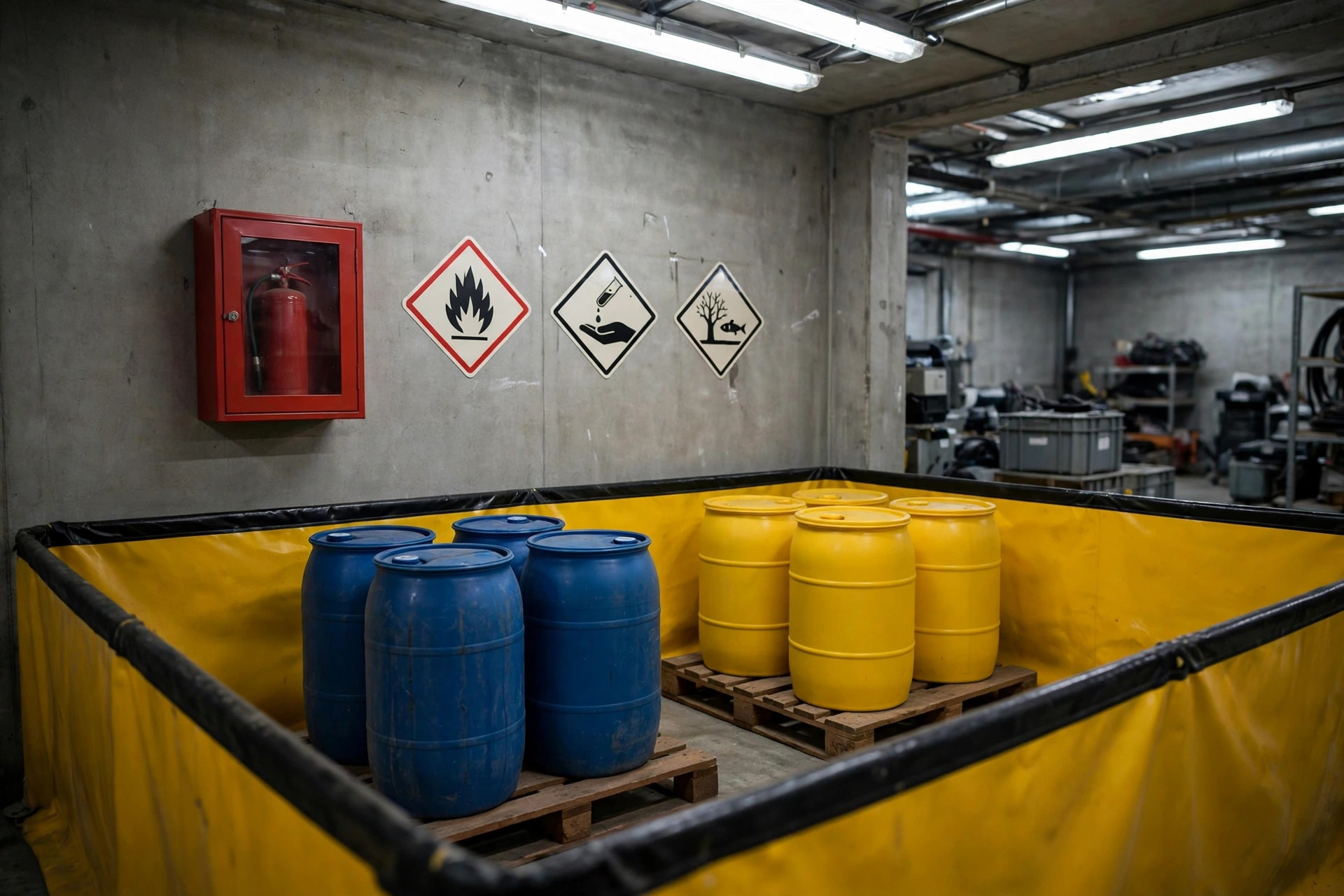
So here's my list, straight from the road. Stock one full set per hazmat storage zone — per rack group, per hazmat cage. Don't count on one shared kit for the whole building. Nobody's running across the warehouse for it when things are leaking.
| Item | How much | Notes |
|---|---|---|
| Universal sorbent pads | 2 bales (100 pads each) | For small seeps; lay inside the sock ring |
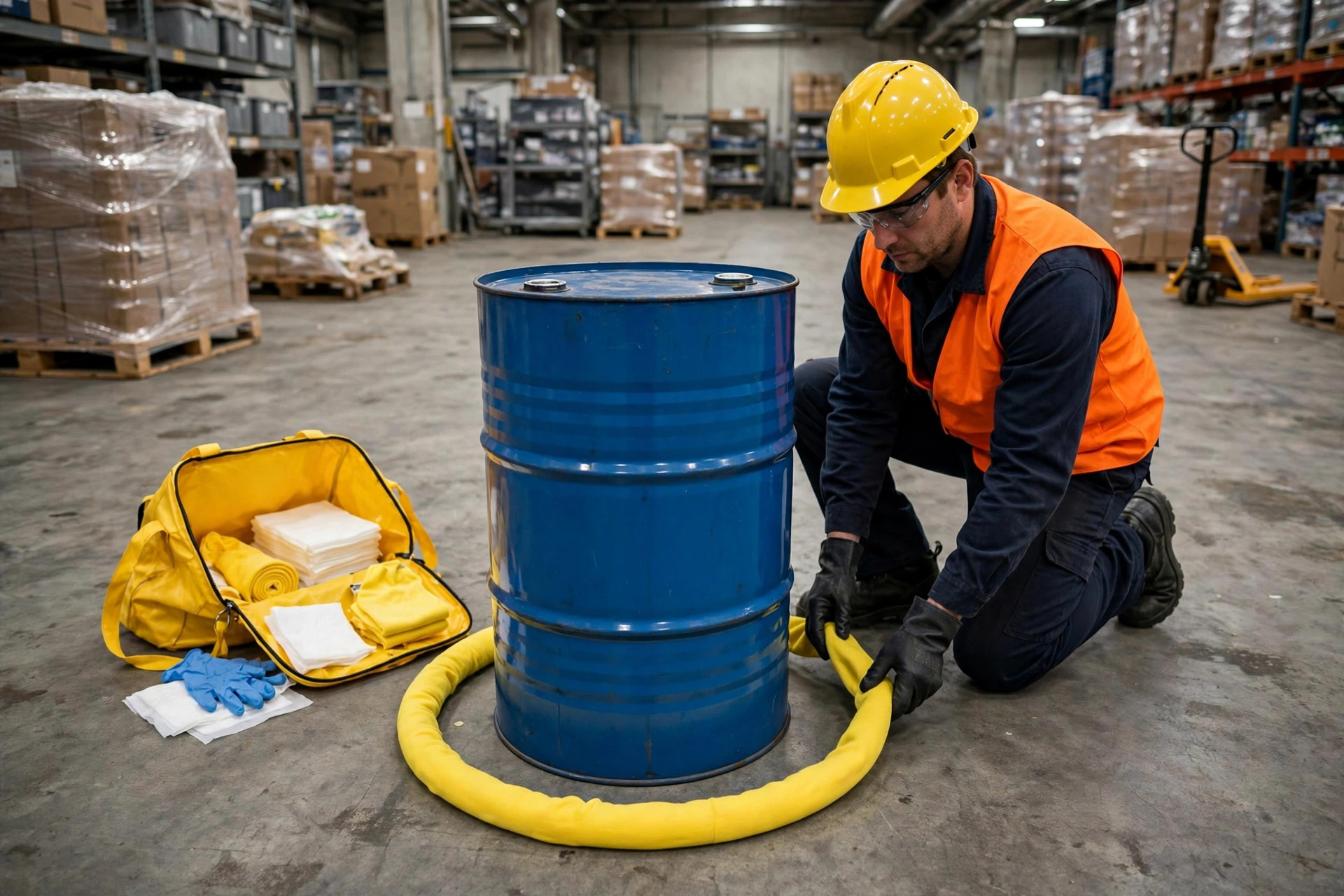
| Yellow sorbent socks (3 in x 10 ft) | 6 | Ring first, soak second — takes at least 2 to circle one 55-gal drum |
| Sorbent pillows | 4 | Slide under cracks and valves; absorb deeper than pads |
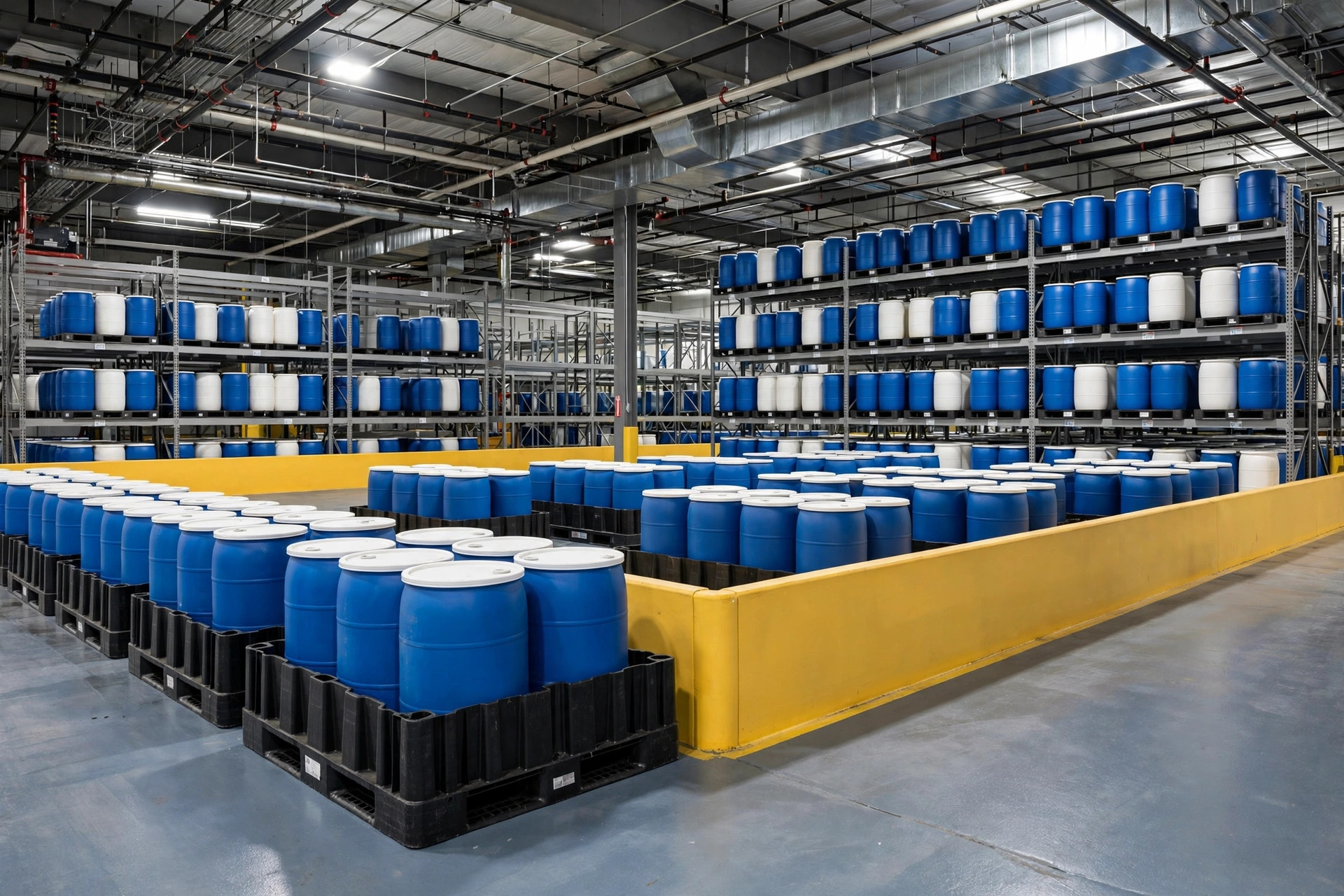
| Berms / secondary containment pallets | Sized to your largest single container | Drums and totes must sit on containment pallets that can hold the biggest one |
| Salvage drum (95 gal, with lid) | 1 | For used sorbents and contaminated soil — that's hazardous waste, not regular trash |
| Chemical gloves + goggles + coveralls | 2 sets | Live in the kit. Suit up before you touch the spill |
| Haz waste bags + ties + labels | 1 roll | Used sorbents get bagged and labeled with what they soaked up |
| Shovel + dustpan | 1 set | For granular sorbent after it's done its job |
| The yellow 95-gal spill kit itself | 1 | Everything lives in it, within about 50 feet of the hazmat zone — and not behind a lock |
Matching the sorbent to the liquid is where most places get it wrong, so it gets its own table:
| Liquid type | Use this | Never use this |
|---|---|---|
| Oils, lube oil, hydraulic fluid | White oil-only sorbents (repel water) | Not universal pads — once they fill up with water there's no room left for oil |
| Water-based liquids, coolant, general chemicals | Gray universal sorbents | Not white oil-only — they won't grab water-based stuff |
| Acids, caustics, corrosives | Yellow hazmat-rated sorbents and pillows | Never sawdust or paper towels — organics plus strong acid can smoke or catch fire |
| Unknown | Treat it as the worst case: yellow hazmat-rated | Don't guess. One wrong guess is all it takes |
Here's a counterintuitive one that people don't believe: the most expensive part of spill response isn't the kit. It's the few minutes the liquid spends running toward the drain. A fully stocked 95-gallon kit costs a few hundred bucks. One visit from a professional cleanup contractor starts in the thousands. And if it reaches the storm drain and EPA gets involved, the fines and shutdown math gets ugly fast. So overstock sorbents and let them expire on the shelf if you have to — beats coming up short when it counts. Socks lose performance after a couple of years anyway, so check the dates annually and use the old ones for drills. Nothing wasted.
How often to drill? The good warehouses I've seen run at least two full hands-on drills a year: real water (never real chemicals) on the floor, real stopwatch, real timing on how fast they ring it and clean it up. New hires drill in their first week — not after their first real spill. Check your local requirements with OSHA, EPA, and your state for the exact frequency and documentation rules. Inspectors will ask for drill records. No records means it never happened.
And one more for the shippers reading this. When you're touring a warehouse or negotiating a contract, don't just look at how straight the racks are. Spend five minutes on three things. First: is there a yellow spill kit next to the hazmat zone, and can someone grab it right now, or is it locked in an office? Second: open it and look at the color of the sorbents — all gray universal pads where they store acids, or no yellow hazmat sorbents at all, and you should walk away. Third: ask for the record of their last spill drill. If they can't produce one, the first two were theater. Three checks, and you'll know whether a warehouse's safety program is real or wallpaper.
I've seen too many "low-probability events" in fifteen years on the road. When one lands on you, it's a hundred percent. Spill gear is like the fire extinguisher in your cab: most days it just takes up space. The day you need it, it pays for itself for a lifetime.
By Shifu Zhao, Trucking Veteran (15 yrs)