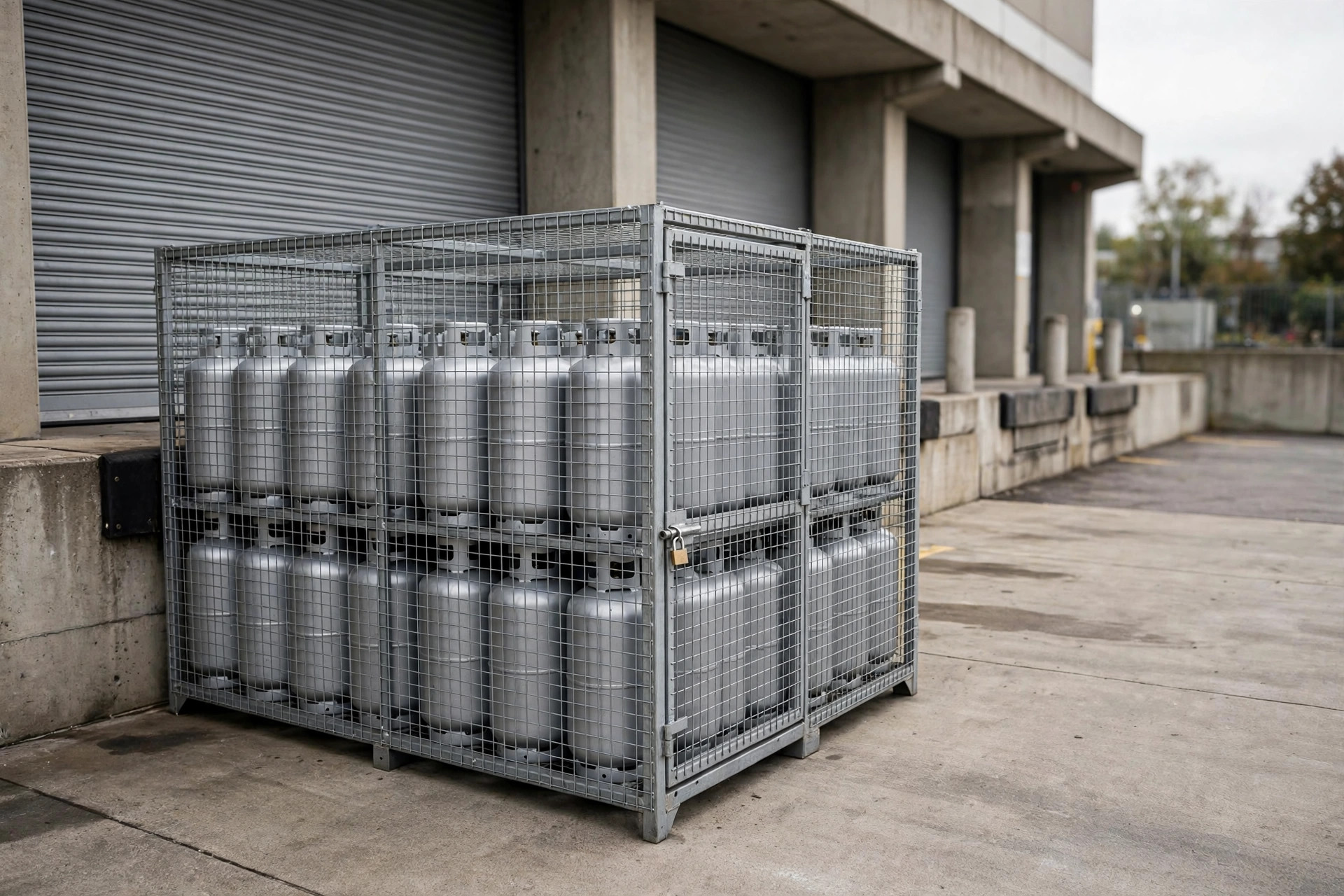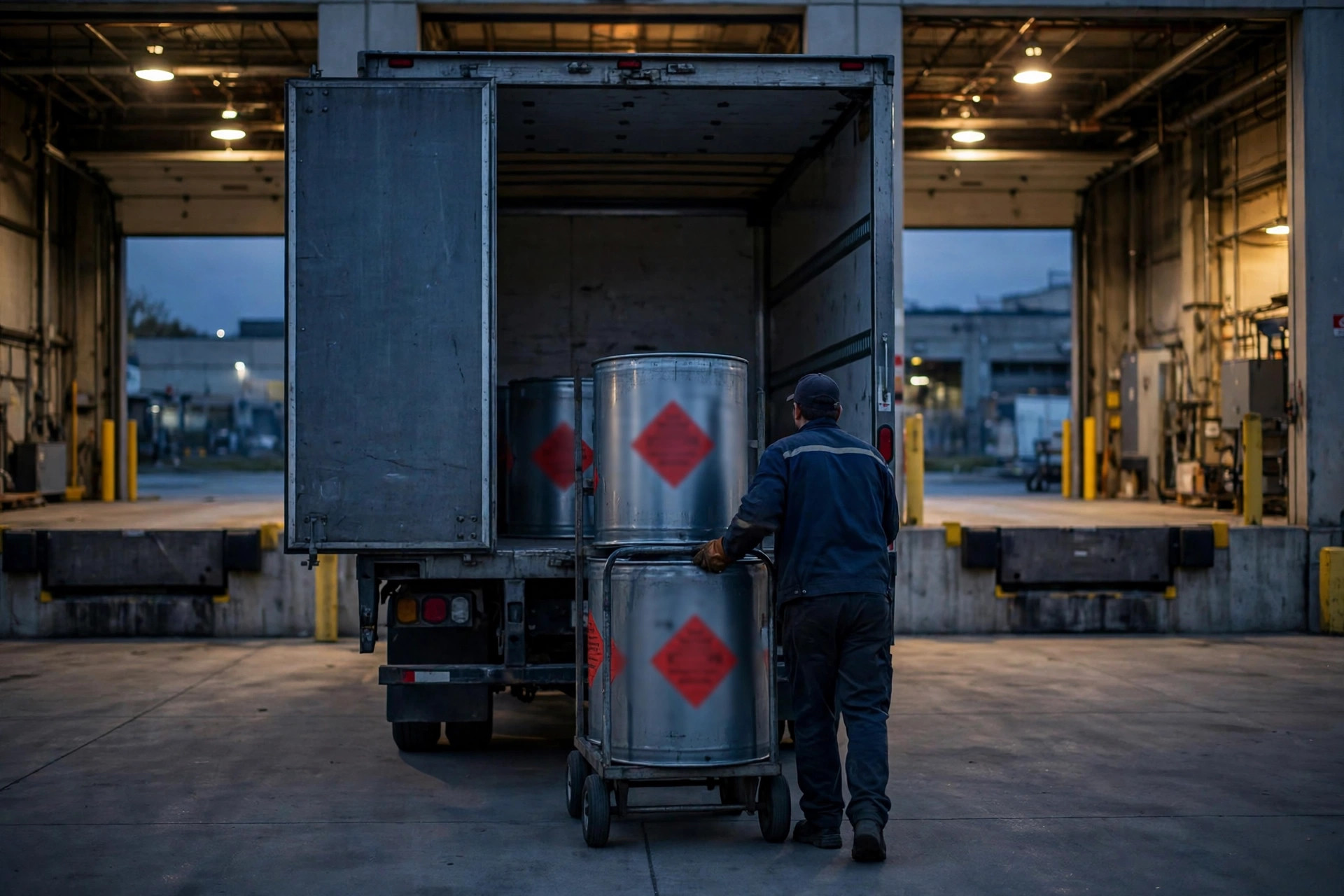
If DOT pulls your hazmat truck over, it's the paperwork that sinks you.
Twenty years in this business and I keep watching the same movie: good truck, load strapped down tight, veteran behind the wheel — and the citation still lands because of something small on a piece of paper. A missing packing group. The description in the wrong order. Shipping papers tossed in the cargo box where the driver can't reach them. The inspector doesn't care how well you strapped the load. He reads paper.
The encouraging part is that every one of these traps can be caught at the dock, before the wheels roll. What follows is the outbound hazmat playbook for US highway transport under 49 CFR — shipping papers, placards, driver and vehicle. Where I'm not certain about a detail, I'll say to check the current DOT/PHMSA requirements rather than guess.
The shipping paper is the whole ballgame
The shipping paper gets the closest look from DOT. Under 49 CFR 172.202, the shipping description must carry four elements: the UN identification number, the proper shipping name, the hazard class or division, and the packing group. The order is fixed — memorize four letters: I-S-H-P. Identification number first, then Shipping name, Hazard class, Packing group. Wrong order is its own citable offense.
Beyond the four, three more items belong on that paper. Total quantity, spelled out — "12 drums, 2,400 lbs total." A 24-hour emergency response telephone number, per 172.604: while the material is in transport, someone knowledgeable has to pick up at any hour, able to say what the shipment is and what to do if it goes wrong. Plenty of small shippers can't staff that line, so they contract it to services like CHEMTREC — fully compliant, as long as the provider's name or contract number appears on the paper. And the shipper's certification: whoever signs is personally vouching that the classification, packaging, and marking are right.
Two details sink more warehouses than anything else. First, the hazmat entries must be instantly recognizable. If the shipping paper rides in a stack of bills, the hazmat lines go first — or use a tab, a colored sheet, a contrasting background. The inspector should find them without flipping pages. Second, the papers must sit within the driver's immediate reach — 177.817(e) says "immediate reach," meaning reachable from the driving position with the seatbelt fastened. Not in the cargo box, not locked in the side toolbox, not under the passenger seat. The inspection station at Cordelia, off I-80 in California — every Northern California driver knows it — writes this one up for sport.
Placards and the 1,001-pound line
Placarding lives in 49 CFR 172.504, and the whole thing turns on one number: 1,001 pounds.
Start with what you're hauling. Table 1 materials — Division 1.1, 1.2, and 1.3 explosives, poison inhalation hazards, radioactive materials — trigger placards at any quantity. One drum, still placard. Table 2 materials — flammable liquids, corrosives, oxidizers, the everyday stuff — go by aggregate gross weight: 454 kg, or 1,001 lbs, across the whole vehicle before placards are required. Under that, you may run without. Gross weight is the key word — the packaging counts, not just the contents.
Mixed loads get a shortcut: two or more Table 2 categories needing different placards, and a single DANGEROUS placard can stand in for all of them. The exception: when one category reaches 1,000 kg (2,205 lbs) loaded at a single facility, that category's own placard goes up — DANGEROUS doesn't cover it.
Placement has its own rule: front, rear, and both sides — four placards (172.504(a)). The most unfair ticket I've seen was a placard half-hidden behind a tarp edge, and the runner-up was one knocked crooked halfway through a multi-stop route with nobody straightening it. The reverse trap exists too: freight delivered, truck empty, placards still flying. Placards that don't match the actual load are their own violation. Walk around the truck before it rolls. Thirty seconds. Don't skip it.
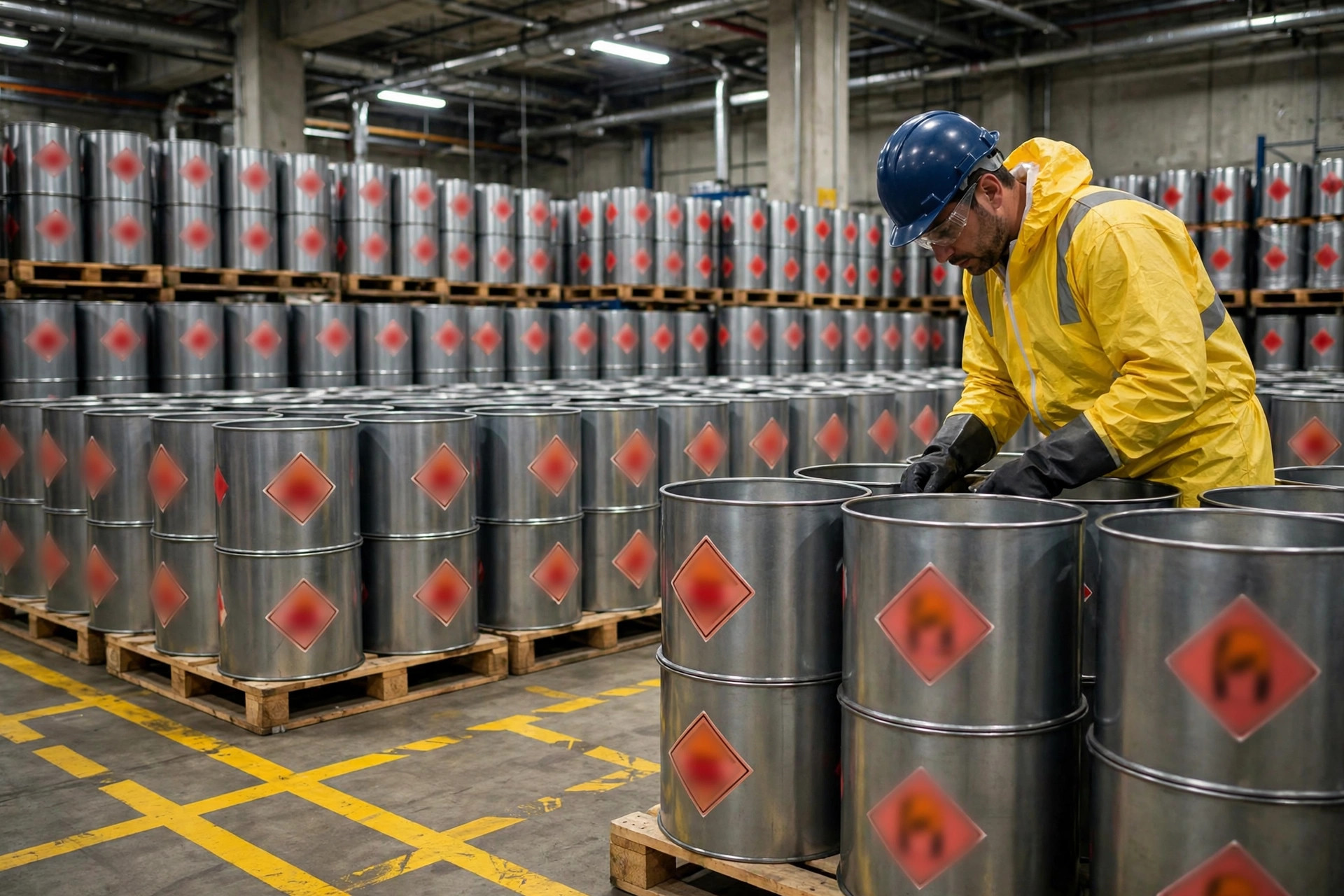
The driver, the truck, and fifteen minutes at the dock
The last gate is the person. A hazmat driver needs the H endorsement on the CDL, and earning it means more than a written test: the driver must clear TSA's security threat assessment — fingerprints, a criminal history records check — on a renewal cycle of no more than five years (49 CFR 1572.13). An expired endorsement, or none at all, gets the truck parked on the spot. That's not a fine. That's a shutdown.
Here's the pre-departure checklist I've run for years. Fifteen minutes, top to bottom.
Packaging and load: no leaks, no bulging drums, valves and caps tight, freight secured against a hard stop. Placards: all four faces, straight, unobstructed, matching the shipping paper. Papers: all four ISHP elements in order, emergency number and shipper's certification present, papers in the cab within the driver's reach. Emergency gear: the ERG — the 2024 edition is the current one — in the cab, extinguisher charged and in date. Then one question for the driver: what hazard class is this load, and what's the emergency number? No answer, no departure.
The roadside violations I see most, ranked: incomplete or misordered shipping description; driver can't produce the papers; missing, obscured, or wrong placards; no hazmat endorsement; no 24-hour emergency number on the papers. Four out of five are paperwork. The truck and the freight rarely fail — because they're visible, and nobody dares get sloppy with what's visible. Paperwork is invisible. That's exactly why it slips.
The dock-wall version, short enough to actually get used: UN number, proper shipping name, hazard class, packing group — in ISHP order? Total quantity, 24-hour emergency number, shipper's certification — all three present? Papers first in the stack, within the driver's reach? Table 1 placarded, Table 2 over 1,001 lbs placarded, DANGEROUS used correctly on mixed loads? Four placards, straight, unobstructed? Driver's H endorsement valid? ERG and extinguisher aboard?
Seven checks, all green, then release the truck. Hazmat outbound has no "close enough" — only "passed" and "cited."