Let me tell you something. Fifteen years behind the wheel, and the runs that still make my palms sweat aren't the mountain passes or the whiteout fog. They're the ones where I'm rolling down the highway with a trailer full of hazmat and a shipping paper that doesn't quite add up.
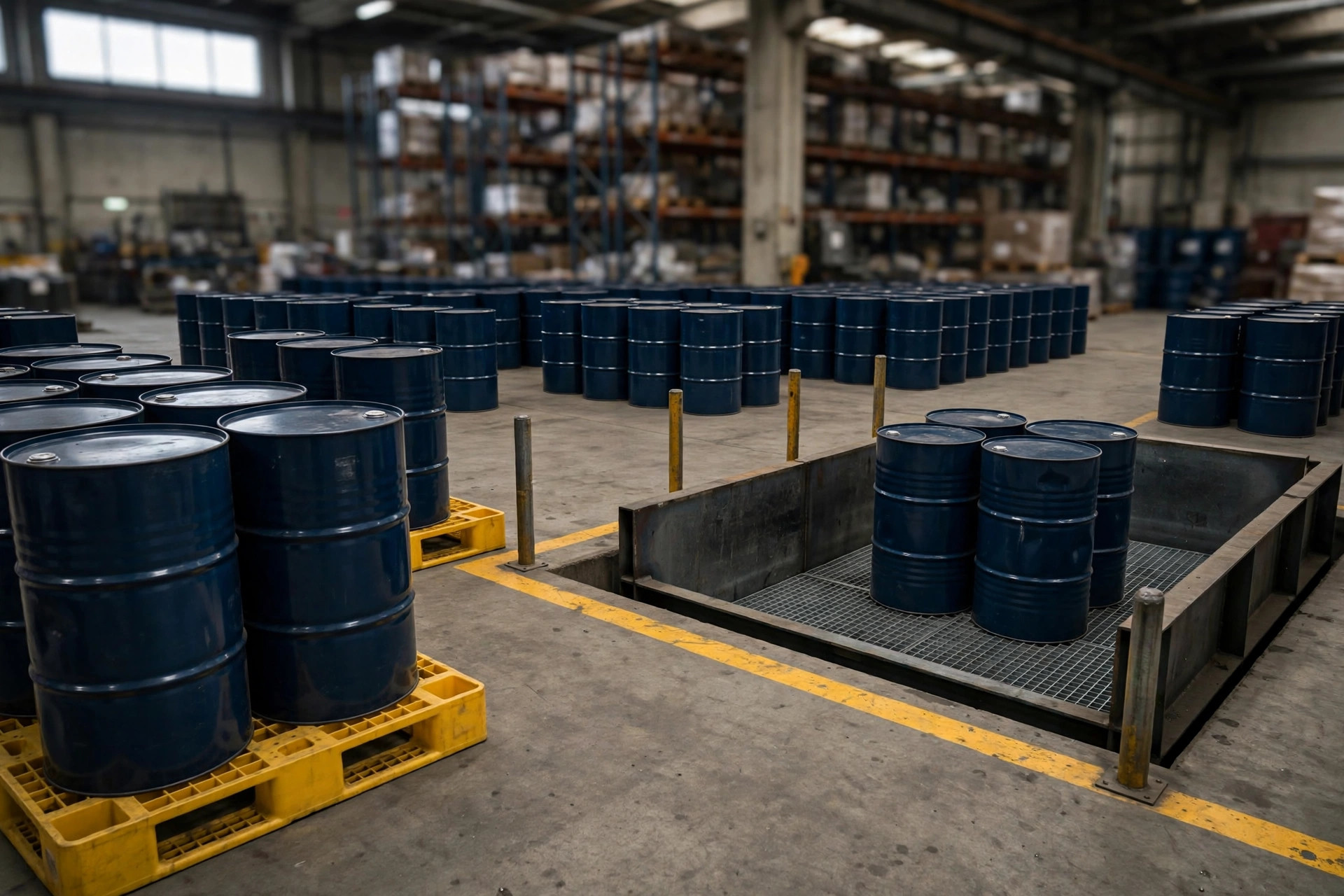
Fall of 2023, I'm at a chemical warehouse outside Houston, loading paint thinner — UN1263, flammable liquid. The paperwork the clerk hands me looks fine: UN number, proper shipping name, hazard class, all there. Then I walk the drums. The UN packaging marks on half of them are rubbed near-illegible, and one drum has a dented corner. I ask her, "This one's been dropped, hasn't it?" She says, "Shifu, don't worry, it won't leak." That's the two words that scare me most in this business. I made her swap the drum and re-mark the lot — two hours lost. Later I heard about another driver who didn't have my stubborn streak — same kind of load onto I-10, federal roadside inspection in Louisiana. His shipping paper said Packing Group III. The freight was really PG II. Paper and cargo didn't match. Truck impounded on the spot, driver and cargo sat at a rest area for two days, and both the shipper and the carrier got citations.
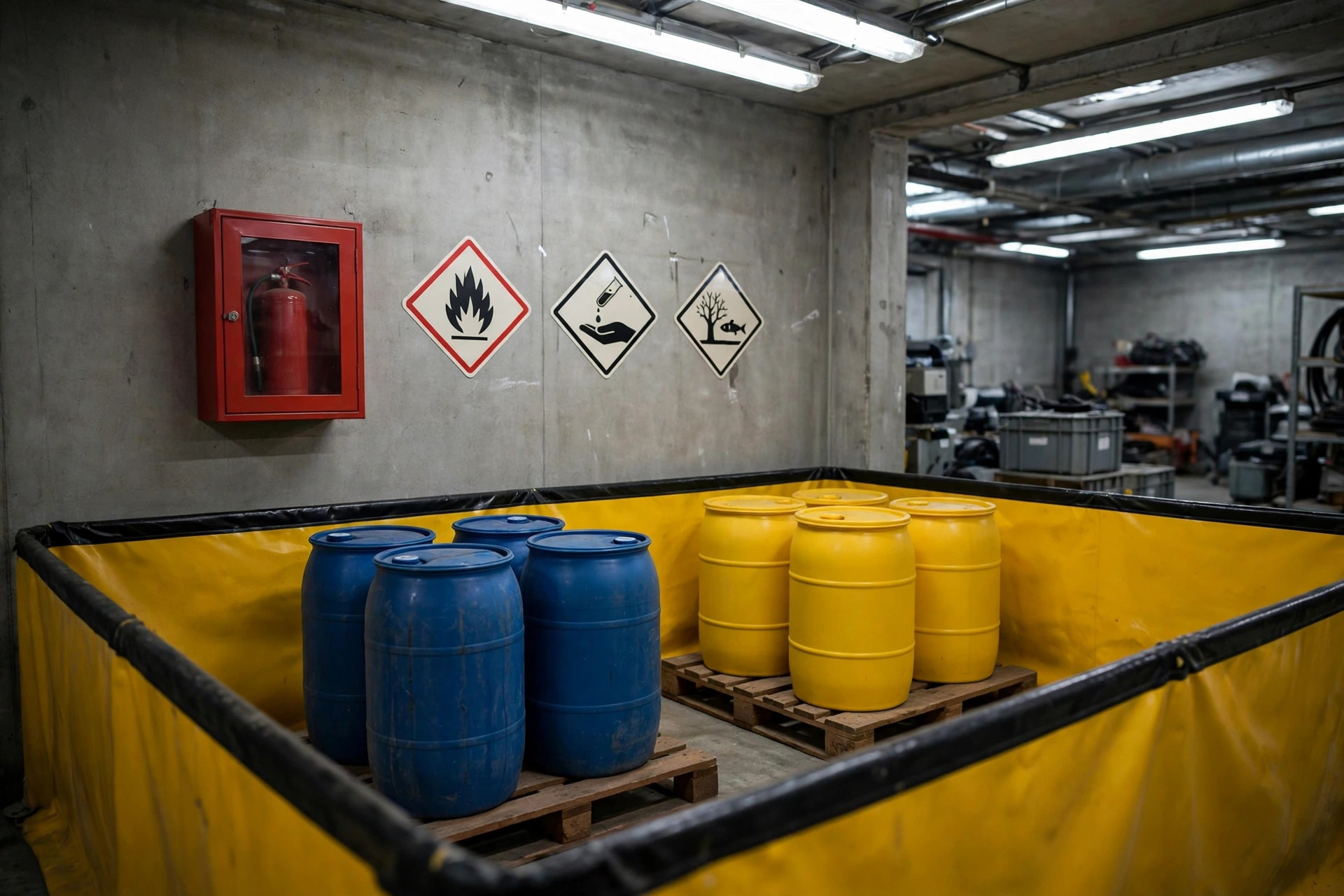
Early 2024, a warehouse in Ontario, California. Twelve plastic drums of corrosive cleaner, loaded neat, diamond labels stuck on. Driver fuels up in Fontana, walks around out of habit — one side label has been half-torn off by the wind, hanging by a strip of adhesive. He thinks, "Still on there, close enough," and rolls. CHP pulls him over northbound on I-15. A defaced label, by 49 CFR's reading, is the same as no label. Two violations that day: the marking, and an emergency phone number on the shipping paper that rang straight to voicemail. The driver went pale.
Here's what those stops tell you: in hazmat outbound shipping, DOT 49 CFR isn't rules on paper — it's rules on the road. The inspector checks three things: is the packaging right, are the markings legible, is the paperwork complete. Miss one, and the truck doesn't move.
DOT 49 CFR Packing Groups: What PG I, II, and III Actually Mean
Most people hear "packing group" and think it's about how thick the drum is. It's not — PG grades the danger of the material: PG I great danger, PG II medium, PG III minor. Once that grade is set, the whole packaging regime follows: more dangerous goods, more brutal tests (drop, stacking, pressure). PG I packaging goes through the worst; PG III gets a lighter ride. The trap I see shippers fall into most often is the "downgrade mindset": the freight is really PG II, but they call it PG III to save on drums and paperwork. That math is upside down. Get caught with a packing group that doesn't match the actual hazard, and the fine will buy you a whole warehouse of drums. Worse — if something actually happens, the insurance adjuster's first move is to pull your PG declaration.
And here's the counterintuitive part: PG III freight gets cited more often than PG I. Nobody dares get sloppy with PG I. But PG III sounds like "minor danger," so everyone gets casual — labels crooked, paperwork from memory, old drums grabbed as-is. Inspectors know this. They look for the loads that "don't look dangerous." The lower the grade, the less room for carelessness.
The Work on the Drum: UN Packaging Marks and Diamond Labels
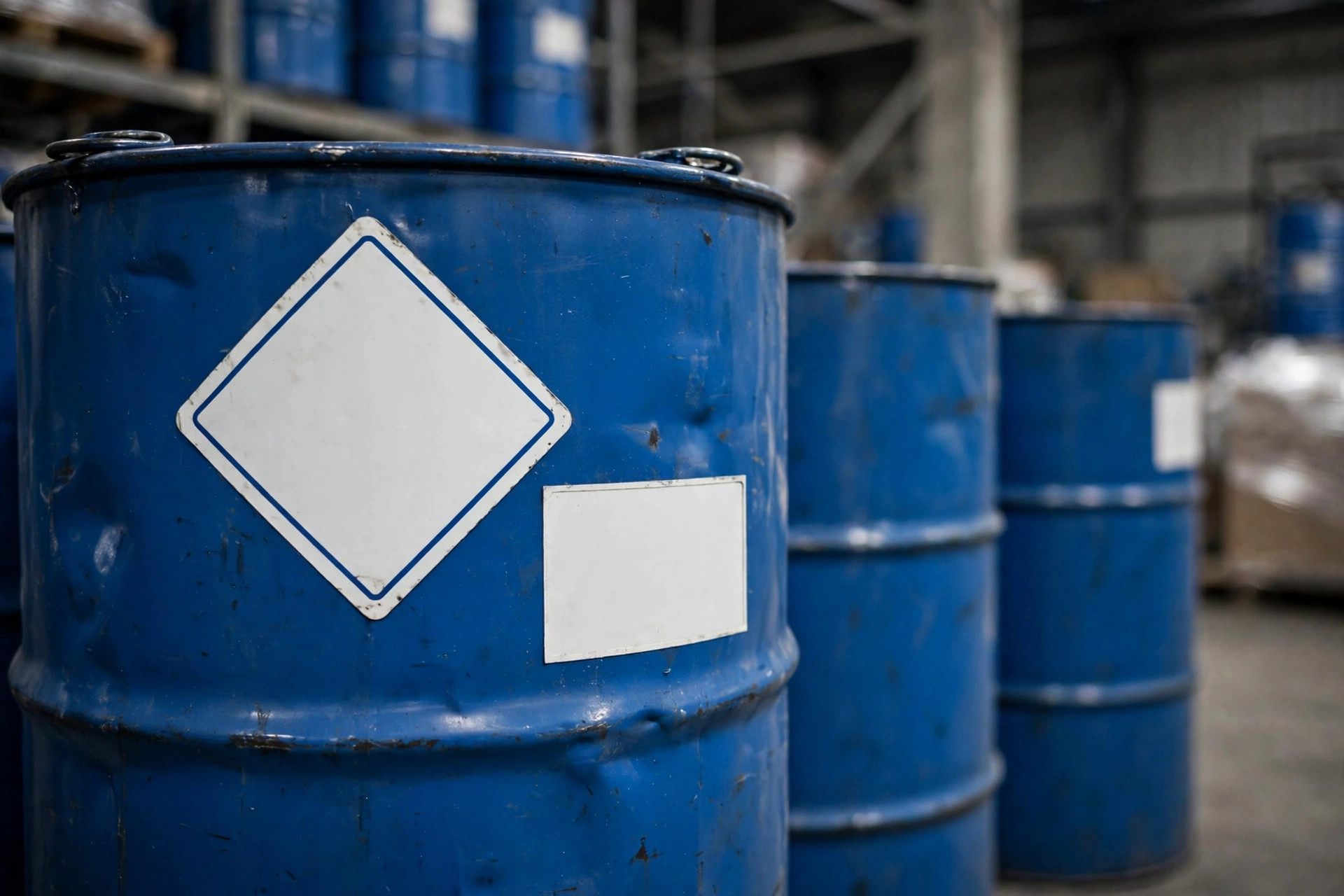
Every compliant hazmat package carries a UN mark, like "UN 1A1/X1.8/300" — the drum's ID card: 1A1 steel drum, X tested for all three packing groups, 1.8 specific gravity, 300 test pressure. Before loading, match the mark to the freight: PG II freight needs Y (PG II and III tested) or X. Loading PG II material into a Z-marked drum (PG III only) is like carrying hot soup in a paper cup.
Don't confuse diamond labels with placards. The diamond label goes on each package for handlers; the placard goes on all four sides of the trailer for everyone on the road, especially first responders. DOT's "1,001-pound rule": the most dangerous class needs placards at any amount; the next tier needs them once the aggregate tops 1,001 pounds. Do that math before the truck rolls.
The Six Elements of DOT 49 CFR Shipping Papers: Write It Right, Rest Easy
Under 49 CFR 172.202, the shipping paper's basic description of each hazmat must list six items, in order:
- UN number — e.g., UN1263, right up front;
- Proper shipping name — must come from the official table in 172.101; your own description doesn't count;
- Hazard class — e.g., Class 3, flammable liquid;
- Packing group — PG I, II, or III;
- Quantity — how many drums, how many liters or kilos;
- Emergency phone number — answered 24 hours a day by someone who knows this load.
Number six is where most shippers bleed. They put down the company main line — answered during business hours, voicemail at 2 a.m. But 172.604 requires that number to be answered around the clock by someone who can speak to the material's hazards and emergency response. The inspector dials it on the spot. Nobody picks up, or the person who picks up doesn't know the freight — citation. I've seen a shipper with the right number whose night-shift kid couldn't answer a single question. Same citation.
The paper also has to ride within the driver's immediate reach — seatbelt on, arm's reach, per 172.201. Buried under the bunk or locked in a toolbox doesn't cut it. And the shipper's certification signature at the bottom is you personally vouching that everything on that page is true. Count the six elements one by one before you sign.
Pre-Departure Checklist: 12 Steps That Keep Hazmat Outbound Shipping Alive
Fifteen years, boiled down. Warehouse runs it before loading; driver runs it before rolling:
Packaging (4)
- Every drum's UN mark legible; performance letter (X/Y/Z) covers this load's PG;
- No dents, rust-through, or leaks; lids tight, gaskets intact;
- Reused drums: compatible with previous contents, old marks removed;
- Load blocked and braced — no drum-on-drum contact, nothing shifts.
Marking (4) 5. Diamond labels complete on every package, facing out, undamaged; 6. Placards on all four sides per the 1,001-pound rule, right side up; 7. UN numbers on packages match the shipping paper; 8. Orientation arrows on liquids point up.
Paperwork (4) 9. All six elements present, in order, with official proper shipping names; 10. Emergency number dialed and tested on the spot — a knowledgeable person answers; 11. Shipper's certification signed; papers within the driver's reach; 12. Emergency Response Guidebook pages for the material ride along — driver knows who to call first if things go wrong.
Twelve items, fifteen minutes when you're practiced. Fifteen minutes for a safe run. That's a trade I'll take every day.
The Real Trade-Off: Are Small-Quantity Exceptions a Break or a Trap?
49 CFR offers limited-quantity and small-quantity exceptions — below certain thresholds, you can skip placards and simplify packaging. Small shippers hear that and smile. I hear it and frown.
The exception waives the placard, not the responsibility. The paperwork still has to be written, the packaging still has to comply, and if you drift over the threshold, you're fined under the full standard. The exception also breaks most often on the word "consolidated": three small shippers each under the limit on one truck, combined over the limit, and the whole load is in violation. My judgment call: if your volumes are steady, run the full compliance program and stop dancing on the edge of the exception. What you save on placards won't cover one lesson learned the hard way.
About Fines — Let's Be Honest
Drivers always ask: how much is the fine? Honest answer: DOT penalties stack per violation per day, and the dollar amounts adjust with inflation every year — any number I quote today could be stale tomorrow. Check the current penalty schedule on the DOT/FMCSA official site. What doesn't change: packaging, marking, and paperwork count as separate violations, stacked on top of each other, and knowing violations get hit harder. Don't ask "how much." Ask "how do I never get there." The answer is the twelve items above.
Three Pieces of Advice for Shippers and Warehouses
First: your signature on that shipping paper starts your liability the second the pen lifts — not a formality. Second: the driver is your last line of defense. One extra question from him is one less citation for you. Third: in hazmat there is no "close enough."
Old saying among us road dogs: don't fear the slow miles — fear the dead stop. A truck rolling slow still gets there. A truck parked on the shoulder over a label doesn't. Get the load there safe. That's the whole job.
By Shifu Zhao, Trucking Veteran (15 yrs)