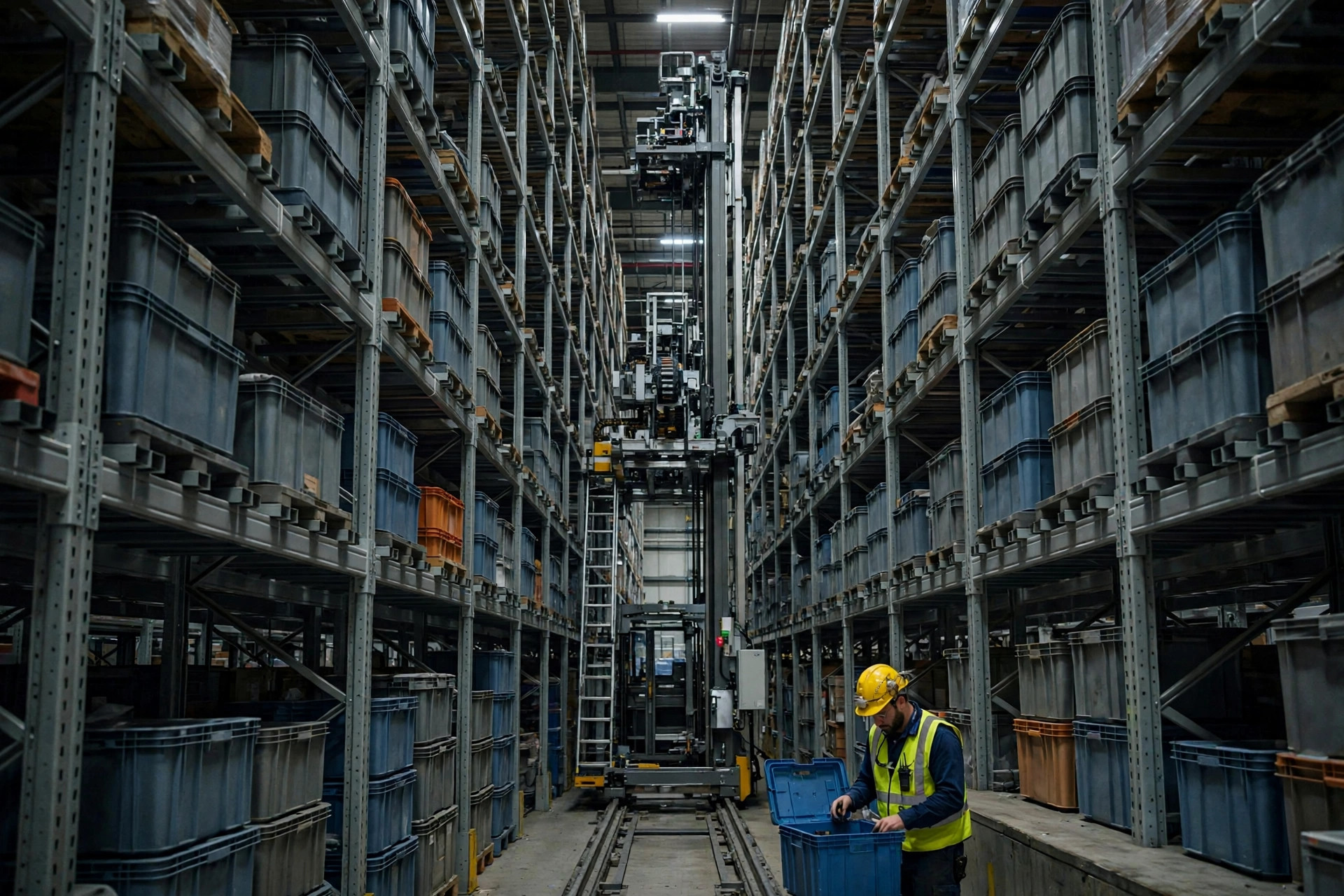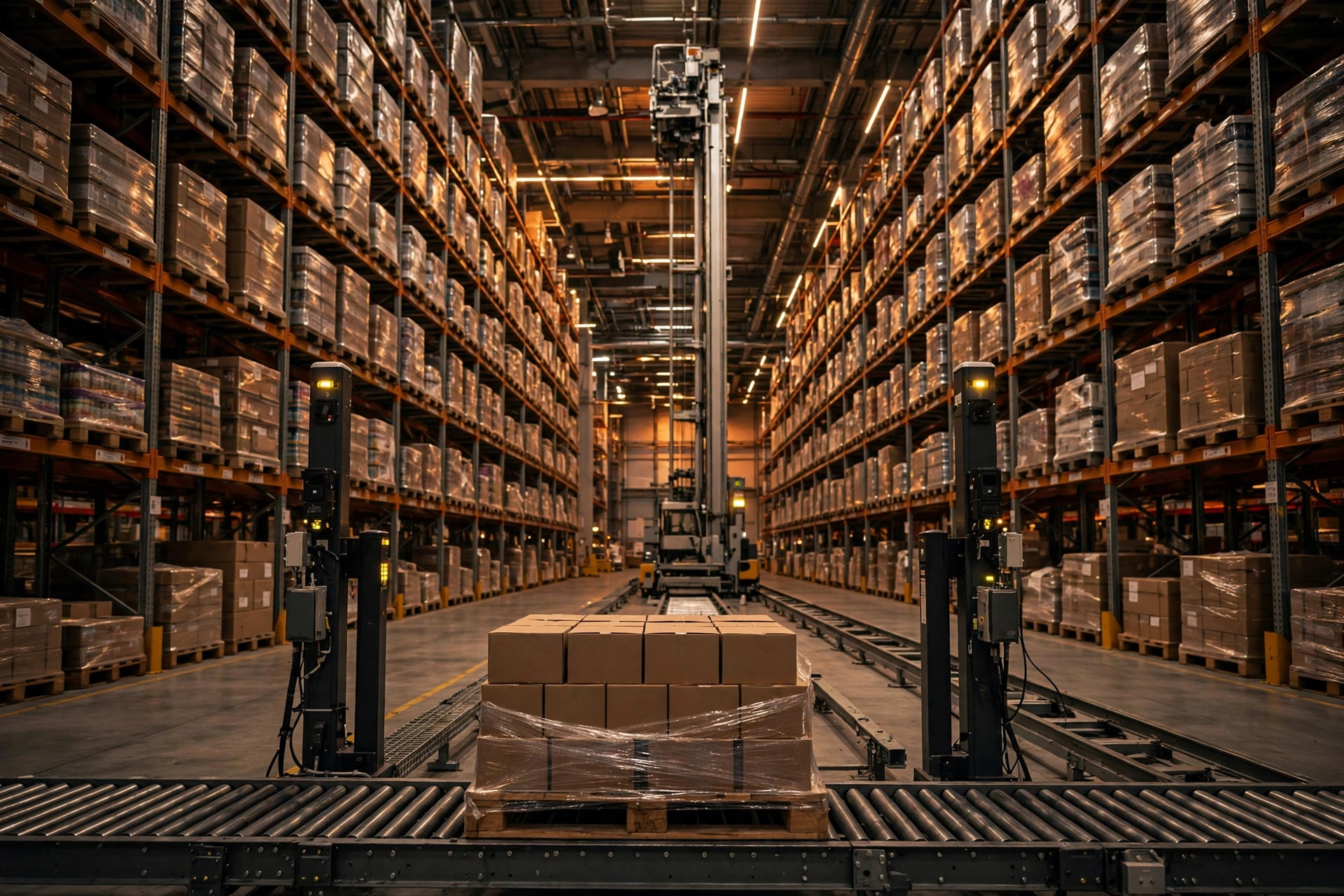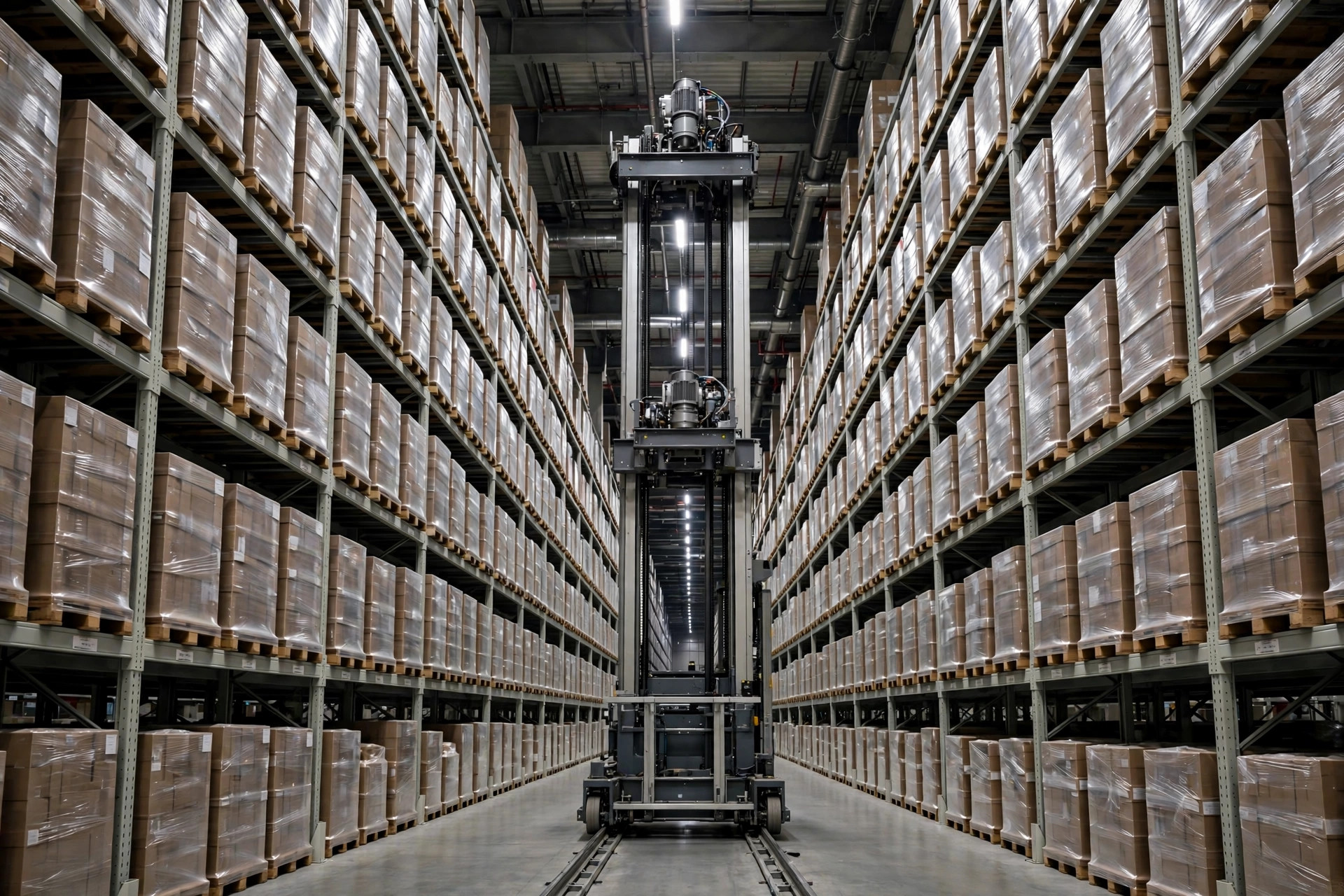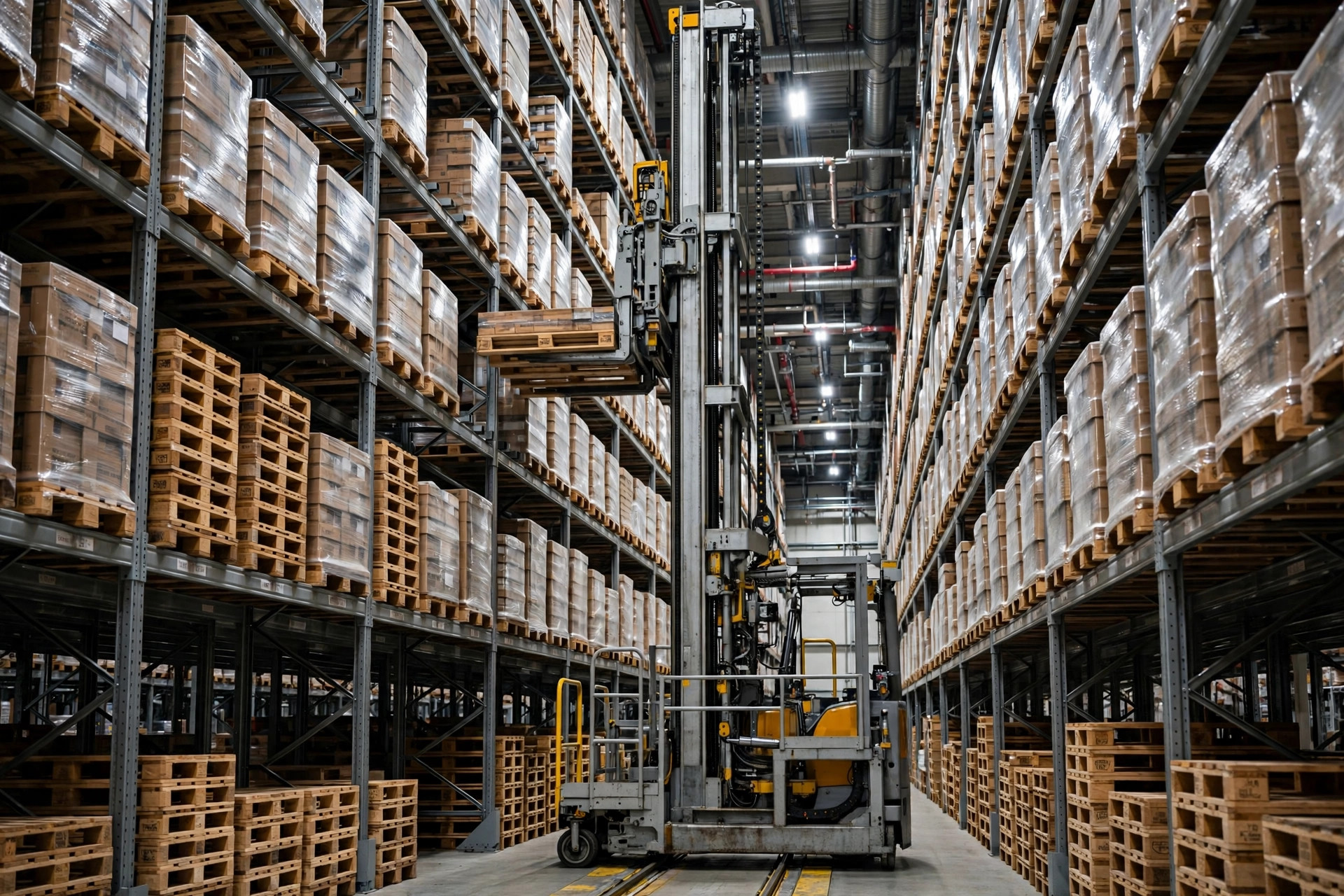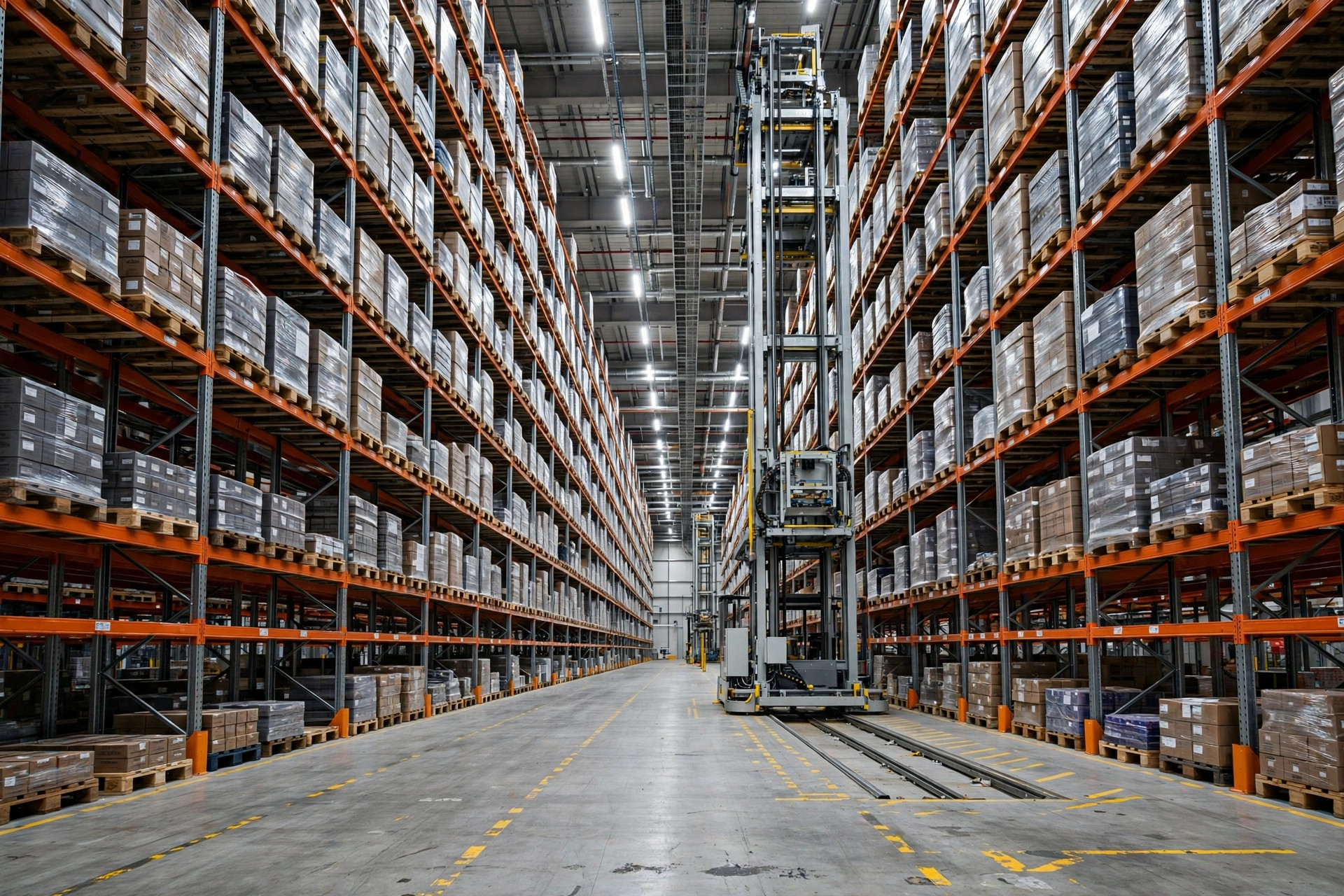
Here's my verdict up front: in dense storage, there is no "advanced" lane and no "outdated" lane. There is only one question that matters — can your operation survive the thing your chosen system is worst at? A stacker crane bets an entire aisle on a single machine. A four-way shuttle spreads the bet across a swarm of small vehicles. You're not pricing equipment here. You're pricing two things: downtime, and change.
The aisle that went dark
I've watched too many warehouses pick an ASRS the way people buy cars — sticker price and advertised horsepower. Fall 2019, a food distributor outside Indianapolis. A freezer building with eight aisles of unit-load stacker cranes. Each crane rated around 30 pallets an hour, dual cycle. The proposal came in nearly 40 percent under the shuttle alternative. On paper, it was a blowout.
Eighteen months after go-live, two weeks before Thanksgiving, the hoist motor on one crane burned out. One aisle — 4,000 pallet positions loaded with holiday promo stock — went completely dark. The spare had to come from Europe: twelve days. A field engineer had to be scheduled on top of that. The workaround was Stone Age: two rented reach trucks, pulling pallets out of the aisle ends one at a time. Six days of that recovered less than a third of the stranded inventory. On-time shipping for the week fell off a cliff, and the customer service phones melted. Worse was the timing: two weeks before Thanksgiving is the one window of the year you cannot go dark, with 3PL penalty clauses fully armed. The GM later told me that week's delay credits alone would have bought half a crane.
Two sides to that story. Stacker cranes earn their keep — one crane does the work of three forklift drivers, around the clock, with aisle utilization north of 85 percent. But the failure mode is written into the architecture: one machine per aisle. When it stops, the whole aisle stops with it. You aren't just buying a machine; you're buying a single point of failure for every aisle you build. Spare-part lead times, engineer scheduling, and the calendar — any one of them can kill you in peak season.
The shuttle math works differently
Summer 2023, a cold-chain e-commerce fulfillment site in Dallas went with four-way shuttles for tote-based dense storage. Fourteen shuttles at launch, roughly 600 totes an hour system-wide. The next year, volume grew 40 percent. No construction, no shutdown — they added six shuttles, reconfigured in software, and throughput caught up the following day. That is the shuttle's real asset: capacity scales by addition, not by demolition.
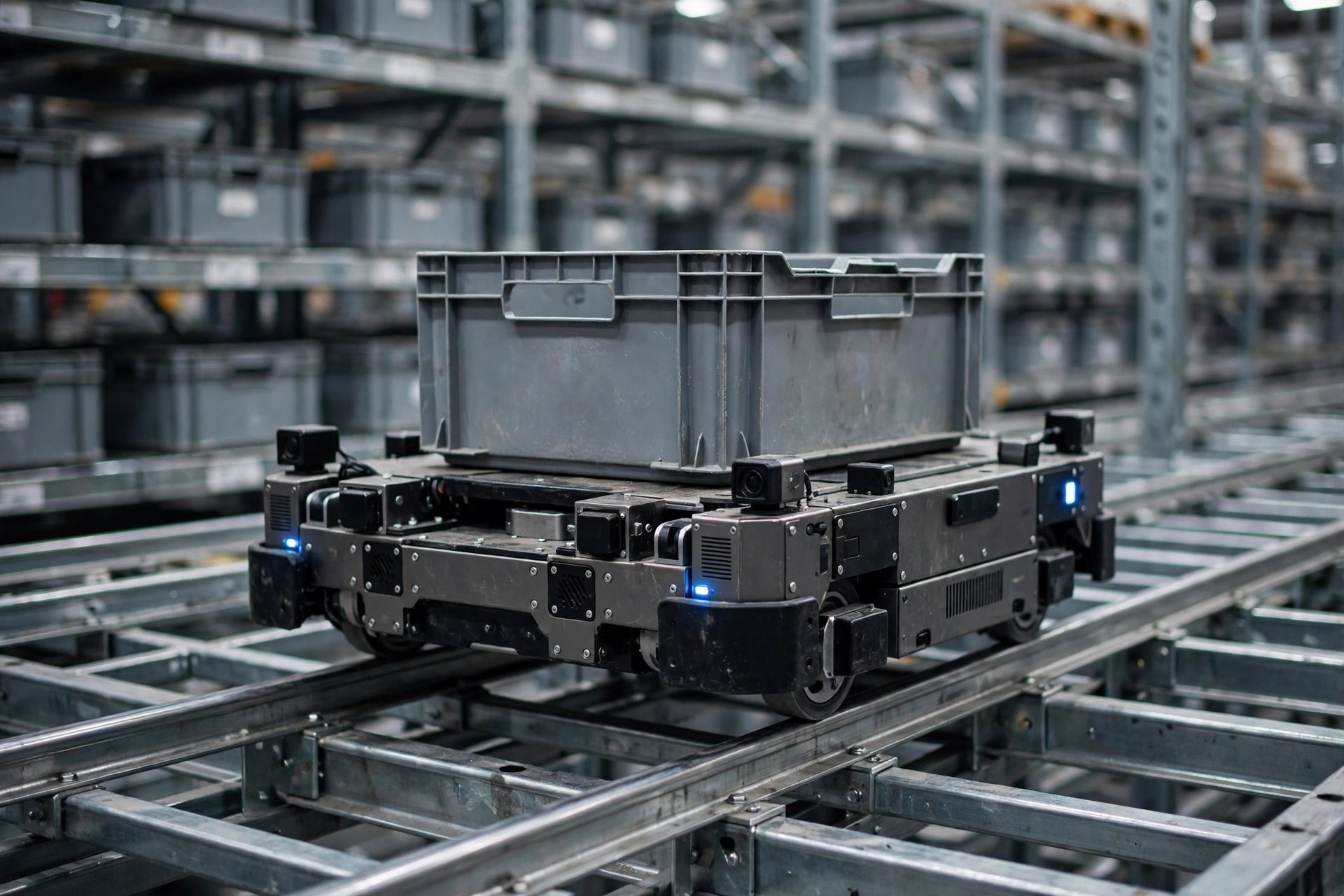
Now the contrarian take: shuttles are neither cheaper nor automatically faster. Per-tote cost usually runs higher than a crane scheme, and the racking tolerances are stricter, not looser — shuttles ride rails on every level, and a few millimeters of installation error means daily alarms. I know an auto-parts warehouse where overweight pallets were routine; the shuttle motors ran overloaded, and the maintenance tech was swapping drive wheels weekly. Every hour of avoided downtime got paid back in work orders.
Say it again, both sides: cranes fear the machine stopping. Shuttles fear your freight being out of spec. How disciplined your freight actually is should decide your lane. Automating on top of sloppy freight with shuttles is just buying yourself an expensive headache.
One more cost nobody puts on the slide: building height. Cranes are a "the taller the better" proposition — they only earn their keep in high-bay buildings north of 25 meters. Shuttle tote systems mostly live in buildings around 10 meters and retrofit old low-clearance sites just fine. If your lease is a standard 32-foot-clear US warehouse, the crane scheme starts handicapped: you pay high-bay money for low-bay efficiency. Skip that math and the whole selection exercise is theater.
And don't call the crane outdated, either. Stable SKUs, standard pallets, running around the clock — one crane does work that takes a dozen-plus shuttles to match, with the power bills and service points to go with it. Don't let the words "new technology" do your thinking. Fit beats fashion.
Head to head
| Dimension | Stacker crane (aisle-based ASRS) | Four-way shuttle |
|---|---|---|
| Throughput | High ceiling per machine (unit-load ~25–40 pallets/hr, miniload up to ~80–120 totes/hr) — but capped per aisle | Modest per shuttle; system throughput scales linearly with shuttle count |
| Single-point-of-failure risk | Fatal: a dead crane blacks out the whole aisle; spares measured in weeks | Distributed: one dead shuttle, the rest cover; but lifts and layer-changers are still bottlenecks |
| Expansion flexibility | Poor: a new aisle means new construction plus new machinery | Strong: add shuttles or levels, expand live with no shutdown |
| Investment scale | Concentrated capex per aisle; low cost per position once filled | Racking, rails, shuttles, and software all cost money; more shuttles, more money; often higher upfront |
| Maintenance | Few service points, but each repair takes down a whole aisle | Many small service points (batteries, wheels, comms); a steady drip of routine tickets |
| Freight discipline | Tolerant; pallets and totes get some slack | Unforgiving: overweight, oversize, or rack misalignment causes chronic pain |
| Building fit | Loves high-bay (25 m+) to pay off; heavy floor-load demands | Friendly to standard and retrofit buildings; runs fine around 10 m |
| Best fit | Stable SKUs, predictable throughput, heavy pallet loads | Fast-changing SKUs, sharp peaks, tote-level goods, growth ahead |
The table done, answer five questions before you sign — the answers will pick for you.
One: pallets or totes? Heavy pallets with stable SKUs — crane, no contest. Totes, small parts, SKUs that churn every season — shuttle territory.
Two: how spiky is your peak? If peaks run more than double your average, the shuttle's add-a-bot flexibility is worth real money. If the year is flat, you harvest the crane's efficiency dividend in full.
Three: does volume double in three years? If yes, take the shuttle lane and start with fewer bots — grow into the system. If no, the crane's one-and-done build is cheaper.
Four: how many dark days can you afford? Price a week of a dead aisle against the shuttle premium. The bigger number picks the winner.
Five: is your freight disciplined? If broken pallets and overweight totes are normal in your building, shuttles will make you regret the purchase. Fix the freight first, then automate.
And price what's off the quote. Cranes demand critical spares — one hoist motor costs enough to hurt for half a year. Shuttles demand spare bots, batteries are consumables, and the software carries an annual fee. I've seen too many projects where year-one add-on spending exceeded whatever the cheaper bid had saved. Put five-year total cost of ownership on the table in the selection meeting and half the arguments die on the spot.
In the selection meeting, every vendor will show you beautiful throughput curves. Ask the other question instead: on the worst day, how does this system die? A crane dies by taking the whole aisle down with it. A shuttle dies of a thousand chronic ailments. Know which death you can afford — then sign. The most expensive part of automation was never the quote. It's the years you spend rebuilding after choosing wrong.
By Lao Mi, Supply Chain Veteran (20 yrs)