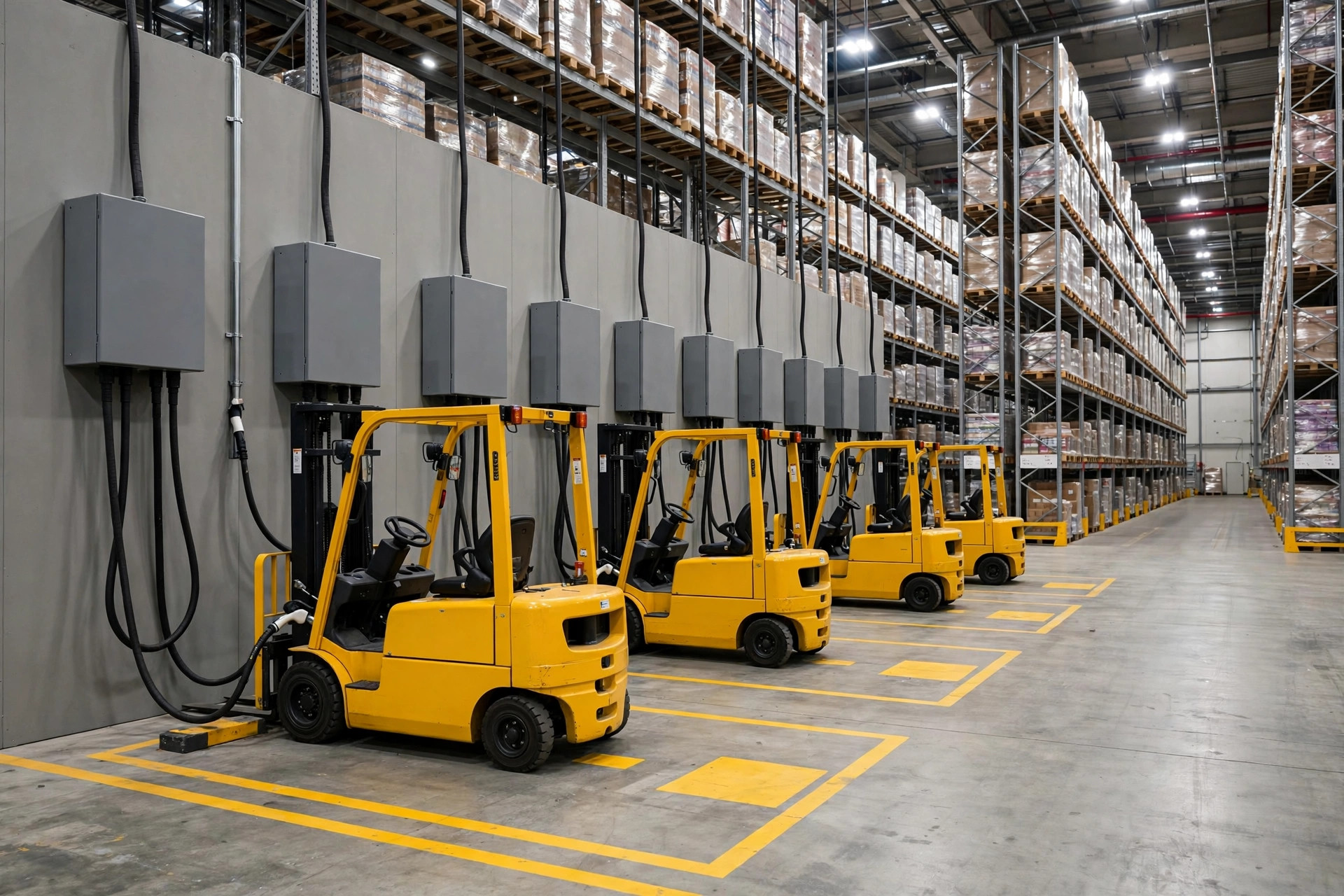
Last winter I ran a load up to Kunshan and rolled into an auto parts warehouse at eleven at night to pick up. Two forklifts sat charging right across the dock door, cables dragging from the wall chargers straight across the walkway, and a guy pushing a pallet jack nearly ate it on one of those cables. I sat out there for over forty minutes before they got around to unloading me. When I asked, they just shrugged: "Chargers are by the dock door. Convenient — the electrician said it's close to the panel, saves on wiring."
Let me tell you, that story is as typical as it gets. The charging area is the piece of warehouse layout that gets placed "wherever" more than anything else. The electrician puts it wherever is closest to the panel. The warehouse manager lets forklifts charge wherever is closest to the work. And the result is a squatter sitting right in your traffic lane — blocking doors, tripping people, hogging dock positions, the whole package. In all my years on the road, I've seen more badly placed charging areas than I can count on both hands.
Put It in the Wrong Spot and You're Blocking Your Own Door
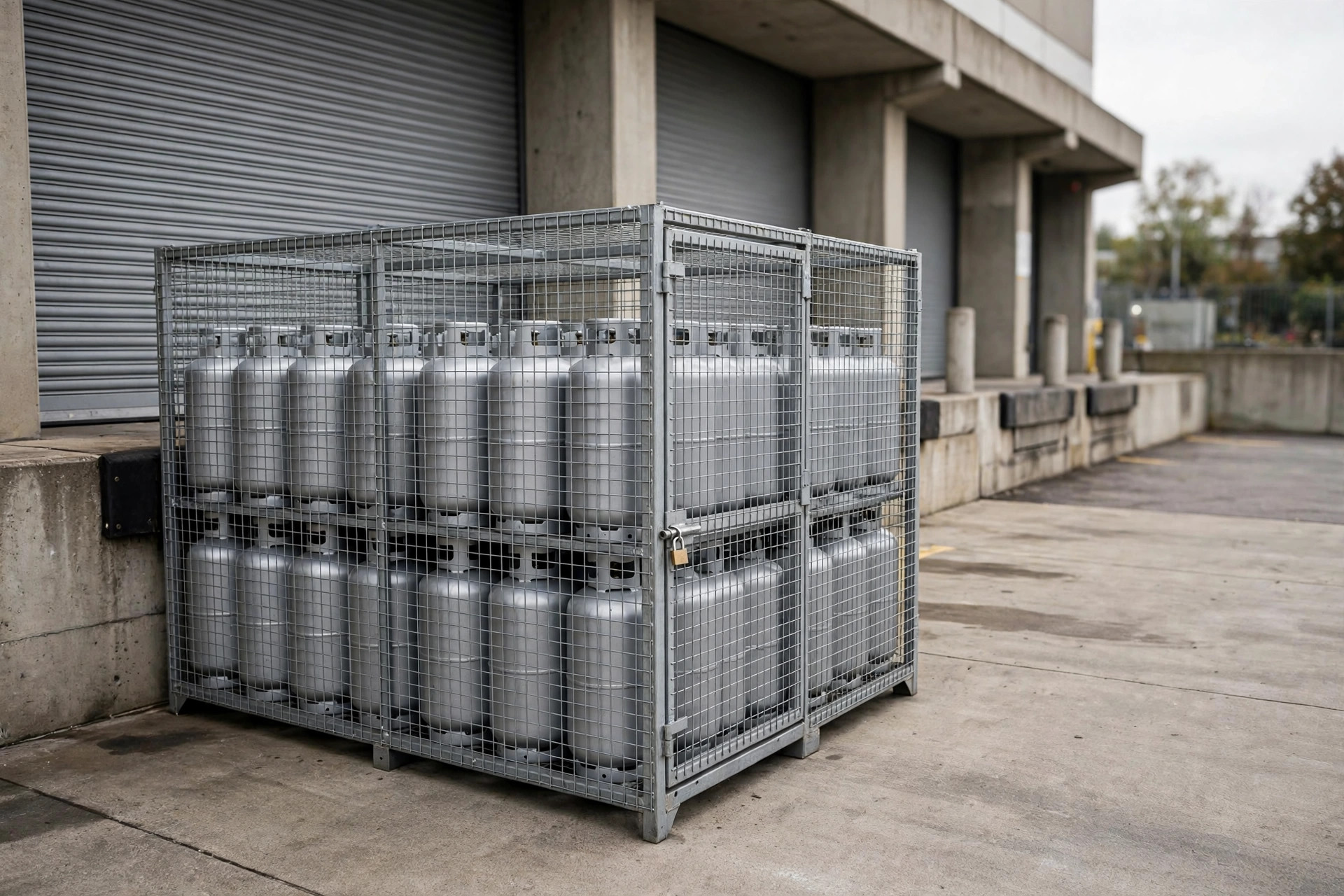
A couple summers back, down in Foshan, I delivered to a furniture warehouse where the charging area sat right next to the carton and packaging storage. Forklifts charging away, mountains of cardboard boxes stacked right beside them. I said to their warehouse guy, "All these boxes next to charging equipment — what if a spark ever flies?" He waved me off: "We've kept it this way for years, never been a problem." I'm telling you, after all these years on the road, that sentence makes my blood run cold every single time I hear it. No incident doesn't mean no risk. It means you've been lucky.
So where should the charging area go? I've boiled it down to three rules. One: keep it close to the work area, so drivers aren't driving halfway across the building to charge — that saves real time every shift. Two: keep it far from anything flammable — cartons, wooden pallets, packaging storage, as far away as you can manage. Three: never, ever block a main aisle or a dock door. That's iron law. No matter how many trucks need charging, you don't block the door. One blocked door and the whole building's schedule starts slipping — drivers stacking up outside, everybody inside getting jumpy.
Ventilation Isn't Being Fussy — It's the Real Deal
Some folks hear "ventilation for the charging area" and think that's overkill. I'm telling you, it's not. Lead-acid batteries give off hydrogen gas when they charge. Hydrogen is lighter than air, so it floats up and collects near the ceiling, and it doesn't just drift away on its own. Get the concentration high enough and one electrical spark turns into a very bad day — the textbooks put hydrogen's lower explosive limit at 4% in air, and that's not a number to argue with.
So the charging area must never be some sealed-up corner. Keep doors and windows open, put an exhaust fan overhead, and don't cheap out on it. This goes double for older buildings — low ceilings, small windows, charging area stuffed into a corner, and all that hydrogen just sits up there. The worst one I ever saw had the chargers crammed into a dead corner with one little window for airflow. Walked in on a summer day and the air smelled sour — that's electrolyte fumes. You could feel in your gut that something wasn't right.
Lead-Acid vs. Lithium: Two Completely Different Animals
Plenty of warehouses have switched to lithium forklifts now, and charging gets a lot simpler. But plenty still run lead-acid, and those two batteries charge in completely different ways — so the layout has to be different too:
| Lead-acid | Lithium | |
|---|---|---|
| Charging style | Full charge cycles, no opportunity charging | Charge whenever — plug in on a break |
| What comes off it | Hydrogen gas — ventilation required | Practically no hydrogen, much less worry |
| Battery swaps | Needs a hoist and battery rack, eats floor space | No swaps at all — that workstation disappears |
Last fall at an e-commerce warehouse in Dongguan, everything was lithium. Drivers plugged in over lunch and rolled straight back out in the afternoon, zero downtime. One driver told me back in his lead-acid days, a battery swap took two guys the better part of fifteen minutes, plus they had to keep a whole area clear for spare batteries. That old swap area? It's pick faces now. See — every square foot you free up is money.

Now here's the part that goes against common sense. Most people figure a charging area is just a place to plug in, so the smaller the better — save the floor space. I'm telling you it's exactly backwards. The smaller the charging area, the faster it turns into a mess. Give it proper room — space to coil cables, space to park, room to turn — and it runs itself. You save a few square meters and then one blocked dock door or one tripped worker costs you ten times that. Warehouse owners need to do that math honestly.
Three Down-to-Earth Suggestions
After all these years on the road, here's my plain advice for warehouses. None of it costs much.
First: put the chargers at the edge of the work area but in their own separated corner. Paint the zones on the floor. Run cables through overhead trays on the wall — never drag them across the floor. A cable on the floor will trip somebody sooner or later, and the medical bill costs a whole lot more than a cable tray.
Second: if you're on lead-acid, wall off the charging area separately, put exhaust ventilation overhead, and keep a fire extinguisher by the door where a hand can reach it. Don't wait until the inspector shows up to install one — the ones installed the day before an inspection never actually work when you need them.
Third: leave one spare charging spot. Peak season brings extra trucks, rental forklifts show up, and everybody needs a plug. Without a spare spot, someone runs an extension cord across the building. Extension cords in a warehouse are one of the things I dread seeing most — once the cables multiply, every kind of hazard multiplies with them.
There's an old saying: sharpening the axe doesn't delay the woodcutting. A charging area looks like a few unremarkable square meters, but when it blocks your door, it holds up the whole building's clock. Next time your warehouse does a layout, don't just stare at the racking plan — take a hard look at where the chargers are going. Get that spot right, and what you save is real money.
By Shifu Zhao, Trucking Veteran (15 yrs)