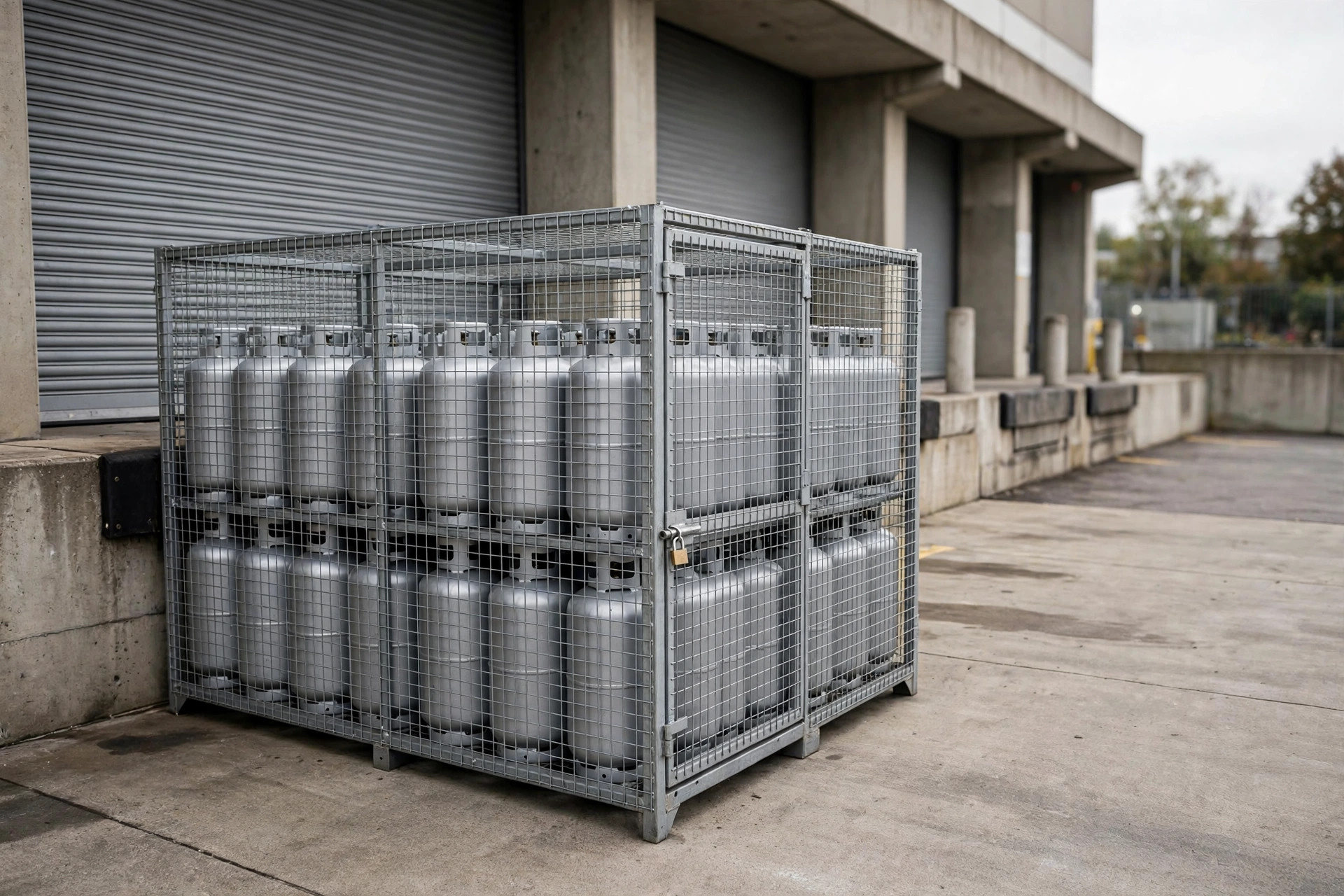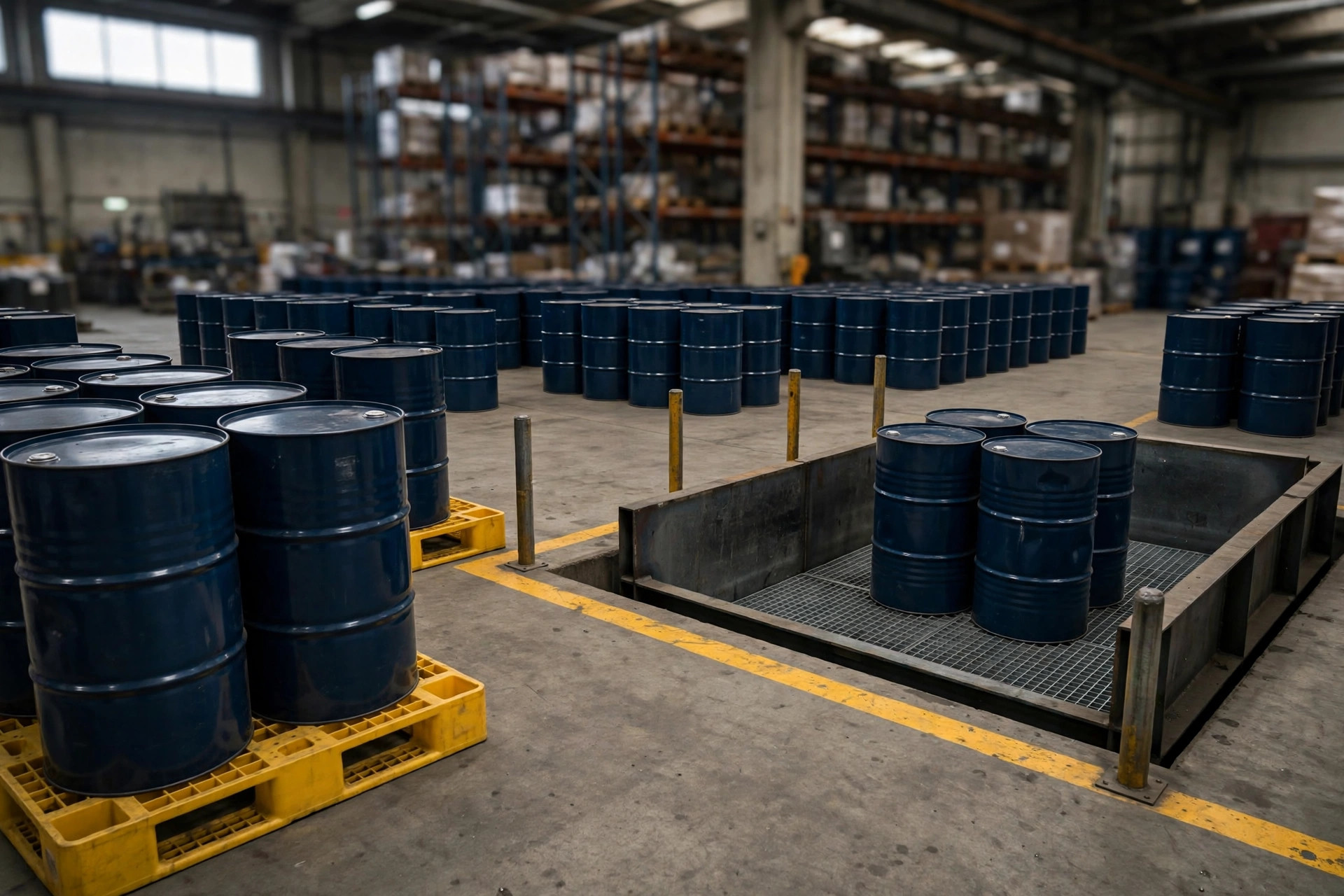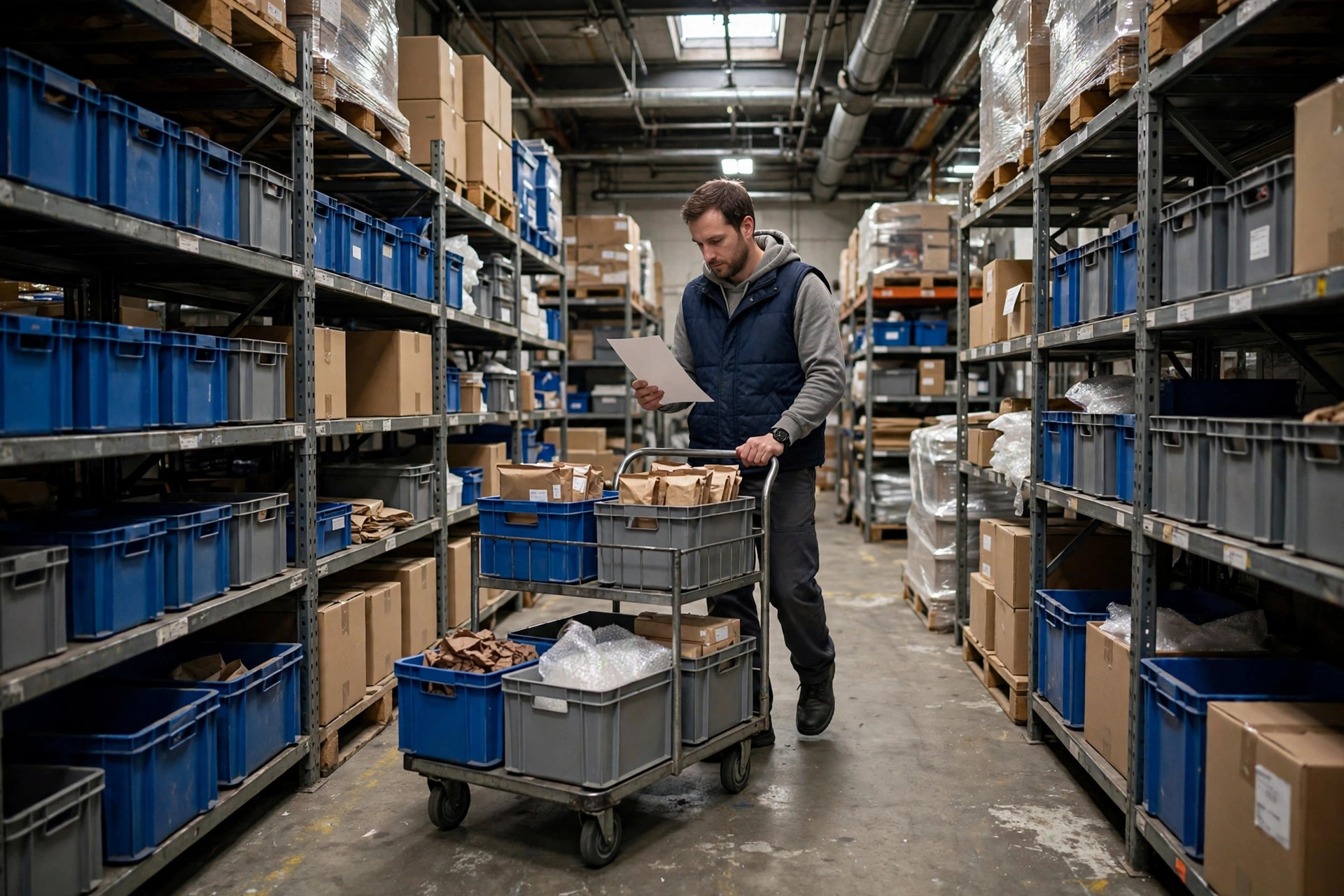
In March this year, 40 cases of tar remover nearly set my 30,000-square-foot warehouse on fire — not literally, but the OSHA rulebook scared me straight. That was the week I learned storing flammable liquids is not a “stick it in the corner” situation. Which flammable storage cabinet to buy, how many, where to put them — every step has a red line. Here is everything I learned the hard way, including the money I wasted and the money I saved.
What a Flammable Storage Cabinet Actually Does (Spoiler: Not What You Think)
Here is the counterintuitive part: a flammable storage cabinet does not prevent explosions. It buys you time.
Three months ago I assumed the cabinet's job was to lock an explosion inside — the tougher the box, the more you cram in, the safer. Wrong. Its real name is fire-rated safety cabinet: if a fire breaks out, the double-wall steel construction holds the flames back long enough for people to evacuate, call 911, and fight the fire. So cramming it full until the door barely closes is the most dangerous thing you can do — a blocked self-closing door means you paid for nothing.
Once you get that, the hard numbers in OSHA 1910.106 click into place, and they explain why this money is non-negotiable:
- Outside an approved cabinet, a single room may hold at most 25 gallons of flammable or combustible liquids;
- One cabinet holds at most 60 gallons of flammable liquids (120 gallons for combustible);
- No more than 3 cabinets per fire area;
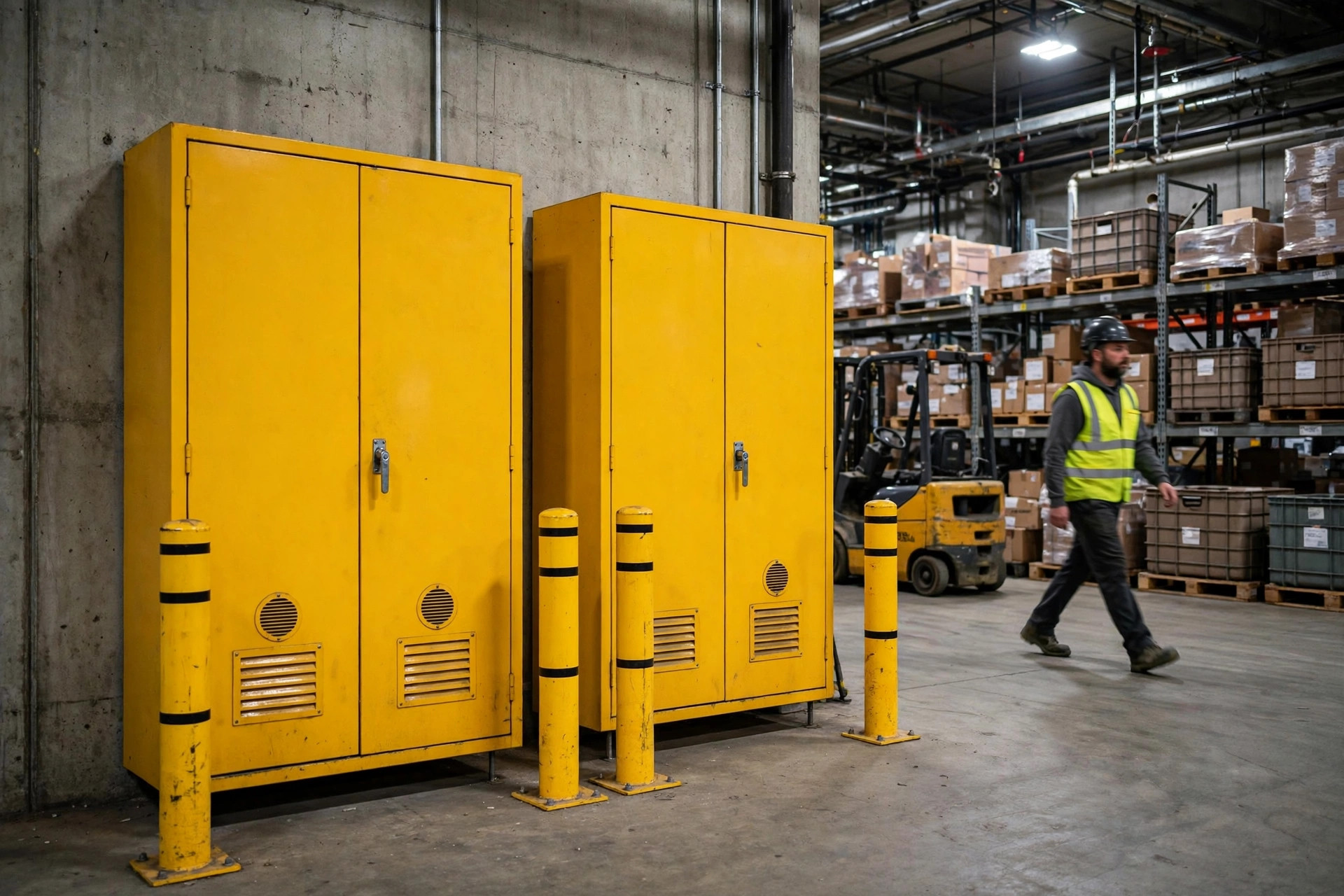
- Cabinets are typically double-wall 18-gauge steel with self-closing doors, a 2-inch leakproof sill, and a permanent “Flammable-Keep Fire Away” label on the door.
How much is 25 gallons? About five standard 5-gallon pails. One decent-sized order blows right past it. So the question was never “do I buy cabinets” — it was “how many, and where do they go.”
Our Predicament: 40 Cases Forced Me Into a Crash Course
In mid-March, a local car-detailing brand came knocking: 40 cases of tar remover and spray wax, needing three months of temporary storage at my warehouse. The rent they offered was sweet, it was the slow season, and I said “no problem, we've got room” before asking what was actually in the boxes.
Rookie mistake. When the shipment landed, the SDS said Flammable in big unfriendly letters. I had Jay, my warehouse guy, convert the per-can volume: roughly 60 gallons total — sitting exactly on one cabinet's 60-gallon limit. Worse, without cabinets, the 25-gallon rule meant I couldn't legally store those 40 cases overnight.
That night I went home and did a crash course on hazmat storage, and the deeper I dug, the scarier it got. Our little warehouse normally handles cartons and household goods — nobody here had ever studied hazardous materials seriously. Big companies have an EHS department. We have me and Jay. This one was on me to figure out.
The DIY Fix: Two Cabinets, Under $3,000, Done
My decision framework was three questions:
- Flammable or combustible? Read the SDS classification — don't guess. Flammable means 60 gallons per cabinet; combustible means 120. The SDS is the boss.
- How much total? Ours was about 60 gallons, technically one cabinet's limit. But I leave margin in everything, including steel boxes — what if the client adds 10 cases next month? I bought two.
- Where do they go? That's the next section, a story of pain. Short version: away from ignition sources, never blocking egress.
While shopping I had three money-saving ideas. I killed two; one survived:
- Buy used cabinets? Killed. You cannot eyeball whether self-closing doors and door gaskets have aged out. Saving a few hundred bucks there is exactly the kind of thing an insurance adjuster would love to find after an incident. Some money you just spend.
- Buy two small cabinets instead? Killed. Remember the 3-cabinets-per-fire-area cap — cabinet slots are a scarce resource. A small warehouse might take on more flammable SKUs later; don't burn your slots early. One bigger cabinet beats two small ones and hogs fewer slots.
- Split freight with the neighbor? Survived! The warehouse next door needed spill pallets, so we combined the order and split the freight — saved nearly two hundred bucks. And don't DIY the label with your office printer (painful lesson below); a reflective “Flammable-Keep Fire Away” decal costs a few dollars online.
Two 45-gallon cabinets plus freight: under $3,000 out of pocket. Now compare that with the big-company approach and you'll see where a small warehouse's money should go:
Flammable Storage Cabinet vs. Dedicated Hazmat Room: The Small-Warehouse Math
| Safety cabinets (our pick) | Dedicated hazmat room (the enterprise way) | |
|---|---|---|
| Upfront cost | Two cabinets, under $3,000 (what I actually paid, approximate) | Two contractors quoted five figures to start — get your own local quote |
| Capacity | 60 gal flammable / 120 gal combustible per cabinet | Bigger, designed to the room |
| Permitting | Buy it, use it | Construction permits + fire approval, measured in months |
| Flexibility | Movable, expandable (max 3 per fire area) | Poured in concrete, going nowhere |
| Right for | Small batches, rotating SKUs and clients | Large volumes, stable long-term SKUs |
The verdict: our clients sign three-month and six-month deals. Building a hazmat room would be renovating my landlord's property — hard pass. Cabinets are the small warehouse's lifeline.
Flammable Storage Cabinet Placement: Three Rules Our Fire Inspector Taught Me
One Tuesday morning in early July, the local fire marshal showed up for a routine inspection. I was feeling confident — cabinets bought, goods inside, what could go wrong? He circled the cabinets twice and handed me three verbal warnings (two weeks to fix, no fine — thank goodness):
- Never block egress. We had parked the cabinets against the wall nearest the dock doors for convenience — too close to the exit path. His exact words: “In a fire, are your people running toward the cabinets or away from them?” I broke into a sweat. Fix: moved them to a wall far from exits, charging stations, and electrical panels.
- Vents stay closed. Some old-timer told me cabinets need to “breathe,” and I almost had someone drill a vent line. The inspector set me straight: vent openings stay closed during normal use; any mechanical ventilation has to meet the code. For a small warehouse, the sane move is to keep them closed and rely on the building's ventilation plus grab-and-close discipline. Drilling holes can wreck the cabinet's fire rating.
- Labels must be permanent and legible. We had printed “Flammable” on office paper and taped it to the door. His response: “In a fire, that's the first thing that burns.” A reflective permanent “Flammable-Keep Fire Away” label: a few dollars, problem solved.
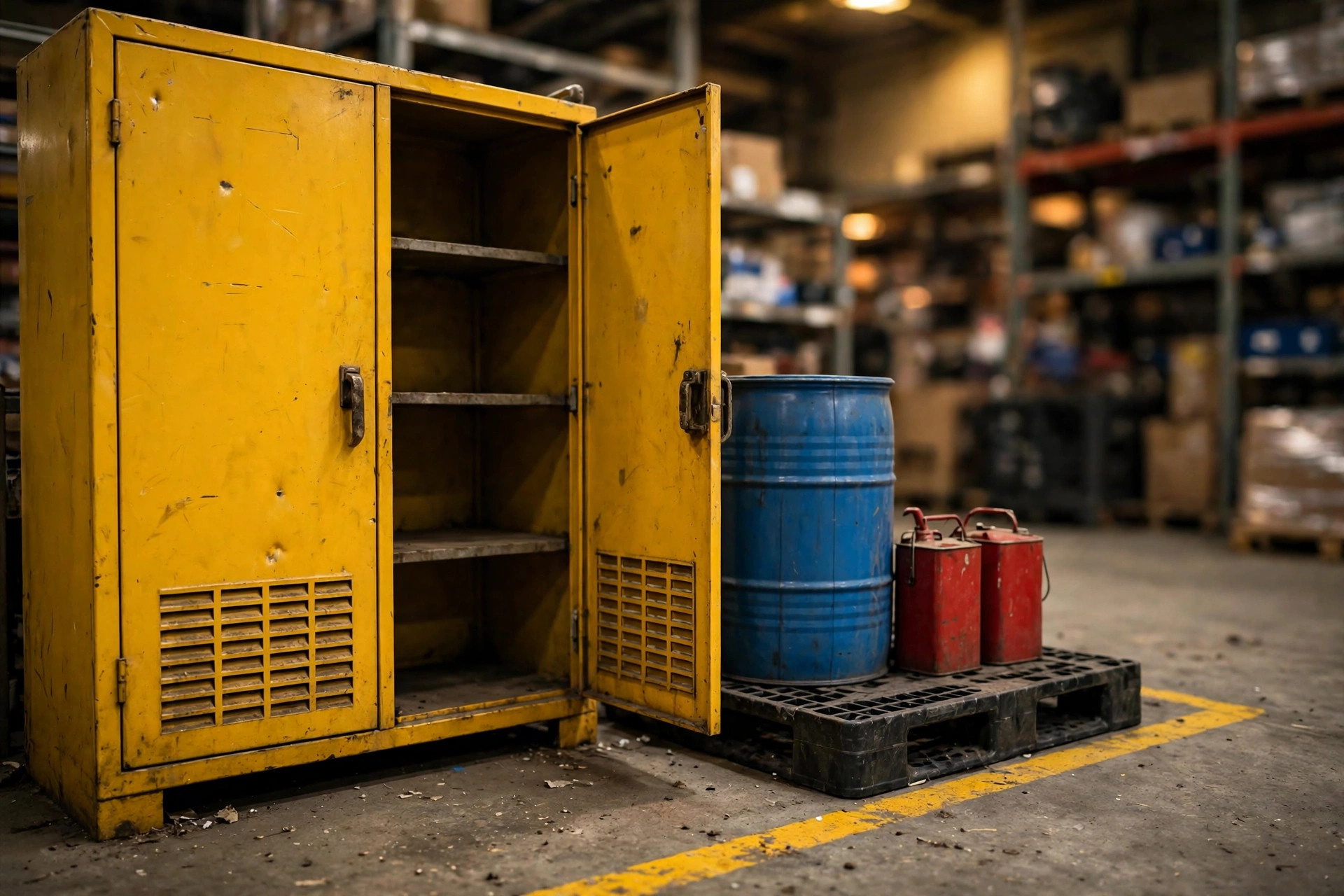
We passed the re-inspection on the first try. As he left, the inspector added: “For a small operation, you're ahead of half your peers.” I played it cool. Inside, I was setting off fireworks.
Five Tips for Fellow Small Warehouses
- Read the SDS before you quote. When a chemical-liquid order comes in, get the SDS first: Flammable or Combustible, then total gallons. A few minutes of homework avoids most of the trouble.
- Buy big, not small — save your cabinet slots. Three cabinets per fire area is a hard cap. One 60-gallon cabinet with margin beats two small ones eating your slots.
- The three placement rules: don't block egress, stay away from ignition and charging areas, keep vents closed. Paint yellow no-parking lines in front and drop two bollards — our forklift drivers have enthusiastic steering, and a cabinet costs more than a rack to replace.
- Excel is your budget WMS. One spreadsheet per cabinet: product, quantity, gallons, red-flag anything near the 60-gallon line. A few minutes of self-audit every month beats any software you won't actually use.
- When in doubt, call the fire department. Every number and requirement here follows OSHA 1910.106 and your local fire authority's latest rules — not “some old-timer.” The fire department's advice line is free. Their fines are not.
Big companies handle hazmat with an EHS department. Small warehouses handle it with the owner giving a damn. Two cabinets, under three grand — and now I can take orders I used to turn down, and sleep through inspections. Small warehouses have their own way of surviving: spend where it counts, and never let a freight charge go unsplit.
By Xiao Ma, Small Warehouse Owner