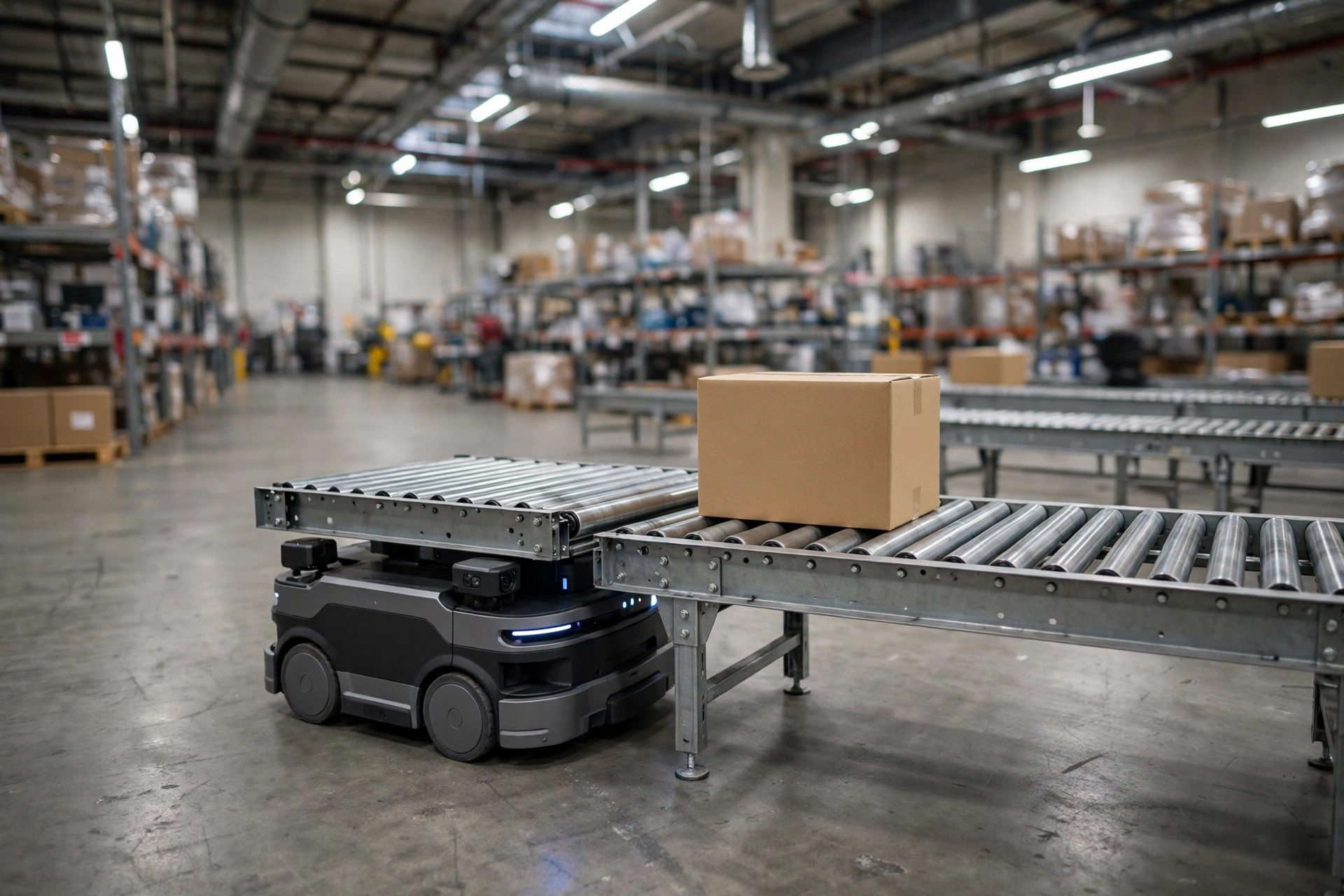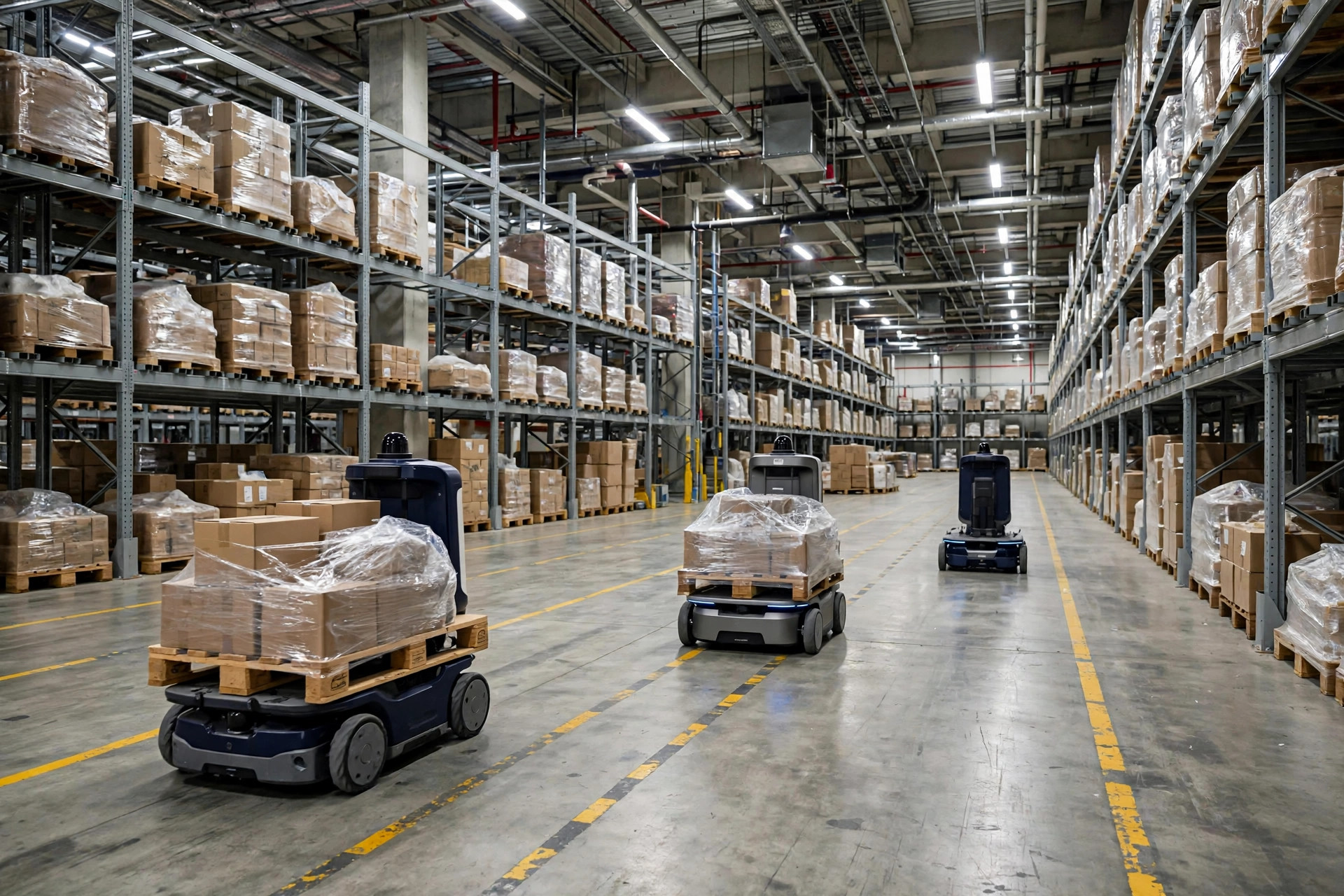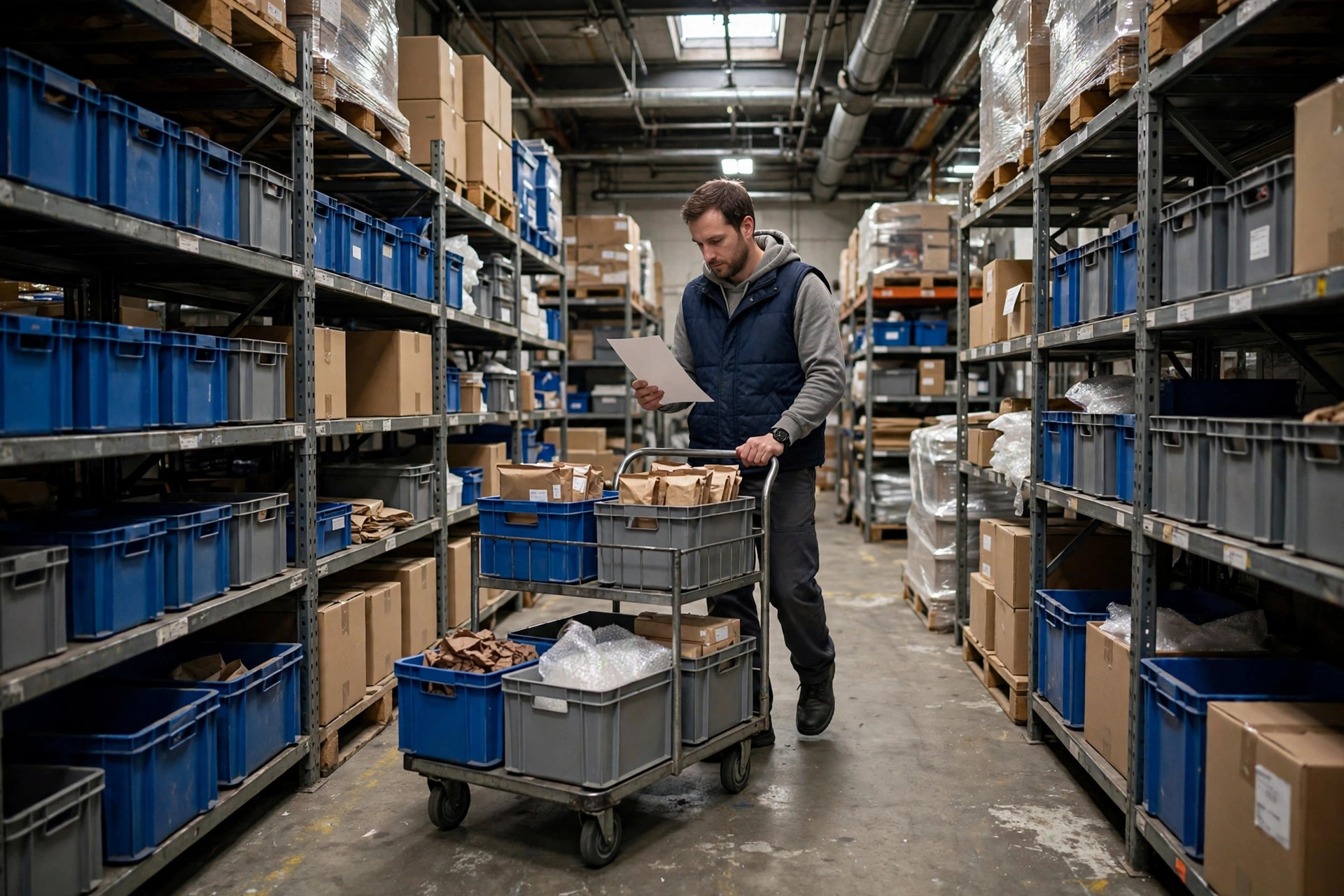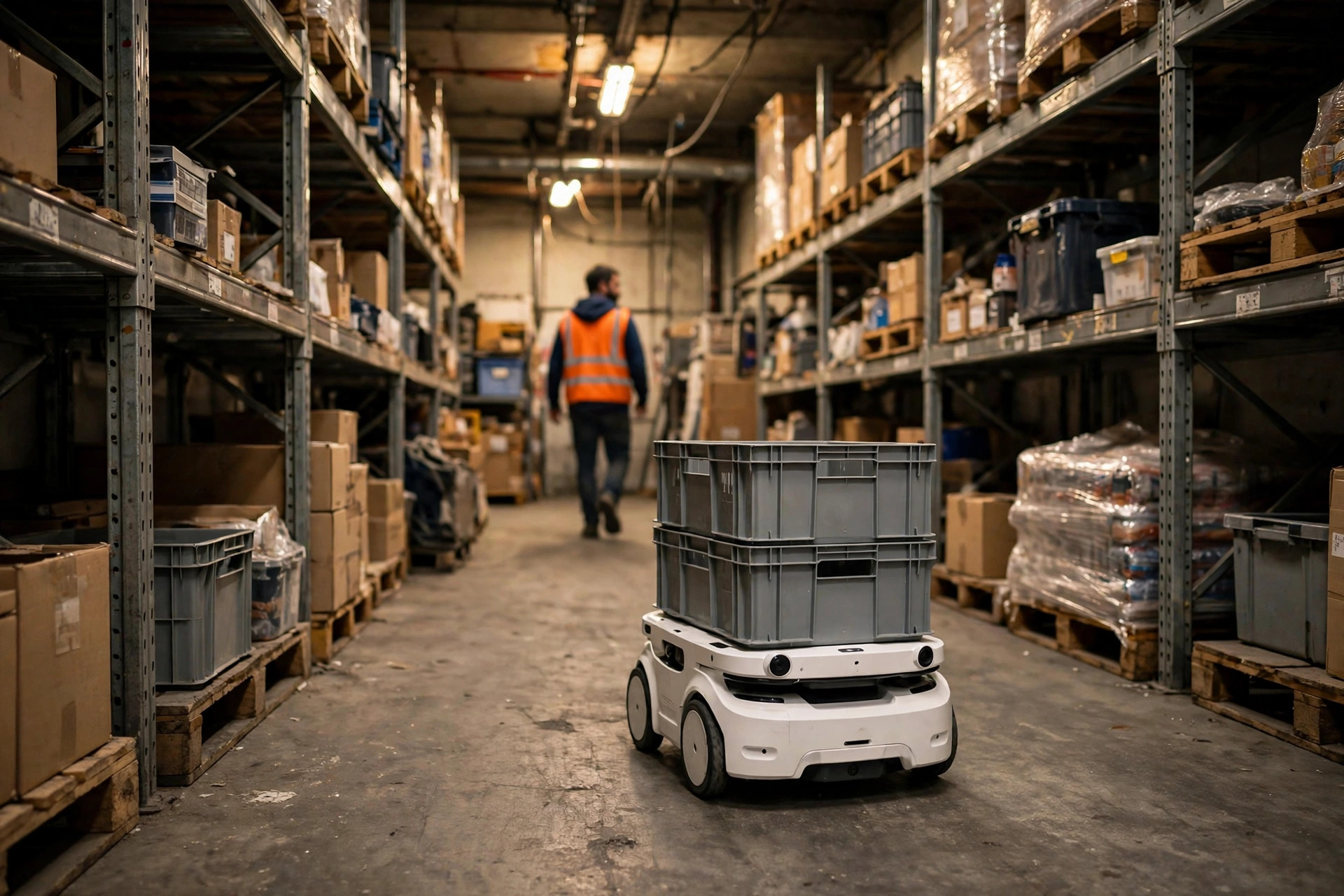
Last October, visiting a buddy's warehouse in Dongguan, I watched a little white cart glide past on its own — two stacks of totes riding on its back, traveling from receiving straight to the racking area, nobody touching it. That was my first brush with a real first AMR pilot in the wild. My buddy slapped the robot like a proud dad: "Half a material handler — never asks for benefits, never calls in sick, never sulks." My heart skipped a beat. Our warehouse is 3,000 square meters with a dozen people; every peak season our handlers' backs give out before the orders do, and temp workers are harder to find than pandas. A year later, our own first unit has been humming along for over half a year. Here's the test-drive math — small-warehouse style. Don't listen to the vendor on this one. Listen to me.
The vendor wanted to sell me six. I bought one.
The sales rep showed up pitching "full-floor orchestration," a slide deck prettier than a wedding planner's portfolio — six units minimum, take it or leave it. I laughed out loud. A small warehouse like ours can't burn money like that. Besides, we've got exactly two main aisles — six robots in there would just be playing bumper cars.
The big-company "automate the whole building" story is fun to listen to. For a small warehouse, the first AMR pilot has exactly one job, four words: prove it works. Spend a little, answer one question — can this thing actually do real work in a place with uneven floors, messy SKUs, and a skeleton crew?
Picking the line for our first AMR pilot: my "three dumb questions"
I chewed on it for half a month and landed on three brutally simple filters. Pick the job that's dumb and exhausting:
First, is the route dumb enough? The more fixed and repetitive the route, the happier the robot. Don't ask it to improvise — it can't, and you shouldn't.
Second, are humans miserable doing it? The harder and more thankless the manual hauling, the sooner that line deserves a robot. Our handlers average in their late forties — backs are a shared company asset.
Third, are mistakes expensive? Any step where one wrong box costs half a day's wages should go to the machine first.
I scored our four candidate routes, 1–5 on each:
| Candidate route | Route fixedness | Manual misery | Cost of errors | Total |
|---|---|---|---|---|
| Receiving → putaway (full-case moves) | 5 | 5 | 3 | 13 |
| Replenishment to pick faces | 3 | 4 | 4 | 11 |
| Pack stations → outbound staging | 4 | 3 | 2 | 9 |
| Returns → QC | 2 | 2 | 3 | 7 |
No contest. Receiving to putaway: one straight line, dozens of trips a day, our guys pushing pallet jacks until they questioned their life choices. That's the one.
A first AMR pilot doesn't start with a purchase order
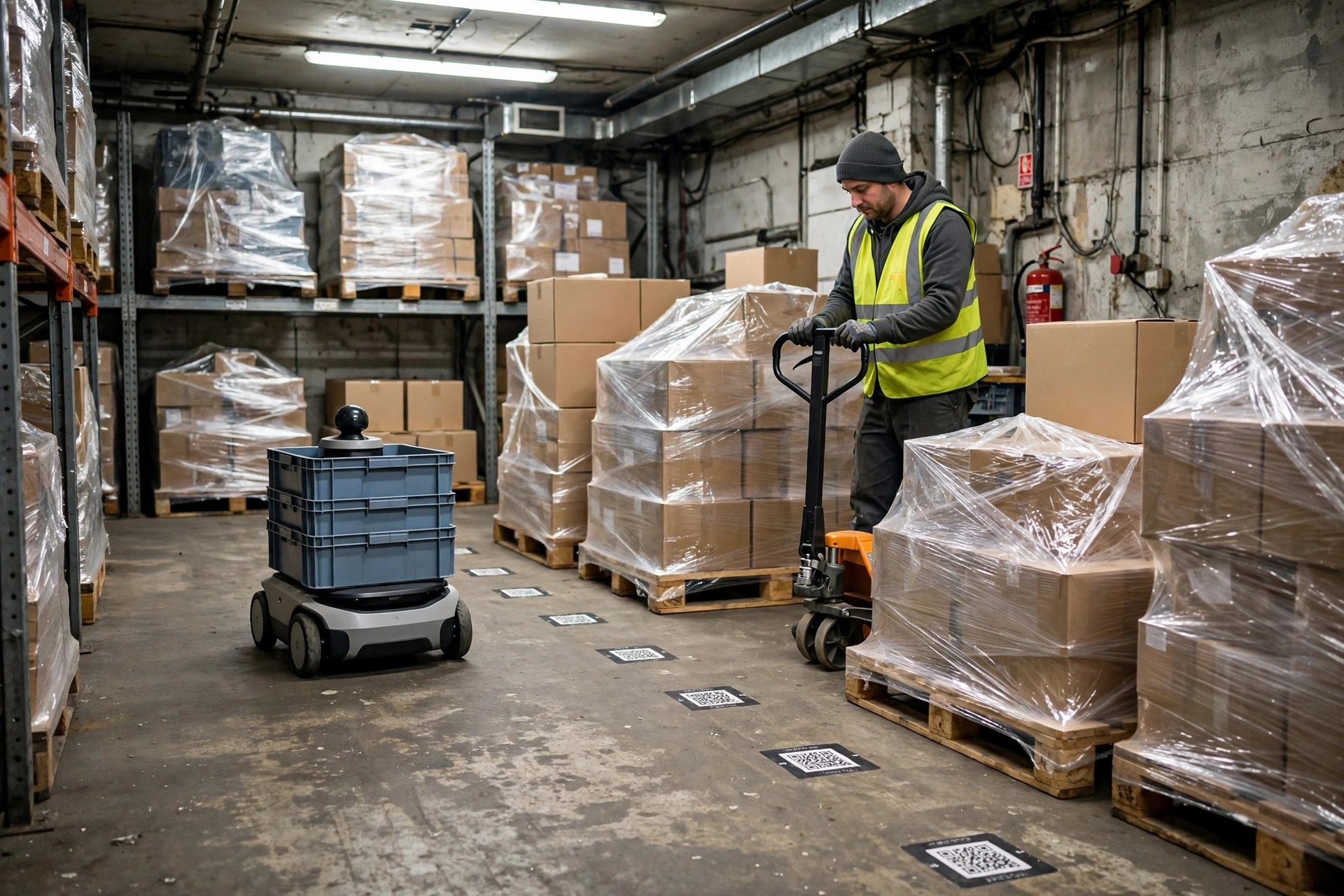
I didn't order right away. For two months, our handlers ran the planned robot route with an electric pallet jack, logging trips and times every day. We called it "the human AMR simulation."
Those two months uncovered three things, each worth real money:
First, the bottleneck was real — forty, fifty trips a day like clockwork, double that in peak season. Humans simply couldn't keep up.
Second, the floor had issues. One stretch of epoxy coating was peeling; even a pallet jack rattled over it. QR navigation markers glued onto that kind of floor would've been chewed up in weeks. Fixing that patch cost pocket change compared to the robot.
Third — the big one — we straightened out the process first. We simplified the handoff paperwork between receiving and putaway, so when the robot arrived it started working on day one. Zero ramp-up drama.
My low-tech advice: rehearse the route with whatever you already own before you buy. A route that doesn't flow in rehearsal won't flow with a robot either.
Half a year in, here's what the math actually says
The unit arrived late last year — entry-level, QR-code navigation. Yes, I skipped the fancy laser navigation. Our routes are as fixed as a subway line; buying laser nav for that is like putting GPS on a bicycle you're riding to the corner store. Overkill.
Half a year, three takeaways:
First, peak season stopped being a staffing panic. I used to spend a month before every big sale begging for temp workers. Last peak season, our handling crew barely worked overtime — the robot doesn't get tired, and it keeps running after hours.
Second, fewer mistakes. Humans get tired, get annoyed, grab the wrong tote. The robot only trusts the code; if the code doesn't match, it stops and yells. Honestly more reliable than us.
Third — and this is the counterintuitive one — this robot doesn't save wages. Headcount-wise it replaces maybe half a person; on pure payroll math the payback looks slow. What it actually saves are three things no spreadsheet captures: the risk of finding nobody to hire in peak season, our veterans' backs, and the rework from shipping errors. A small warehouse's nightmare isn't spending money — it's the operation seizing up at the worst moment. What we bought was "never goes dark."
We did hit one pothole: Wi-Fi. One stretch of aisle had a dead zone, and the robot would just sit there thinking about life. One extra access point fixed it — a couple hundred bucks. Lesson: walk the route with your phone checking signal before you buy. It's free.
And a cautionary tale. Old Li runs an apparel warehouse in the next industrial park and bought four units at once, going big on day one. His WMS was a decade old; the integration dragged on for months. The robots sat in a corner gathering dust — the most expensive decorations in the whole industrial park. The biggest cost of a first AMR pilot was never the robot. It's everything around it: floor, network, process, system integration. Skip any of those and the robot is just furniture.
Three honest words for fellow small warehouses
One: don't get greedy. One unit, one route — get it running smooth before anything else. The vendor's fleet plan is built for big operations. Small warehouses can't burn money like that.
Two: the surroundings matter more than the robot. Floor, network, process — get those straight before the robot arrives. Rolling out a robot before that is like paving a runway for a tractor. The robot is innocent.
Three: don't do the math on wages alone. Price in the impossibility of peak-season hiring, the cost of errors, and how many years your veterans' backs have left. For a small warehouse, an AMR means "nothing seizes up at the worst moment" — not "replace three people."
We small players can't afford the big companies' arms race. But small boats turn fast: one robot is enough to test the waters. Get the first one running smooth, and the second and third will plan themselves.
Small warehouses have their own way of surviving.
By Xiao Ma, Small Warehouse Owner