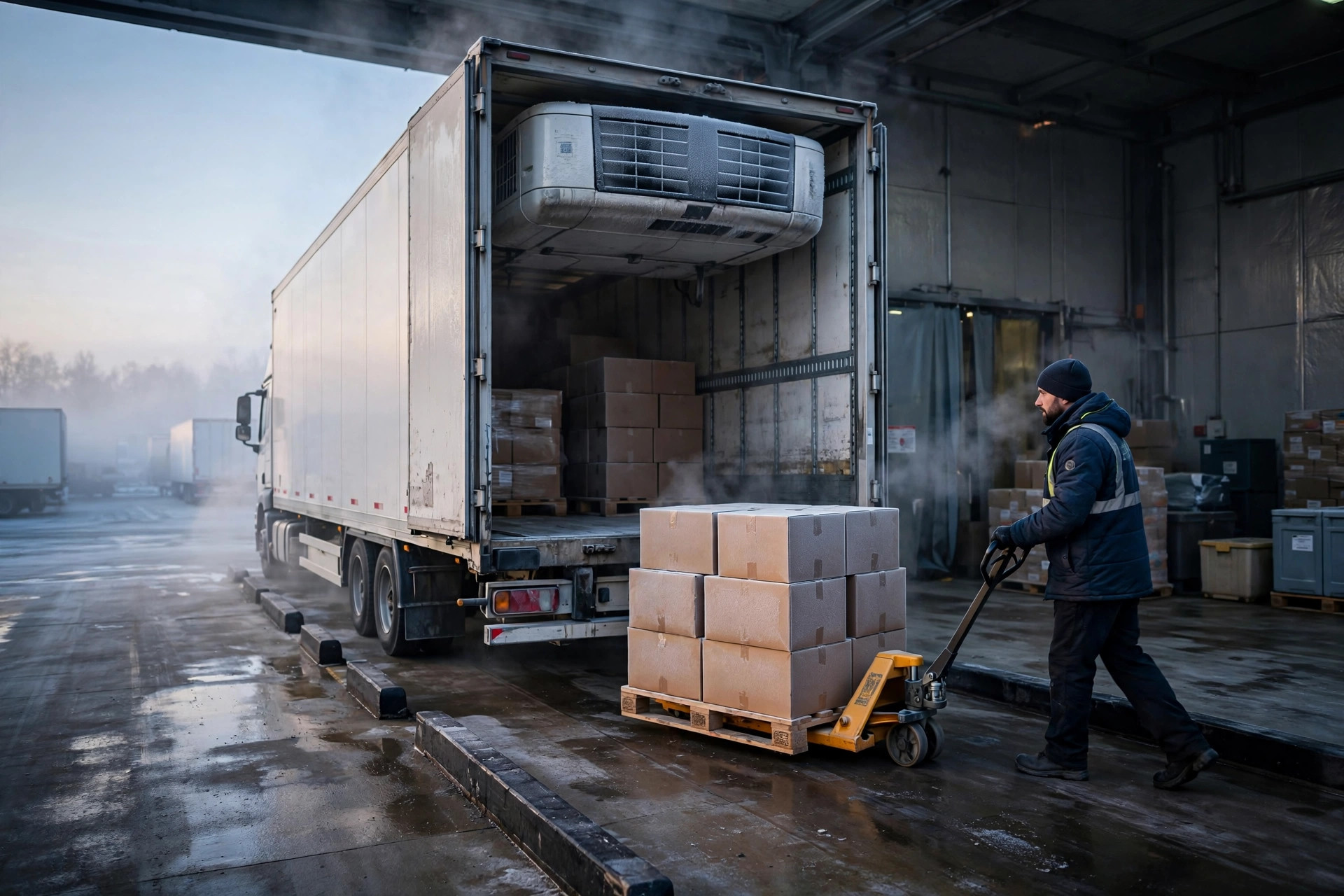
I first heard the words "FDA sanitary transportation rule" from a receiving clerk who was turning my truck away. It was summer, a couple years after the rule took effect. I was hauling a reefer load of frozen chicken from California's Central Valley to a warehouse outside LA. At the gate, the clerk wouldn't let me back into the dock. He walked around the trailer, then asked for the printout from my temperature recorder. Arrival temp was fine — but the tape showed a climb of about two hours in the middle of the night. Truth is, I'd shut the unit down during a fuel stop. He pointed at the gap in the curve and said: broken temperature record, can't accept it. I argued for twenty minutes. Didn't move him an inch. That load sat in the lot for two days while the shipper sent QA out to re-inspect it, and everybody burned money. That's the day I learned the FDA has a sanitary transportation rule — 21 CFR Part 1, Subpart O, published in 2016, compliance starting in 2017 — and it governs the truck, the driver, and the paper trail, not just the freight.
Here's what that day taught me: most drivers think on-time delivery plus the right temperature means the job's done. Wrong. Under this rule, the receiver inspects the trip itself — how clean it was, whether it was recorded, whether the record is whole.
Who the FDA Sanitary Transportation Rule Covers: Four Roles, No Excuses
The rule names four players: shippers, carriers, loaders, and receivers. Shippers are the cargo owners, carriers are drivers and fleets like mine, loaders are the folks putting freight on the trailer at origin, and receivers are the warehouses taking it off. Interstate or intrastate, it doesn't matter — the rule says it applies whether or not the food enters interstate commerce. If you're moving food, you're in.
A few businesses sit outside it: very small operations under $500,000 in average annual revenue (three-year average — check FDA's official rule text for the exact measure), food transshipped through the US to another country, live food animals, and food completely sealed in a container that doesn't need temperature control. Nearly everybody running reefer or hauling food is covered. Don't bet on being the exception.
I'll tell you what makes this rule tough, after all these years on the road: it regulates the truck and the people together. The freight has to be right, the trailer has to be clean, the temperatures have to be recorded, and the driver has to know food safety. All of it.
What the Inspector Sees First: Three Things on Your Trailer
Fifteen years behind the wheel, and I can tell you exactly what a receiving clerk looks at the second those doors open:
One: is the trailer clean? What was the last load, any residue, standing water, mold on the floor — one glance tells the story. The rule requires food-transport equipment to be designed so it can be cleaned. A trailer that can't be properly washed out is non-compliant by design, before you even load it.
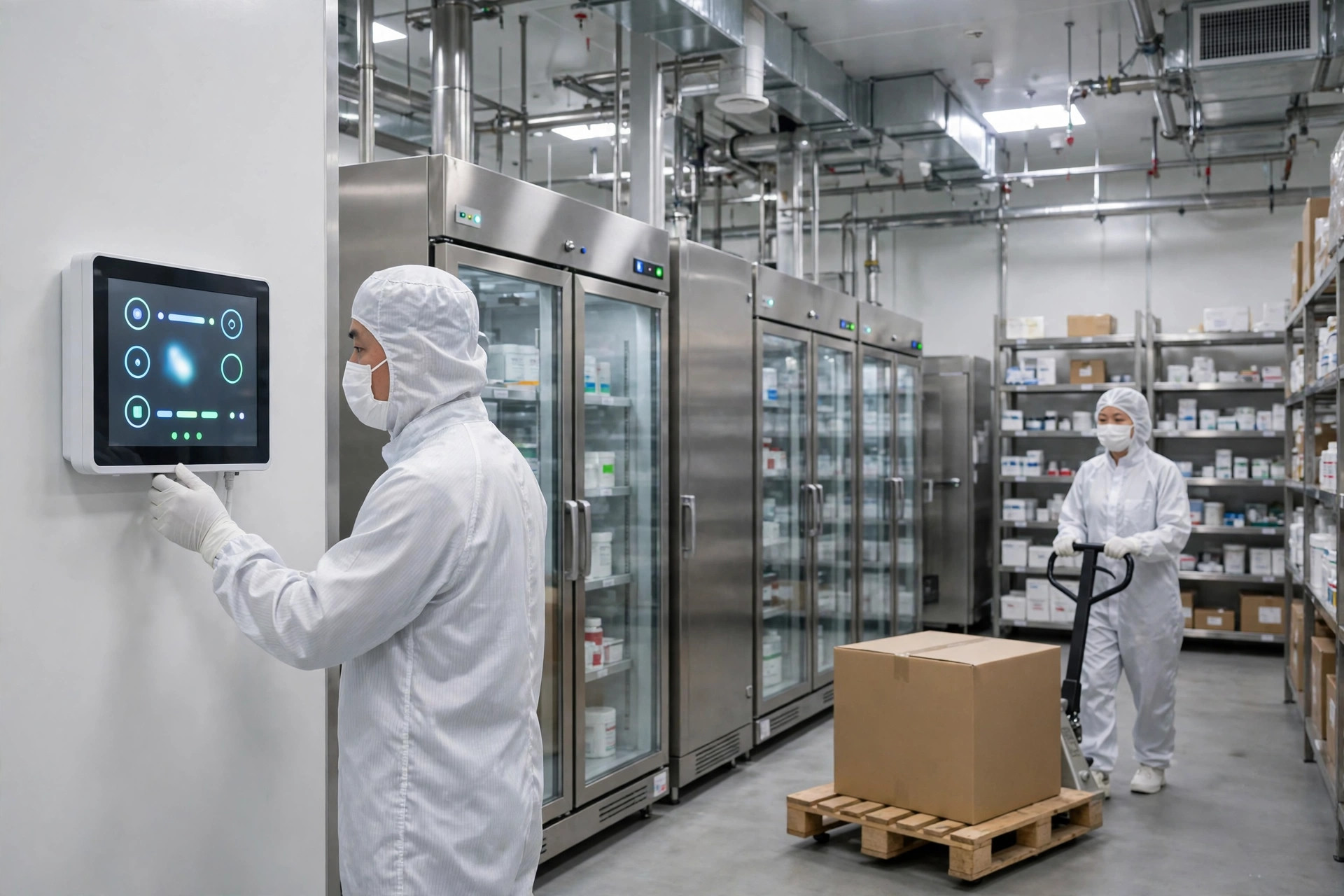
Two: is the temperature record complete? Mechanically refrigerated compartments must carry a thermometer or temperature-recording device — that's in the rule. Arrival temperature is table stakes. What the clerk really wants is the whole trip: any gaps, any spikes. Two hours you can't account for, and they've got grounds to refuse the load.
Three: does it smell wrong? The rule doesn't say "sniff the trailer," but preventing cross-contamination is a real, written requirement. I learned this one the hard way. Ran a load of seasoning packets once, swept the trailer out, figured it was clean. Next load was ice cream. The clerk opened the doors, took one sniff, and told me to hit the road — seasoning smell, contamination risk. Ever since, after any strong-smelling load I wash out and air out before taking food, no matter how hot the next load is. A temperature curve can't catch a smell.
Two more things drivers ignore: carriers must have written procedures for temperature-controlled food — "I've always done it this way" doesn't count. And drivers need food-safety training at hire and as needed after that: what can go wrong with food on the road, and the sanitary practices that prevent it. Sounds like paperwork until something goes wrong. Then that training record is your proof you did your part.
Pre-cooling is another one drivers shrug off, and it bit me too. Showed up for a pickup once with the box not yet pulled down to temp, figured they'd load anyway. The loader stopped me cold — the rule requires the shipper to verify proper pre-cooling before loading, and he wasn't about to break it for me. Sat at the gate running the unit for the better part of an hour before they opened the doors. Lesson learned: for a food pickup, I start the reefer an hour early now. Saves my own time.
FDA Sanitary Transportation Receiving Checklist: Five Fails, Any One Rejects the Load
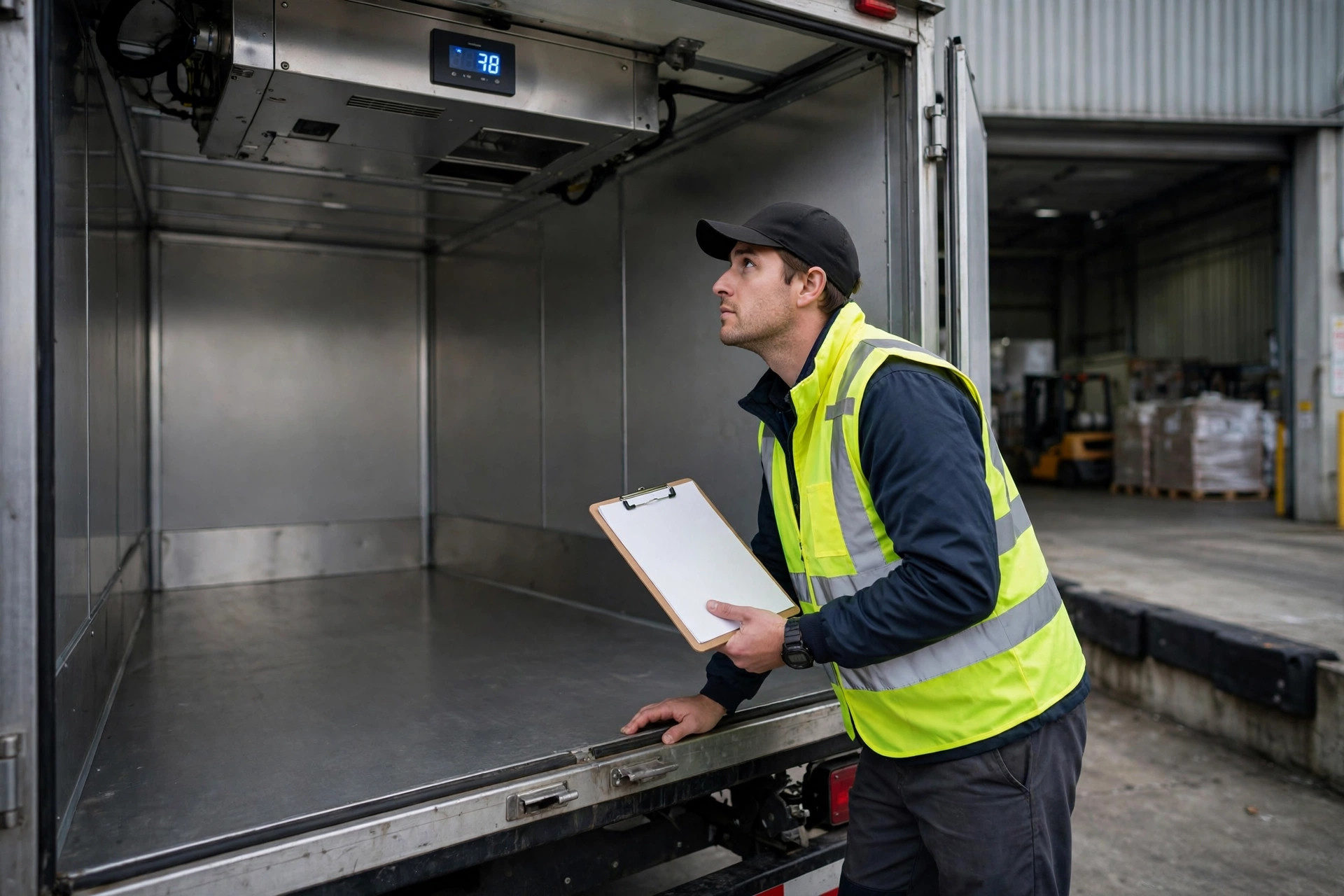
Here's the checklist I've built from years of getting inspected. Warehouse folks, feel free to steal it:
| Check | How | Fail means… |
|---|---|---|
| Temperature record integrity | Full trip log — no gaps, no unexplained spikes | Reject or hold for QA |
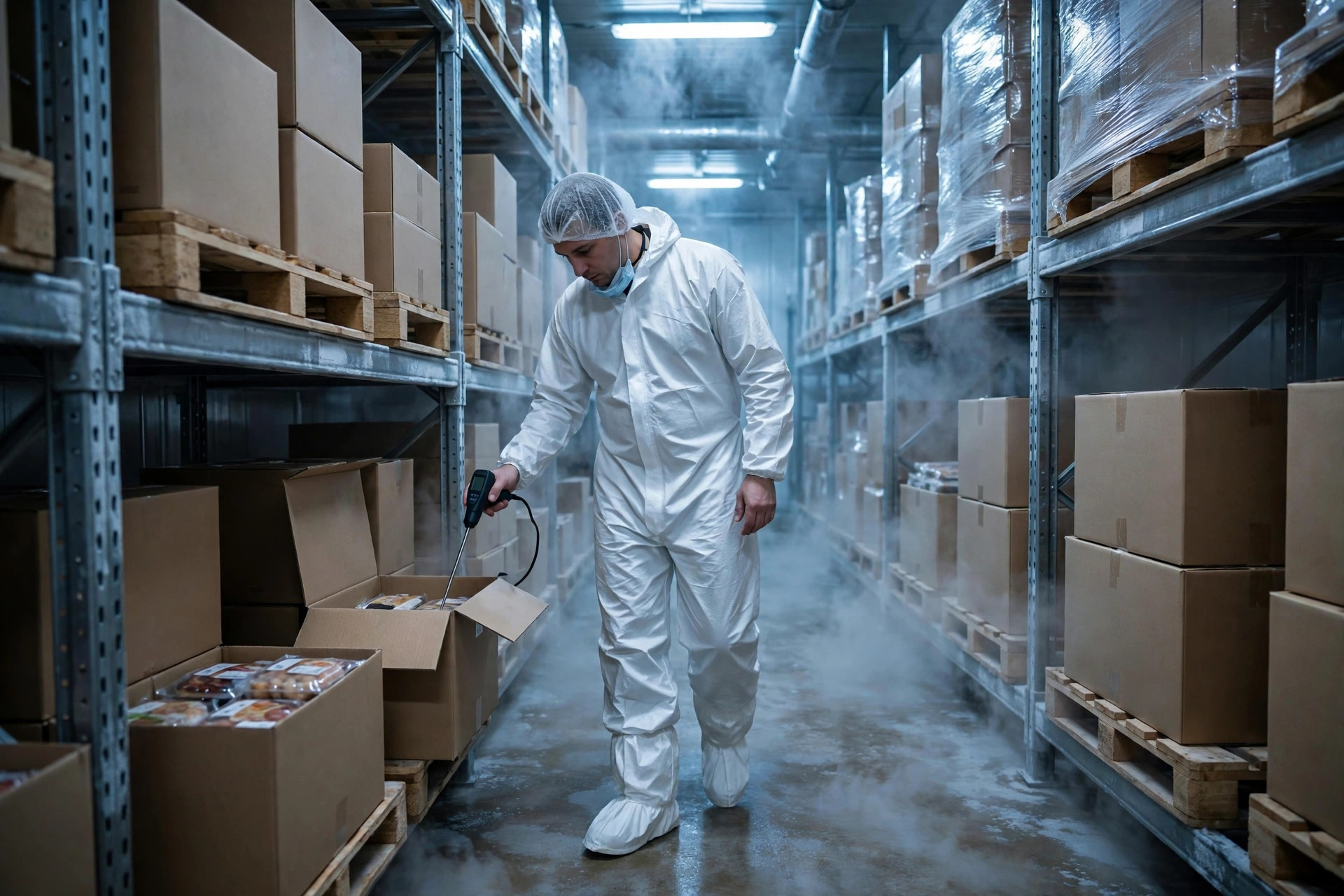
| Arrival product temp | Sample with probe or infrared | Reject if out of spec |
| Trailer cleanliness | Visual: residue, standing water, mold, damage | Reject or require washout |
| Odor and prior cargo | Sniff it; ask the driver what the last load was | Reject if contamination risk |
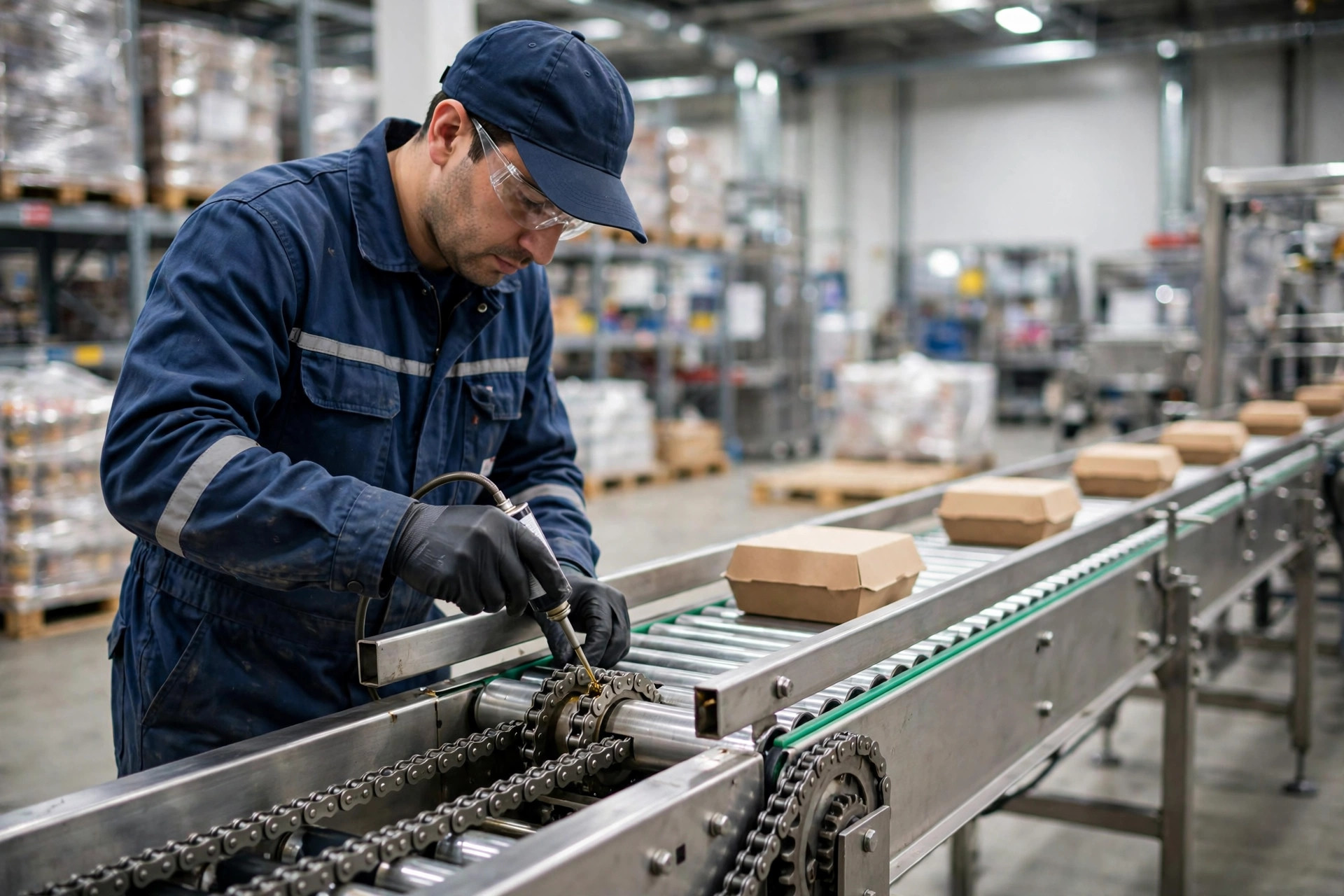
| Equipment condition | Door seals, floor, reefer unit running | Reject if the unit can't hold temp |
Do the math: what's more expensive, rejecting or accepting?
Every driver knows what a rejection costs: detention time, redelivery or transload, rescheduling the appointment, arguing with the shipper — usually a few hundred to a few thousand dollars. Hurts, but it's contained.
Now price out accepting a bad load. It goes into the warehouse, out to customers, and if there's a food-safety problem — claims, an FDA inspection, maybe a recall — you're looking at tens or hundreds of thousands of dollars, plus your reputation. Rejecting is cheap insurance. Remember this: a rejection annoys one driver for a day. An accepted bad load can end a company.
Put It in the Contract, or Don't Argue About It Later
The rule splits up responsibility pretty clearly. In plain English:
- The shipper gives the carrier written temperature and pre-cooling specs before loading, and verifies pre-cooling before the freight goes on. Verbal doesn't count.
- The carrier proves compliant temperatures at delivery — to the shipper, and to the receiver on request — "by any appropriate means," like a printout from the recording device. The carrier and shipper can agree in writing, before the shipment, to shift these duties to the shipper. Arguing about it afterward doesn't count.
- The receiver (the warehouse) can't leave temperature-controlled food baking on a hot dock during loading and unloading — conditions have to prevent microbial growth and contamination.
So here's my practical advice for shippers and warehouses: write these into the contract — who sets the temperature spec, who owns pre-cooling, who provides the temperature record, how many minutes of gap counts as an incident, what the rejection criteria are, who keeps driver training records. Anything you're unsure about, check FDA's official rule text. Don't invent numbers.
And three things for my fellow drivers, a pre-trip self-check: one, keep your trailer washout receipt — if the last load smelled, that slip is your proof of innocence. Two, have the temperature record ready at delivery and offer it before they ask. Three, ask your company whether that written temperature-control procedure and your training record actually exist — if not, get the boss to fix it now. With those three in hand, you roll with confidence.
One trade-off nobody talks about: the strictest warehouses are the easiest to work with. The standard is on paper — pass and you're in, fail and you're out, no mystery. The worst are the "mood of the day" docks: one clerk waves you through with a glance at the thermometer, the next one demands the full curve. Drivers don't fear strict. We fear random. If you're going to inspect, inspect to a standard. Better for everybody.
Fifteen years on the road taught me one thing: a careful trip beats a fast one. The load isn't delivered when the wheels stop — it's delivered when the clerk signs off.
By Shifu Zhao, Trucking Veteran (15 yrs)