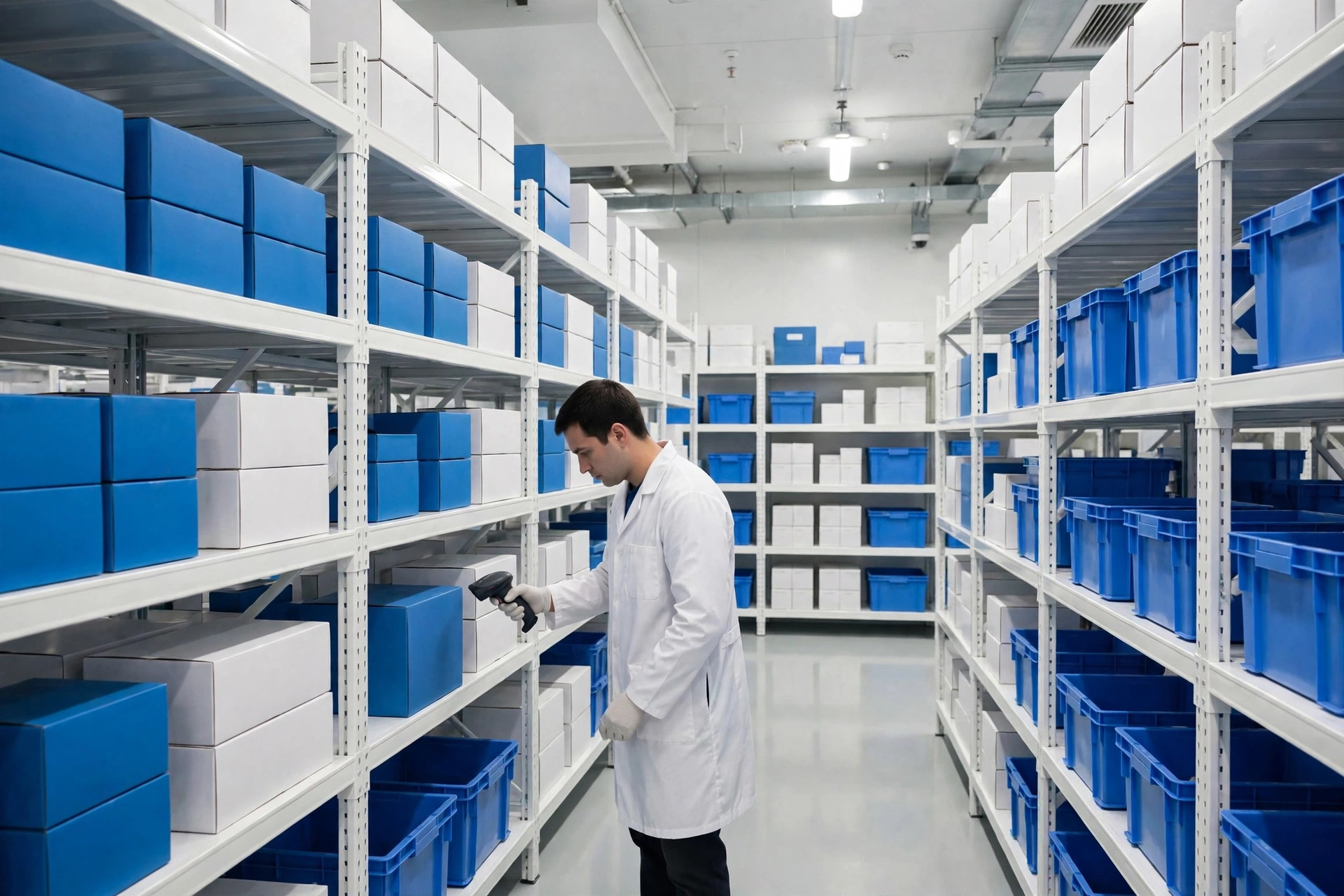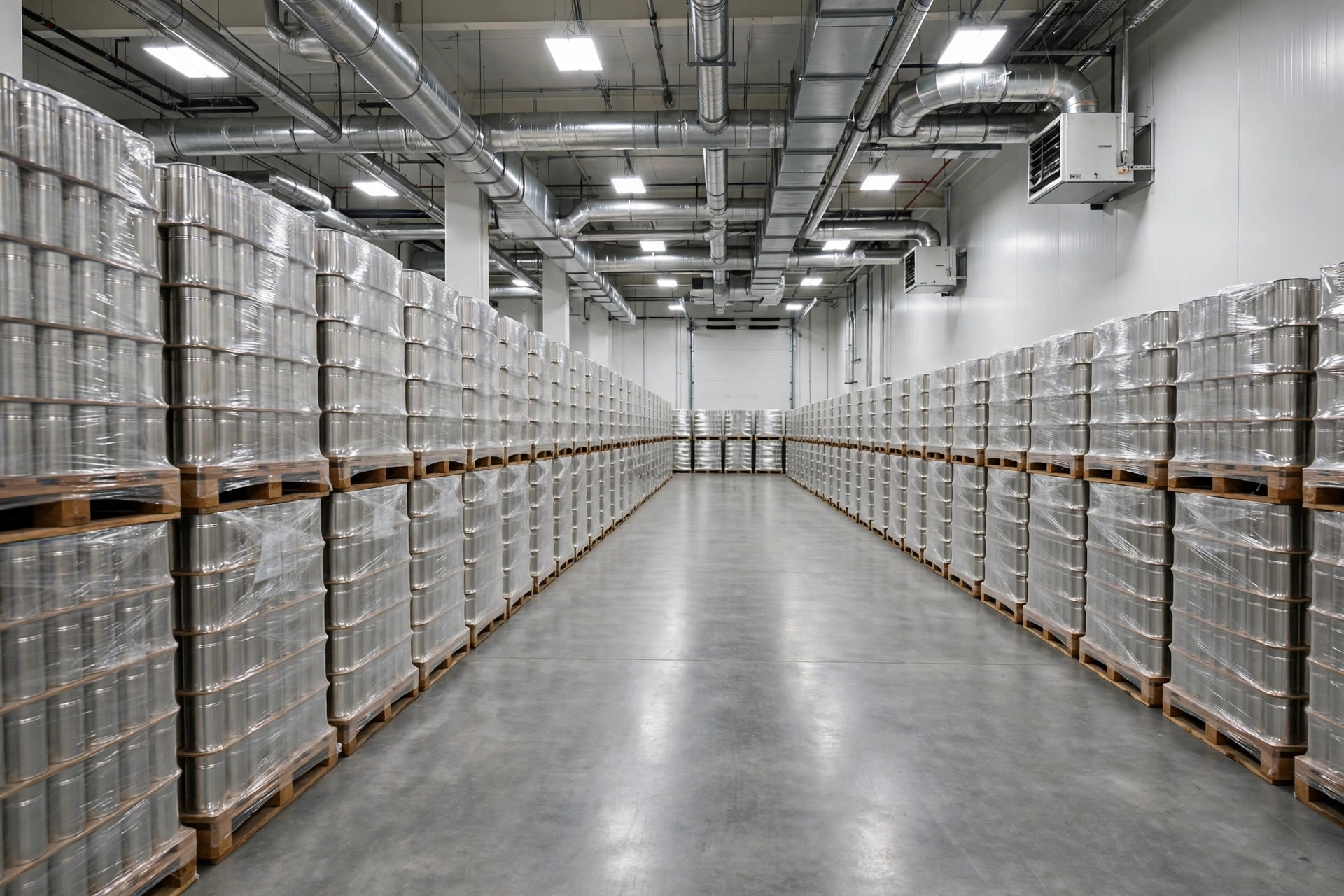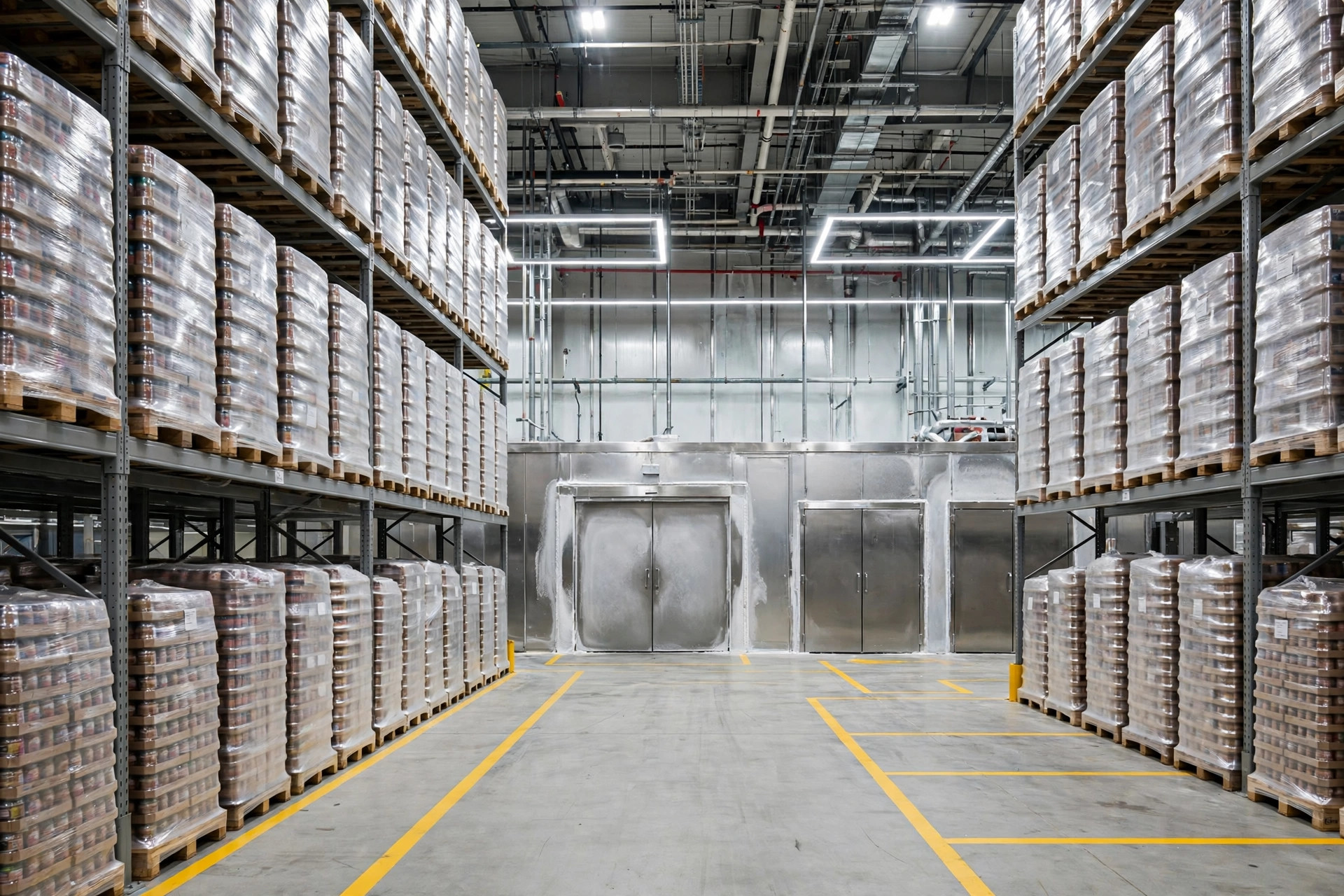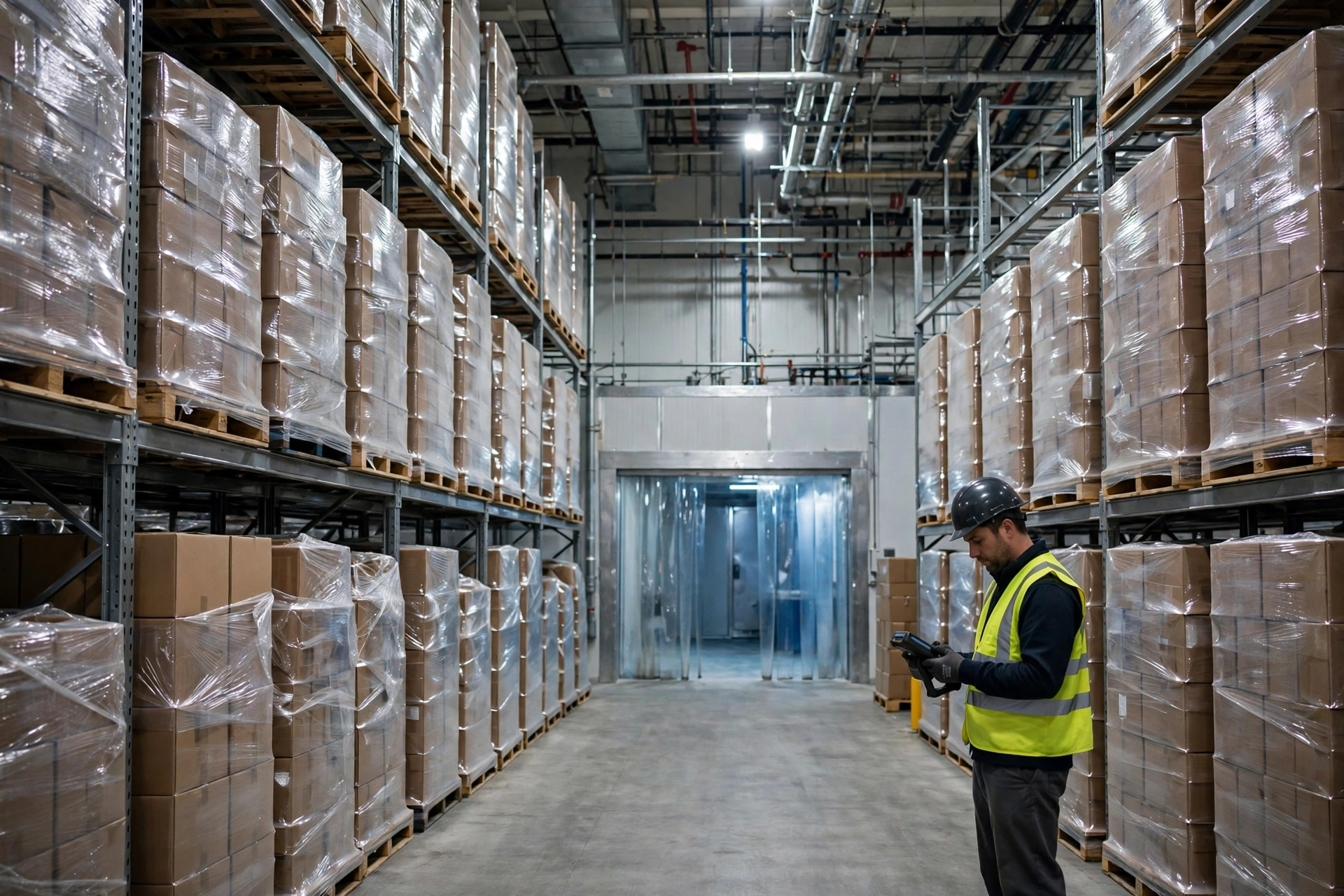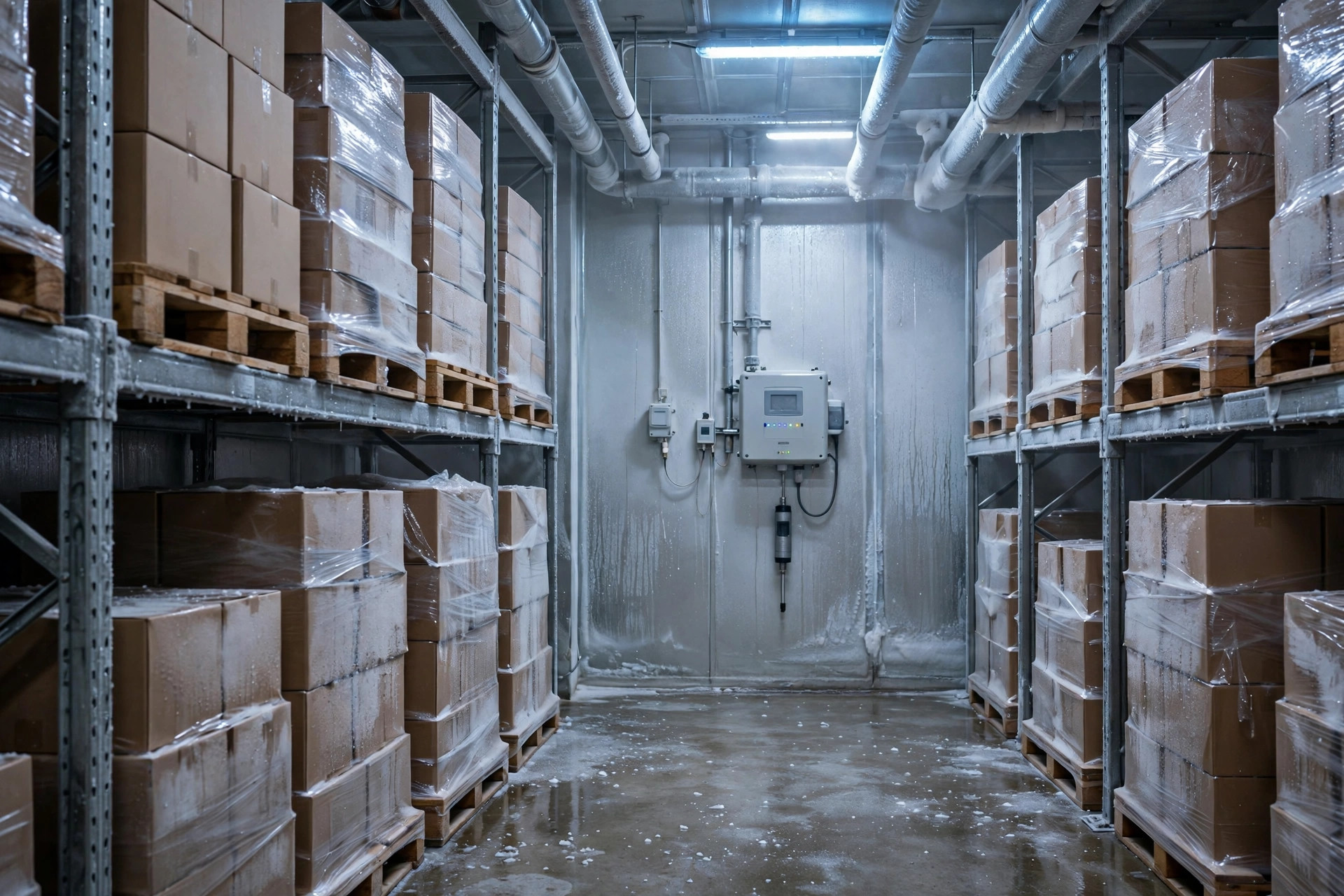
Do you know the first record an FDA inspector asks for when they walk into your warehouse? It's not your SOPs. It's not your training files. It's your temperature and humidity logs.
In 2022, I helped a 3PL in Ontario, California — a 120,000-square-foot refrigerated facility — prepare for an FDA inspection. The equipment was solid, the paperwork was clean, training was current. Twenty minutes into the records review, the inspector issued a Form 483. The problem wasn't the equipment. It was where the probes were mounted: directly under the refrigeration unit's discharge vent. Three years of textbook-perfect readings. The inspector pulled out his own calibrated thermometer, walked to the middle of a pallet stack, and the actual temperature was nowhere near what the logs claimed. Three years of data, thrown out on the spot.
Since then I've had a habit: every time I walk into a food warehouse, the first thing I look at isn't the racking or the square footage. I look up to see where the probes are.
This article is only about temperature and humidity logging — not batch management, not FEFO. What FDA actually expects, how to place probes, what to do when temperatures go out of range, and the three records inspectors always ask for.
Where You Put the Probe Matters More Than the Brand
Here's my verdict: in temperature compliance, seventy percent of failures come from probe placement, and only thirty percent from the equipment itself. I've seen too many warehouses get this backwards — spending good money on premium wireless loggers, then mounting them and forgetting about them: two by the door, one on the office wall, nothing deep inside the storage area. The data exists. It's just not real data.
The right move is a temperature mapping study first. During the hottest weeks of the year — or whenever your cooling load peaks — place temporary probes everywhere: near the doors, at the vents, in the corners, in the middle of pallet stacks, high and low. Run them for a few days and find your true hot spots and cold spots. Then mount your permanent probes at those worst-case locations. The logic is simple: if the worst spots pass, the whole room passes. When an inspector asks why your probes represent the entire space, you slide that mapping report across the table. It says more than any explanation.
Break it down by zone. In freezers, the doors are the danger — forklifts running in and out all day make the door area swing the most, so put a probe just inside each door. In coolers, watch the compressors: don't mount probes under the discharge vent, where readings always look perfect, or in a dead-air corner by the return, where they always read high. Mount them at pallet-stack height, where airflow is relatively stable. Ambient warehouses get ignored too often — if you store FDA-regulated food, ambient temperature and humidity need logging too, especially through hot, humid months. Humidity probes get skipped a lot, but for chocolate, milk powder, or supplements, an out-of-range humidity reading will earn you an observation just as fast.
One more practical pitfall: probes get knocked off by forklifts. A probe mounted too close to the forklift lane near the door gets clipped, the cable breaks, and nobody notices the data gap for days. Add a guard cage or mount it on the inside of a rack upright — cheap insurance against a big headache.
On recording frequency, the regulation doesn't pin down a single number, but there's a practical floor: continuous automated logging. Manual twice-a-day clipboard readings might have passed ten years ago. Today an inspector will ask what happened during the long stretch between readings, and nobody can answer. Set your loggers to record continuously, push data to a server or the cloud automatically, and route out-of-range alerts to the on-duty phone. Set alert thresholds against product labels and the latest FDA guidance — and when in doubt, go stricter.
Wired versus wireless is a genuine trade-off. Wired is stable, immune to signal dead zones, and easy to calibrate — but running cable is expensive and disruptive, and retrofitting an older building with conduit can be miserable. Wireless is flexible — adding a probe takes minutes — but now you're managing batteries. A dead battery means a gap in your data, and to an inspector, a gap is worse than an excursion. My current leaning: go wired for new builds and do it right once; use wireless for retrofits, but only with low-battery alerts, and make battery swaps part of the SOP with a log. Brands matter less than people think — the mainstream ones like HOBO and Vaisala are all fine. What matters is annual calibration with certificates on file. A probe with no calibration certificate produces data that, in an inspector's eyes, doesn't exist.
An Excursion Isn't the Problem — Having No Record of It Is
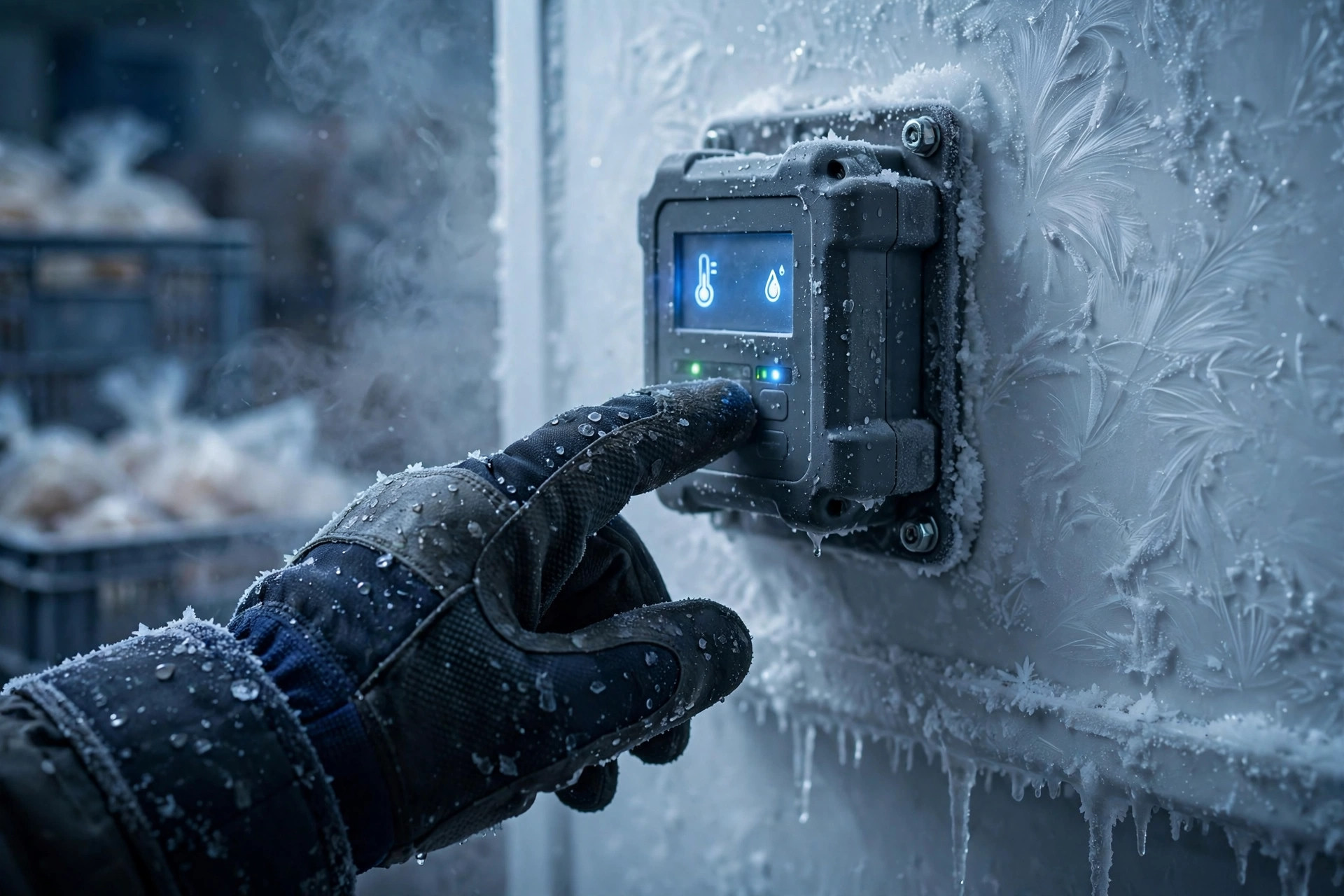
A lot of warehouse managers dread the temperature alarm. But an excursion itself isn't what hurts you. What hurts you is an excursion with no documented response. FDA's logic is straightforward: deviations happen; what matters is your CAPA. When an inspector reads a deviation file, they want four things: when it was found, how long it lasted, how you assessed the affected product, and what you changed so it won't happen again.
Here's a practical flow. The alarm goes off — first, confirm it's real. False alarms from aging probes or dying batteries are common, so verify with a calibrated handheld thermometer on the spot. Second, lock down the affected time window and product, and put the pallets on hold. Don't ship first and investigate later. Third, write the deviation report: start and end times, peak temperature, likely cause — a door left ajar, a compressor failure, a power outage — and a product impact assessment. Let QA disposition by product characteristics: release what can be released, destroy what can't. Fourth comes CAPA: repair the compressor, add strip curtains, adjust alarm thresholds, retrain the night shift — with owners and due dates in writing. An inspector who finds "three-hour excursion, no record, no product assessment" will write you up without hesitation. But "forty-minute excursion, product assessed and released, air curtain installed" — a complete closed loop — and most inspectors just move on.
The three records inspectors ask for most, ranked by how often they get pulled: first, the continuous temperature and humidity logs themselves — timestamped, uneditable, no gaps. Second, probe calibration certificates and the placement map, proving your data is trustworthy and your probe locations are defensible. Third, deviation and CAPA records, proving you know what to do when things go wrong. Get those three right and inspections get a lot less scary. The regulation requires keeping records at least two years; I keep electronic records for five. Storage is cheap. Being unable to produce data from three years ago is not.
FSMA was signed in 2011, and its preventive mindset is baked into 21 CFR Part 117. More than a decade later, the inspection playbook is predictable: first they check whether you have continuous records, then whether those records have gaps, then whether the gaps and excursions have CAPAs behind them. Put simply, FDA doesn't expect your warehouse to never have a problem. It expects you to know about every problem, handle it, and write it down.
So here's a question for you: if an inspector walked in tomorrow at 8 a.m. and asked for your last three months of temperature logs, would you turn your screen toward them without flinching? If that made your stomach drop, do two things tonight: look up and check where your probes are mounted, then flip through last month's logs for gaps. Both take half a day. Either one can decide whether your next inspection ends in a handshake or a 483.