The first thing an FDA investigator does when they walk into your food warehouse is not look at your racking, your forklifts, or your product. They reach into their bag and hand you a piece of paper: Form 482, the Notice of Inspection. No small talk, no coffee. First they confirm two things — that you are authorized to receive them on behalf of the facility, and that your food facility registration on file matches the operation in front of them.
I have watched warehouses fail right there, at the front desk. A 3PL in Fresno that stores dry goods for food brands kept the investigator waiting twenty minutes because the receptionist had no idea whether the company had ever registered as a food facility, let alone where the registration number was. Standing in a lobby for twenty minutes sets a tone, and the inspection that followed was noticeably more thorough. Coincidence? Maybe. I wouldn't bet on it.
So here is the first piece of practical advice: put the inspection reception procedure in your SOP — who greets the investigator, where the registration information lives, who the designated contact is. Under Section 415 of the Federal Food, Drug, and Cosmetic Act, any facility that manufactures, processes, packs, or holds food for consumption in the United States must register with FDA. A 3PL warehouse storing food for someone else is not exempt. If you are not registered, the investigator barely needs to step inside.
What they pull on day one: five sets of records
After the credentials, investigators usually head straight for the office: records first, floor second. Their training drills this in because records are hard to fake and gaps are impossible to hide. You can deep-clean a floor overnight; you cannot retroactively create two years of monitoring logs.
First, pest control records. Outsourcing to a pest management company is fine, but the contract, the service reports, the bait station map, and the corrective action records for every pest sighting have to hang together as one package. The investigator's favorite question is: "This report says rodent activity was found last month — where is your corrective action record?" Most warehouses can produce the service report. They cannot produce their own follow-up. Remediation is always your responsibility; the pest company kills the bugs, it does not write your records for you. And the map has to match the floor — they walk it with the diagram in hand, counting stations. One missing station is one observation.
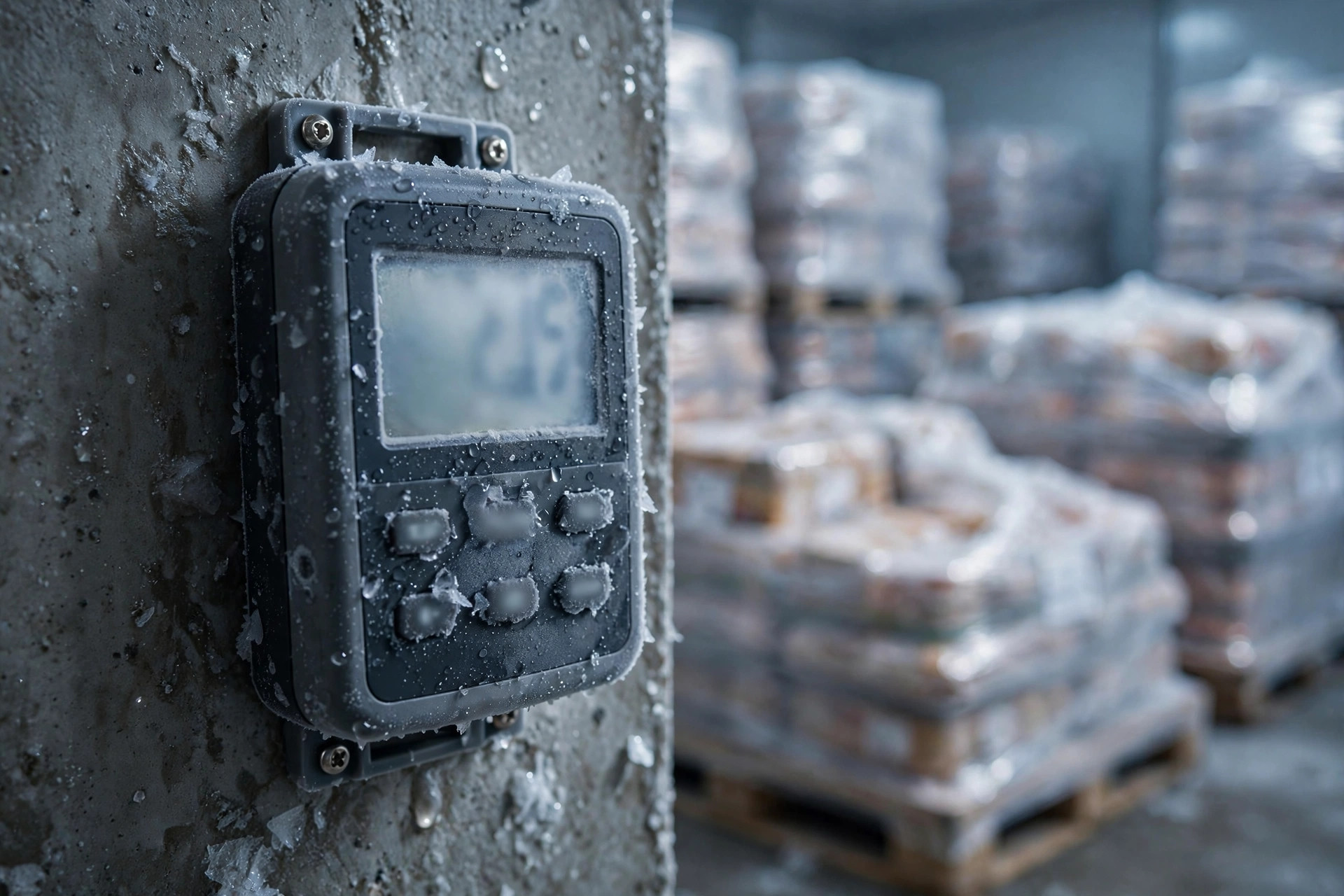
Second, temperature and humidity records. Cold storage operations all have automated loggers, but the investigator reads the alarm log, not the pretty curves. How many temperature excursions triggered alarms, who responded each time, and what happened to the product. I once saw a cold storage facility with flawless temperature curves and zero alarms in three months of logs. The investigator's response: "What are your alarm setpoints?" The setpoints were so wide they would never trip. A setpoint with no basis in your product's safety requirements is the same as no alarm at all. You need to be able to defend the number.
Third, sanitation records. Who cleaned, which sanitizer, at what concentration, at the SOP's required frequency. The investigator picks a random date from the log and then goes to look at that area. Sanitizer concentration is where warehouses bleed: people write "prepared per label instructions," and the investigator wants the actual concentration number and the verification method. If you cannot show it, they conclude you never verified that your sanitation works.
Fourth, training records. Food defense and sanitary operations training are spelled out in Subpart B of 21 CFR Part 117. The investigator will stop a random operator on the floor and ask something like, "What do you do if you find bird droppings on a pallet?" If the operator freezes, the training file — however handsome — is worthless. Training records have to match what people actually do. It is a crude effectiveness check, and it works every time.
Fifth, recall and traceability records. Inbound lot numbers, outbound lot numbers, one-up-one-down supplier and customer information — can you reconstruct where a lot went within a few hours? For certain higher-risk foods, FDA's traceability rule adds specific recordkeeping obligations, and the investigator likes to run a live drill: "This lot — tell me which customers received it, in ten minutes." If you have never rehearsed traceability, inspection day is when it jams.
How 483 observations are actually written
At the close-out meeting, the investigator reads out and hands over Form FDA 483, Inspectional Observations. Understand what it is: not a penalty, not a verdict — a written record of "here is what I found." But every observation is drafted by someone trained to write them, and the phrasing follows a pattern.
The 483s I have seen for food storage operations cluster around the same handful of themes: pest control deficiencies — evidence of pests on site, or missing control records; insanitary operations — sanitation procedures not followed or never validated; recordkeeping failures — required records missing or incomplete; temperature control failures — refrigerated or frozen product held out of range with no disposition records; and missing corrective actions — deviations found, but no documented investigation or correction.
In plain terms, the investigator's formula is always "what I saw + which requirement it violates + what was missing." They do not just write "flies observed." They write something like "numerous flies observed in the finished goods area, in violation of the sanitary operations requirements of 21 CFR Part 117, with no effective pest control records available." That formula is also your response template: for every observation, answer three things — what you acknowledge, what you have already done, and how you will keep it from happening again.
The 15-business-day response is what keeps you off the Warning Letter list
This is the step that matters most, and the one warehouses botch most often. FDA's long-standing expectation is that a firm responds to 483 observations in writing within 15 business days. That is agency practice rather than a statutory deadline — but if you miss it, FDA assumes you have nothing to say, and the next step is a Warning Letter.
Write the response properly. One section per observation, numbered to match. State the correction first, then the preventive action — keep them separate. Correction is "here is what we did with the affected product and how we closed the gap." Prevention is "here is which SOP paragraph changed, when the retraining happened, and who owns the follow-up." Attach evidence: the revised SOP pages, training sign-in sheets, before-and-after photos. "We have corrected this" with nothing behind it counts as nothing.
A Warning Letter is the next rung on the escalation ladder. After your 483 response, FDA evaluates it; if the problems look serious or the fixes look thin, out comes a Warning Letter — and it is public, posted on FDA's website for your customers, competitors, and the press to read. Below that rung sit import detention, product recalls, and injunctions. Every step down costs roughly ten times the one above it.
My advice to every food warehouse client is one sentence: treat every FDA inspection as a rehearsal for the next one. Do not file the 483 away once you have answered it — turn it into training material and walk the whole team through it. The next investigator's first question will be what changed since the last 483. Show real change, and their confidence in your whole system shifts. The game is mostly decided the moment Form 482 changes hands. What decides it is not luck — it is the last two years of your records.