I have a client who sells small home appliances. Last October he called me about a batch of vacuum accessories that came back through Amazon returns — back in the building, but unsellable — and asked whether we could do something with them. How many units, I asked. A little over three hundred, he said. Then I dug one layer deeper and found out they'd been sitting in FBA since April. Six months. Amazon had flagged every one of them unfulfillable, and he had never once opened the stranded inventory report.
That's not an edge case. In my years selling 3PL services, returns are where sellers bleed money fastest — and notice it slowest. So here's the FBA returns machine taken apart: the two different roads a fulfillable return and an unfulfillable return travel through the warehouse, how 3PLs actually price the fix, and the questions to ask before you sign a returns clause.
Two doors: fulfillable goes back on the shelf, unfulfillable goes nowhere by itself
Start with the policy framework. When Amazon receives a return, it makes a judgment call. If the item can still be sold, it's fulfillable — it goes straight back into your FBA sellable inventory and keeps selling, with basically no action from you. If it can't be sold, it's unfulfillable, and Amazon will not deal with it for you. You get two options: file a removal order to get the goods out, or have Amazon dispose of them. One important note: Amazon revises its returns policies and fee schedules from time to time, so always go by the latest version published on Seller Central — I'm deliberately not quoting rates here, because the number I write today could be wrong tomorrow.
The line sounds simple, but the devil lives in the details. First, that automatic return to sellable stock: a lot of sellers assume anything that comes back can sell. Amazon's bar is Amazon's, not yours — a scuffed box or a missing manual, sometimes just a scratch on the outer carton, is enough to fail. Second, unfulfillable goods don't evaporate. Removal orders carry removal fees, disposals carry disposal fees, and storage fees keep accruing every single day the goods sit in an FBA warehouse. Third, Seller Central will not tap you on the shoulder — that unfulfillable quantity sits quietly inside a report until you go looking for it. Skip it for half a year, like my client did, and a few thousand dollars of inventory just lies there, depreciating and burning storage fees at the same time.
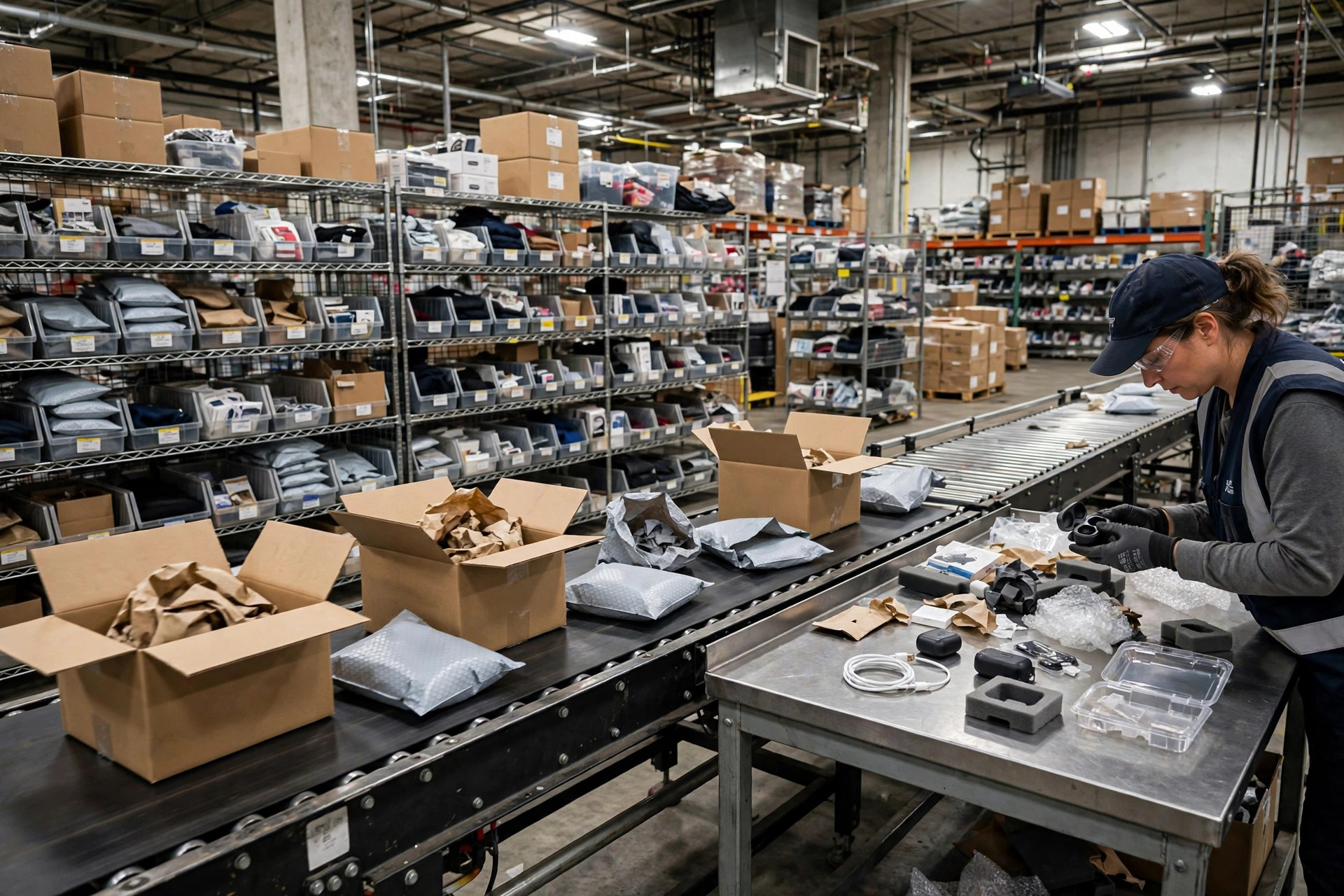
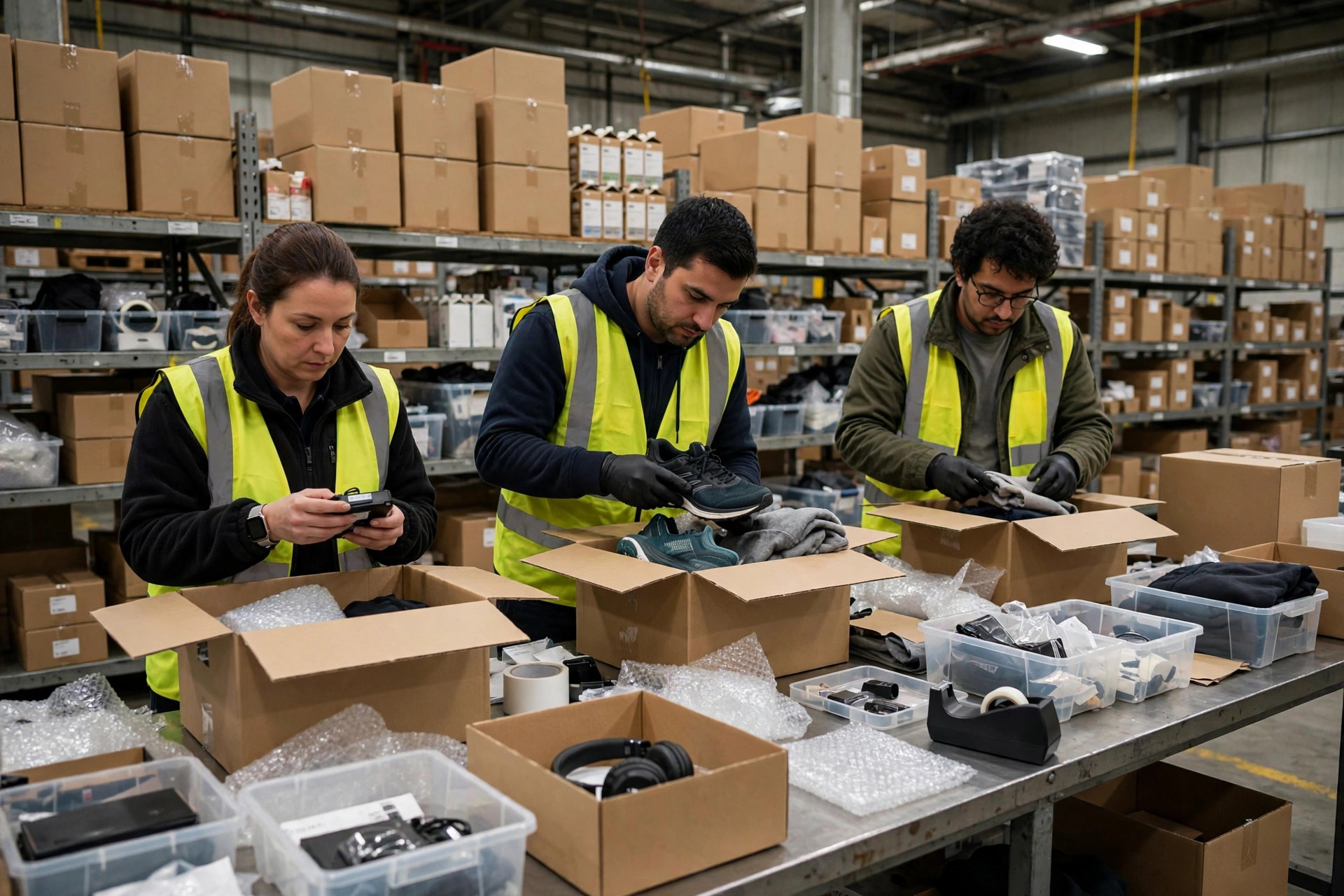
This is exactly where a 3PL earns its keep. We pull your removals out of Amazon, receive them at our warehouse, inspect, grade, refurbish, and relist — or push them into liquidation channels. And the pricing logic for this work looks nothing like standard warehousing.
How 3PLs price returns: per-unit inspection, per-grade refurb
A little behind-the-counter honesty from the sell side. On a 3PL quote, returns handling usually breaks into four lines: receiving and inspection, refurbishment labor, storage, and relist-or-return shipping. Inspection is priced per unit and varies enormously by category — small household goods versus anything that needs a power-on test are completely different jobs. Grading is typically three tiers: Grade A, resellable as-is; Grade B, needs light refurb — new packaging, missing parts, cleaning; Grade C, dead — scrap it or harvest it for parts.

For refurbish-and-resell, the industry runs two pricing models. One is flat labor plus materials at cost: a fixed handling fee per unit, with replacement boxes, labels, and inserts billed at actual usage. The other is bundled per-grade pricing: Grade A pays inspection only, Grade B pays an inspection-plus-refurb bundle, Grade C pays inspection plus a disposal fee. Each has its trade-offs, and I'll run the numbers on both below.
Here's the counterintuitive judgment most sellers get wrong: the most expensive step in returns handling is usually doing nothing. I watch it happen constantly — we send the inspection report, the seller doesn't reply for a week, then two. The goods pile up in our returns area, and returns-area storage is priced higher than bulk storage because it's labor-dense space with fast turnover requirements. You think you're saving decision cost; you're burning cash every day. Our internal numbers: a small appliance averaging twenty-five dollars, sitting thirty days in a returns zone, burns roughly eight to twelve percent of its residual value in storage and occupancy cost. That's why the contract needs a default-disposition clause — authorizing the 3PL to act on a preset rule after N days of silence, say Grade C gets scrapped and Grade B gets refurbished.
Run the numbers: is this inventory worth saving?
Back to my client's real situation. Three hundred-plus vacuum accessories, ruled unfulfillable mostly for damaged packaging and missing manuals. Our quote: per-unit inspection, a bundled Grade B refurb price, and replacement retail boxes plus reprinted manuals at cost. All in, per-unit handling cost landed at roughly eighteen to twenty-two percent of the landed cost of a brand-new unit. Sounds steep — until you line it up against the alternatives: dispose of everything and you lose one hundred percent of the goods' value, on top of the removal fees already paid and six months of FBA storage already burned; refurbish and resell, and even a seventy-percent clearance sale recovers seventy percent of the value. The decision framework is simple:
| Option | Cash recovered | Sunk cost | When it makes sense |
|---|---|---|---|
| Refurbish and resell | ~60-80% of goods value | Inspection + refurb fees | Mostly Grade B, goods value 3x+ the handling cost |
| Remove and hold at 3PL | $0 (decision pending) | Removal + 3PL storage | Seasonal goods, waiting for the next peak |
| Dispose | $0 | Disposal fees | Grade C, goods value below handling cost |
(Rates per your actual quote and the latest Seller Central policies.)
The client chose refurbish-and-resell. By late November all three hundred-plus units were processed; they sold through a clearance channel during the December peak and recovered about sixty-five percent of goods value. His comment afterward stuck with me: the returns weren't the painful part — the painful part was April to October, when the goods just sat in FBA and he never even looked.
A second case, because the trade-off deserves a fuller picture. Another seller I work with does seasonal party supplies — think Halloween costumes. Every November, Amazon flags a wave of returns unfulfillable: opened packaging, missing accessories. For three years running he chose the middle row of that table: removal to our warehouse, hold through the dead months, relist the following September. The math only works because the goods are truly seasonal — storage from November to August costs real money, but a costume that sells at full price in October is worth five times its November clearance value. The trade-off to watch: this strategy dies the moment the product isn't seasonal. I've seen sellers copy it for phone cases and Bluetooth speakers — generic goods with no seasonal premium — and the storage bill quietly ate the entire margin they were trying to protect. Removal-and-hold is a timing play, not a default.
Three questions for your next contract negotiation
One: are the inspection grading standards written into the contract as an exhibit? What counts as Grade A versus Grade B cannot live in a verbal understanding. Photographed reference standards for each grade should be attached to the contract, or every grading decision becomes an argument.
Two: what is the default disposition rule when you go silent? How many days after the inspection report counts as overdue, does the 3PL have the authority to act on the preset rule, and how is that work priced? Without this clause, your goods burn money in the returns zone indefinitely.
Three: whose job is the stranded-inventory alert? Does the 3PL send you a weekly unfulfillable inventory report, or is it on you to check Seller Central? Write the responsibility down, and the nobody-noticed-for-six-months story never happens.
Sellers treat returns as a customer-service problem. It's a cash-flow problem. Fulfillable units should get back on the shelf fast; unfulfillable units should turn back into cash — or disappear — fast. Every day of hesitation in between is a cost.
By Susan, 3PL Sales Director