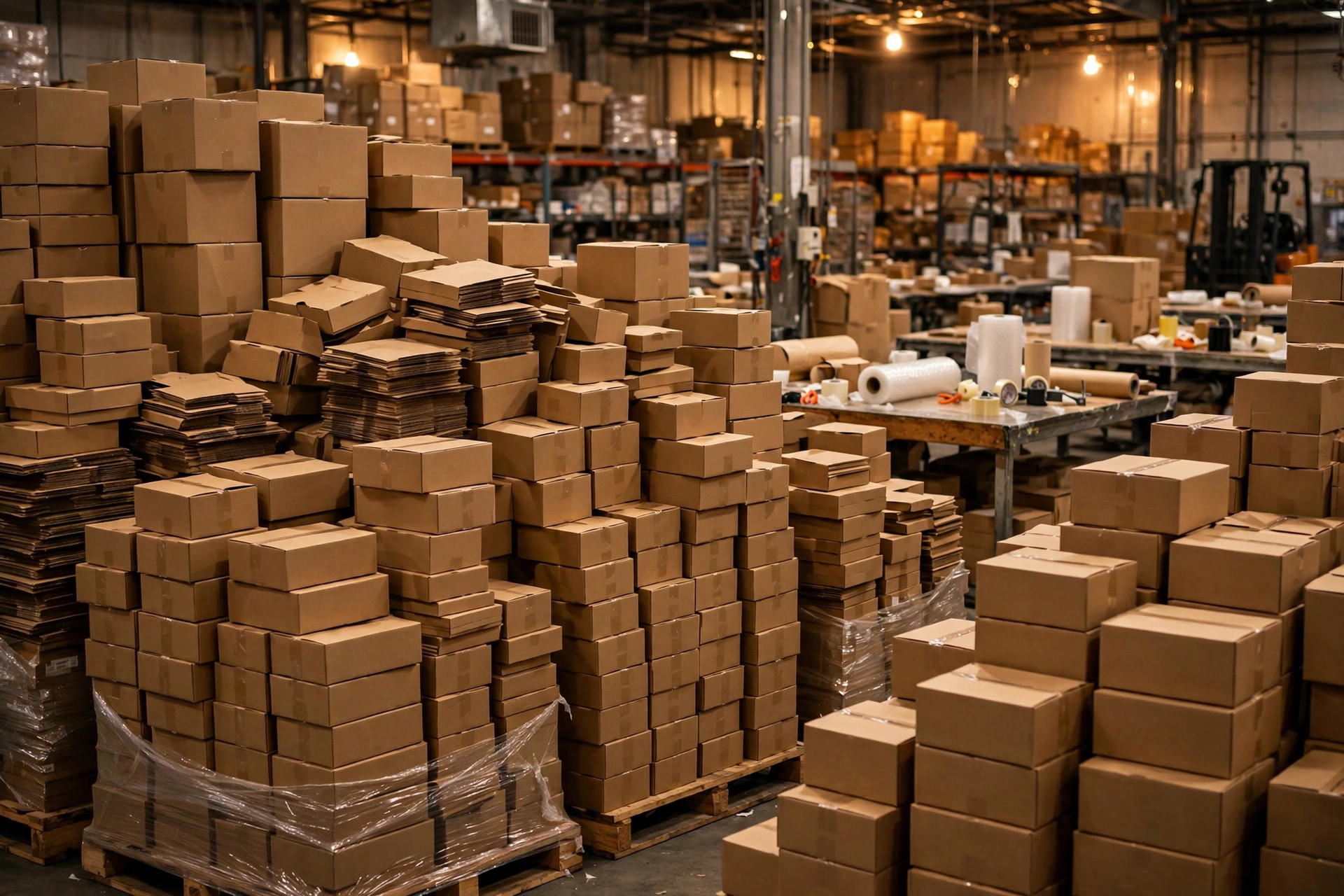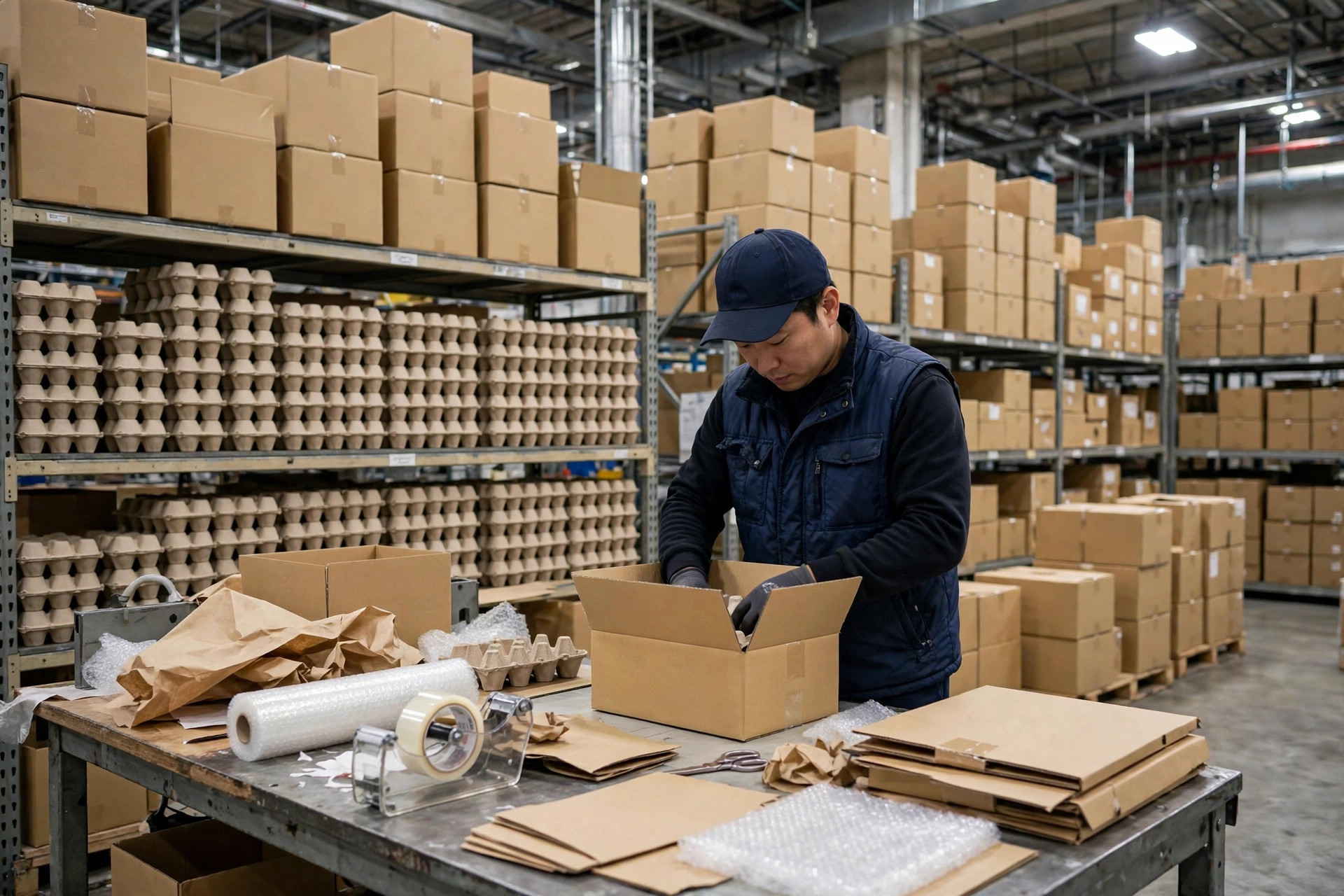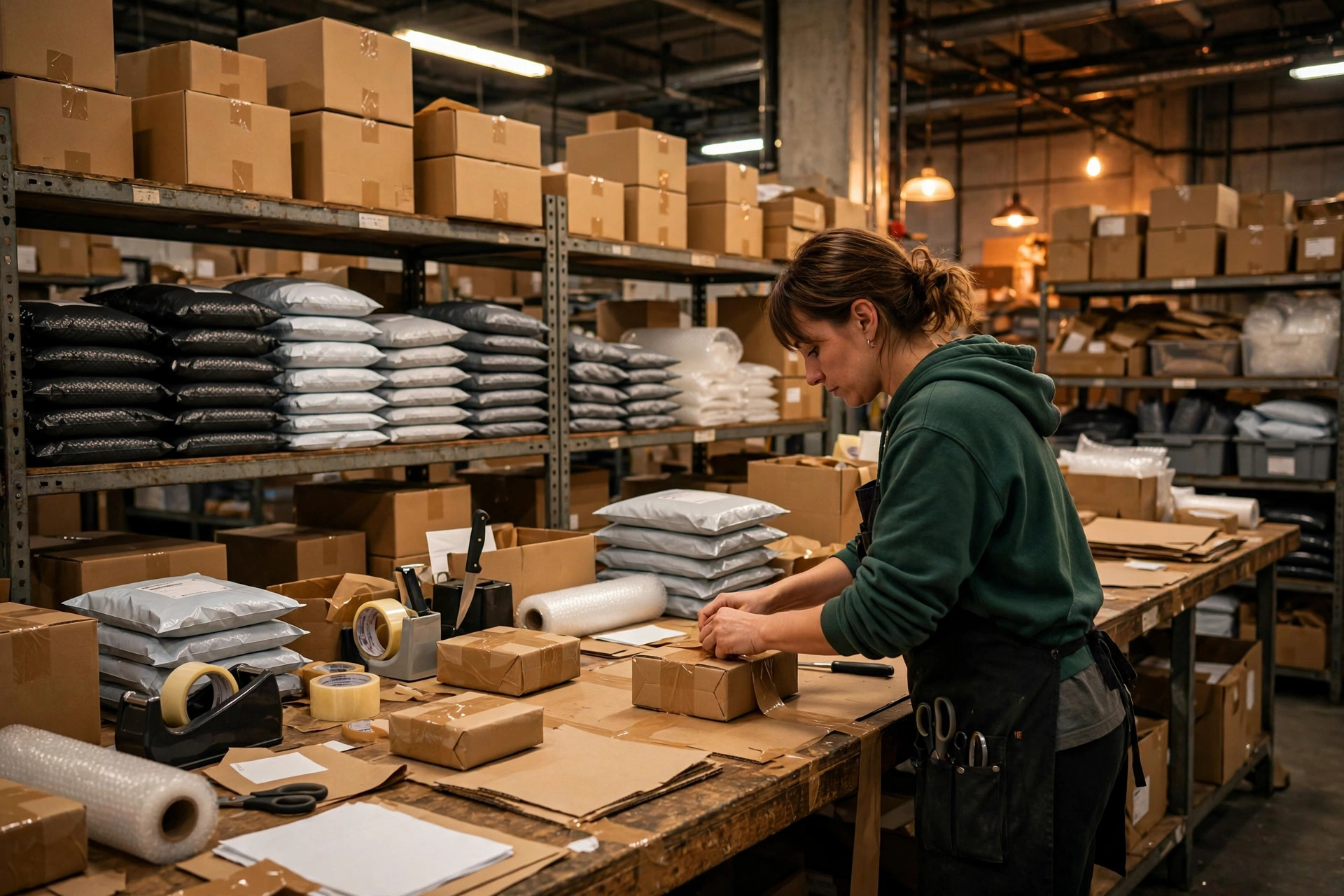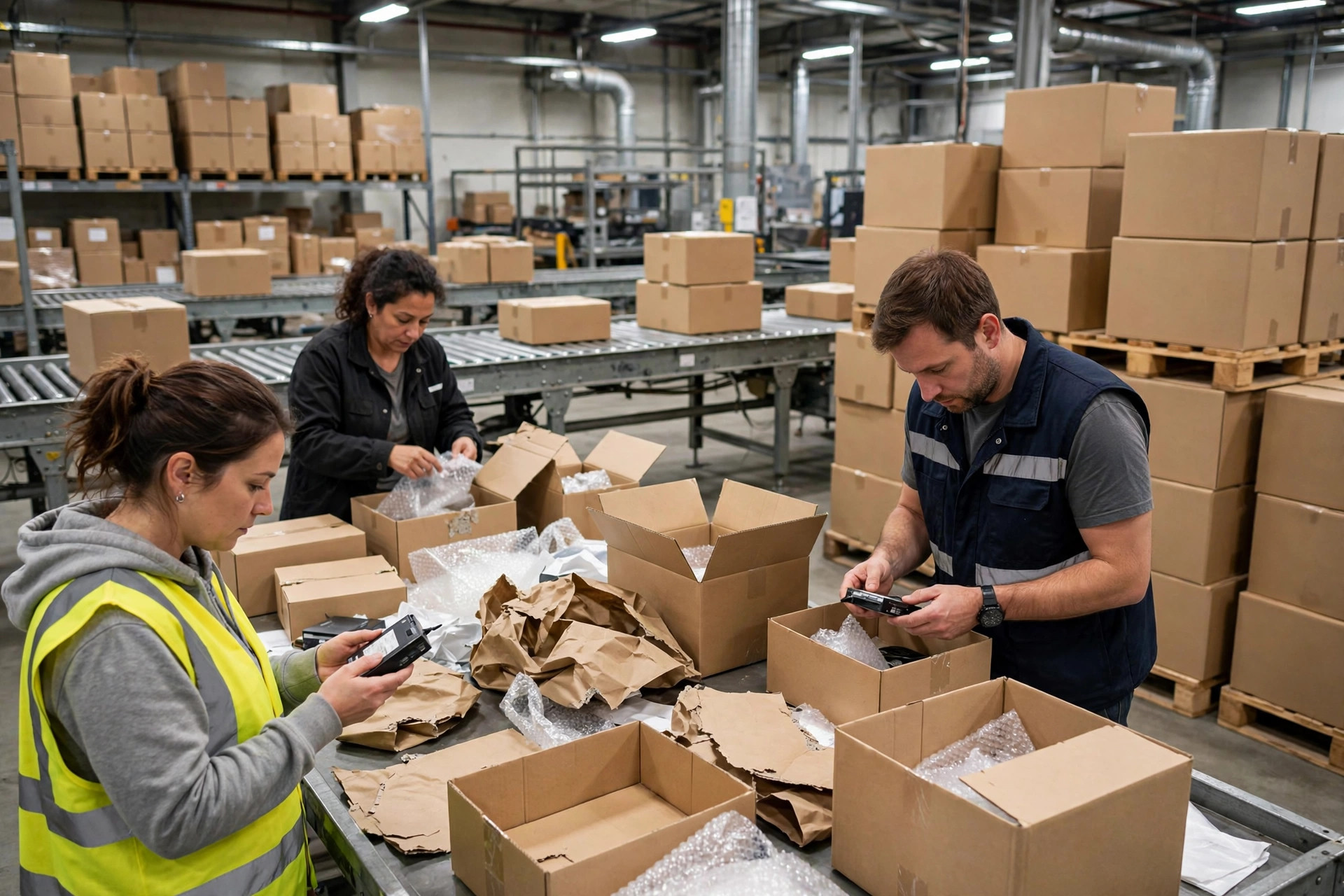
Amazon changed the rules again — no wait. This time it was FBA relabeling that broke me. Last peak season, November through December, one of my Bluetooth earbuds at $29.99 hit a 16% return rate. I pulled 214 units back through removal, and they sat at my US prep center with torn labels and crushed boxes. That's how I learned everything about FBA relabeling the hard way. Ignore it, and every returned unit is a pure loss.
What relabeling actually involves: from removal to restock
Let me walk through the process, because most sellers get lost at step one. Returned units don't fly back to you on their own. You file a removal order, and under the 2026 fee schedule that's about $1.33 per unit, shipped to whatever US address you specify — usually your prep center.
Once the goods arrive, the prep center does inspection and grading. This is the step that matters most. Three buckets:
Bucket one: salvageable. The product itself is fine — the outer box is crushed, the label fell off, the FNSKU is scuffed. New label, new poly bag, and it's back in the warehouse selling at full price.
Bucket two: liquidation only. The product works but the packaging can't be restored, or the condition doesn't qualify as new. These go to Amazon's Grade and Resell program or local clearance.
Bucket three: dead. Dropped, missing parts, too dirty to look at. Don't waste relabeling money on these.
My 214 earbuds graded out as 168 in bucket one, 32 in bucket two, 14 in bucket three. As for the costs: a US prep center charges roughly $0.25–0.50 per unit for basic prep (relabeling, bagging, the works). Get the FNSKU applied in China before shipping and it's more like $0.05–0.15 per unit. Prevention is always cheaper than the cure.
Here's an operational detail from working with prep centers: grading has to be photo-documented. My rule now is that every batch gets sorted into the three buckets, with 3–5 photos per bucket sent to me, and I personally review every photo in buckets two and three. Why? Because the grader decides, and if you're not watching, salvageable units mysteriously end up "liquidation only" — and they charge you a service fee for liquidating, too. Photos are your eyes on the ground.
One more thing: during the post-holiday returns wave (January–February), every prep center is slammed and processing queues can stretch two weeks. I lock in capacity with my prep center back in December, so returns get processed the day they land. Two weeks late to restock is money left on the table.
One more detail most sellers skip: agree in writing who pays when grading goes wrong. My contract with the prep center says that if they condemn a bucket-one unit as bucket three, they reimburse me at cost. Ask "what happens when you misgrade" before you sign — their whole attitude toward your inventory changes.
(Rates above come from prep-center quotes and Amazon's published fee schedule. Every provider charges differently — confirm against Amazon's latest published policy before you act.)
The FBA relabeling math: save it or scrap it
Time for numbers. My earbuds: saving one unit cost $1.33 removal plus about $0.40 relabeling, so $1.73 per unit. The 168 salvageable units cost me $290 total — and put 168 units back on sale at $29.99.
Scrapping one unit? Liquidation recovers roughly 5% of the original price — about $1.50 per earbud, which doesn't even cover the removal shipping. Liquidating all 168 would have returned barely $250, plus a pile of wasted time.
| Option | Per-unit economics | 168 units total |
|---|---|---|
| Relabel and restock | Spend $1.73, recover a $29.99 listing | $290 spent |
| Liquidate | Recover ~$1.50 salvage value | ~$250 back |
Once you run the math, the decision framework writes itself. I sort by unit value now, three tiers:
Over $15: save it, no debate. Relabeling costs under 10% of the selling price. Not saving it is the real loss. $5–$15: depends on volume and your prep quote. Big enough volume to negotiate under $0.30 a unit? Save. Small batch? Wait until you can bundle. Under $5: liquidate or dispose, straight away. Don't get sentimental — your time is money too.
One more money-saver: negotiate a volume rate with your prep center instead of paying walk-in prices. Mine does $0.28 a unit once my monthly volume crosses 500 units; walk-ins pay $0.45. If your return volume is steady, just ask: "Here's my annual volume — what's the contract rate?" You'll usually shave off twenty percent.
And watch out for Europe. One EU prep center I know charges €0.50–2 per unit for relabeling — way pricier than the US. My rule for EU returns: liquidate locally. Shipping them back to the US plus relabeling fees is a guaranteed loss once you add it up.
Wrong FNSKU? Nothing can save you
Last one, a bloody lesson. A friend of mine in Shenzhen shipped 500 units last year with the wrong FNSKU — the factory had applied another ASIN's code. Amazon rejected the shipment outright, and part of it got commingled into someone else's inventory. A month of disputes later, the batch was essentially a total loss.
Remember: a torn label can be relabeled. A wrong FNSKU is a death sentence. Amazon's scanners read the FNSKU — wrong code, and your goods are "someone else's goods" in the system.
Avoiding it is boring but it works: first, spot-check 20 random units per shipment by scanning before it leaves, and rework the whole batch if one fails. Second, for the first run with any new factory, have them photograph the applied FNSKU and send it for your sign-off. Don't trust a verbal "it's labeled."
This one I've personally tested and it works: when returns come back, don't rush to liquidate. Grade first, relabel what's salvageable, restock it. My 214 returns turned into 168 units back on sale — nearly $4,000 in losses avoided. Returns aren't the scary part. The scary part is throwing them away without doing the math.
By Ah K, E-commerce Seller (5 yrs)