Let me start with a number. When a batch of Giza long-staple cotton gets mixed with another variety at the gin, the grade drops a notch, and the price drop is often larger than the gin's profit for the whole month. In the Egypt cotton business, the most expensive part of storage is not warehouse rent. It is three hidden bills: varieties got mixed, grading got messy, and bales got damp. For the 2026/27 season, Egypt's agriculture ministry tightened variety controls at gins further: varieties outside the permitted list may not be processed or stored, with the named varieties including Giza 86, 94, 95, 96, 97, and 98, plus extra-long-staple Extra Giza 45, 87, and 93. The exact enforcement wording should be checked against the current official document, but the direction is clear. The variety gate will only get stricter, not looser.
The bill starts on the day seed cotton arrives at the gin. The first jobs are variety verification, moisture checks, and trash checks. Get the variety wrong and everything after it is wrong. Let moisture run high and bales heat and mold in storage, taking fiber quality down with them. Let trash run high and the grade drops at classification, taking the export price with it. Gin storage management is really three things: variety segregation, moisture control, and grading records. Miss one, and the export gate will make you pay for it.
Variety segregation: cotton mixing is a double loss
Giza long-staple cotton is valuable because of fiber length and consistency. Mixing varieties costs twice: the grade falls and the price falls, and once a buyer finds mixed varieties, trust for the next order goes with them. We have run the numbers for gins: storing, ginning, and packing varieties separately looks like extra steps and extra warehouse slots, but against the loss from a downgraded batch, that cost is negligible.
In practice, that means different varieties go to different slots, each slot carries a sign with the variety, batch, and delivery date, and the gin line is cleaned out when the variety changes, with the cleanout signed off. Bales carry variety marks, and a mis-marked bale means rework for the whole lot. It sounds tedious, but it is the price of admission to Egypt cotton storage. The 2026/27 variety controls effectively turn this practice from industry habit into a compliance requirement. What used to be negotiable is no longer negotiable.
Grading and cotton bale storage under CATGO
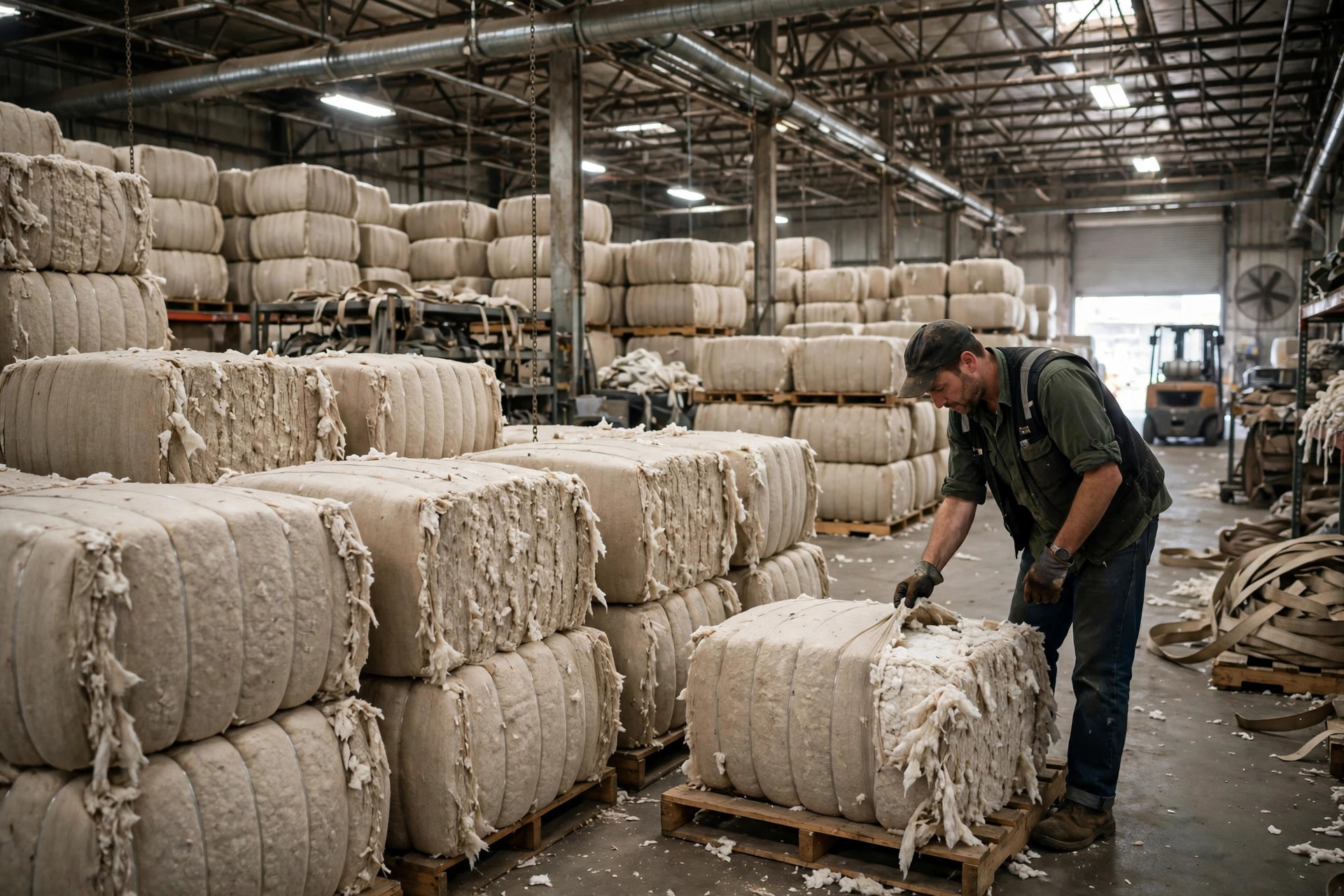
Egypt cotton grading runs under the CATGO system, and grading results feed directly into the export price. Storage affects grading in two main ways. First, the bale storage environment. Bales fear damp, sun, and contamination. Warehouse floors must resist moisture, bales must not sit directly on the ground, stacks need ventilation gaps, and roofs and walls need attention in the rainy season. Second, bales of different grades must not cross-contaminate. Store grades in separate zones, because if one bale fails a grading spot check, it can drag the whole lot down with it.
The bale storage budget also needs to be counted in full. Warehouse rent is the visible bill. Moisture protection, ventilation, fire prevention, and insurance are the hidden bills. Rework for damp bales and downgrade deductions are the penalty bills. Many gins count only the visible bill, decide storage costs nothing much, and then discover that the hidden and penalty bills together cost more than the rent. My recommendation is to budget storage in three lines: visible costs, hidden costs, and a risk reserve set from the historical downgrade rate. A reserve you set aside and never use is good news. Needing a reserve you never set aside is bad news.
| Step | What failure costs | What works |
|---|---|---|
| Variety segregation | Mixed ginning cuts grade and price together | Separate slots, line cleanout on variety change, variety marks on bales |
| Grading records | One bad bale in a spot check drags the lot | Zoned storage by grade, grading records traveling with bales |
| Storage environment | Damp and mold cut fiber quality | Raised stacking, ventilation gaps, rain-season leak checks |
From the gin to Alexandria: the last-mile bill
Moving bales from the gin to Alexandria for export carries one more bill. Bales must not be dragged or dropped during loading, rain transit needs covers, and port warehouse storage needs the same damp and sun protection. At export inspection, buyers look at bales, marks, and records. A torn bale, a wrong mark, or a record that does not match means rework before loading, and a missed sailing means demurrage follows.
Here is a counterintuitive judgment: the best money a gin can spend is not on a bigger warehouse. It is on better records. Variety, batch, grade, storage conditions, and transport handover records, the more complete they are, the faster any problem can be traced to the step that caused it, and the more confidently buyers will order. A gin with incomplete records, however low its price, will always leave a buyer wondering.
The fire bill: what cotton bales fear most
Cotton storage carries one more bill that many budgets miss: the fire bill. Bales fear damp, but what they fear most is fire. Cotton dust, lint, static, and open flame together are fire's raw material. Fire prevention in a gin warehouse is not just placing a few extinguishers. It breaks into three items. First, dust control: dust in the plant and warehouse must be cleared on a schedule written into the roster, not when it has already built up thick. Second, hot-work control: welding or cutting in the warehouse requires approval, a cleared area, and a watcher on site. A hot-work permit is not paperwork. It is the document that assigns responsibility when something happens. Third, fire lanes and bale stack spacing: stacks packed too tightly let a fire spread across the whole bay, and fire trucks cannot get in or hoses cannot reach, so the loss becomes the whole warehouse.
The math is the same as before. Fire prevention spending, dust control, hot-work management, and fire equipment maintenance, set against the loss from a single fire, is always the smaller number. When a gin sets its annual budget, fire prevention should be its own line, not buried under miscellaneous spending. Money buried under miscellaneous is the first money cut.
So here is a calculable conclusion. When a gin sets its annual budget, list three lines separately: variety segregation costs, grading rework reserve, and moisture protection spending, and compare them once against historical downgrade losses. If segregation and moisture spending cost less than one downgrade loss, spend the money. If you already spent it and still get downgrades, check the records to find which step broke. Counted to that level of detail, the cotton storage bill is finally a real bill.
By Lao Zhou, Logistics Cost Analyst