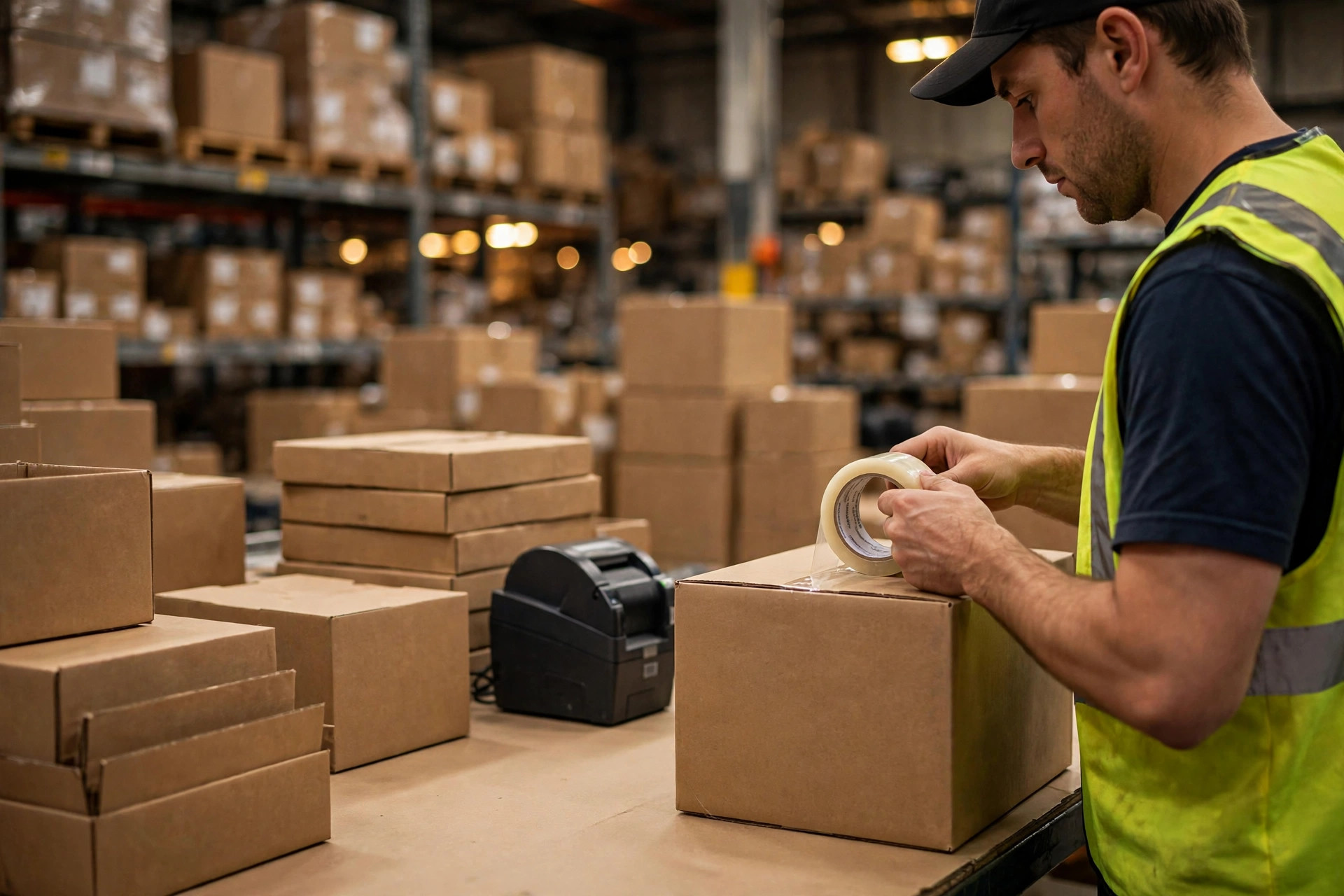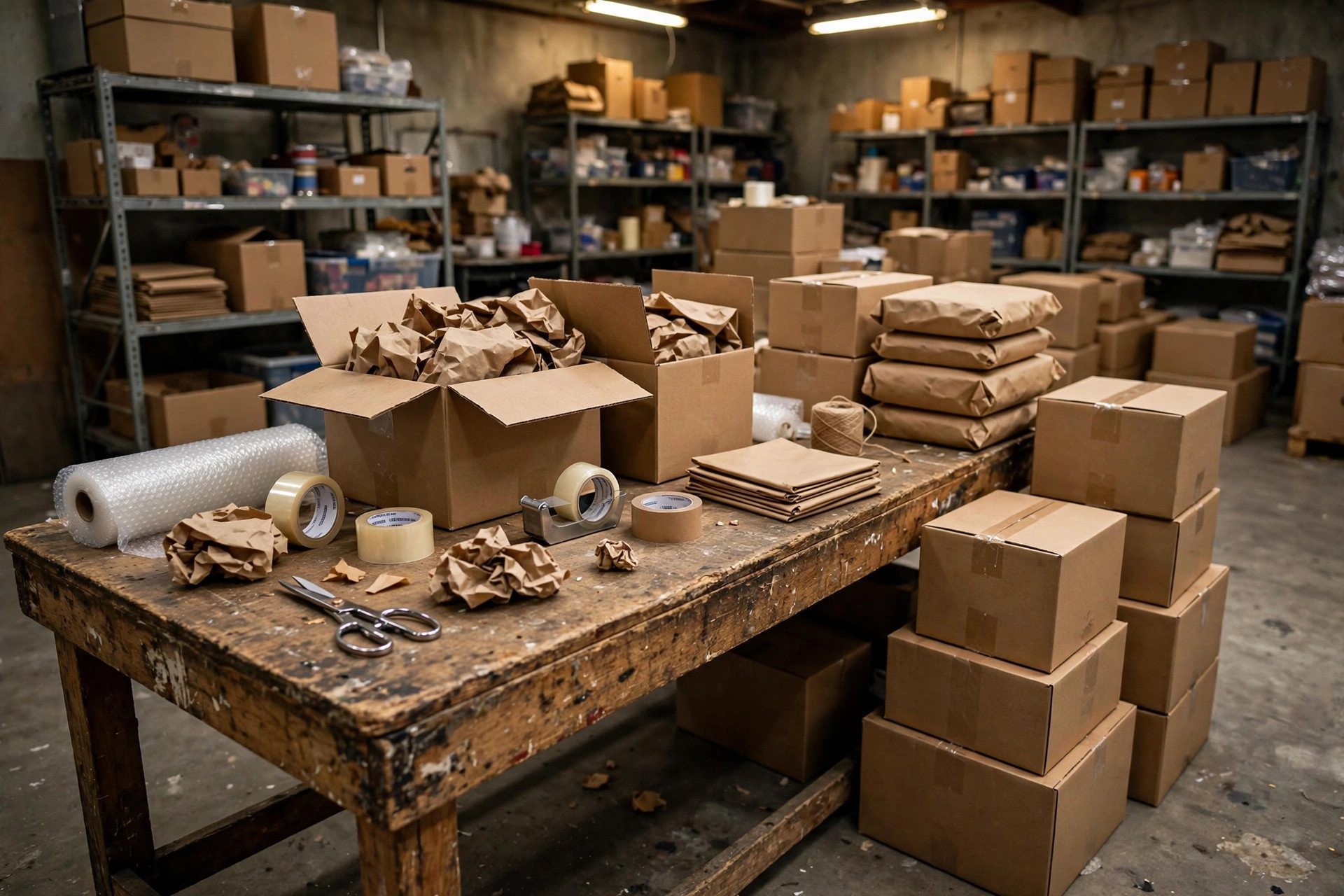
I'll be honest: this time last year, I never imagined my little 3,000-square-meter warehouse would take on an eBay Below Standard seller recovery job.
It started with a phone call in March 2026. Chen, an auto-parts seller on eBay, rang me up and said: "My account just dropped to Below Standard. Traffic's been cut in half. Can your warehouse help me dig out?" My stomach dropped. We're a five-person operation. No WMS, no SLA playbook, no data team. If his account died on our watch and he blamed our shipping, my tiny business couldn't afford that fight.
But his offer was hard to refuse: he'd move all his inventory into our warehouse, pay our fulfillment fees, and — this was the key part — follow our rhythm. Fine, I thought. We don't do "enterprise-grade" here. We do scrappy.
What Below Standard Actually Costs You
Quick primer, so nobody's confused: eBay grades sellers on the 20th of every month, looking at the trailing three months of transactions (twelve months for low-volume sellers). Three tiers: Top Rated, Above Standard, Below Standard. Push your transaction defect rate above 2%, and you're in the basement.
Once you're down there, three things hit you: your listings get demoted in Best Match search, eBay can cap how much you're allowed to list, and you lose access to certain promotional tools. Several seller-service providers also report additional final value fee surcharges for Below Standard accounts in some categories — I haven't verified that one myself, so check eBay Seller Center for the latest policy.
Chen's dashboard told the whole story: a 3.1% defect rate and a late shipment rate above 8%. Both deep in the red. The late shipments were easy to explain — he used to ship from his garage, ignored the computer all weekend, and blasted everything out on Monday. An order placed Friday night wouldn't get tracking until Tuesday. The stockout cancellations were worse: his bestsellers lived in two separate realities — what his spreadsheet said he had, and what was actually on his shelves. Oversell, cancel the order, and eBay logs a defect. No appeal, no mercy.
No Fancy System? No Problem. Our Scrappy Fixes
Five people, Excel, and a group chat — that was our entire tech stack. The enterprise playbook (API syncs, real-time inventory feeds, EDI) was never going to happen, so we went old-school. Every one of these actually happened:
Lock the inventory first. Stop the bleeding. When Chen's stock arrived, we spent two full days doing a wall-to-wall count: 140+ SKUs, 11 with quantity mismatches. Then we made a pact: the sellable quantity on his listings would match our count, period. Every evening by 9 PM he'd update eBay to the numbers we reported. Primitive? Absolutely. His stockout cancellations went to zero and stayed there.
Put the cutoff time on the wall — literally. Our daily cutoff is 3 PM; the carrier pickup truck rolls in at 4:30. Chen's old listings promised "ships within 1 day," but a buyer ordering Friday at 11 PM got their package Monday — eBay counts that as late. New rule: anything in before 3 PM ships same day; after 3 PM goes out first thing next morning. We taped a big sheet to the wall, and whoever missed the cutoff bought bubble tea for the crew. Laugh all you want — bubble tea outperforms KPIs.
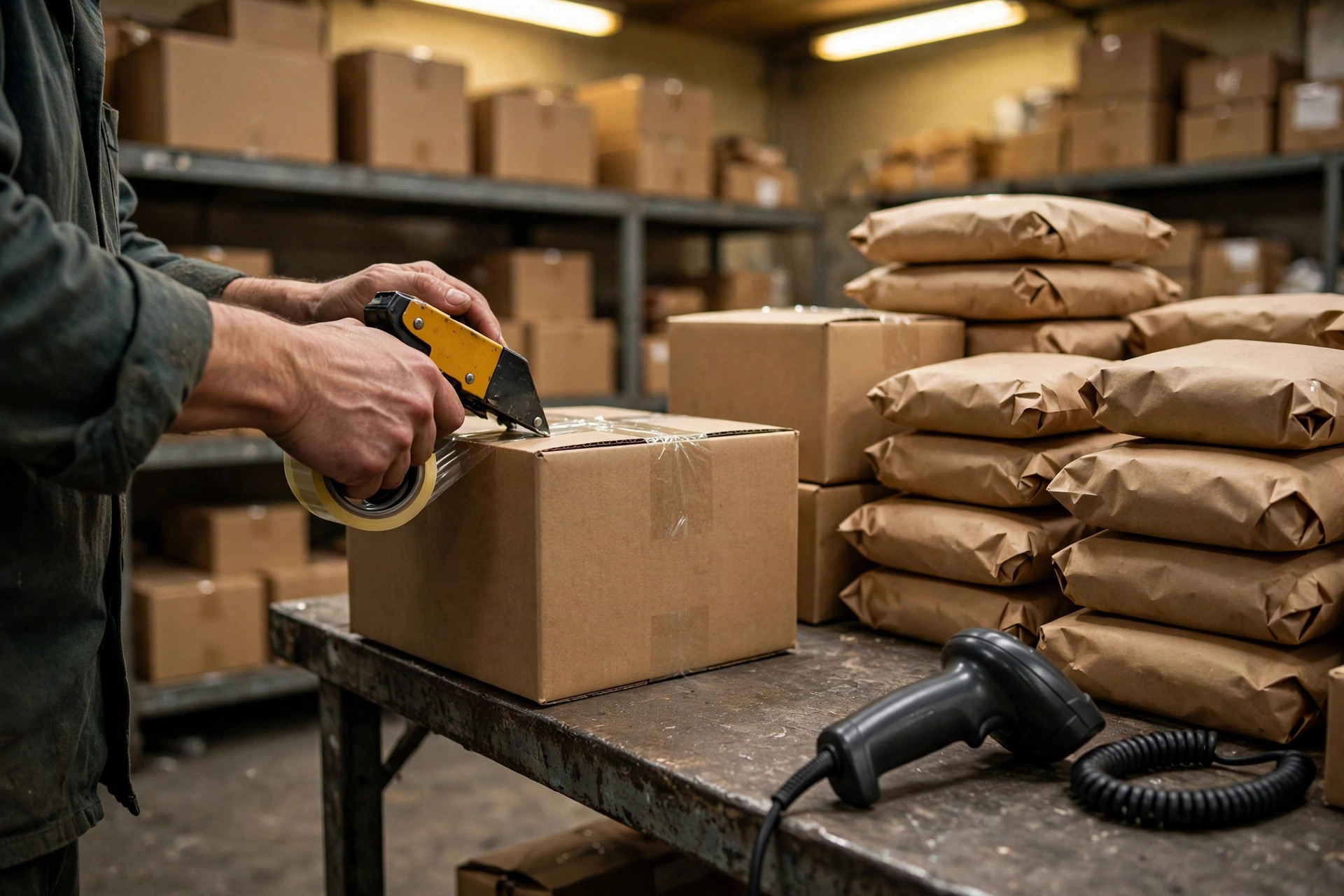
Tracking uploaded the same day, no exceptions. This is where small warehouses die: the boxes leave, but the tracking numbers sit in the carrier's system while nobody pushes them to eBay. New rule: within 30 minutes of the pickup truck leaving, every tracking number gets uploaded, and the person responsible posts a photo in the group chat. eBay scores on-time tracking upload (Top Rated needs 95%+), and for a seller climbing out of Below Standard, this is the easiest point on the test.
Weekend coverage. eBay doesn't care what day it is — a Saturday order shipped Monday still counts as late. Five people, rotating: two come in Saturday morning for two hours, eBay orders only. Cost? A few hundred dollars a month in overtime. Compared to a throttled account, that's nothing.
The 90-Day Plan to Recover Your eBay Seller Rating
eBay's evaluation is a rolling window — falling is fast, climbing back is slow. We mapped a 12-week plan for Chen, with the warehouse's job spelled out week by week:
| Week | Warehouse-side actions | Done when |
|---|---|---|
| 1 | Full inventory count, reconcile every SKU; freeze oversold listings | Sellable stock 100% accurate |
| 2 | Daily inventory sync routine agreed; rewrite listing handling times to match reality | Stockout cancellations at zero |
| 3–4 | Two-person pack verification live; 30-minute tracking upload rule; cutoff sheet on the wall | Late shipment rate at or under 3% |
| 5–8 | Fulfillment report every Monday (ship times, exceptions, cancellations); weekly review of the exception log | Defect rate below 2% |
| 9–10 | Hold the process steady; restore listings to 80% of prior volume | Sitting safely above the Above Standard line |
| 11–12 | Full volume restored; document everything for next time | Rating back to Above Standard |
Now the counterintuitive part, and I need to say it plainly: discounting your way out of Below Standard is drinking poison to quench your thirst.
The instinct after a demotion is: traffic's down, so cut prices, run promos, pump volume — dilute the defect rate with a bigger denominator. The math checks out; the operation doesn't. Double the orders without doubling fulfillment capacity and you get more late shipments and more mispicks. Numerator and denominator rise together, the defect rate doesn't budge, and the account dies faster. We did the opposite with Chen: for the first eight weeks we deliberately held listings at 60% of prior volume and made every single order a perfect fulfillment. eBay grades on ratios, not absolute volume.
The result? By week 10, Chen was back at Above Standard. His late shipment rate fell from over 8% to 1.2%. Stockout cancellations: zero for two straight months. Over dinner he told me: "If I'd known a warehouse could fix a demoted rating, I'd have stopped shipping from my garage a year ago."
It worked a second time, faster. In June 2026 a home-decor seller came to us with the same disease but a more classic cause: her spreadsheet said one thing, our shelves said another — 40+ cancelled orders in a single month. Same scrappy playbook, defect rate back under 2% by week 8. She's now a long-term client doing 3,000+ orders a month through our warehouse.
Taking On Clients Like This? Check Three Things First
After word got around, more sellers started calling. But I've gotten picky — not every Below Standard client is worth taking. Three things I check first:
One: will the seller actually cooperate? Won't share inventory data, won't rewrite handling times, still dreaming of discounting their way out — that client is unfixable, and taking them on is digging your own grave. Our fulfillment contracts now include a line: "Seller shall maintain sellable quantities per warehouse-reported inventory." Get it in writing upfront.
Two: the product category. Standardized stuff — auto parts, home goods — we'll take all day. Custom or made-to-order products that need secondary processing? A five-person crew can't hold that line. Know your limits.
Three: the money. The first two months are pure investment — the full count, the process setup, the weekly reports are all labor. Our pricing now: a one-time onboarding fee (a few hundred dollars) in month one to cover the setup, then normal per-order fulfillment rates after. Clients get it — one recovered month of sales pays for it many times over.
Here's the honest truth: big companies have systems, SOPs, and data teams. We have none of that. What we have is flexibility. Client calls at 10 PM on a Friday with an urgent order? I drive back to the warehouse and pack it in 20 minutes. That request takes three days through a big company's process.
So if your eBay seller rating just dropped to Below Standard, don't panic. Half the problem is operations, half is the warehouse. Find a warehouse that'll work with you, give it 90 days, and climbing back is genuinely doable.
Small warehouses have their own way of surviving.
By Xiao Ma, Small Warehouse Owner