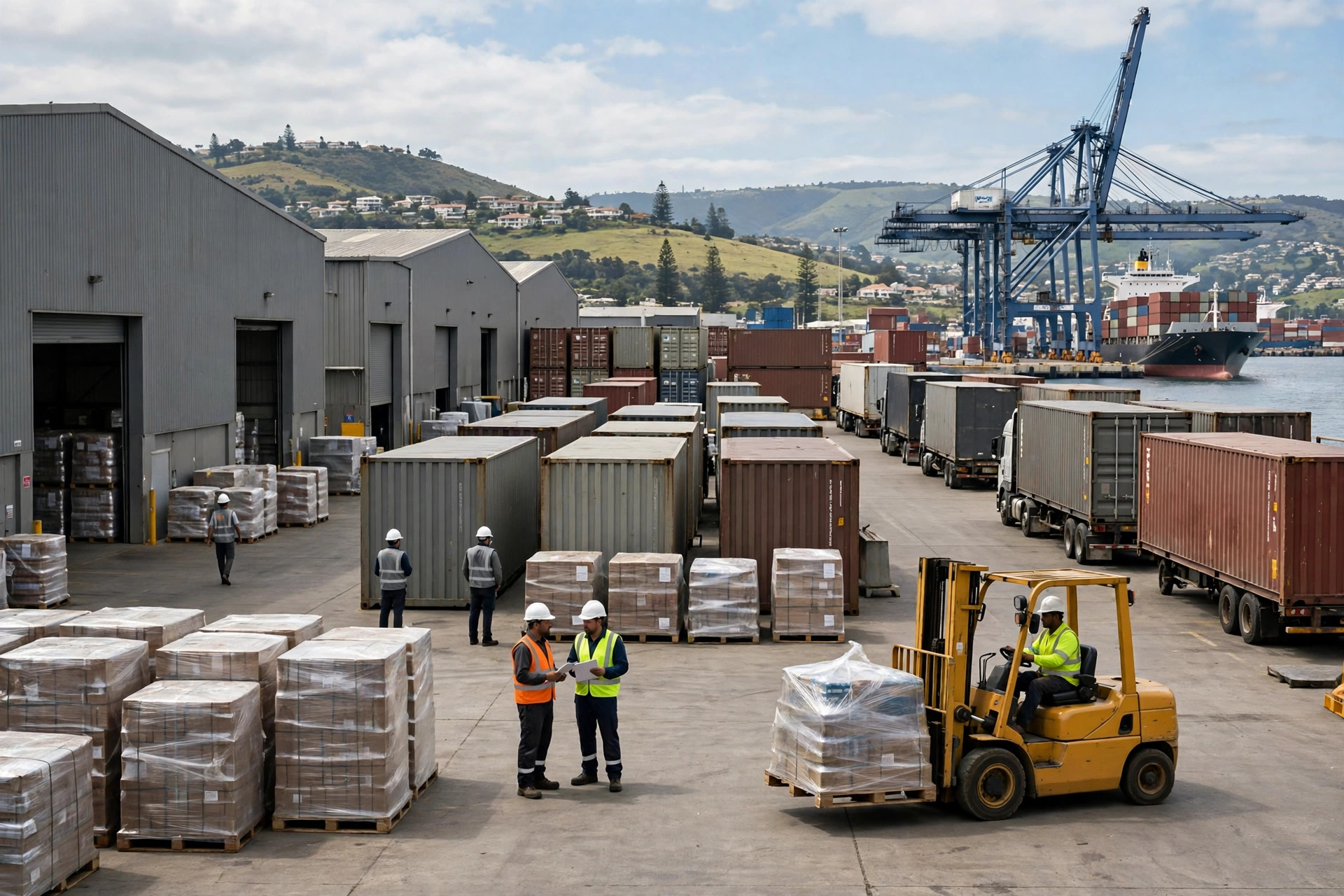
I'll be honest with you: when I first looked at Durban, I went straight for the port. The fantasy wrote itself. Warehouse next to the docks, containers rolling off the ship and straight into our racks, no trucking leg, no waiting around. Clients hear a port address and they trust you on the spot. Then I actually went and looked, ran the numbers, and came home and told my partner: a small outfit like ours cannot afford that postcode.
We are a team of about ten people. That is the whole context you need for everything that follows, because every decision in this piece comes back to one question: can a ten-person crew absorb it when things go sideways? Near the port, the answer kept coming back no.
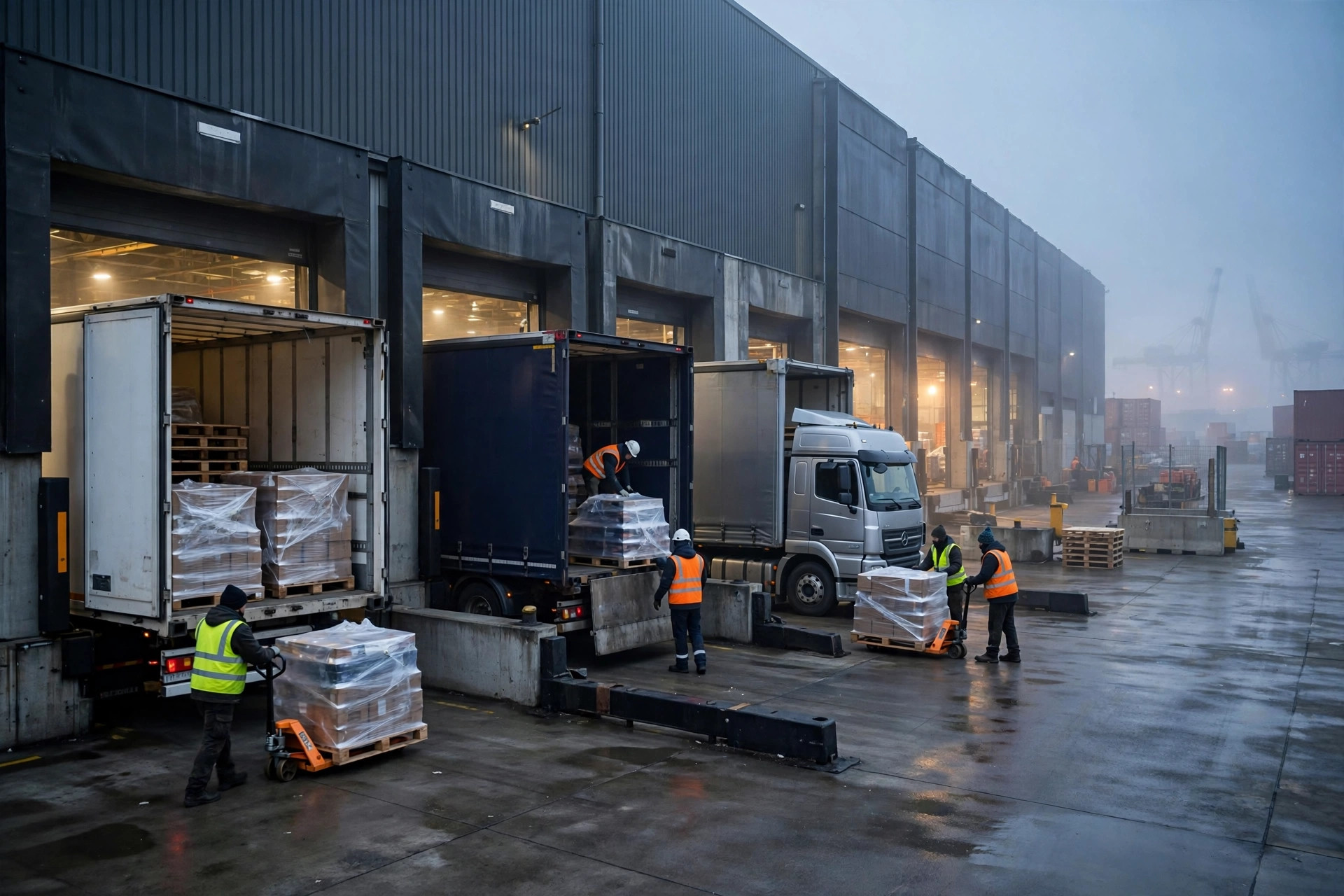
A friend of mine, Lao Chen, learned this the expensive way. He rented a small unit near the port a while back to pick up deconsolidation work, the kind of job that sounds perfect for a small warehouse. Then peak season hit, the roads around the port jammed solid, and his forklift spent half a day out on a single container pickup. His client was calling every hour. The margin on that job went straight into waiting time. He was closer to the cargo than anyone, and further from getting anything done. That story has stuck with me ever since.
Durban Port-Adjacent Space: The Rent Is Only the First Bill
The trap with port-side warehousing is that you think you are paying rent, but you are actually buying into an entire port lifestyle. Booked gate slots, container queues, peak-season congestion, drivers burning hours on the road that eventually show up on somebody's invoice. And the flexibility is terrible. Today you are handling loose cargo, tomorrow you want to shift toward distribution, and suddenly the yard, the dock doors, the whole flow needs reworking. A small team cannot rebuild its operation every time the work changes shape.
I learned to judge a warehouse by a different metric: how much room it gives you to recover when the plan breaks. Not kilometres from the quay, but turnaround cost. Port warehouses suit the big players who run their own fleets and have someone whose full-time job is watching the port system. Congestion costs spread thin across their volume. For us, one jammed day means the entire crew standing around. We cannot burn money like that.
Durban's Suburbs: Where We Ended Up
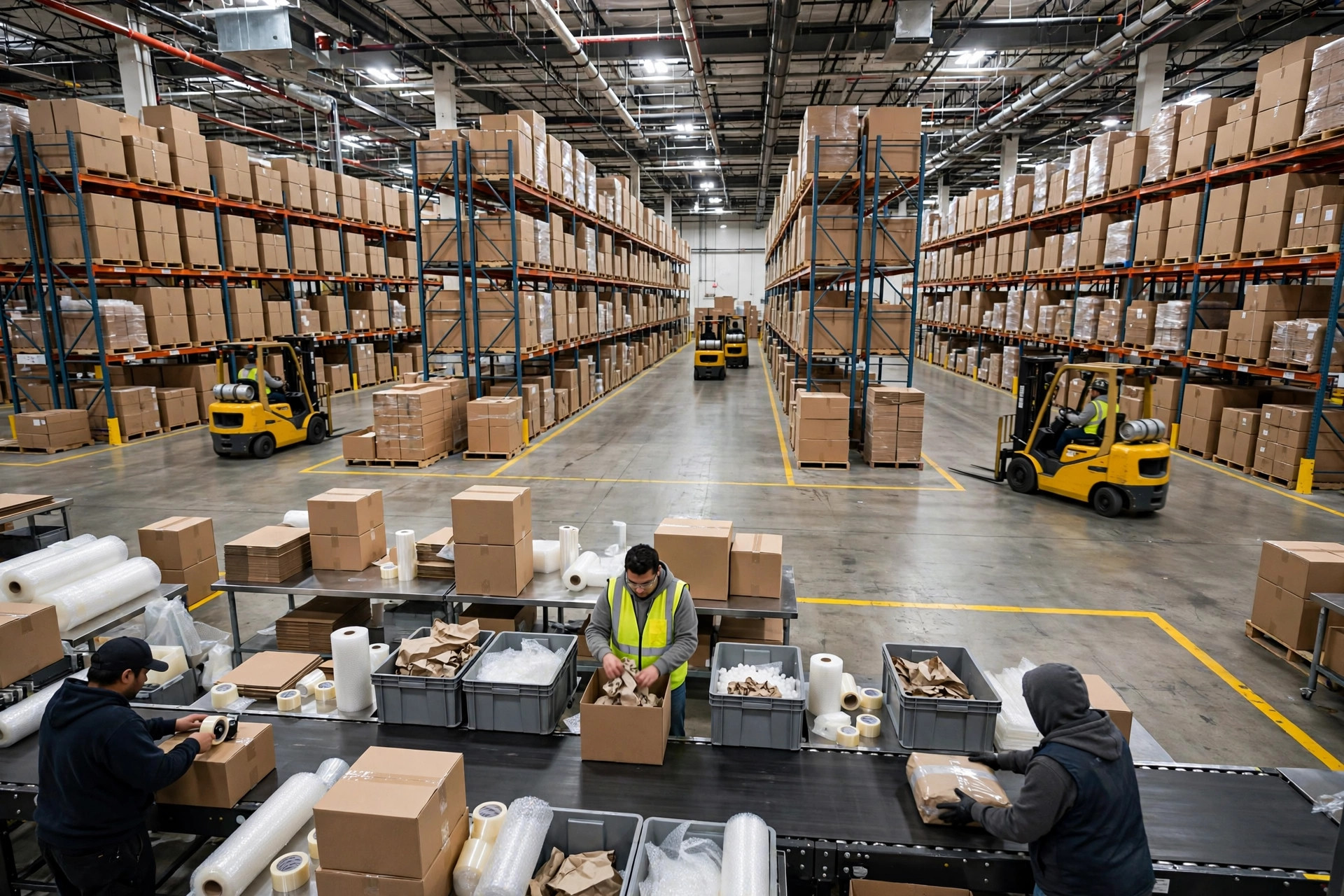
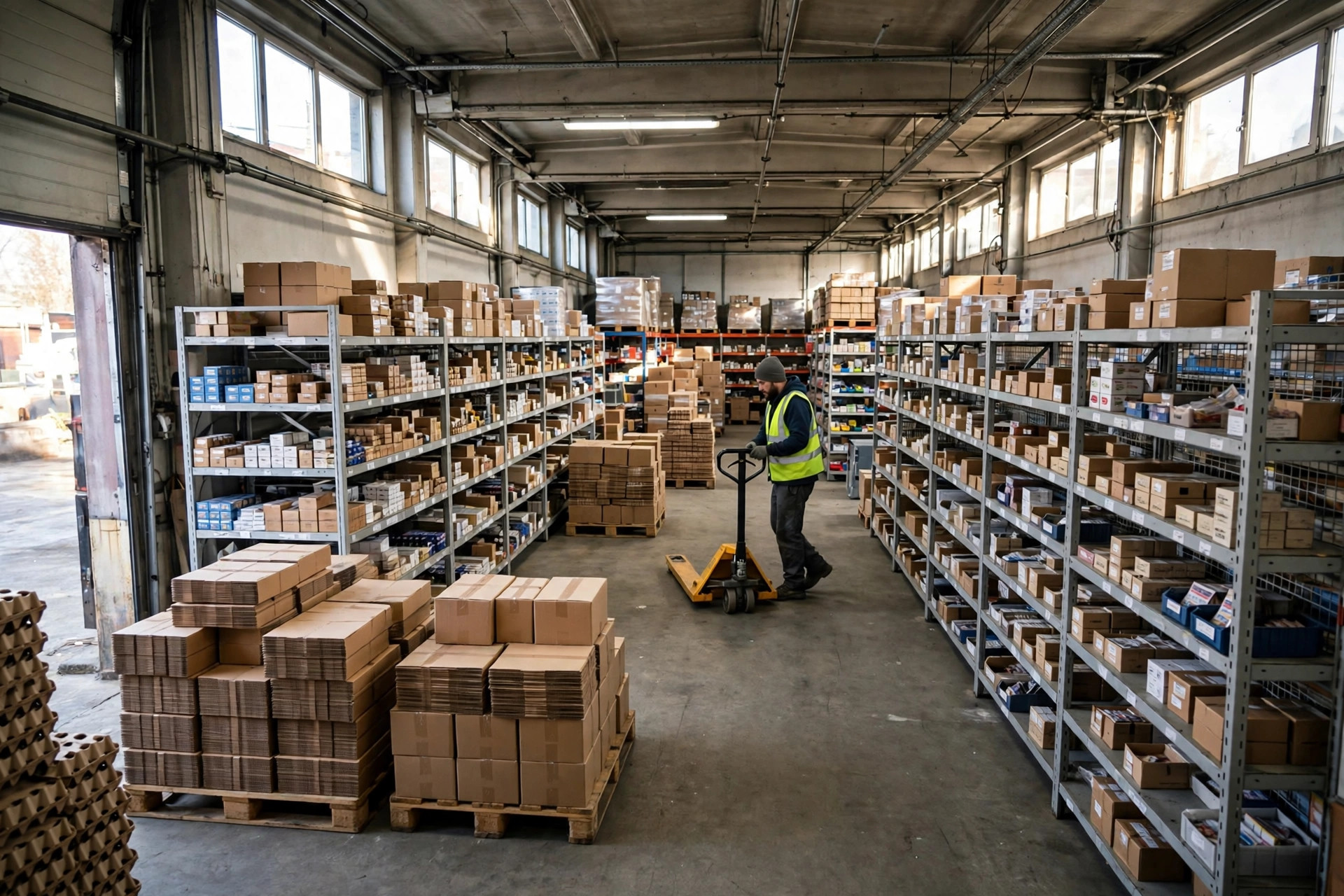
We ended up in a suburban location, a drive from the port but right near a highway interchange. And here is the part people do not believe until they see the books: our overall costs went down after the move. The suburban unit is bigger, trucks come and go without queuing, drivers show up and start work immediately, and nobody complains when we run late into the evening.
Clients asked the obvious question at first: does being further from the port slow you down? I showed them the math. Whatever we saved on the short port transfer was wiped out by a single congestion delay. A warehouse that delivers on time beats a warehouse with a prestigious address, and it is not close.
There is a second story from our own industrial park that settled the argument for me. Another small operator handling auto parts chose a port-side unit for the image, figuring clients would trust the address. Then a key customer needed an urgent shipment, the truck sat outside the port for most of the day, and the goods arrived after the customer's production line had already waited through two shifts. That customer moved to a suburban warehouse like ours. His reasoning was blunt: he does not want the warehouse closest to the port, he wants the one whose arrival times he can plan around. Image is worth nothing once it costs you an order.
Suburban space has its own headaches, and I will not pretend otherwise. The most practical one is hiring. Suburban sites are not on easy commuter routes, and workers notice. Our workaround is gloriously low-tech: we stagger shifts to dodge the worst traffic, start half an hour early, and pay a small transport allowance to long-term staff. It is not a big-company benefits package. It is a small, steady kindness, and it keeps people.
The other lesson was learned the wet way. I will not name the year, but one rainy season our neighbouring warehouse took on water, a layer of stock got soaked, and the insurance claim dragged on for months. Since then, the first things I check in any unit are the ground level and the drainage, then the fencing and the night lighting. They look boring on a viewing tour. They are pure money when something goes wrong. Rents and freight rates can be negotiated before you sign; drainage and security can only be fixed after a disaster, at a far higher price. For current local rates, check the latest market figures rather than trusting any number printed in a blog post, including this one.
Durban Inland Distribution: The Line Small Warehouses Should Not Swallow Whole
The real opportunity around Durban is not Durban itself. It is the corridor running north through Johannesburg toward Botswana, Zimbabwe, and Zambia. Plenty of sellers and traders want goods landed at Durban port and pushed inland. It sounds like a growth story, and it is, but for a small warehouse the danger is that you think you are selling storage while you are actually underwriting cross-border uncertainty.
We took a hit on this once. A shipment bound inland was pushed out while the clearance paperwork was not fully aligned, because the client was in a hurry. It sat at the border for days, and the storage charges, demurrage, and the client's penalties all landed on the middlemen. Us, in other words. Since then I have one rule: no truck leaves for an inland destination until the documents are complete, even if it costs us a day. Clients grumbled at first. Now they send us more work, because we do not create bigger problems for them.
The right shape for a small warehouse on this corridor is to be a transfer node, not a full-route contractor. What we do now: receive, deconsolidate, sort, and repack in Durban, then hand the cross-border leg to specialists who run that route every week. We make sure the cargo and the paperwork change hands clean. We earn the part of the chain we actually understand, and we leave the part we do not to people who do. It sounds less ambitious. It keeps us alive.
Choosing Between Three Locations: A Small Operator's Comparison
| Location | Best for | Biggest advantage | Biggest trap | | Port-adjacent | Big players with daily container volumes | Shortest transfer, closest to cargo | Congestion, queues, no room to manoeuvre when plans break | | Durban suburbs | Small and distribution-style warehouses | Space, smooth access, controllable costs | Commuting for staff, drainage and security are on you | | Inland distribution node | Operators with cross-border paperwork and channel expertise | Access to southern African inland growth | Border uncertainty; one document error can eat the whole job |
Before you sign anything, ask yourself three questions. First, does your cargo genuinely need to move in and out of the port every day? If not, do not pay the port premium. Second, can your team survive a full day lost to congestion? If not, choose the place where trucks move freely. Third, do you truly understand the cross-border leg? If not, do only your segment, and do it well.
Here is the counter-intuitive truth I keep coming back to: for a small warehouse, a location is not valuable because it is close to the cargo. It is valuable because of how much room it gives you when something goes wrong. A port warehouse looks impressive, but when the queue builds up, you have nowhere to pivot. A suburban warehouse looks ordinary, but it gives us the three things that actually matter: arrival times we can promise, costs we can control, and staff who stay.
So my advice is simple. Do not let the words "port warehouse" impress you into a lease. Run your own numbers, honestly, for your own team size, and then pick your spot. Small warehouses have their own way of surviving, and surviving beats looking big every single time.
By Xiao Ma, Small Warehouse Owner