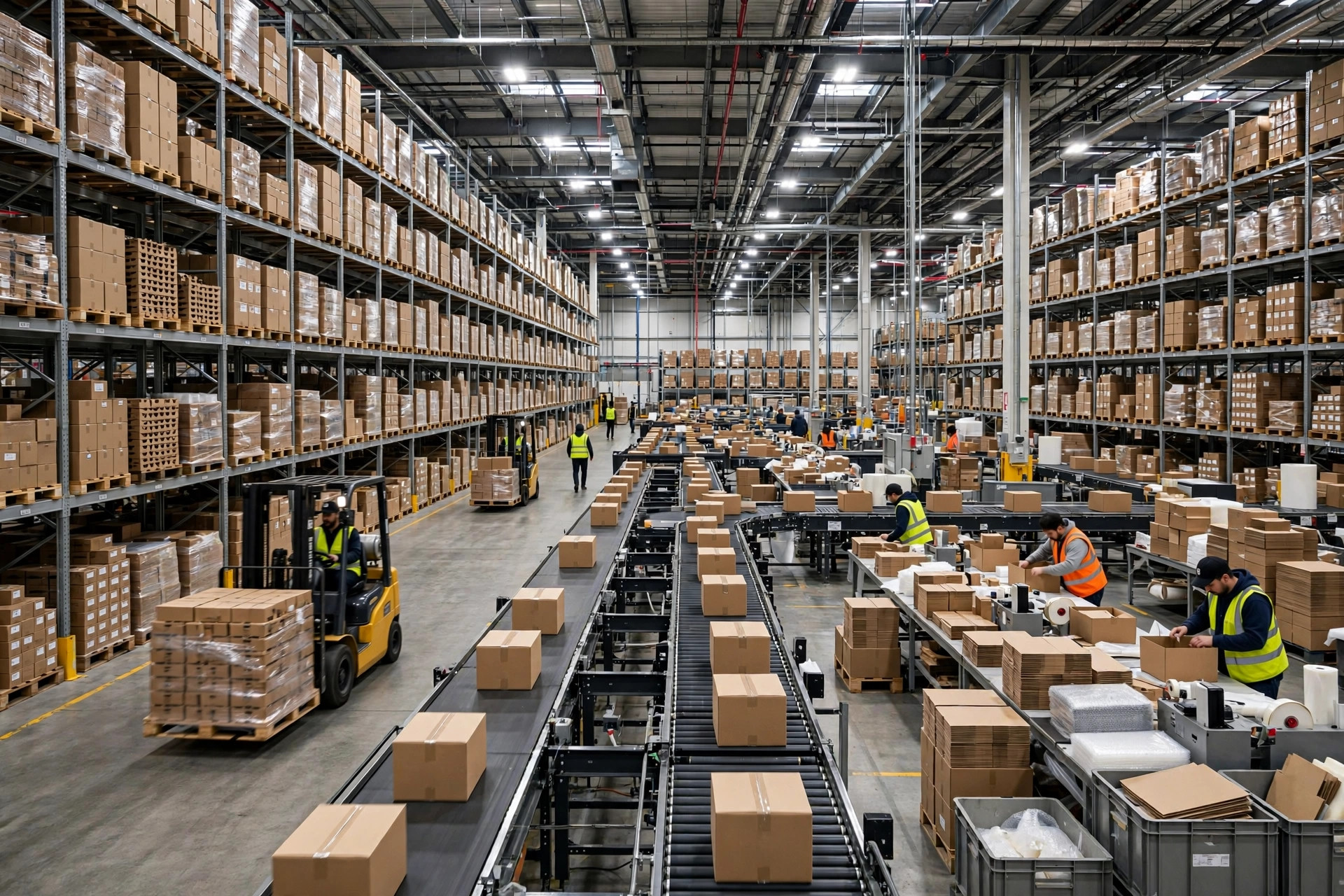
We had a client — kitchen gadgets, decent-sized brand — shipping every U.S. order out of a single warehouse in Texas. The owner called me to vent: a customer in California waited five days for UPS Ground, billed at Zone 8 pricing; a customer in New York got Zone 7. Forty thousand orders a month, and last-mile shipping alone was burning close to a million dollars. In early 2024 they split into a dual 3PL fulfillment network — one warehouse in Ontario, California, one in Edison, New Jersey. Six months later the owner took me to dinner. Shipping alone, they were saving nearly $200K a month.
Sounds great, right? But that same year, another client — pet supplies — tried the same split and quietly merged back into one warehouse six months later. Splitting into two 3PLs is not as simple as turning one warehouse into two. Today I'll open the books from the vendor's side of the table and walk you through the real math.
Should You Go Dual 3PL? Read Your Order Map, Not Your Gut
Here's the threshold question: how are your orders split between the coasts?
The rule of thumb I use: East Coast (New York, Boston, Atlanta and surroundings) and West Coast (California, Washington, Oregon) each account for 30%+ of orders, the middle of the country takes the rest, and you're doing 20K+ orders a month — that's when splitting starts to pay for its own overhead. Under 10K orders a month? Don't bother. Negotiate a better single-warehouse rate instead.
The kitchen gadget client's numbers: 36% East Coast, 34% West Coast, 30% middle, 40K orders a month. A textbook dumbbell-shaped order distribution — a dual-3PL network was practically built for them. The pet supplies client, on the other hand, had 55% of orders concentrated in California and Texas with only 18% on the East Coast. The owner split because a competitor bragged about it at a conference — and paid for it six months later.
The classic mistake brands make is deciding on total order volume instead of opening the order map. A split only saves money on the cross-country portion of your shipments. If your orders already cluster on one coast, splitting buys you nothing.
The Three Calculations of a Dual-3PL Network: Shipping Cost, Transit Time, Risk
Calculation one: last-mile shipping. This is the big one, and the most tangible. U.S. domestic carriers (UPS, FedEx) price Ground by zone — higher zone number, higher price. Shipping from Texas to California is Zone 8; to New York, Zone 7. With a dual-3PL network on both coasts, over 80% of orders drop to Zones 2–4.
How much is that worth? As a rule of thumb: for a typical 5-lb parcel, moving from Zone 7/8 down to Zone 2/3 cuts the shipping cost by roughly 30–40% (verify against UPS's and FedEx's published rate tables). The kitchen gadget client's actuals: monthly last-mile spend fell from about $960K to around $780K. That's $180K a month, over $2M a year.
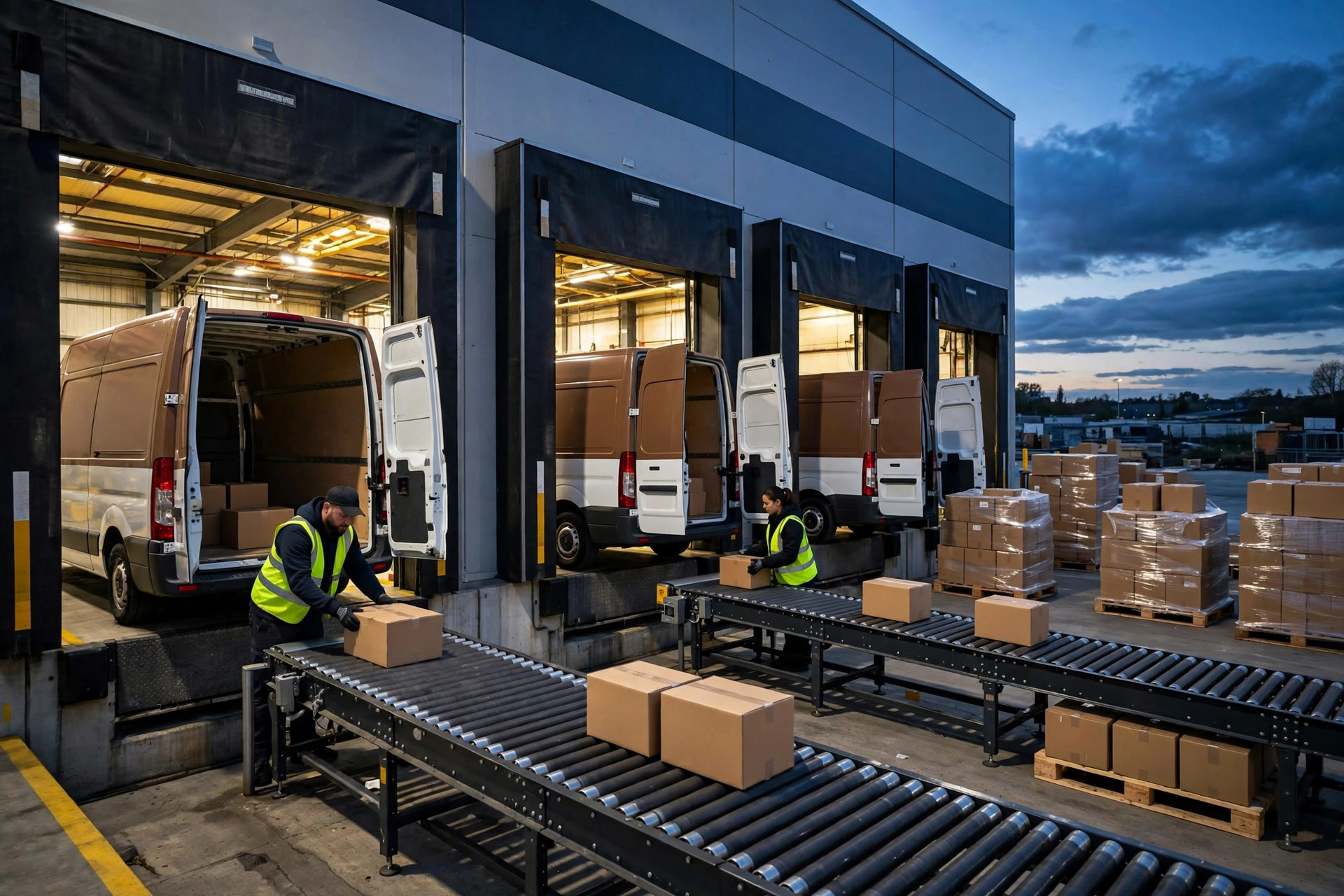
Calculation two: transit time. One warehouse shipping nationwide gets you maybe 70% two-day delivery coverage — cross-country Ground is four to five days. With both coasts covered, hitting around 95% two-day coverage is the norm (that client's measured range). Faster delivery doesn't directly cut costs, but it buys conversion: Amazon and every DTC benchmark out there shows "2-day delivery" on the product page moves the needle on add-to-cart rates. Brands forget to include this in the ROI math, and vendors never volunteer it in proposals.
Calculation three: risk. The biggest risk of a single warehouse isn't cost — it's "one outage kills everything." The 2022 California warehouse fire made the news — dozens of brands had their entire holiday inventory stuck inside. Port strikes, extreme weather, a warehouse's systems going offline — any one of these is existential. Two warehouses are built-in disaster recovery: one goes down, the other picks up, and you flip the routing rules in your OMS. This calculation is invisible on a normal day and priceless on a bad one. It's also our favorite slide when selling a dual-warehouse deal — because the brand owner's hand stops shaking and signs.
The Three Hidden Costs Nobody Puts in the Proposal
The math is done. Now three cold showers. These three costs are the ones 3PL salespeople (me included) tend to gloss over in the pitch deck. Consider this my confession.
Hidden cost one: two system integrations. One 3PL means one EDI/API integration, one round of split-shipment logic testing, one inventory sync to tune. Two 3PLs means double all of that. And most 3PL quotes list integration as a separate "one-time implementation fee," starting in the tens of thousands. Here's the counterintuitive part: in year one, the extra integration and implementation costs can eat up roughly half of what you save on shipping. The real payback starts in year two — so splitting is a two-year play at minimum. Anyone who splits on a one-year contract is basically donating money to the 3PL.
Hidden cost two: split inventory, rising stockouts. This one hurts the most. One warehouse needs, say, 1,000 units of safety stock; split across two warehouses and the square-root law of inventory says you need close to double to hold the same fill rate. Brands with few SKUs (under 50) barely feel it. But brands with deep long-tail catalogs get crushed — the pet supplies client had 800 SKUs, with the tail 600 selling under 50 units a month each. After the split, their stockout rate climbed from 2% to 6%, and customer service drowned in complaints. The longer your SKU tail, the more splitting hurts. That's the iron rule.
Hidden cost three: diluted negotiating power. At 40K orders a month in one warehouse, you get the 40K-tier rate. Split into two warehouses at 20K each, and both quote you the 20K tier — the unit price goes up, unless you negotiate "combined-volume tier pricing" into the contract (see the playbook below). Plenty of brands discover after splitting that "shipping went down but warehouse handling fees went up." This is why.
| Single warehouse (Texas) | Dual-3PL network (CA + NJ) | |
|---|---|---|
| Last-mile shipping | High (mostly Zones 7/8) | Down 30–40% (mostly Zones 2–4) |
| Two-day coverage | ~70% | ~95% |
| Outage risk | One failure kills everything | Built-in disaster recovery |
| Integration cost | One setup | Two setups — eats ~half of year-one savings |
| Safety stock | Baseline | Nearly double |
| Negotiating power | Best volume tier | Diluted — needs combined-tier clause |
| Management effort | One partner | Two partners + routing rules |
How to Negotiate: Ask These Three Questions Next Time
Seventy percent of split-warehouse pain is baked in on signing day. At the negotiating table, these are the three questions vendors least want to hear:
Question one: "Are shipping discounts and handling fees tiered on combined volume across both warehouses, or separately?" Most 3PLs default to separate — your 40K orders become two 20K accounts, the tier drops, the unit price climbs. Get "combined-volume tiering" written into the main contract, not an appendix. This is the highest-value sentence in a dual-3PL negotiation.
Question two: "Are the cutoff times and same-day ship commitments aligned between the two warehouses?" East and West Coasts are three hours apart. An East Coast warehouse cutting off at 3 PM and a West Coast warehouse cutting off at 3 PM local time are very different things in absolute terms. Your OMS split-routing logic has to follow the cutoff schedule, or you'll see orders routed to a warehouse that already closed for the day — and customers still see delayed shipping. Before signing, make both 3PLs put their cutoff schedules on the table, compare them, and write the result into the SLA.
Question three: "If the actual savings miss the projection after six months, can I consolidate inventory back with no penalty?" This is your escape hatch. Split projections are built on historical order distribution — if your order geography shifts (say, a big customer pops up in the Midwest), two warehouses can suddenly lose to one. Without an exit clause, one warehouse move will cost you enough to make you lose sleep — a single inventory relocation can run you half a year's warehouse rent.
And here's the honest vendor-side truth: a dual 3PL fulfillment network is a good tool, but it's a scale tool, not a magic pill. Dumbbell-shaped order map, enough volume, and no brutal long-tail SKU catalog — when all three line up, split. Missing one? Negotiate your single-warehouse contract properly first. Getting a great rate out of one 3PL is a skill in itself.
By Susan, 3PL Sales Director