A freight-forwarder buddy of mine who runs the Morocco lane called me the summer before last, fuming. His container of auto parts had berthed at the Port of Casablanca at the end of June — and he didn't get the box out until the middle of July. Queues outside the gate, a jammed yard, no customs window to be had. His customer supplies the auto-parts markets around Casablanca, and ten days of stockout got him chewed out by every dealer downstream.
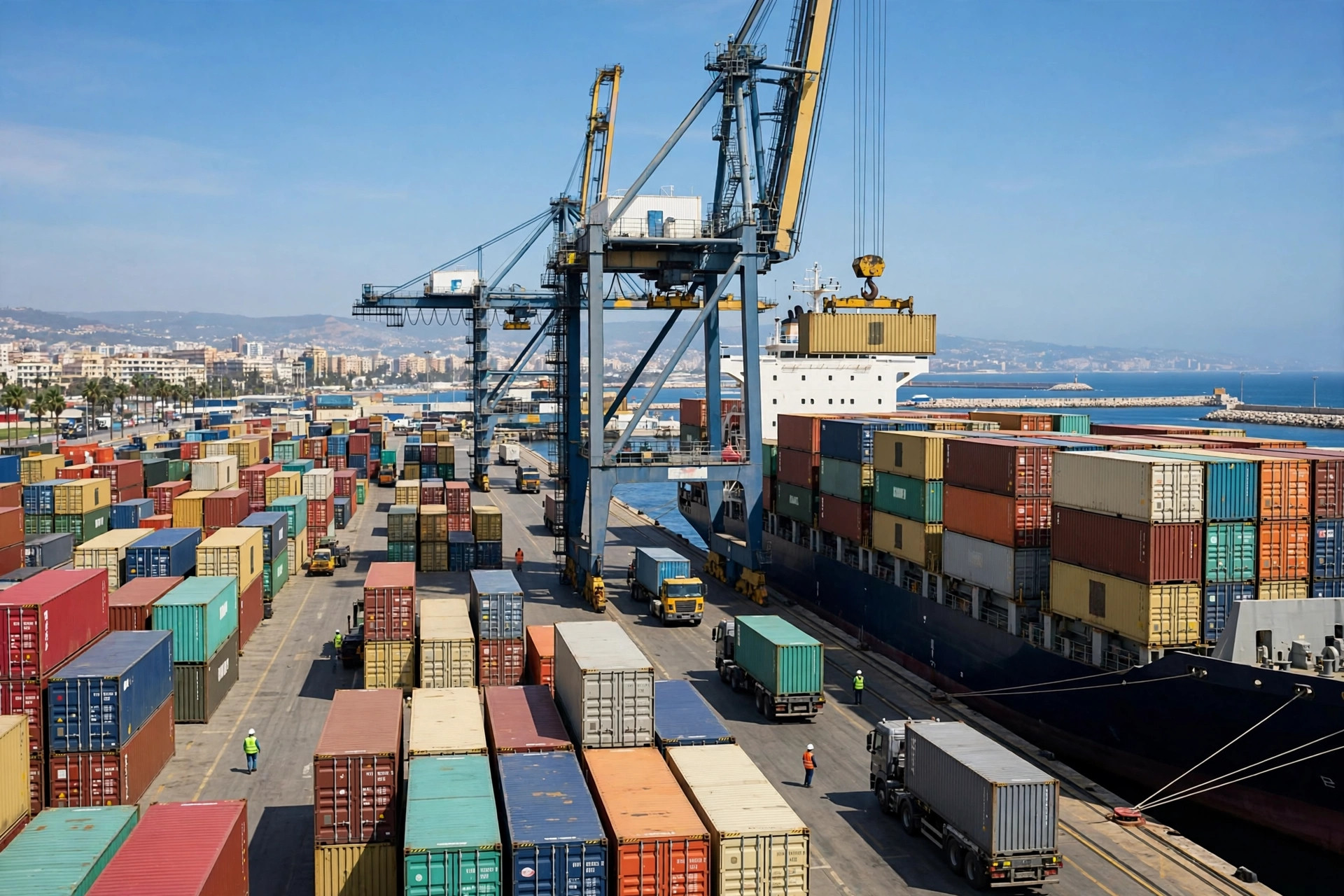
Let me tell you, after all these years on the road, I know the North Africa lane cold. Casablanca is Morocco's economic capital and its biggest commercial hub — most import and export cargo touches this city one way or another. But a big gateway doesn't mean a fast gateway. In the first half of 2026, this port handled 17 million tonnes of cargo (port data cited by Maersk), with June alone hitting 3.53 million tonnes, up 32% year on year. Roughly 35% of all Moroccan port traffic squeezes through this one port. In peak season, of course it chokes.
Here's what that tells us: if you're setting up distribution in Casablanca, the first question isn't "what's the warehouse rent per square meter." It's "where does the cargo enter, where does it clear, and how does it get into the city." Get that math wrong, and whatever you saved on rent goes straight into demurrage and stockouts.
Where Casablanca Port Chokes: The 17-Million-Tonne Congestion Bill
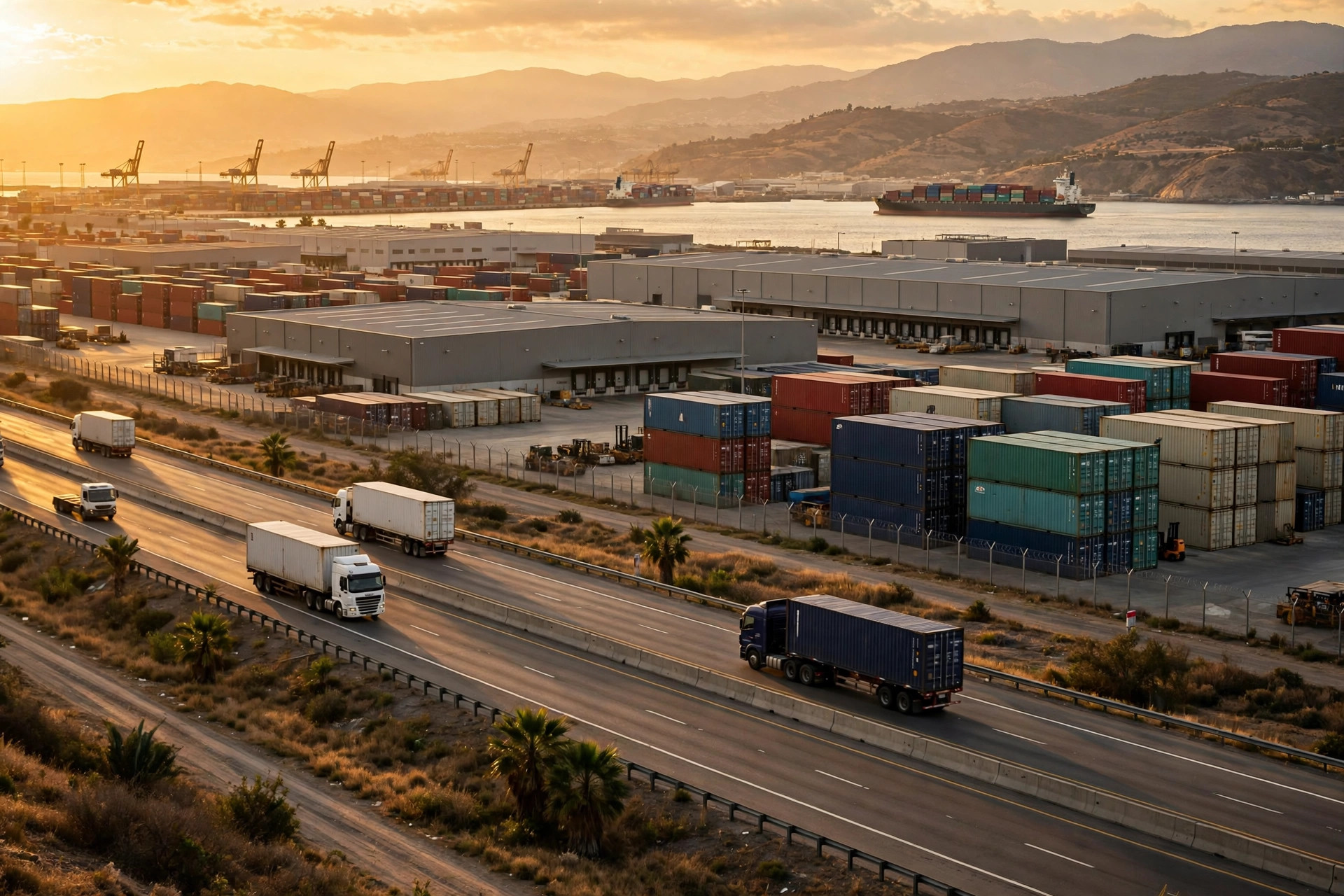
Anyone in this business knows the port's old ailments: berths not deep enough, a small yard, and only so many truck lanes in and out. The port is trying — 230 meters of multipurpose quay have been dredged to 12 meters, so it can now take 60,000-ton vessels (it used to top out around 35,000 tons). But bigger ships unload faster than the yard and the truck fleet can absorb, so congestion just moved from "ships waiting for berths" to "boxes waiting for trucks." The root problem didn't budge.
So the port upgrade answers "can the ship dock," not "can the box leave." And for distribution people, only the second question matters.
In Through Tangier Med, Down by Rail: Morocco Logistics' New Play
In 2026 Maersk launched a dedicated Tangier–Casablanca rail service: cargo discharges at Tangier Med — the biggest deep-water transshipment hub on the Mediterranean, with the densest global connections — and rides the train straight to Casablanca, bypassing the congested stretch at Casa port.
The logic is simple: let Tangier be the maritime gateway and Casablanca the inland distribution hub, each doing what it does best. For shippers, it adds one rail leg but makes transit time predictable. The trap to avoid is the "looks like we saved a leg, actually gambled the whole lead time" play — five extra days stuck outside Casa port in peak season, and the demurrage alone eats the transshipment savings several times over.
LOGINTEK Bonded Dry Port: Moving Customs Out of the Quay
About 50 kilometers south of Casablanca, at a place called Sidi Aidi, LOGINTEK built a bonded dry port: six hectares of bonded zone with 60,000 square meters of grade-A warehousing, a one-stop window covering customs, banking, and insurance, a TIR-compliant truck park for fueling, rest, and overnight stays, direct access to the A7 motorway, and 30 kilometers from the airport.
A dry port is a time-for-space trade, let me tell you. Boxes transit through the seaport under bond without touching the port yard or the customs queue, then clear and deconsolidate inland at leisure. Once the port's free storage period expires in peak season, demurrage runs by the day — and suddenly the dry-port route looks very good.
Last year a consumer-goods distributor handling several European brands in Morocco moved his distribution warehouse from the port area to next to the dry port before peak season. His math was simple: port-area rent was high and box pickup in peak season was a gamble; at the dry port, clearance and distribution run as one operation, trucks roll straight into the TIR park overnight, and they're in the city delivering first thing in the morning. His first peak season after the move, stockout days dropped from nine the year before to two. He didn't save much on rent — he saved on never going out of stock.
Three Routes, Worked Out Plain and Simple
| Route | How it goes | Fits what cargo | Cost and risk |
|---|---|---|---|
| A. Clear at the port | Ship to Casa, clear and pick up inside the port | Small volumes, time-insensitive | Peak-season congestion; demurrage and stockout risk are yours |
| B. North in, rail south | Discharge at Tangier Med, rail to Casa | Time-sensitive, batch shipments | One extra leg, but predictable timing |
| C. Clear at the dry port | In-transit bonded move, clear and distribute at Sidi Aidi | Steady long-term volumes, regional distribution | Need the transit-bond and warehouse setup agreed upfront |
Here's the counterintuitive bit, and fifteen years on the road taught me this the hard way: most people assume "clear where the ship docks" is cheapest. What you save is visible freight; what you lose is invisible time. One stockout doesn't just cost a penalty — it costs the dealer's trust, and nobody reimburses you for that.
A Few Straight Words for Shippers and Warehouse Folks
First, don't fixate on warehouses next to the port. Dry-port-area warehouses usually rent and staff cheaper than the port zone, and clearance runs faster — but only if your forwarder actually knows how to run a transit bond. One who doesn't can sit on your transit document for three days.
Second, write the port free-storage period and the demurrage start date into the contract, in ink. In a congested peak season, those two clauses save real money. Verbal promises count for nothing.
Third, use local trucking for Casablanca city delivery. The city's traffic is a maze; an out-of-town driver will collect fines or take a wrong turn into a restricted zone, and the local guys know every unloading bay. Worth the premium.
Fourth, in the annual mid-year peak (June 2026 at Casa port was up 32% year on year — that's your warning sign), book vessels and trucks two to three weeks early. Don't gamble on "we'll figure it out when it lands."
There's an old saying back home: you don't go broke eating or dressing, you go broke failing to plan. On the Morocco lane, the cargo reaching the port is only the beginning — work out the three bills for the port, the dry port, and the rail in advance, and you'll sleep fine through peak season.
By Shifu Zhao, Trucking Veteran (15 yrs)