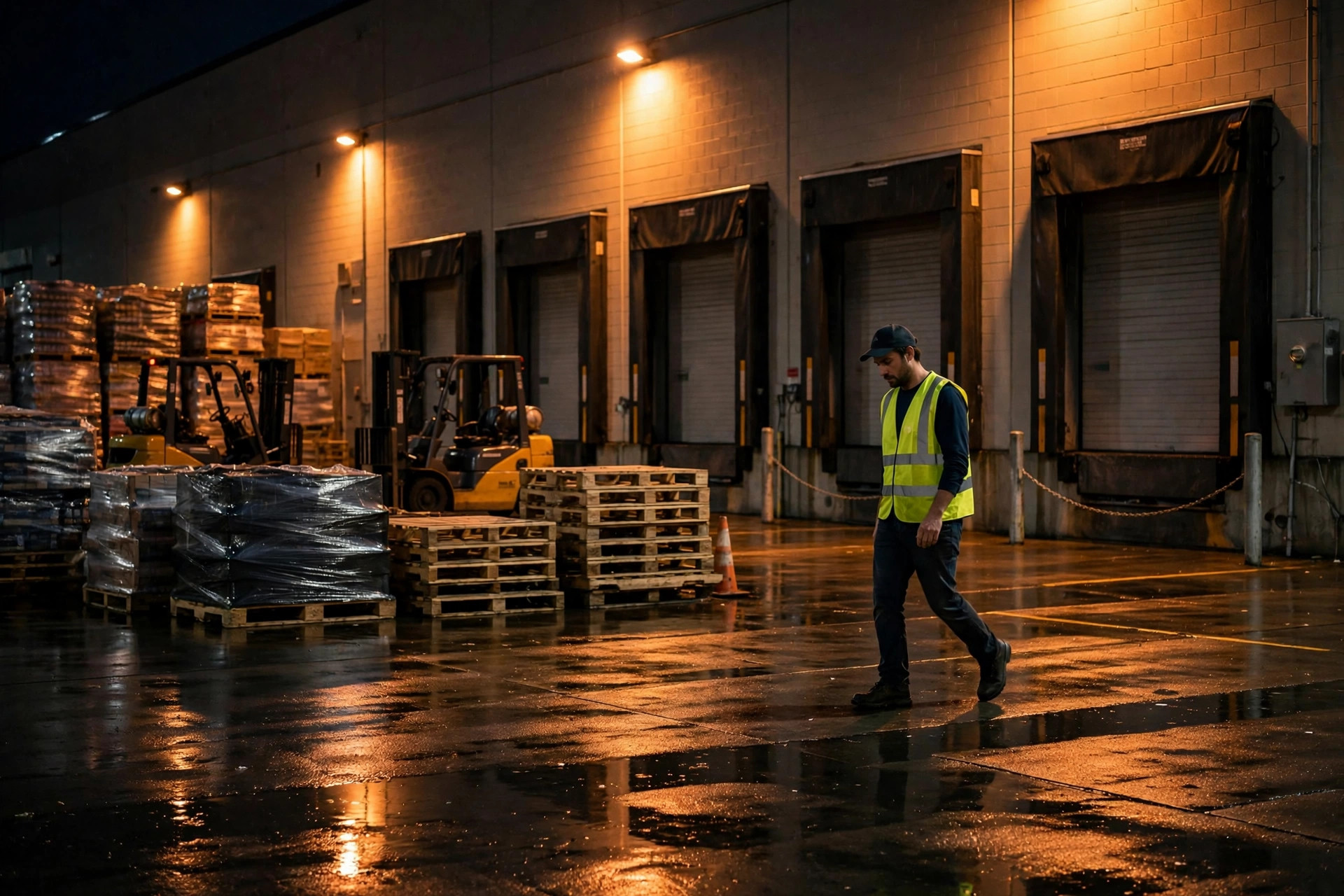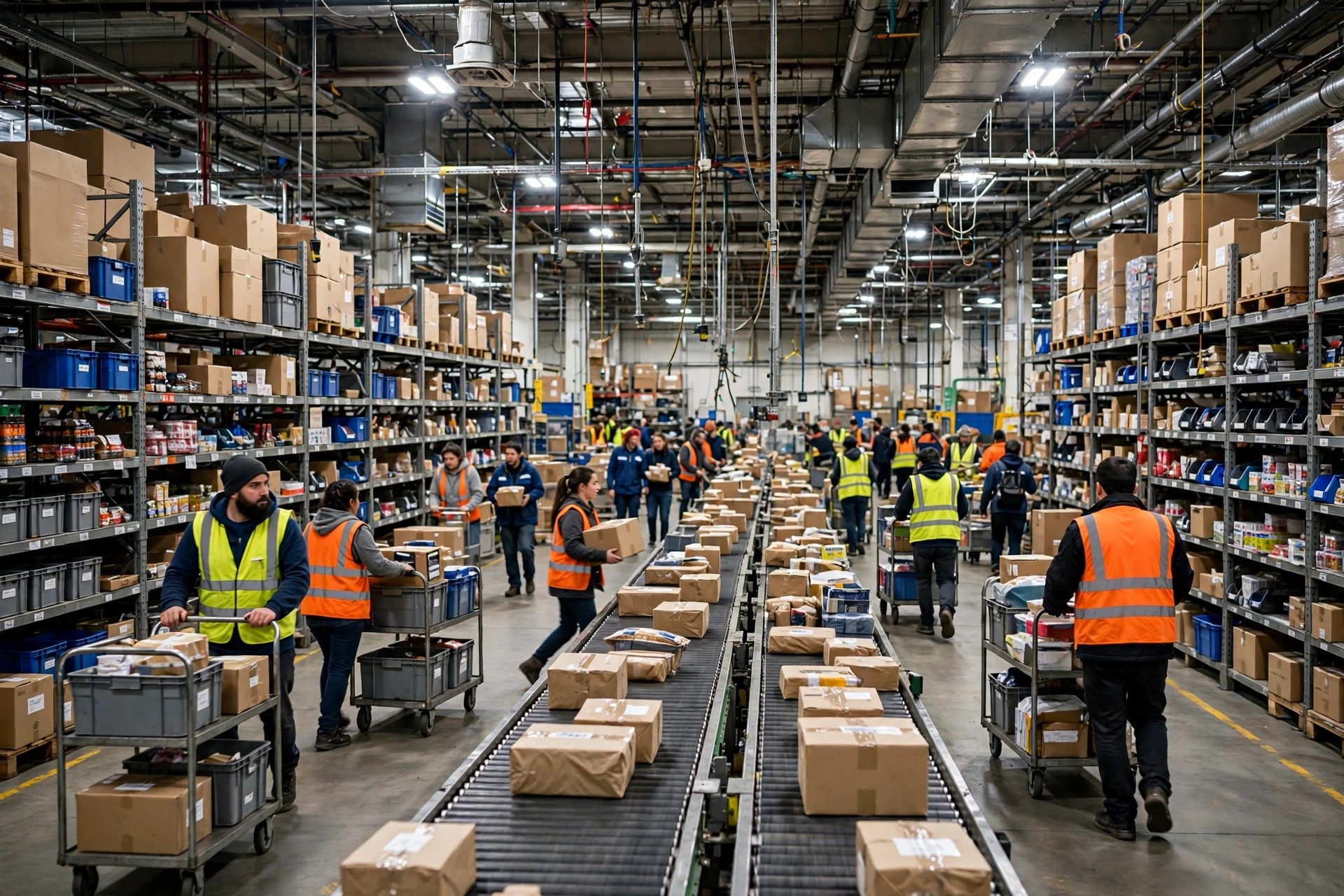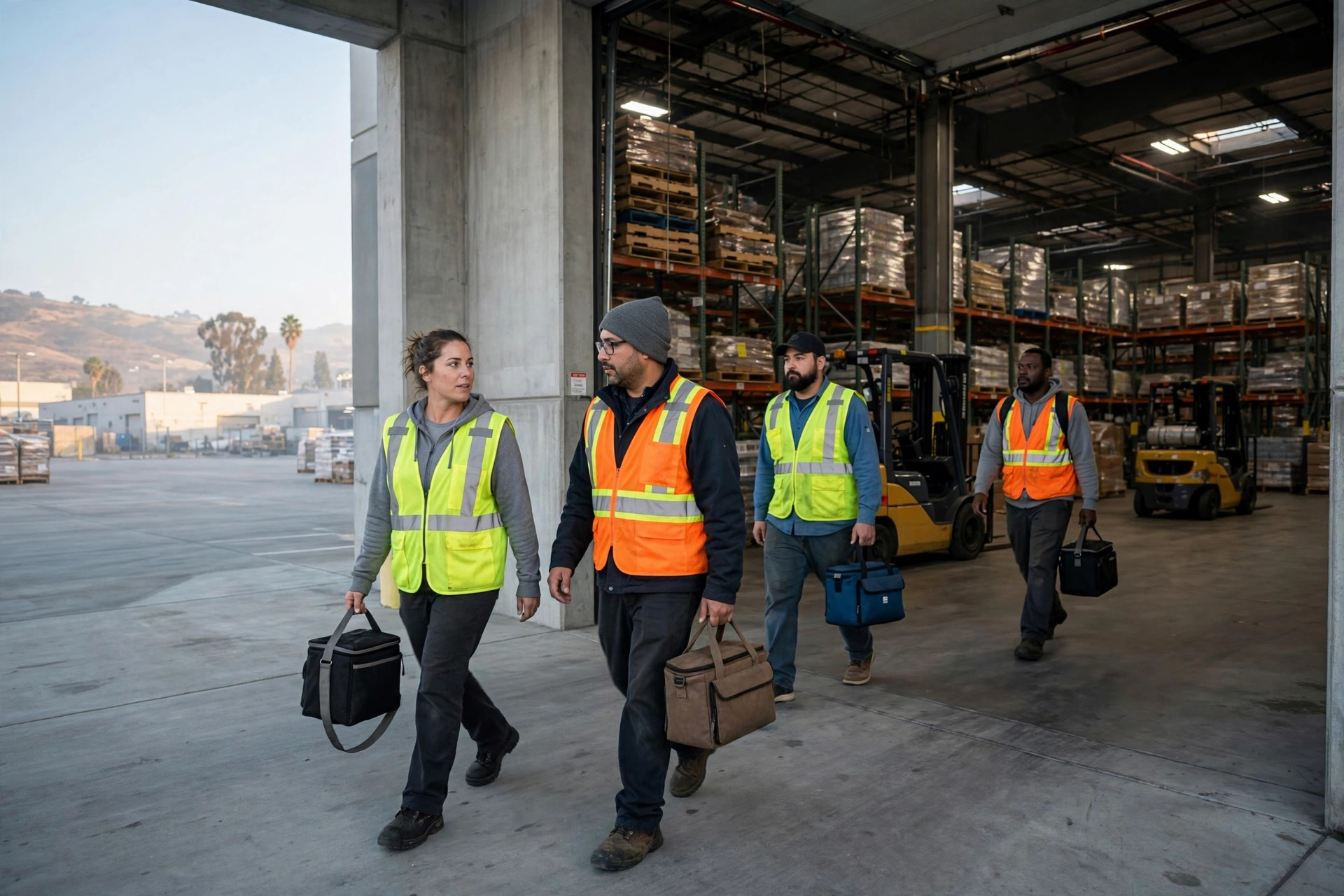
A 120-person warehouse in California burns $167,760 a year on absenteeism. Only $100,800 of that is the sick pay itself. The other $67,000 is overtime premiums, temp agency markups, and scheduling chaos. That is the real bill for California's five-day paid sick leave law — and most warehouse operators are still doing the math wrong, counting it as "two extra days of wages." Let's fix that, down to the dollar.
The law, briefly, with sources: Senate Bill 616, signed by Governor Newsom on October 4, 2023 and effective January 1, 2024, amends the Healthy Workplaces, Healthy Families Act of 2014 (California Labor Code § 245 et seq.). The headline change: minimum paid sick leave rises from 3 days/24 hours to 5 days/40 hours per year. The mechanics: employees accrue one hour per 30 hours worked; under the alternative accrual method, at least 24 hours must be on the books by day 120 of employment and 40 hours by day 200. Accrual caps at 80 hours/10 days; annual use is capped at 40 hours/5 days. Coverage is broad: anyone who works 30+ days for the same employer within a year — including part-time and temp workers — is in, and leave becomes usable after 90 days of employment. Unused sick leave is not paid out at separation (but is reinstated if the worker is rehired within a year), it is paid at the regular rate of pay, balances must appear on each wage statement, and records must be kept for three years. Some cities set higher local floors — check the current local ordinance before you act.
What Five Days Actually Costs Per Year
In January 2026, a 120-person 3PL warehouse in Ontario called me: two weeks of flu season, 96 missed shifts, absenteeism hitting 11%, the schedule in ruins, everything covered with overtime. The burn:
- Sick pay: 96 shifts × 8 hours × $21 = $16,128
- Overtime premium to cover: 96 × 8 × $21 × 0.5 = $8,064
- Two weeks: $24,192, gone
($21 an hour is that facility's floor average; BLS May 2024 data for the Inland Empire shows $21.50 for material movers and $20.93 for stockers — it checks out.)
Now the full-year anatomy. Assuming the full five days get used and a $21 base wage, here is what one absent employee costs per year:
| Cost item | Math | $/employee/year |
|---|---|---|
| Sick pay | 40 hours × $21 | $840 |
| Overtime coverage premium | 60% of missed shifts covered on OT: 24 hrs × $21 × 0.5 | $252 |
| Temp agency markup | 40% via temps at 40% markup: 16 hrs × $21 × 0.4 | $134 |
| Replacement productivity loss | first-day output at ~80% | $84 |
| Supervisor rescheduling time | 5 events × 0.5 hr × $35 | $88 |
| Total | $1,398 |
120 × $1,398 = $167,760 a year. Sick pay is only 60% of it; the other 40% is the cascade. Every assumption is in the table — plug in your own numbers and rerun it. I have no patience for "roughly" and "probably."
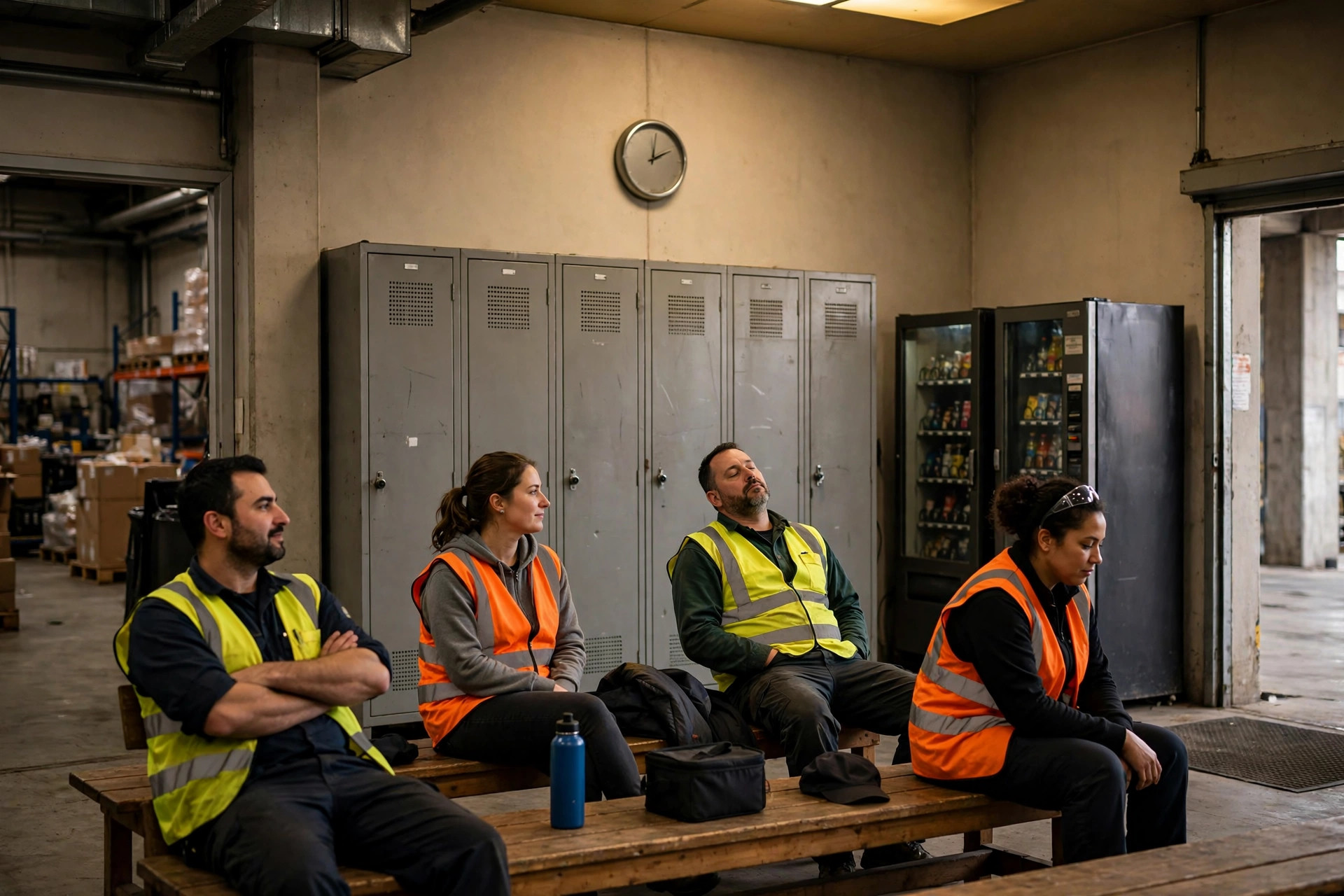
The Fine Costs More Than the Sick Pay: Triple Wages, Explained
November 2025, peak season. An 80-person e-commerce warehouse in Fontana had a supervisor rule: any sick leave beyond two days required a doctor's note, or the days were docked as unpaid. Seven workers got docked, two days each on average, at $22 an hour: 7 × 16 × $22 = $2,464 withheld. Someone filed with the Labor Commissioner.
California's Division of Labor Standards Enforcement has said it plainly: an employer may not deny paid sick leave based solely on a lack of certification from a health care provider. Sick leave vests on the employee's oral or written request — it is not something you trade a note for. Under Labor Code § 248.5, the penalty math:
| Violation | Penalty | Amount |
|---|---|---|
| Unlawfully withholding $2,464 from 7 workers | 3× the amount or $250, whichever is greater | $7,392 |
| Dragging out the fix | $50 per day per worker | on top of that |
| Per-worker penalty cap | $4,000 |
The $2,464 gets repaid on top; the $7,392 is the fine. One handbook rule: $7,392. Money well wasted?
Here is the counterintuitive part: in California, the "require a doctor's note" management move is itself unlawful. What you think of as control is exactly what generates the fine. The real lever was never verifying illness — the law closed that door. DIR leaves only a razor-thin exception: documentation may be requested when the employer has information indicating the leave is not for a valid purpose. Note the standard: information indicating, not suspicion.
Three Ways to Comply. Only One Is Actually Cheaper
SB 616 allows two methods: accrual, or front-loading the full 40 hours at the start of the year (front-loaded leave requires no carryover). Many warehouses pick a third route out of laziness: one big PTO bucket. All three, side by side:
| A: Accrual | B: Front-load 40 hours | C: One PTO bucket | |
|---|---|---|---|
| Method | 1 hour per 30 worked | 40 hours on day one | all PTO, no separate sick leave |
| Admin cost | High: temps qualify after 30 days; every worker's accrual and the 80-hour cap must be tracked | Near zero | Medium |
| Separation cost | Sick balance not paid out | Same | PTO balance must be cashed out in full |
| Hidden risk | One accrual error = a fine | Short-tenure workers get the full 40-hour entitlement early | With high turnover, the cash-out is enormous |
| Fits | Stable workforce, low turnover | High turnover, heavy temp use | Don't — unless you've done the cash-out math |
Option C is the biggest trap, so let me spell it out. California sick leave is never cashed out; but PTO/vacation is treated as earned wages and must be paid out in full at separation. Inland Empire warehouses routinely run 50%–80% annual turnover on the floor. Do the math for 100 people with 60 departures a year, 40 banked PTO hours each at $21: 60 × 40 × $21 = $50,400 a year in separation payouts. That $50,400 would pay for a full-time person to run Option A's accrual ledger with change to spare. Using PTO instead of sick leave saves admin dollars and loses payout dollars — a trade I have rarely seen an owner actually calculate.
The A-versus-B break-even is equally calculable: B's cost is the "early" entitlement handed to short-tenure workers (someone who quits in month two walks away having been entitled to 40 hours, versus about 13 under accrual); B's benefit is zero tracking cost plus zero miscalculation risk. Rule: choose B when (annual HR hours spent tracking accrual × wage + expected fine from one accrual error) > (extra sick hours used by early-tenure workers under front-loading × wage). Turnover above 40%? Pick B and don't look back.
Four Levers That Actually Cut the Bill
- Drive down the overtime coverage rate. The $252/employee overtime line assumes 60% of missed shifts get covered on OT. Cross-training plus a 10%–15% flexible labor pool can push OT coverage under 30% — saving 120 × $252 × 0.5 = $15,120 a year. The single biggest lever on the board.
- Analyze attendance data — but never punish from it. Sick calls clustering on Mondays, Fridays, or right after payday? Pull the data and staff up on those days. But: discipline an employee right after they use sick leave and California law presumes retaliation, with the burden on you to prove otherwise. Analyze, yes. Retaliate, no.
- Use the 90-day rule. Sick leave can't be used until day 90; sub-90-day absences are governed by your probationary attendance policy — but the wording must be clean and must not effectively dock sick leave. Run this one past your employment lawyer; don't improvise.
- Get the compliance basics done once, properly: post the notice in the break room, show the balance on every wage statement, keep records three years. Complaints rarely start with the five days of pay — they start with a pay stub that doesn't even show a balance, which is what sends a worker to the Labor Commissioner.
The calculable conclusion: your warehouse's annual absenteeism bill = headcount × $1,398 × (your wage ÷ $21). At $21 and 120 people, that's $167,760. Three decision rules: (1) turnover above 40% → front-load the 40 hours, skip accrual; (2) coverage costs (overtime + temp premiums) running above half of sick pay → your scheduling redundancy is short, fix cross-training first; (3) any handbook line requiring a doctor's note for sick leave → delete it today. That's not management; that's a $7,392 fine waiting to be printed.
By Lao Zhou, Logistics Cost Analyst