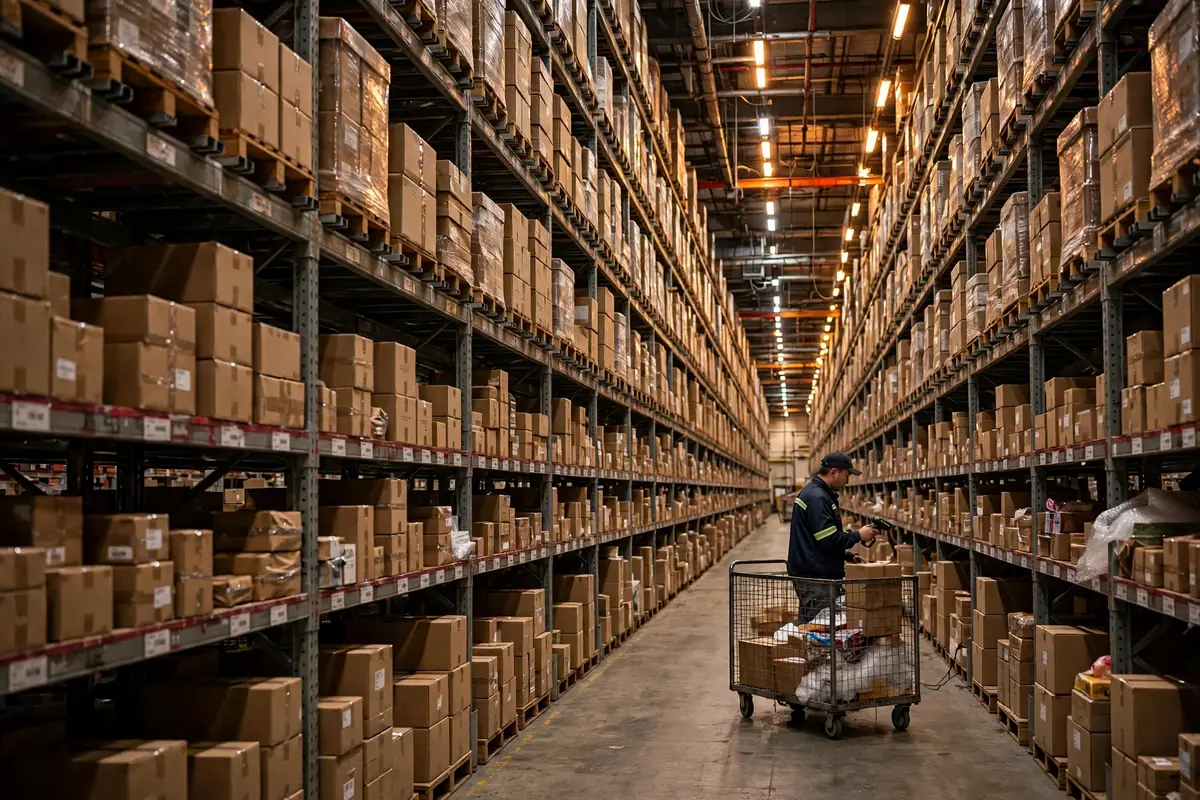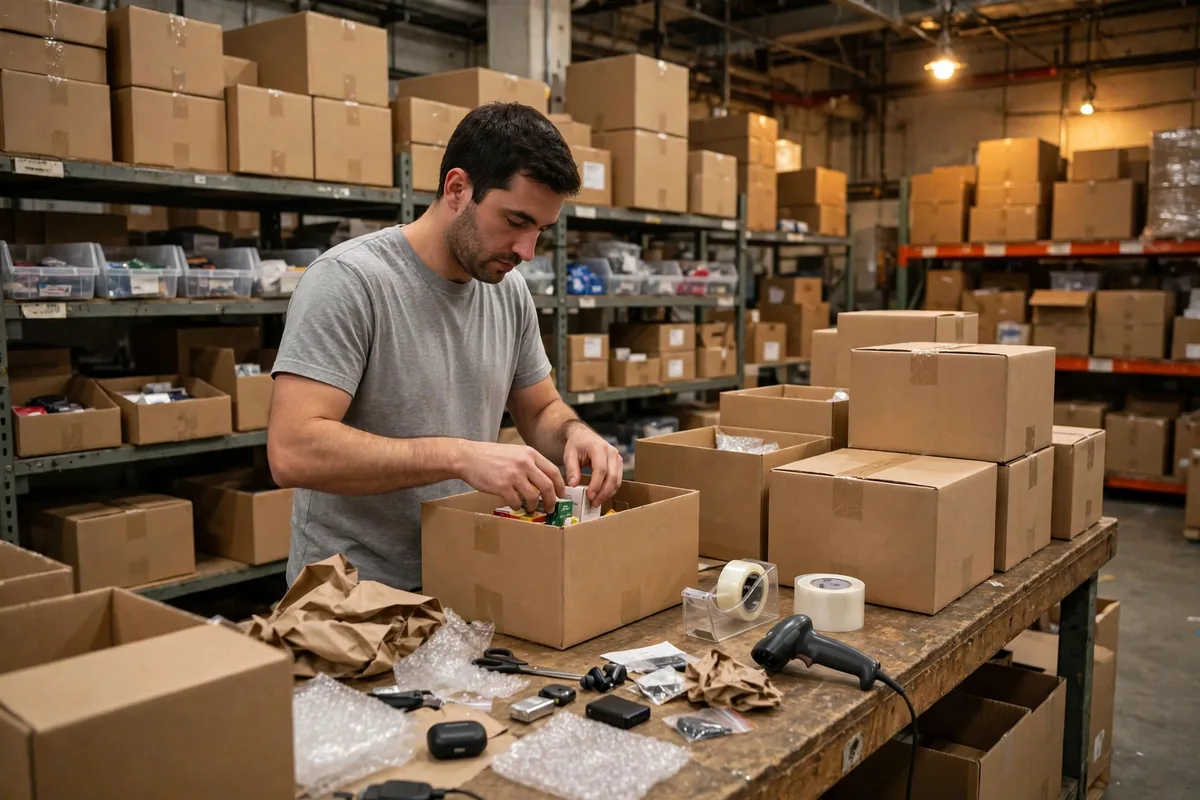
We small warehouses can't afford to burn money like that. Brazil sugar export is exactly the business I mean — the kind a small warehouse can't touch.
A while back, a friend in food importing asked me: "Xiao Ma, can your warehouse hold two containers of Brazilian sugar for me? Not for long." I laughed. Two containers sounds small, but I genuinely couldn't take it. Not because I didn't want the money — because I'd run the numbers, and the numbers said bulk farm commodities are not a game for a 3,000-square-meter small warehouse. Let me lay out that math for you.
From Cane Field to Santos: How Brazil Sugar Export Moves
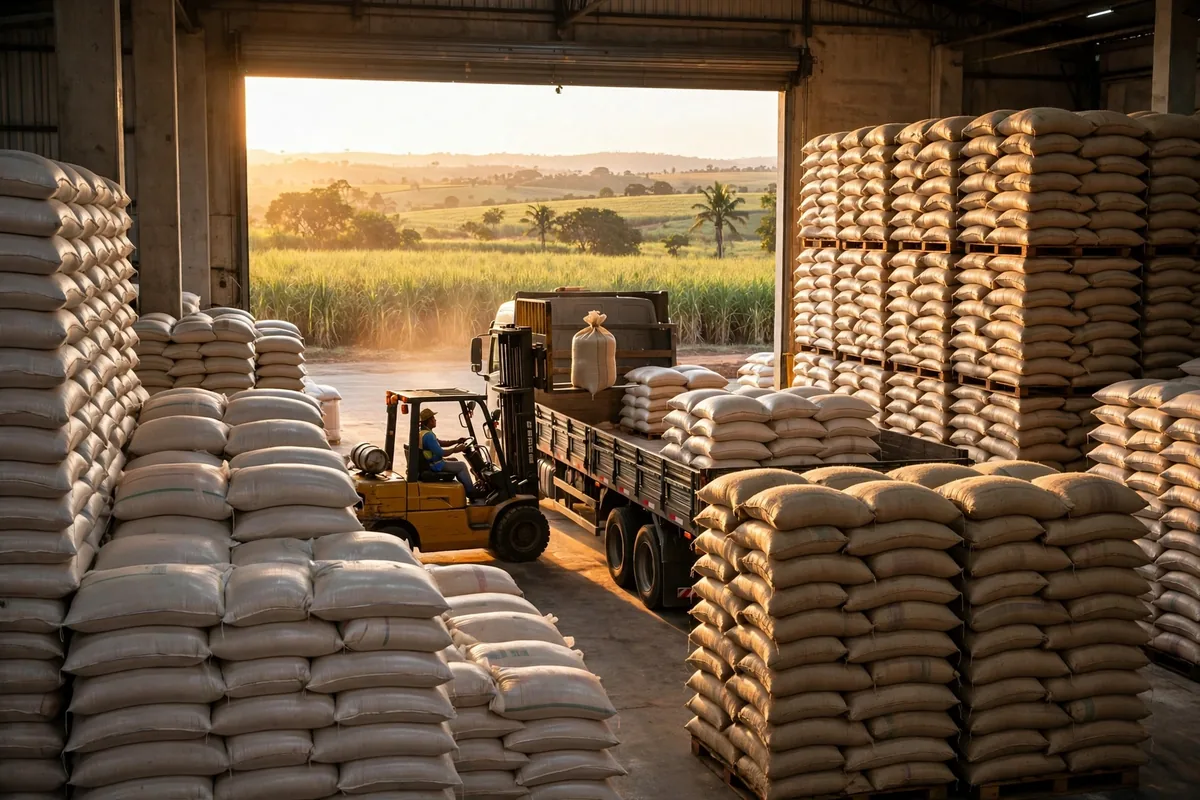
Some background first. Brazil is one of the world's largest sugar producers and exporters. The cane grows mostly in the center-south, and the crushing season usually runs from April through around the end of the year. The sugar leaves the cane field, gets milled into raw sugar near the growing region, then travels to the port warehouse to wait for a ship. The Port of Santos is Brazil's biggest export port and one of the most important sugar gateways in the world — shiploads of sugar leave from here for buyers everywhere.
Along that journey, warehousing shows up in three places: the mill warehouse near the fields, the inland transfer point, and the export warehouse at the port. Each one wants something different. The mill warehouse needs volume and fast turnover — when the crush starts, sugar floods in like a tide. The port warehouse needs to wait for ships, and when a sailing slips, the cargo sits longer. The transfer warehouse needs to connect modes: truck to rail, rail to vessel, and every change of transport adds a loading cycle and another chance of damage and damp.
My friend's two containers sound simple, but they'd have to clear all of it: moisture checks at the mill gate, damp-proofing during stuffing, a sailing schedule that may or may not hold, and customs clearance days at the destination. Any link jams, and the sugar waits in a warehouse. Every extra day in storage adds cost — and that is exactly why a small warehouse can't play this game.
The Counterintuitive Part: Sugar Looks Tough, but Humidity Is Its Kryptonite
Here's the counterintuitive bit: raw sugar looks like one of the toughest cargoes around. It doesn't break, it doesn't bruise, it keeps for ages. But it has one fatal weakness — moisture. Sugar absorbs damp and cakes. Light caking hurts appearance; heavy caking downgrades the whole lot, and the buyer docks the price.
So the real cost of Brazil sugar export warehouse logistics isn't rent. It's moisture control. Does the warehouse floor have a damp-proof layer? Are pallets raised off the floor, and how high? What happens when humidity spikes in the rainy season? The big commodity warehouses have full answers: raised floors, pallet bases, humidity monitoring, dehumidifiers running through the wet months. Our little warehouse? A plain concrete floor — after a heavy rain, the corners weep. Storing sugar on that is betting a client's cargo on the weather.
Now run one concrete scenario. A shipment waits an extra week at the port warehouse because the sailing slipped. Rent, port storage charges, and tied-up capital all climb. Worse, the delay lands in the rainy season, so moisture control costs climb with it. The shipping line doesn't care whether your sugar stayed dry in storage — when the vessel arrives, it loads, and if moisture tests come back high at loading, a whole container can be refused. One container's loss would eat half a year of our small warehouse's profit. I ran that math, and I told my friend: put those two containers in a professional commodity warehouse. I genuinely can't take them here.
| Cost item | Professional commodity warehouse | A small warehouse like ours |
|---|---|---|
| Rent | Volume pricing, real economies of scale | High unit price, no bargaining power at small volume |
| Moisture control | Damp-proof floors, humidity monitoring, dehumidifiers | Plain concrete floor, rainy season left to luck |
| Handling | Bulk, pallets, and containers all covered | Standard pallets and cartons only |
| Sailing coordination | Standing routines with lines and forwarders | One slipped sailing and everything scrambles |
| When things go wrong | Commodity experience and insurance | One moisture claim and we're badly hurt |
The Small Warehouse Way: Which Brazil Sugar Export Money Not to Chase
By now you may think this article is one long discouragement. It is — I'm telling small warehouses like mine to stay away from bulk farm commodities.
The big companies' playbook doesn't fit us, and that's not surrender, it's knowing our place. Our strengths are flexibility, fast reactions, and handling small lots in many batches. Our weaknesses are no scale, no specialized equipment, and no capacity to absorb one big claim. The sugar export business demands scale, professional moisture control, and steady coordination with sailing schedules — every one of them is our weak spot. Taking it on would mean betting the whole small warehouse on one shipload of sugar.
So is there anything in the Brazil sugar chain for a small warehouse? Yes, plenty. After the sugar reaches its destination port, there's deconsolidation, small-lot repacking, and on-demand delivery to local food manufacturers — work that wants flexibility and small batches, which is exactly our strength. There's also short-term transit storage for traders importing from Brazil: small volume, short stays, clear requirements. That's work we can take, and take well. Upstream in bulk commodities is a scale game; downstream is a flexibility game. We find our spot downstream and do it properly.
My friend took my advice and put the two containers in a professional warehouse. Later he told me the sailing did slip by four days, the cargo sat in the port warehouse four extra days, and the storage charges alone were a painful extra line. He said, "Good thing I didn't put it in your place, or I'd feel guilty making you carry those four days." I told him not to feel guilty — if he'd actually put it with me, I'd have been the one losing sleep.
Small warehouses have their own way of surviving. Knowing which money to chase and which money to leave alone matters more than anything. Brazil sugar export warehouse logistics will keep rewarding scale at the top of the chain and flexibility at the bottom — we pick the bottom, and we do it well. The Brazil sugar chain is long — long enough to hold many kinds of warehousing. You don't have to squeeze into the hardest stretch. Find the stretch that fits you, do it well, and it pays all the same.
By Xiao Ma, Small Warehouse Owner