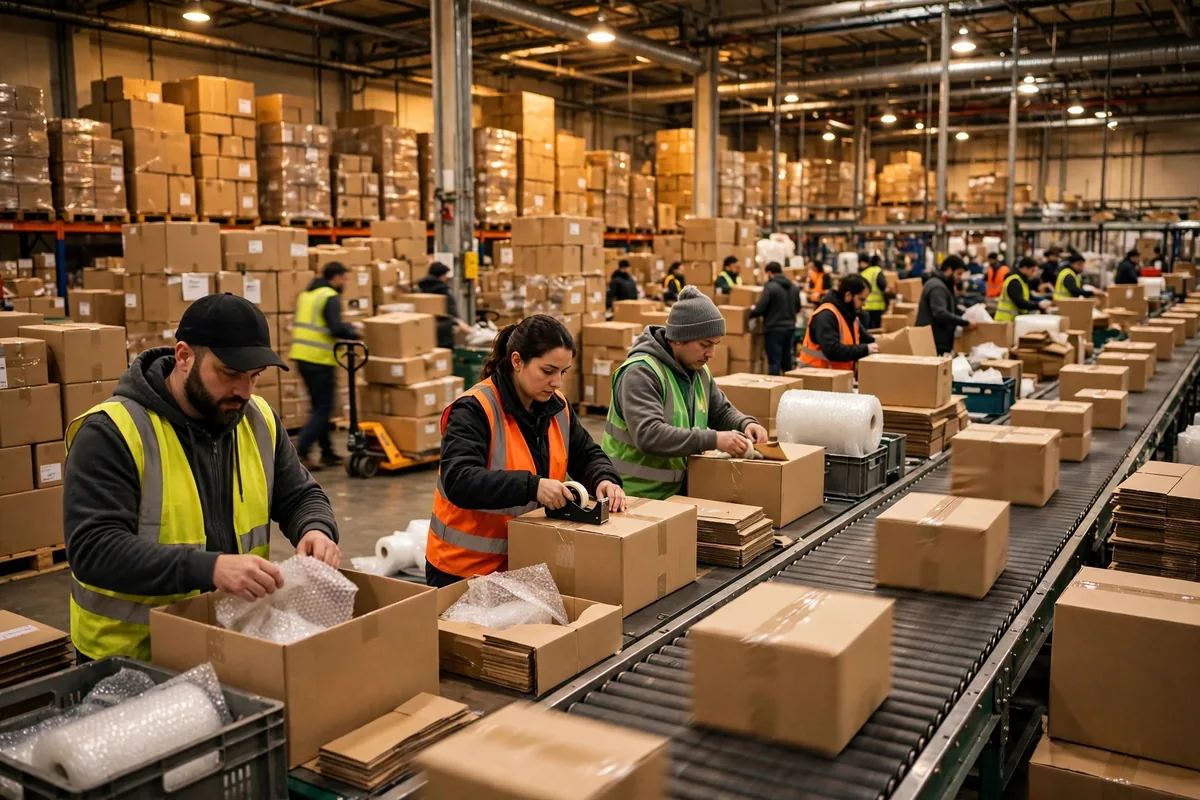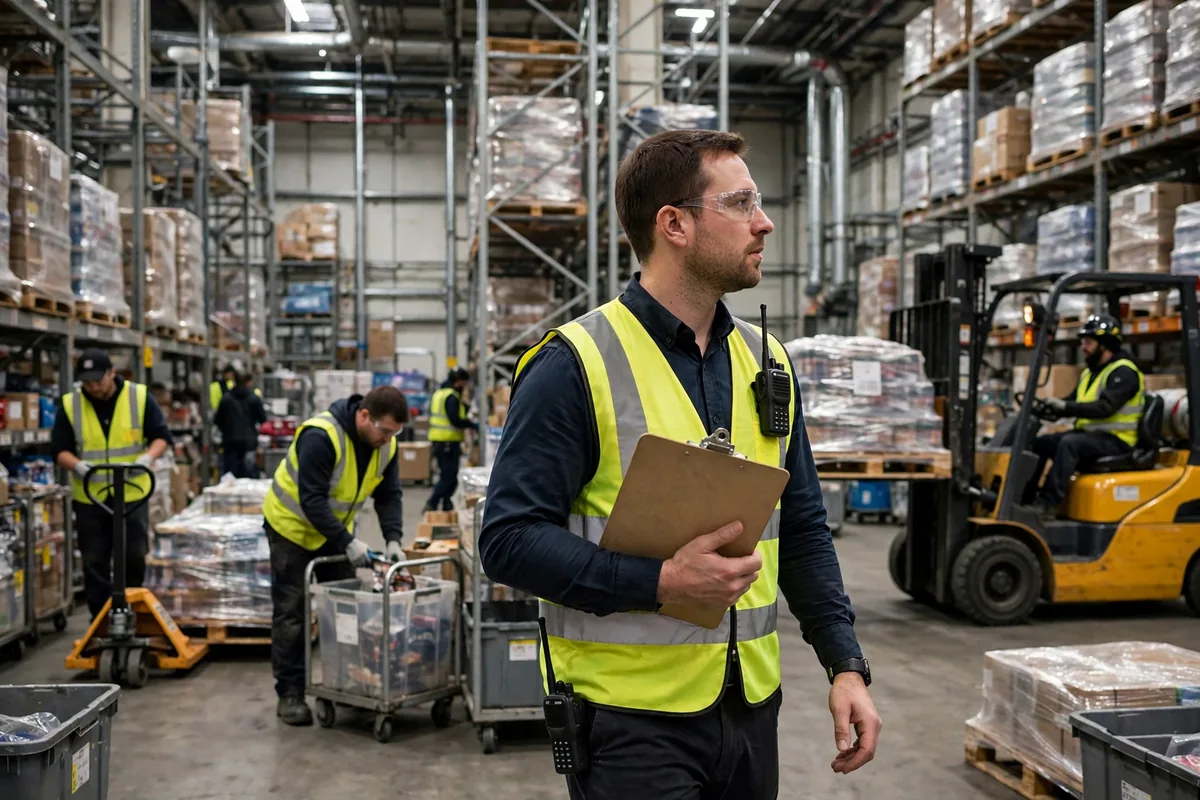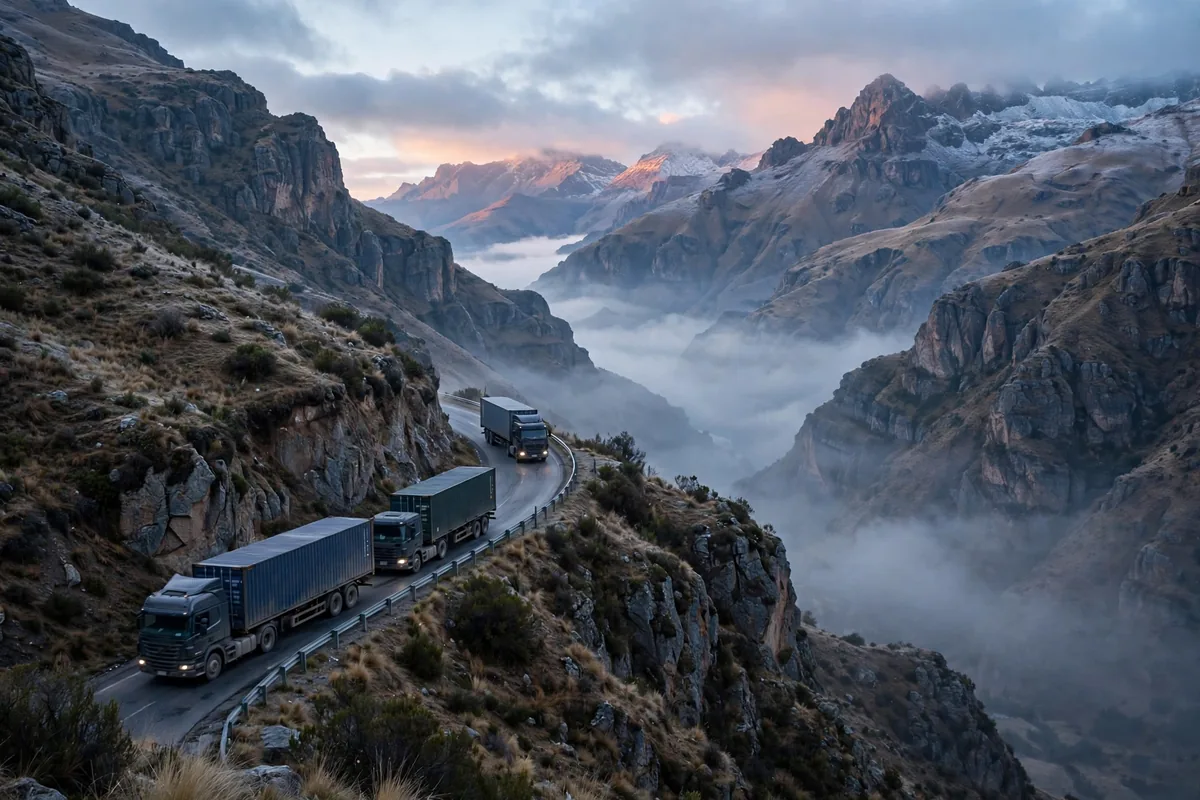
We have a client in bolivia landlocked warehouse export transit, a Bolivian agricultural exporter, and when they first came to us about warehousing and distribution, the first thing they asked was the freight rate. That question taught me something I now tell every new client in this trade: this business is not really priced in the freight line. Bolivia has no seaport of its own, so cargo has to travel by truck across a border, through a neighbouring country, and out through a foreign port. Along the way the freight changes hands several times, and every handover changes who is responsible, which documents apply, and how long everyone waits. You can negotiate a beautiful freight rate and still watch your shipment stall halfway, with the bill growing messier at every stop.
Let me tell you about this client's first shipment. It was a load of agricultural product on a tight vessel schedule, leaving an inland Bolivian warehouse and heading for a Chilean port. On the map it was the shortest route, through a port the client already knew, and it looked like the sensible choice. Then the load reached the border, and one product description on the paperwork did not match what the neighbouring country's customs expected. The truck sat at the border crossing for days while the vessel schedule slipped away, and the client called us every day asking whether we could hurry things along. You cannot hurry a border. A border crossing does not respond to urgency, only to complete paperwork. The shipment eventually caught a later vessel, but the client paid a string of waiting and rescheduling charges that added up to far more than whatever the cheaper freight rate had saved. When we reviewed it afterwards, the route was never the problem. The problem was that nobody had checked the border's document requirements line by line before the truck left the warehouse.
The second shipment ran differently, and the difference is the whole story. Same Bolivian origin, but we did three things in advance. First, before anything left the Bolivian warehouse, we matched the paperwork, product descriptions, and quantities against the neighbouring port of entry's requirements, and no truck moved with a missing stamp. Second, we placed a staging warehouse near the border, so freight could be received, checked, re-documented, and held for release instead of leaving the truck to wait at the crossing. Third, we booked the receiving window at the port warehouse ahead of time, so the load could be accepted on arrival instead of queuing outside the port looking for space. That shipment carried one extra handling step on paper, and in practice it arrived smoothly and made its vessel. The client told me afterwards that they finally understood the game: for a landlocked exporter, the contest is not which route is shortest, it is which route has the fewest handover surprises.
Bolivia landlocked warehouse export transit: choosing the route
For Bolivian cargo there are generally two directions out. One runs west through Chile or Peru to a Pacific port, which suits shipments on a tight vessel schedule. The other runs east through Brazil toward the Atlantic, a longer road that suits cargo already heading that way. Choosing between them is not a map exercise. You need to weigh four things: how the border crossing inspects freight, whether the port warehouse can actually receive your load when it arrives, how seasonal rains and mountain roads affect driving time, and whether you have a local agent on that lane who has done this before. A lane can look shortest and still lose the race, because a strict inspection post or a long queue in peak season eats every mile you saved. A longer lane with smooth paperwork and an experienced agent often delivers sooner. My advice to a new client is blunt: for the first shipment, do not chase the cheapest lane. Take the lane you know best, run the full process once end to end, and only then start optimising and comparing prices.
The staging warehouse deserves its own thought, because its location decides whether it helps or hurts. A staging warehouse is not just any cheap building. It belongs where handovers are most likely to go wrong, which means near the border and just before the port. The border staging warehouse is a buffer: freight arrives, gets checked, gets re-documented, and waits for release, while the truck turns around on schedule instead of idling at the crossing. The pre-port warehouse is a receiver: freight arrives and can be accepted and scheduled for the vessel immediately, instead of waiting outside the port for space. Place those two warehouses right, and the whole lane runs to a rhythm. Place them wrong, and the staging warehouse becomes another bottleneck, adding a handling step without removing any waiting.
Borders and bonded transit: paperwork has to travel faster than the truck
The most wearing part of this trade is the border and the bonded transit that follows it. Cargo leaving Bolivia, crossing a neighbour, and exiting through that neighbour's port travels under transit documents, moving through the neighbouring country as transit freight rather than as an import, and those documents have to hold together for the entire journey. If any link in the chain fails to match, the freight stops at that link. My rule is that paperwork has to travel faster than the truck. Before the truck departs, the border agent should already hold a full copy of the documents and have pre-checked them, so problems get fixed at the warehouse, not at the crossing. A truck waiting an extra day at a border adds a day of cost to the account and can cost the vessel slot as well.
On figures, I will not quote specific customs rates or fees here, because those policies change and a stale number is worse than no number. Always confirm current customs and port charges against the official sources before you commit, and never let a rate be promised verbally in a negotiation. In the contract, charges should be written as settled on actuals against receipts, or assigned to the party responsible for verifying the current policy. A verbal number is the most dangerous sentence in this business, because the moment policy moves, that number becomes the start of a dispute.
The contract clauses that decide a landlocked shipment
Here is the handover checklist I now walk through item by item in every landlocked transit contract, and it is worth using as your own talking list:
| Handover point | Who holds the freight | When risk transfers | What the contract must spell out | | Bolivian warehouse dispatch | Seller's warehouse or carrier | At loading acceptance signature | Inspection standard and how damage is photographed | | Border crossing | Border agent or carrier | At document handover and release | Who pre-checks documents and who pays waiting costs | | Neighbouring-country staging warehouse | Staging warehouse operator | At inbound count signature | When storage charges start and how overruns are handled | | Pre-vessel delivery at port | Port warehouse or vessel agent | At delivery to the vessel's agent | Who decides on rescheduling and how the cost is split |
Now the counterintuitive judgment, and it is one I repeat to clients who love a low quote: the cheapest freight quotation is often the most expensive contract. A low quotation usually leaves waiting time, staging, and rescheduling outside the price, so when freight gets stuck, all of those costs land back on the cargo owner. A slightly higher quotation that clearly assigns handover responsibility, waiting costs, and rescheduling rules lets the cargo owner sleep at night. In landlocked transit, do not start by asking what the freight costs. Start by asking, at every handover, who is responsible if something goes wrong, who pays, and who steps in to fix it. If those three answers are unclear, the low rate is an illusion.
So next time you negotiate a contract, remember to ask these three questions. First: at every handover at the border and in the staging warehouse, at what exact moment does risk transfer, and is there a signed receipt to prove it. Second: who is responsible for pre-checking documents, and who bears the cost of inspection waiting time and rescheduling. Third: if the vessel is missed, who has the authority to reschedule, and how is the cost divided. Get those three answers in writing, and the economics of bolivia landlocked warehouse export transit become something you can actually plan around, instead of a bill you discover one handover at a time.
By Susan, 3PL Sales Director