Start with the bill. A stacker crane worth several hundred thousand yuan arrives at a Bangladeshi port and cannot enter the customer's warehouse — not because it failed, but because it lacks a Bangladesh BSTI certificate. Demurrage, re-documentation, and the customer's downtime claim, added together, routinely cost more than the certification itself. That is the number to get right before you ship, not after.
BSTI stands for the Bangladesh Standards and Testing Institution, the body behind the country's mandatory product certification. For warehouse equipment heading to Bangladesh, racking, forklifts and handling equipment, conveyors, lifting equipment, and packing and weighing equipment commonly fall within scope. Whether your exact model is on the mandatory list is not a judgment call: check the current official list first, and treat the official policy as final, since lists and requirements change.
What BSTI Actually Covers: Get the Scope Right First
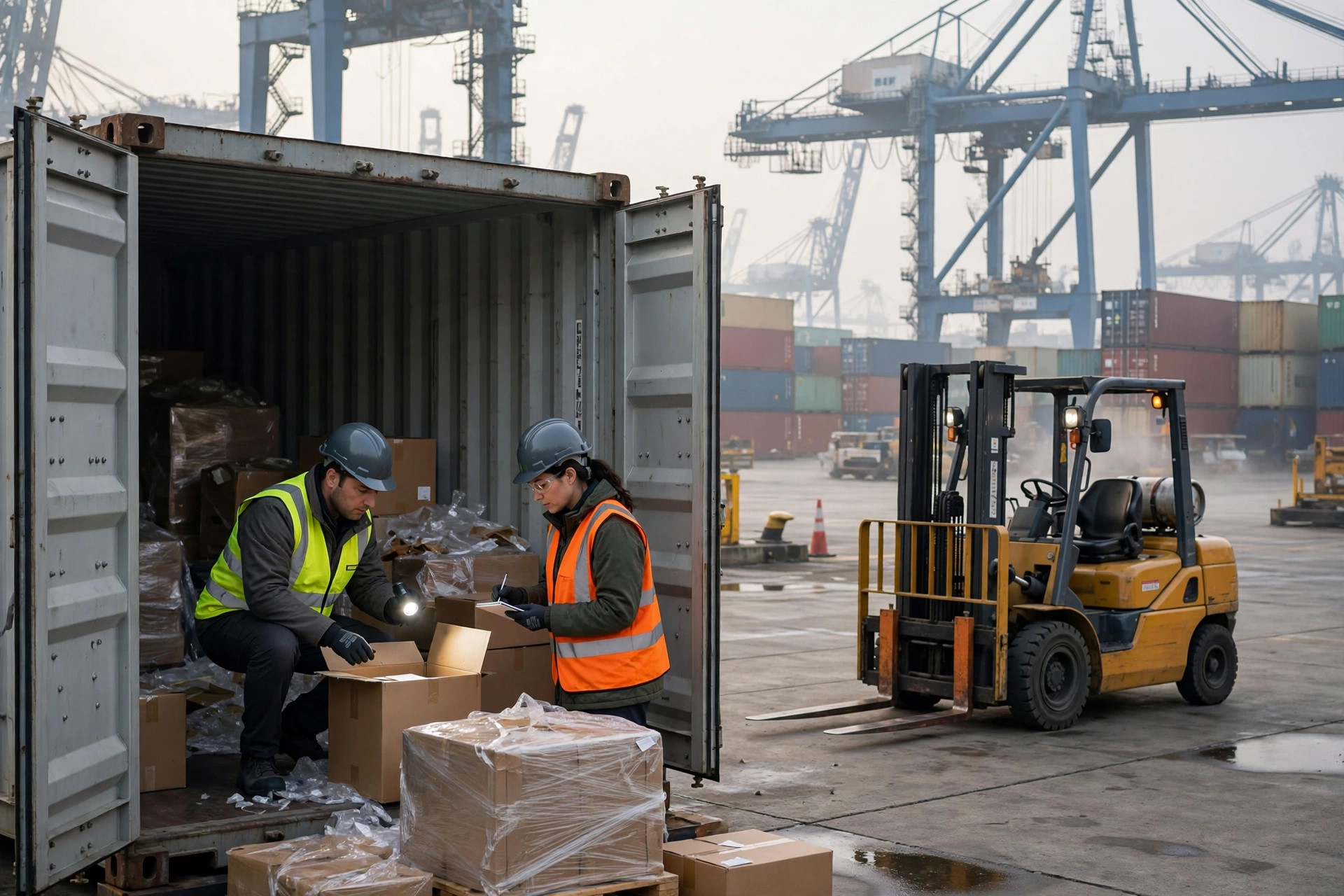
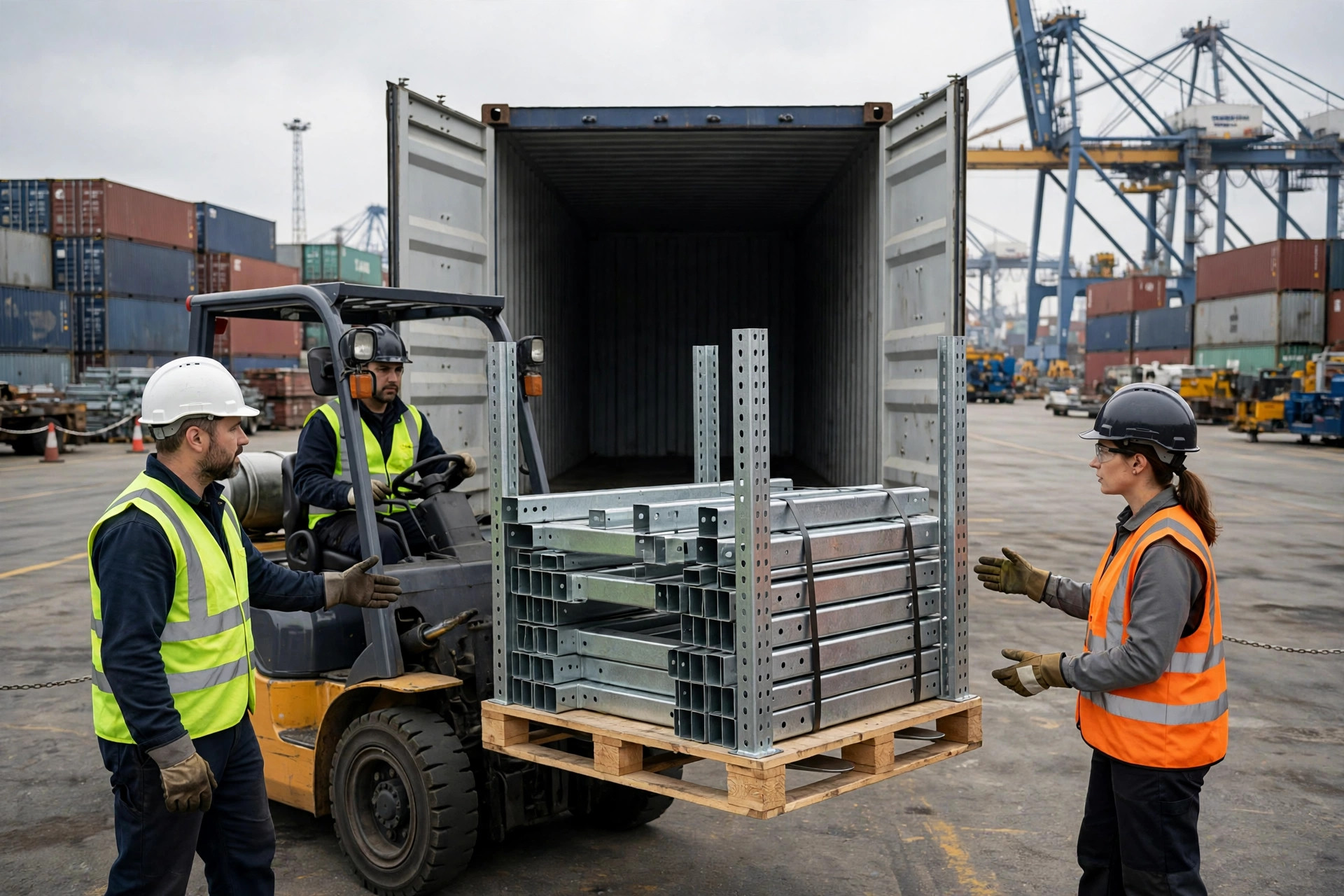
Consider a racking supplier from Ningbo. In the second half of 2024, it shipped heavy-duty beam racking to a third-party warehouse in Dhaka. The contract was signed quickly, and only at the port did the buyer learn that customs clearance required a BSTI certificate. Samples had to be pulled from cargo already at the port, documents had to be rebuilt, and the delay stretched past two months. Warehouse rent, port charges, and the customer's shutdown claim together ate most of the margin. That money was wasted, because a few days of checking the directory before shipment would have prevented all of it.
A conveyor manufacturer in the same period did the opposite. It built certification into the bid schedule: sample submission, document preparation, and factory audit dates were all fixed up front. Delivery ran a few weeks later than competitors', but clearance passed on the first attempt and the final payment arrived on time. The two orders differed not in product quality, but in whether certification was in the project plan.
A practical way to sort scope is to split equipment into three groups. Complete machines shipped as units map directly to the mandatory list. Single machines inside a complete system are trickier: the customer may declare the system as a whole or machine by machine, so confirm both readings. Parts and consumables are usually outside the mandatory list, yet a tender document may still demand a certificate. Tender requirements and legal requirements are different things, and a quotation has to satisfy both. Miss either one and it becomes a cost at the port.
The Bangladesh BSTI Export Certification Path: Where the Four Costs Sit
The path generally runs in four steps: application, sample testing, document and factory audit, and issuance. Testing checks whether the product meets the applicable Bangladesh standard. Document review checks the quality system and consistency. The factory audit checks whether production can repeatedly turn out compliant units. A hold-up at any step stretches the timeline.
Split the cost into four blocks. Lumped together, it cannot be managed:
| Cost block | What it covers | Where it is usually underestimated |
|---|---|---|
| Certification fees | Application, review, and issuance | Charged per model or series, so a long model list multiplies it |
| Testing fees | Sample testing and retesting | A failed first test adds retest fees and reshipping samples |
| Rectification costs | Design changes, material swaps, line adjustments | Changing a structure to pass a test often costs more than the test itself |
| Time costs | Storage, tied-up capital, and late-delivery penalties | Invisible on the ledger, painful at settlement |
Plan on a timeline of weeks to months, and confirm the current schedule against the official policy. Sample preparation, test lab queues, auditor availability, and document corrections can each add weeks. If the delivery date in the contract leaves no room for certification, the contract has effectively written in its own late-delivery penalty.
Model consolidation deserves its own calculation. One manufacturer planned to certify twelve models, with fees and test samples stacking up almost model by model. Grouping structurally identical models that differed only in size into three series cut certification and sample costs sharply and collapsed several test rounds into one. Nothing about the product changed, only the filing approach, and the saving went straight to profit. Filed too finely, the reverse happens: one rectification can force retesting across half a series.
Budgeting also needs a contingency line, and this is where most quotations quietly go wrong. A prudent budget treats one retest as a planning case, not as bad luck: reserve sample reshipping, an extra test slot, and two to four weeks of schedule buffer, then price the order against that case rather than the best case. If the order still clears its margin floor with the contingency included, it is a sound order. If it only works when everything passes first time, the quotation is not competitive — it is optimistic, and optimism is not a cost control. The same logic applies to the timeline promised to the customer. Quote the delivery date from the contingency schedule, and treat an early first-pass result as a bonus to be delivered ahead of schedule, not as the plan itself.
The decision rule is simple arithmetic. Take total certification cost, divide by the number of units in the order, then divide by per-unit gross margin. If certification eats more than roughly 30 percent of that margin, the order needs a higher price, a different model, or a polite no. Shipping first and hoping is a bad bet: win and you save one certification fee, lose and you give up the whole order's profit plus the customer's trust.
Common BSTI Rejection Points: Small Savings That Cause Big Trouble
Most rejections are not technical failures. They are documents that disagree with each other: nameplate data, model naming, manual specifications, and the model on the test report, where any one mismatch sends the file back. Another common cause is samples that do not match production — a good material sent for testing, a cheaper material used in volume, exposed at audit.
Here is the counterintuitive point: on certification, slow is cheap. Compressing test preparation, filing patchy documents, and skipping a pre-audit self-check may look like saving two weeks. In practice it trades a first-pass probability for the near-certainty of retest plus rectification costs. Retesting is never just a second test fee; it also means reshipping samples, idle production lines, and another customer delay. First-pass rate is the real cost lever in certification.
Three levers actually save money. First, consolidate models into series wherever the rules allow, since fees follow model count. Second, self-test before formal submission and fix failures early, which lowers retest rates and shortens the cycle. Third, get documents right the first time: nameplates, manuals, and model lists drafted by one person, not three separate versions from sales, engineering, and customs brokerage.
Customs Handover: A Certificate Alone Does Not Clear the Goods
The certificate and the customs documents must match, character for character where it matters. Product names and model numbers on the bill of lading, packing list, and invoice have to read the same way as on the certificate, and the certificate must still be valid on the clearance date — cargo arriving after expiry is an avoidable embarrassment. Some buyers also want a copy of the certificate shipped with the goods or filed with the clearance agent in advance. Check each item one week before shipment, and assign the check to a named person. A check owned by "the relevant department" is a check nobody owns.
The calculable conclusion for any warehouse equipment maker eyeing Bangladesh is this: before quoting, do three things — confirm mandatory scope against the directory, price all four cost blocks, and write the certification timeline into the delivery date. Divide total certification cost by units in the order and measure what is left of per-unit margin. That remainder is the floor for accepting the order. An order whose floor you cannot calculate is better declined than gambled on a certificate you could have obtained in advance.
By Lao Zhou, Logistics Cost Analyst