Let me tell you something. In all my years on the road, the funniest scene I ever saw was outside a warehouse dock.
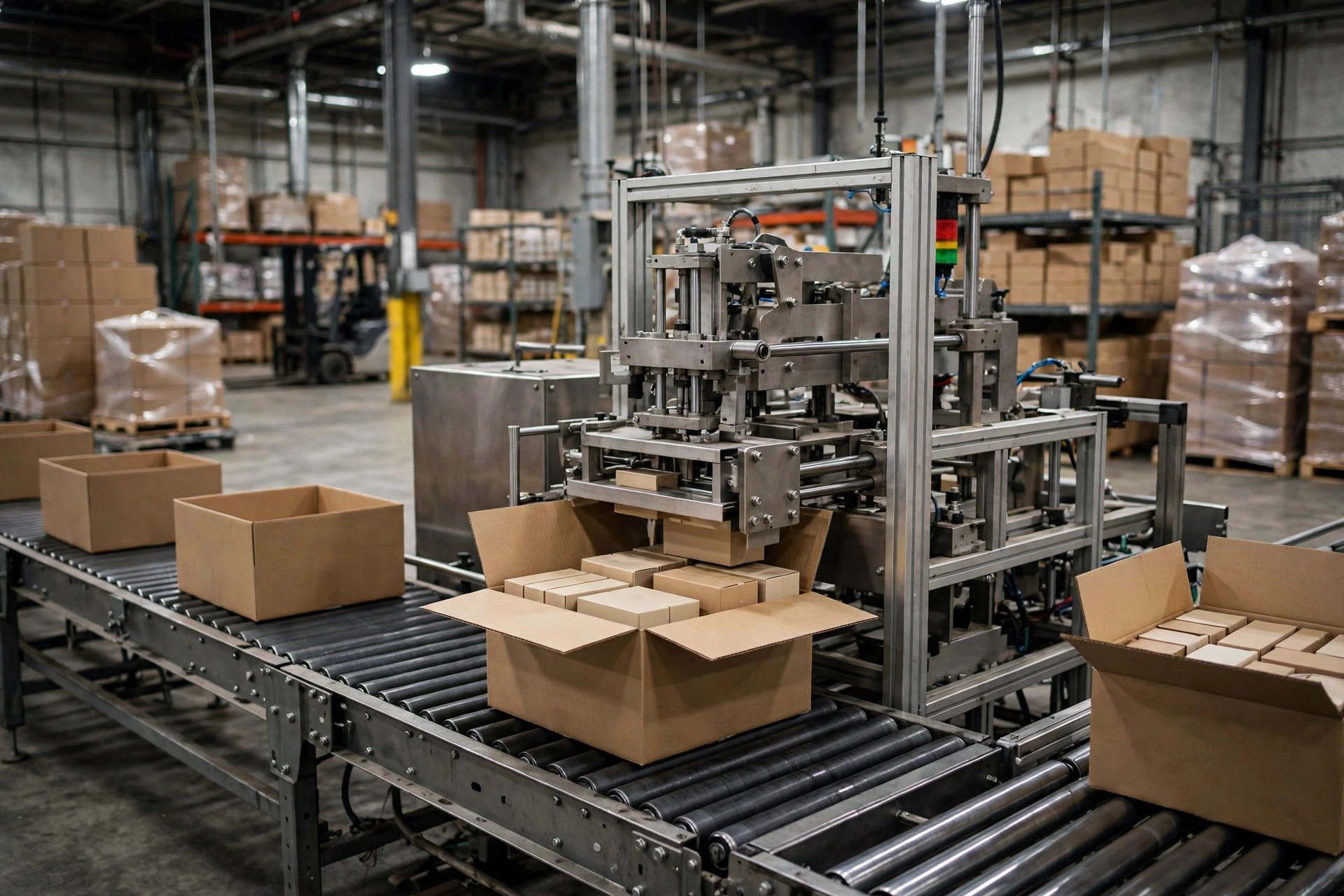
June 2026, a 3PL warehouse outside Phoenix. I was there to pick up a load, appointment at 2 PM. I waited until 4:30 and the truck still was not loaded. So I walked inside. The shipping line stood idle, workers standing around, the conveyor running empty. No boxes. Over at the case erector, two young guys were frantically feeding flat blanks into the machine, and the blanks jammed twice. Sweat everywhere.
I had to laugh. The machine looked brand new. How could it not keep up with the line?
What it tells you: check where the blanks sit first
I got talking with their warehouse supervisor, Lao Wang, and the real story came out piece by piece.
First, the flat blanks were stacked in a staging area 20 meters away. One kid was assigned to haul them back and forth, two to three minutes per round trip, each trip carrying enough for about 10 minutes of machine time. Every time the machine ran dry, he had to sprint back, and the machine needed re-feeding after each stop. I watched him with my own eyes: the kid walked kilometers that day, and the machine still waited on him. The erector was not slow. The feeding could not keep up.
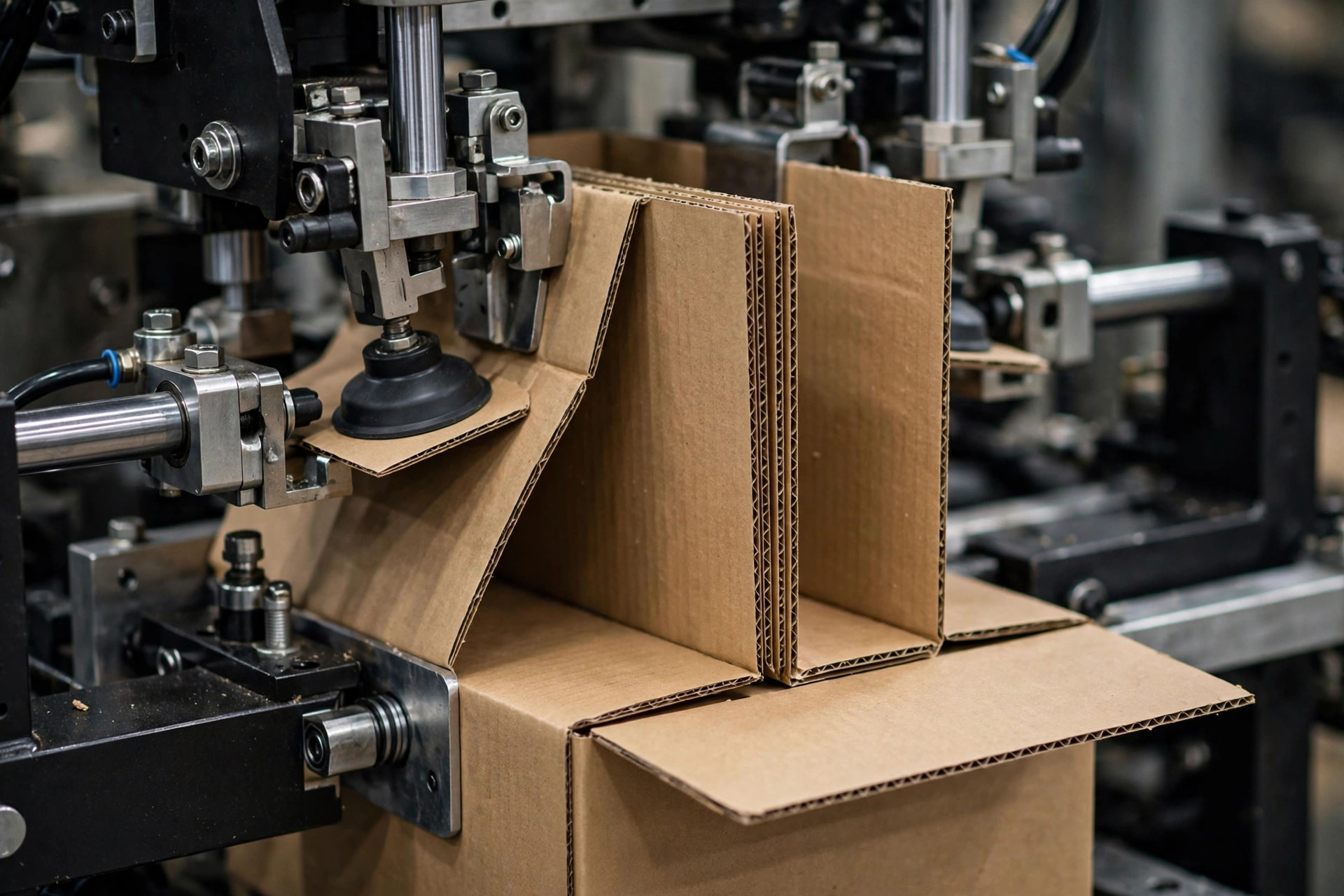
Second, they ran box size A in the morning and switched to size B in the afternoon. The changeover took nearly 40 minutes: adjusting rails, suction cups, flap folders, a technician going back and forth with a wrench. I asked why it took so long. Lao Wang gave a bitter smile: there was no standard changeover procedure. Whoever did it did it their own way, all by feel. A veteran does it in 20 minutes by touch. A rookie can burn a full hour.
Third, I timed it with my watch. The nameplate said 12 boxes a minute. Reality was 7 or 8. Nothing wrong with the machine itself. Nothing around it was cooperating.
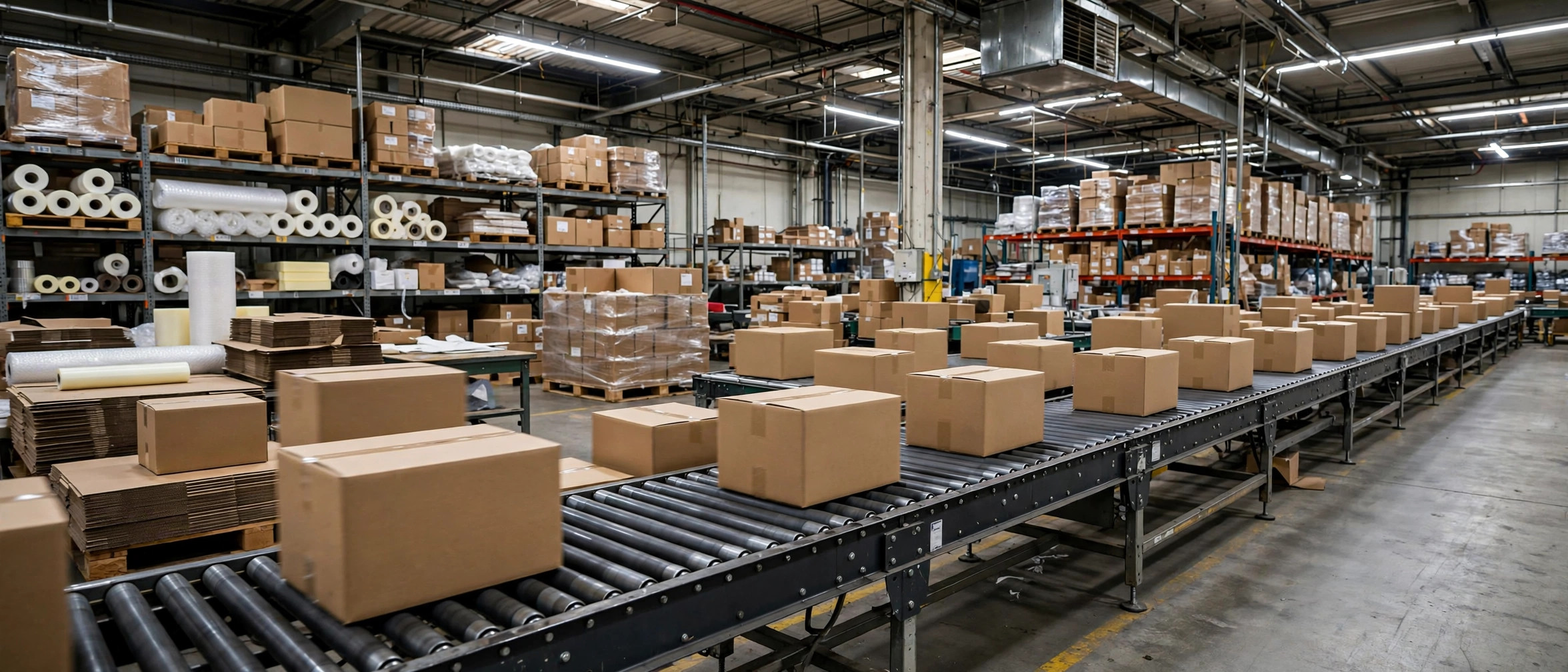
Three problems, and not one of them was the case erector's fault. Here is my first honest truth, and I will say it plain: the bottleneck is rarely the case erector itself. It is blank management and changeover time.
The reverse case: too fast is its own disease
November 2025, an e-commerce warehouse in Los Angeles. I was dropping off a delivery and saw the mirror image of Phoenix.
Their case erector screamed along, spitting out one box after another. But the downstream case sealer could not keep up. Boxes queued up on the conveyor, and workers had to manually pull boxes off and stack them aside. The faster the erector ran, the busier the workers got, the bigger the mess. The shift lead was stomping his feet: the faster the machine ran, the worse his headache got.
What does that tell you? A packing line is one body. Erecting, filling, sealing: the takt has to line up. The slowest link sets the speed of the whole line. Swapping in a faster erector without fixing downstream is money down the drain. It is like a convoy: the lead truck does 75, the trailers can only do 50, so the convoy does 50. A faster lead truck changes nothing.
Do the math: how many boxes go missing in a day
Take the Phoenix warehouse and run the numbers. Nameplate 12 boxes a minute, 8-hour shift, theoretical output 5,760 boxes.
Reality? Two changeovers at 40 minutes each: 80 minutes gone. Waiting on blanks and clearing jams, another 30 minutes in bits and pieces. Effective production time: six and a half hours. At the real rate of 8 boxes a minute, that is 3,120 boxes a day.
5,760 versus 3,120. A gap of 2,640 boxes. Nearly half the capacity, leaking away day after day. What leaks is not machine capacity. It is management capacity. A machine built for 12 boxes a minute delivered 8, and only worked six and a half hours.
The checklist: inspect in this order
After years of walking through warehouses, I worked out my own inspection order. Sharing it here:
| Check this first | How | When it is a problem | | Blank location | How many meters from the blank stack to the machine | Over 5 meters is a problem; park the feed rack right next to the machine | | Changeover time | Time it with your phone | Over 15 minutes needs work; turn it into a standard procedure | | Real throughput | Count boxes for one full minute | Below 70% of nameplate, check feeding and machine settings | | Downstream match | Can the sealer keep up with the erector | Erector fast and sealer slow means the bottleneck is downstream; do not blame the erector |
Follow this order. Do not blame the machine first. Machines cannot defend themselves, but the numbers do not lie.
Four pieces of advice for warehouses
One: keep blanks within 3 meters of the machine. Park the feed rack right beside the erector, within arm's reach. Do not underestimate those 20 meters. Over a full day, the kid walks kilometers, and the machine waits on him. This is the cheapest fix there is, and the fastest to pay off. Costs nothing.
Two: make changeover a standard procedure. Which parts to adjust, how many turns of the wrench, how many test boxes: write it down and stick it on the machine. Time every changeover. Anything over 15 minutes gets reviewed. The old hand's feel has to become steps anyone can follow. People leave; written steps stay.
Three: line up the erector's takt with the sealer's. Pace the whole line to the slowest link. Either add people or equipment downstream, or slow the erector down to wait. Never let boxes queue up on the conveyor. Queues turn into chaos, chaos turns into errors, and errors slow everything down even more.
Four: before peak season, keep a manual box former as backup insurance. When the machine goes down or a changeover jams, people can fill in and the line does not die completely. It costs little and can save the day. Like the spare tire in your truck: you might not touch it all year, and the one time you need it, it pays for itself a hundred times over.
After all these years on the road, I believe one thing: eight times out of ten, a line problem is not the equipment. It is the people managing the equipment. When boxes cannot keep up, do not curse the machine first. Look at where the blanks sit, then look at how long the changeover took. Fix those two, and the erector will run fast on its own.
By Shifu Zhao, Trucking Veteran (15 yrs)