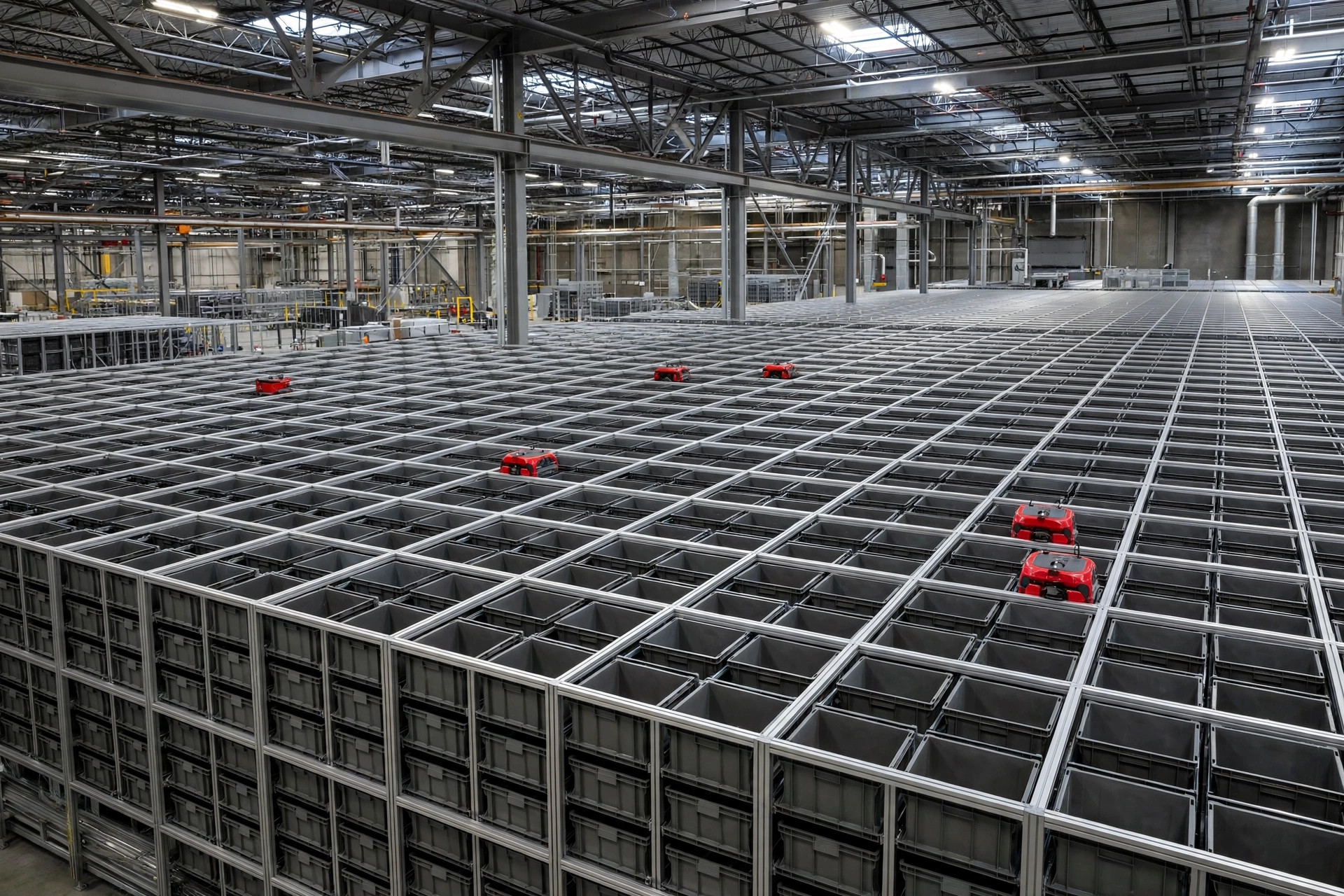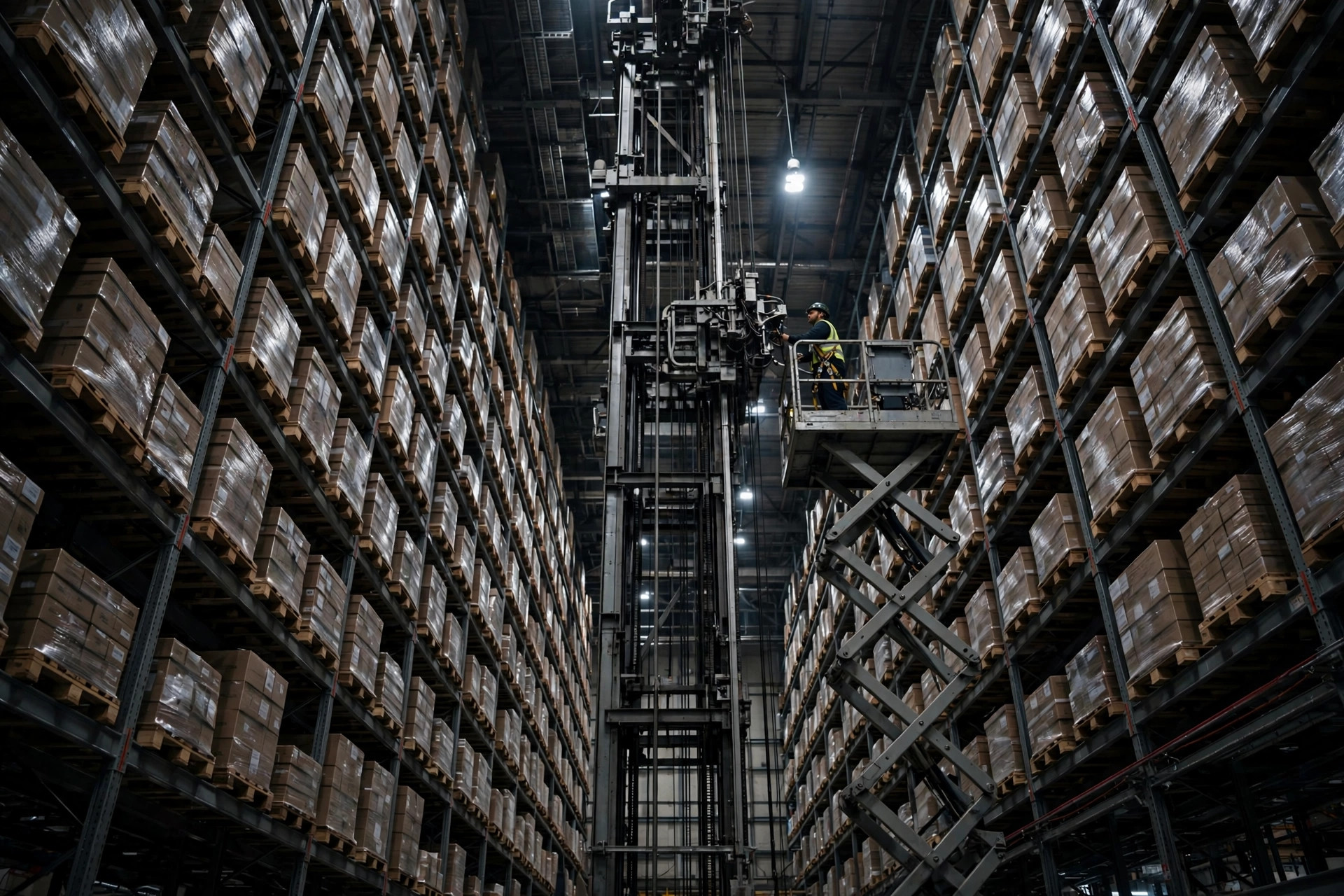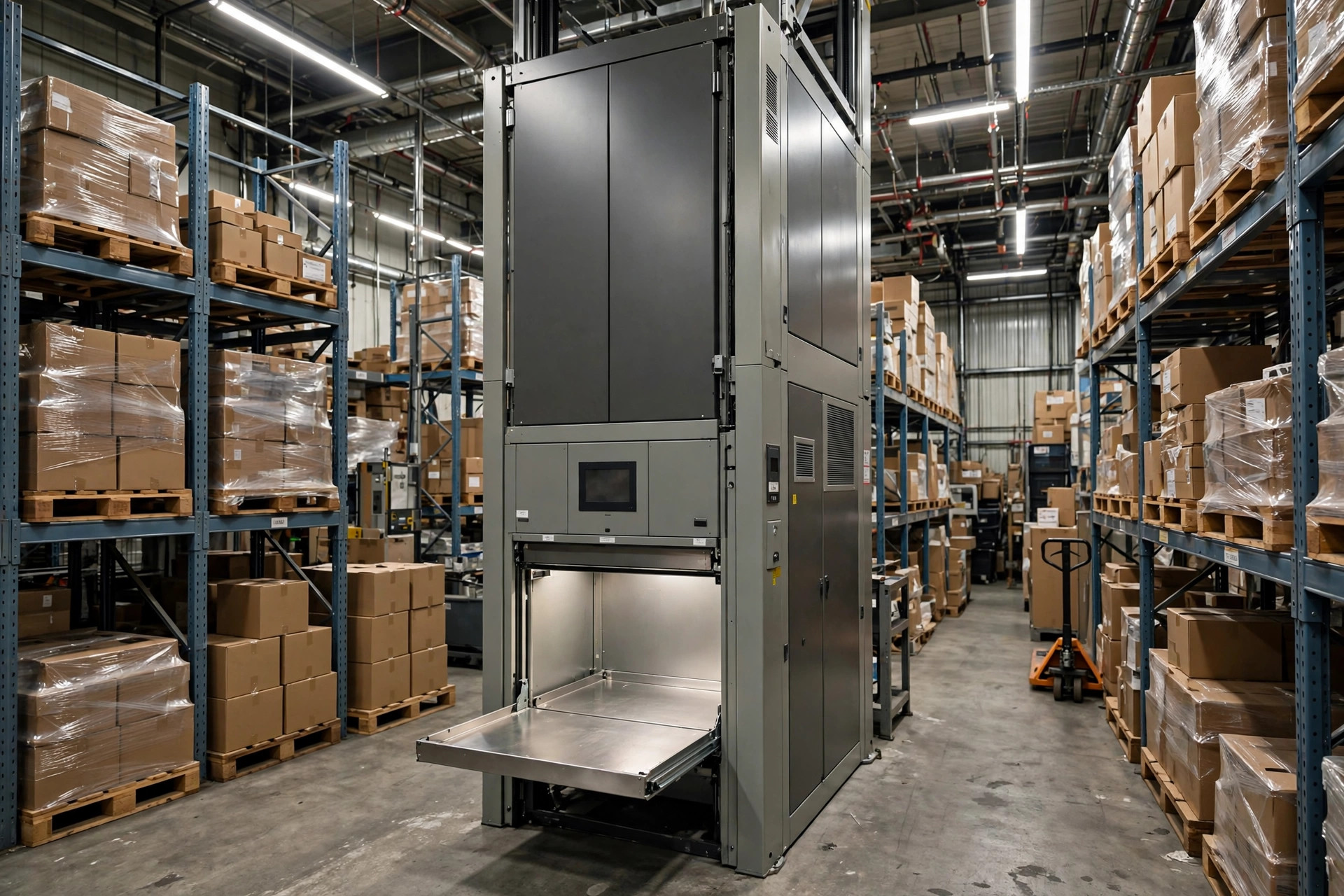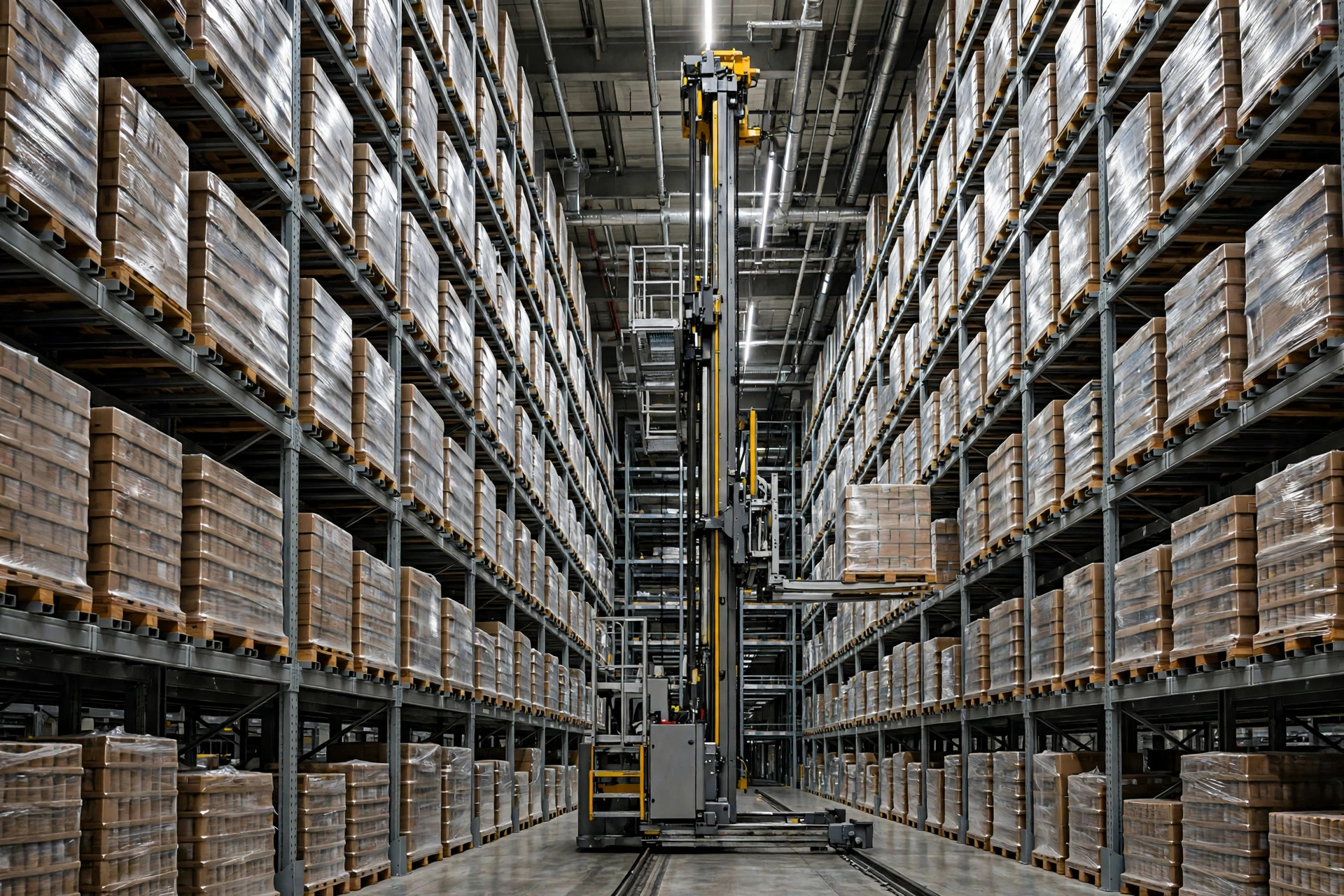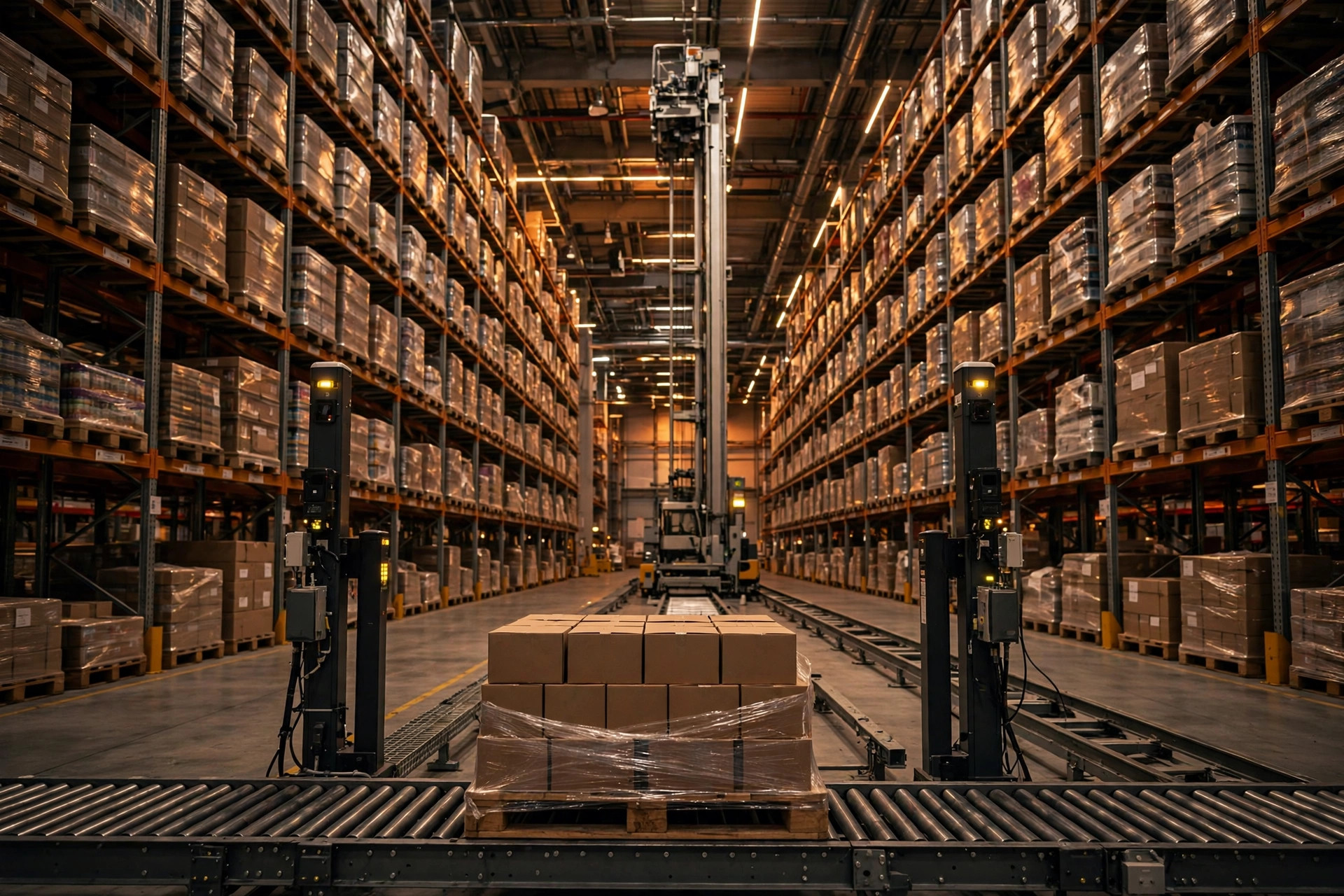
My first real look at ASRS safety came when a friend who works as a systems integrator dragged me along to tour an ASRS warehouse he had just commissioned — my first live stacker crane.
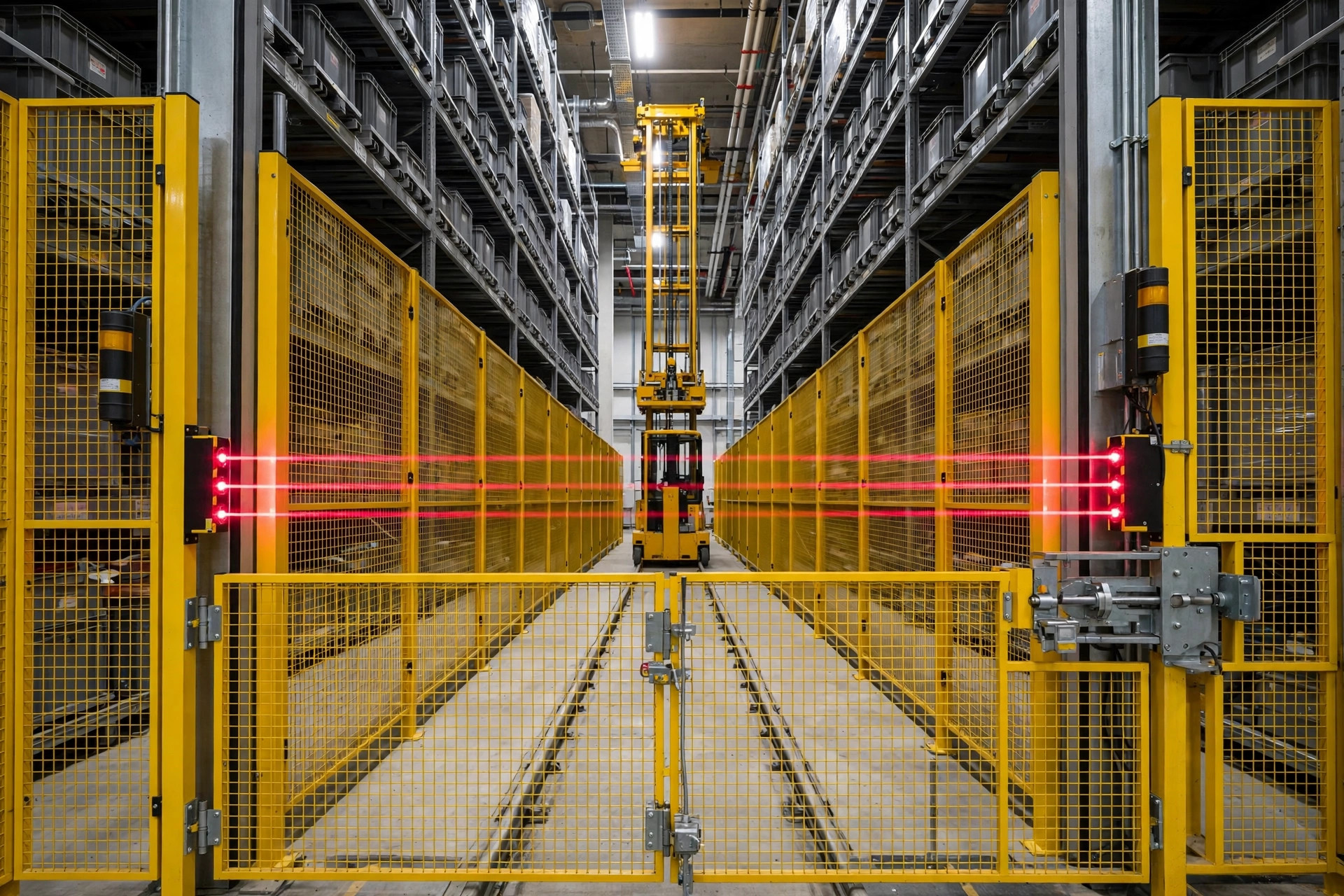
Before the aisle zone: shoe covers, a safety briefing, sign the entry log. Then nothing but yellow — a dozen aisles sealed tight by man-high yellow mesh fencing, red beams of safety light curtains sweeping at every entrance, and on each gate a sign: "Opening this gate stops the machine. Violators will be fined."
My very small-warehouse-owner first thought: how much did all this cost to burn?
"The whole safety package costs a fraction of one stacker crane," my friend said. "But more than half the visiting owners who hear the quote ask the same first question: can we trim the fencing?"
That line stuck with me all the way home. Here's why the ASRS safety budget is the one line item you never cut.
Our small warehouse school of safety: yell first
Let me set the scene with our own humble situation.
In a small warehouse like mine, safety runs on people. Yellow line on the floor, barrier tape outside it, one rule: before you step inside the line, yell. Primitive? Yes. Works? Sort of.
Last peak season a driver backing up nearly squeezed a picker — who'd ducked into the blind spot for a dropped label — between a pallet and the racking. After that: the driver honks twice before moving. A folk remedy, and how small warehouses survive — on awareness passed from veteran to rookie.
But an ASRS is a different animal. A stacker crane at full speed outruns human reaction, and it has no eyes — its "eyes" are software, and software trusts sensors, not "the old hand." Depending on awareness inside an ASRS is like depending on drivers to voluntarily put down their phones — not impossible, just gambling with lives.
That's why Europe wrote EN 528, the dedicated safety standard for rail-dependent storage and retrieval equipment, widely referenced in China too. In plain language: people and fast-moving machines must be physically separated, foolproof-style.
Safety fencing: the first wall of ASRS safety
The first piece of the ASRS safety kit is safety fencing. Fully enclosing the aisle zone is iron law, not an option.
Fences don't keep out bad guys. They keep out "just a second" — ducking into the aisle to grab a fallen carton, cutting across to the other side, reaching in for something just out of reach. Plenty of close calls in an ASRS start with "just a second." The fence exists to make "just a second" physically impossible.
This is where folk remedies and the professional approach diverge most visibly:
- Folk remedy: a barrier tape and a "temporary entrance" closed by a hanging chain. The tape is still there; people walked past it long ago.
- Professional approach: steel mesh panels, man-high, mesh too small for a hand, floor gap too small for a foot, anti-climb top. Every opening is a safety gate — no "temporary entrance."
My friend told me a true industry story (no names): one project fenced only three sides to save money, leaving a chained "temporary entrance." During commissioning, a worker walked in for a tool just as the crane was running tests. The aisle light curtain caught the person and hit the e-stop — nobody hurt, but the project was shut down two weeks for remediation, penalties running. The fencing savings didn't cover those two weeks.
Light curtains: the eyes of ASRS safety
The second piece: safety light curtains. Aisle ends, conveyor handoff points where lines enter and leave the ASRS, pick stations where humans and machines meet — anywhere "a person might appear while machines are moving" gets one.
Light curtains follow IEC 61496 — Type 2 and Type 4 safety ratings, 14-millimeter finger detection versus 30-millimeter hand detection. Aisle entrances typically use finger-level: you're guarding against exactly that "just a second" hand.
Critical point: an interrupted light curtain triggers a safety-circuit emergency stop — not a polite signal to the PLC. Ordinary signals travel through software, which can be bypassed, delayed, or told "finish this order first." A safety circuit is hard-wired: it cuts drive power directly. Bypassing it equals cutting your own brake lines.
We once stuck a "Watch your hands" sign by our conveyor. Signs don't have eyes; light curtains do. Cautionary tale, also from my friend: before a big sales event, a warehouse's handoff light curtain kept false-triggering on dust, so the electrician shorted it out — running blindfolded. Then inspection came: fines, forced shutdown, three days of paralysis before peak. Not evil, just "it's only three days." Wishful thinking doesn't care if you're big or small.
Interlocked gates: the last checkpoint of ASRS safety
Cranes need maintenance. People must enter the aisles. When they do, they go through the safety gate — and the heart of the gate is the interlock.
Interlock logic in one sentence: gate open, machine must stop; machine not stopped, gate won't open. And "stop" means the safety PLC cuts drive power directly — hard cut. Fancier setups add a trapped-key system: pull the key to enter; without it the gate won't lock, and without the locked gate the equipment can't restart. It defends against one failure mode: "I thought nobody was still inside."
One detail: cranes have inertia, so good gates use electromagnetic locks with delayed release — the gate opens only after full stop. Much of safety spending is buying slowness: slow opening, slow restarts, slow confirmations.
Doing the math: what ASRS safety is actually worth
Figures rounded, ratios real (that's how small warehouse owners do math):
| What you spend | What an accident costs | |
|---|---|---|
| Contents | Fencing + light curtains + safety gates + safety locks + safety PLC + risk assessment report | Line shutdown for remediation (measured in weeks) + regulatory fines + project delay penalties + insurance hikes |
| Scale | A fraction of one stacker crane's price | One remediation shutdown eats the "savings" and then some |
| Throughput impact | Zero (safety circuits don't consume production takt) | Shutdown means takt goes to zero |
The contrarian take: in an ASRS project, safety is the highest-ROI line item — the only money that's cheap, costs zero takt, and saves lives. Cut it and the savings won't cover a fraction of one remediation shutdown; keep it and it watches every "just a second," 24/7.
Big companies calculate TCO. We calculate "don't die." Different math, same conclusion: this money doesn't get cut.
Before the ASRS: do the risk assessment first
One more thing separates professionals from amateurs: the risk assessment. On a proper ASRS project, step one isn't buying equipment — it's listing every hazard (aisle entrances, handoff points, maintenance passages, power-loss scenarios), assigning each a countermeasure, and producing the report the safety checklist is built from.
The folk version? Before commissioning new equipment, I walk three laps around it with two veterans asking: can this pinch someone? Drop on someone? What happens if power dies? Primitive — but identical logic: think through dangers first, then act.
Don't dismiss risk assessment as big-company theater. It's cheap money against expensive holes. Can't afford consultants? Walk the three laps yourself — beats walking none.
Four tips for my fellow small operators
- Buying or leasing an ASRS? Check the safety trio first: fencing complete, light curtains responsive, gates interlocked. Sales pitches takt and price; you pitch safety first. Pretty takt numbers on bad safety are built of paper.
- At acceptance, test with your own hands: push a gate, watch the machine stop; block a curtain, watch the e-stop speed. One hands-on test beats ten reports.
- Bypassing safety devices needs formal approval: short a curtain or mask an interlock and you're fired. Write it in the rules, post it on the wall. Peak never justifies running blindfolded.
- Don't trust "our people would never wander in": fences guard against wishful thinking, not bad people. Your most disciplined veteran is one "two seconds" away from a "just a second."
Not burned — insured
My warehouse may never own a stacker crane, but that visit taught me the real lesson: big companies look like they can afford safety and we can't — but when things go wrong, the small warehouse dies faster. A big company's accident is news; ours is a closed door.
This money isn't "burned." It's life insurance. Small warehouses survive their own way — but on staying alive, nobody gets to economize.
By Xiao Ma, Small Warehouse Owner