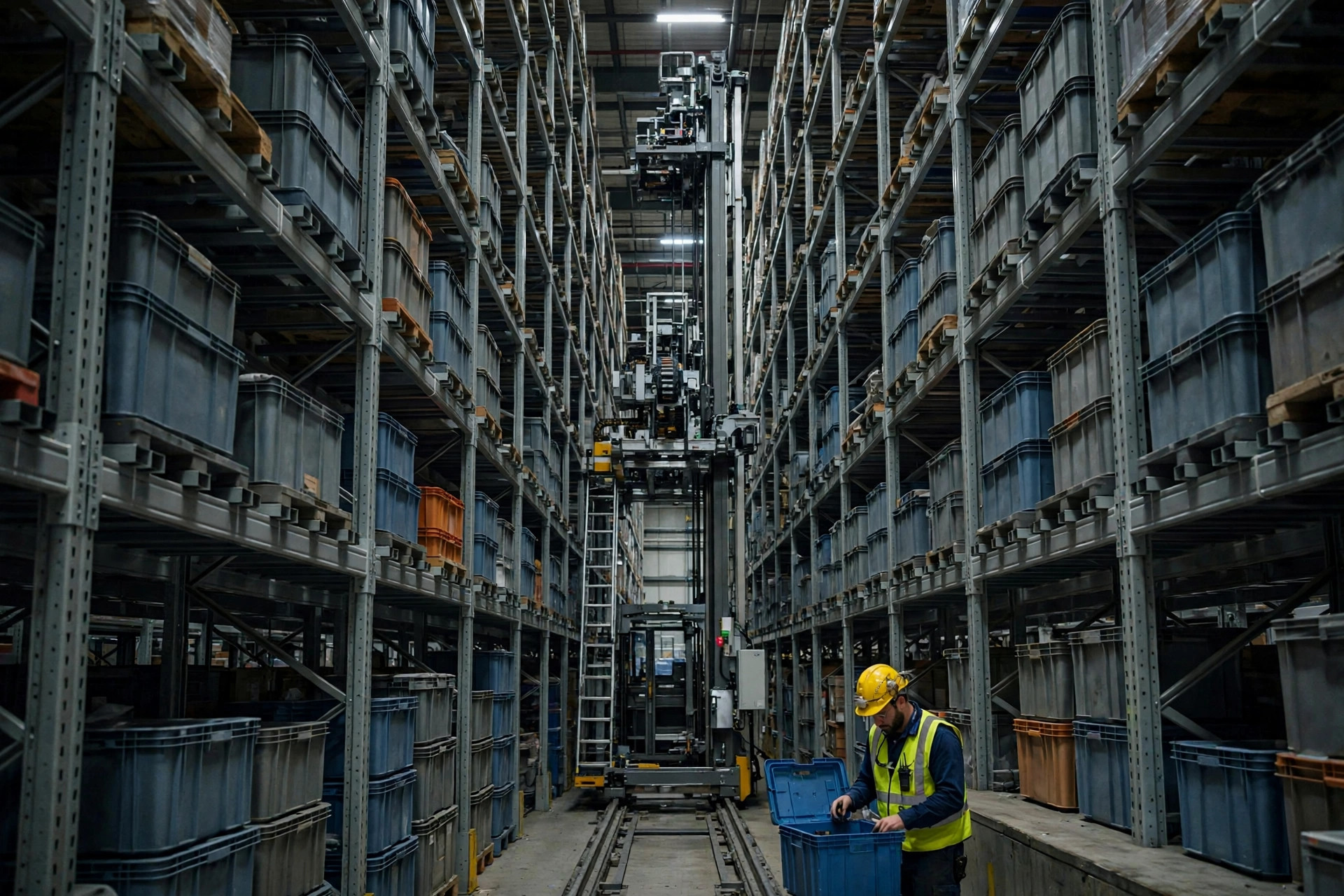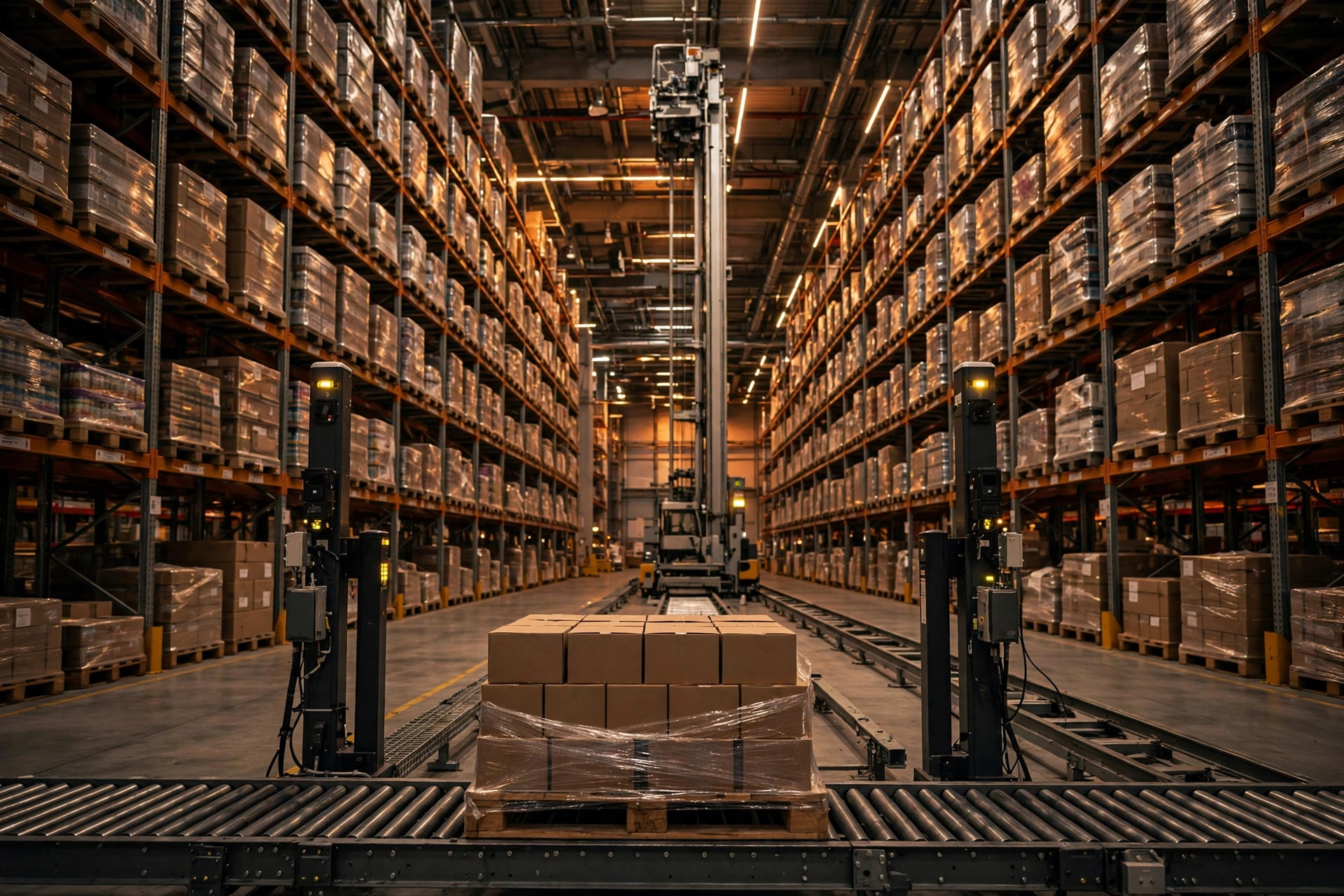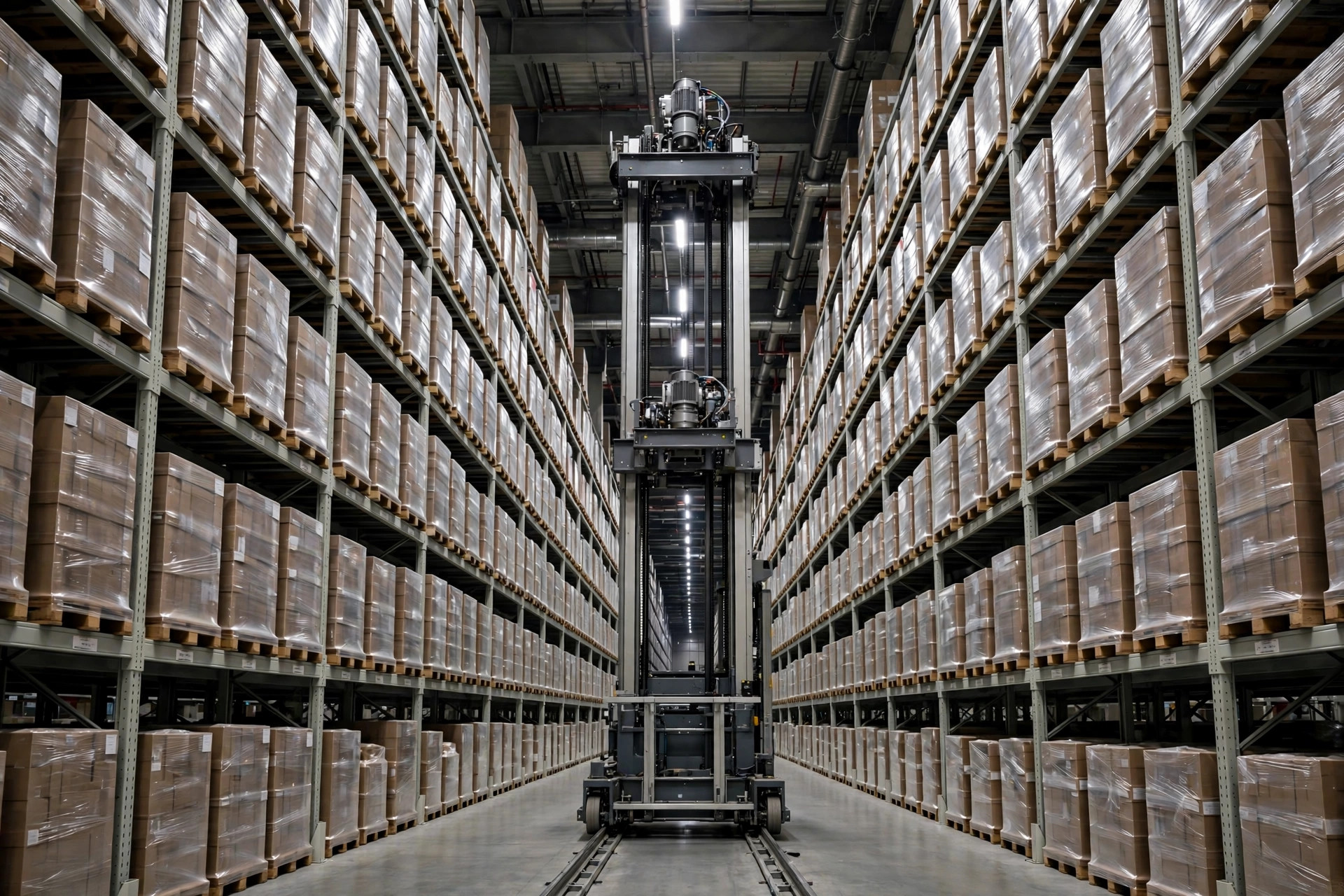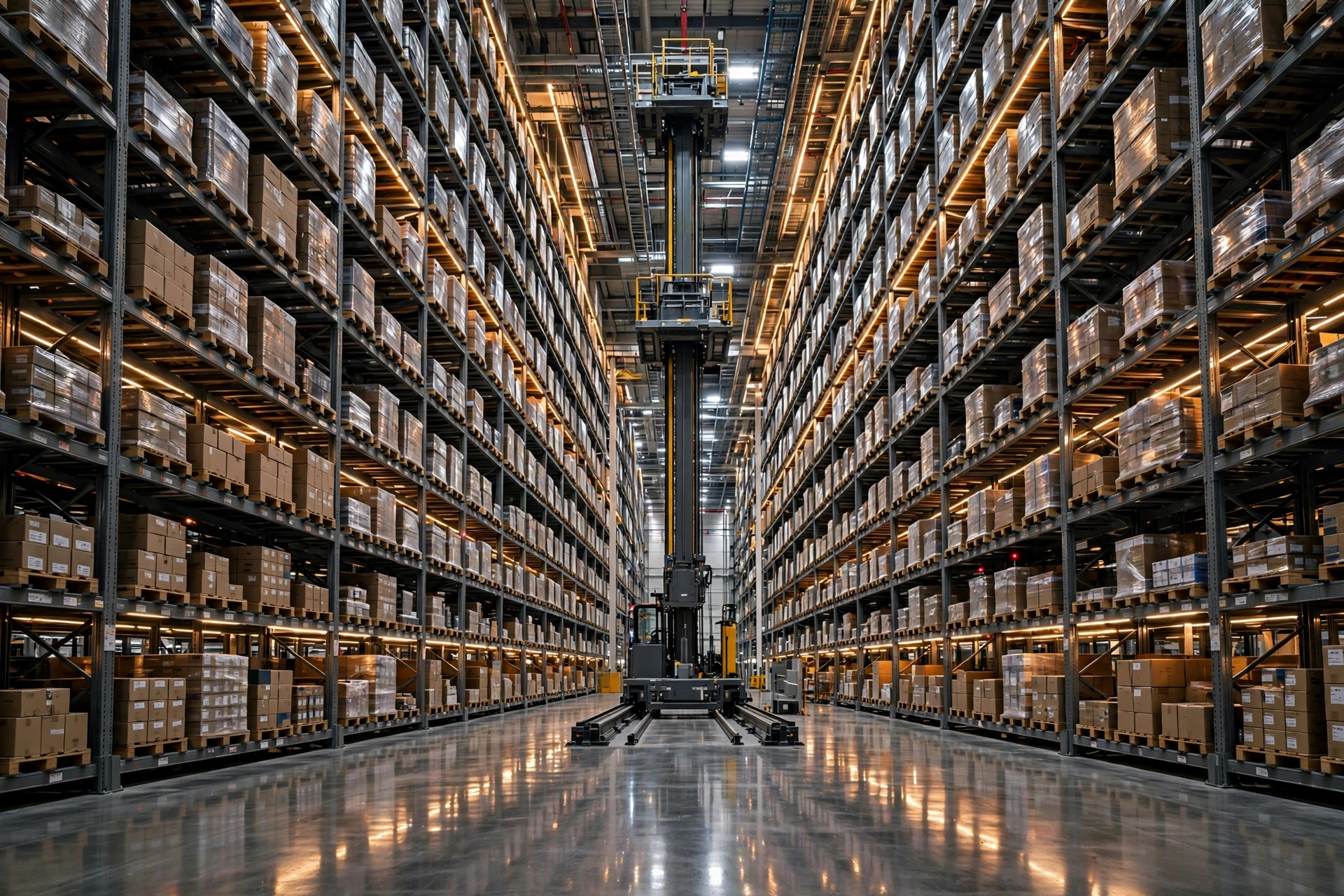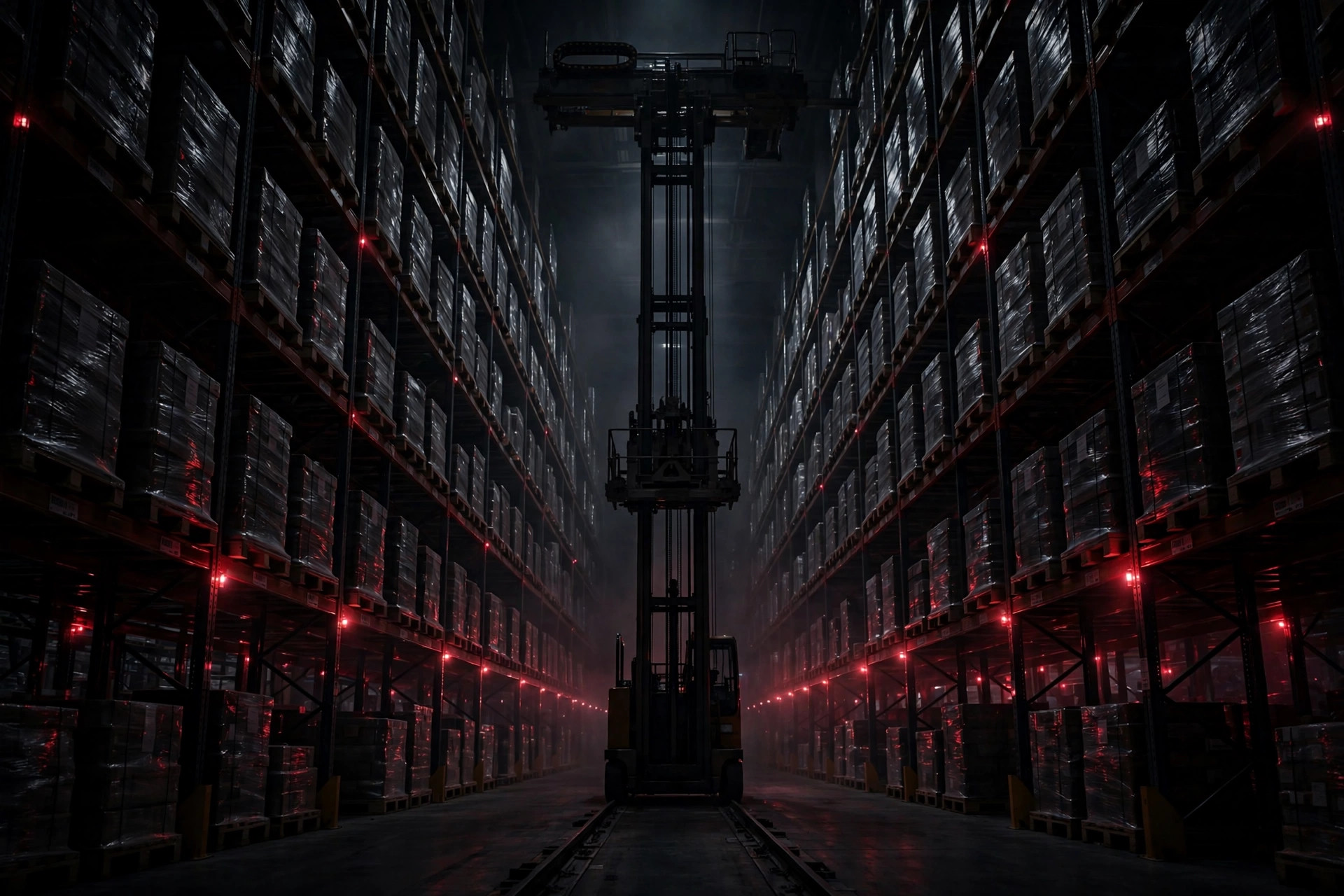
We don't have an AS/RS — our warehouse is 3,000 square meters with 6-meter racks. "AS/RS power outage" was one of those phrases I'd only ever seen in an integrator's PowerPoint — until this June, when I visited my friend Jay's automated warehouse and walked into their power-outage drill.
8 PM, off-peak, they literally pulled the plug. A dozen meters up, 20-odd pallets froze mid-air, cranes slammed to an emergency stop, emergency lights snapped on. One thought: if this were real — whose pallets are those? Which slot? Can the WMS still be trusted?
Jay's engineer Old Xu said something I've remembered ever since: "The scariest part of a blackout isn't the dark. It's when the software and reality stop agreeing."
Schrodinger's Pallet: Where Did Everything Go?
Normally the WCS is an air traffic controller tracking every pallet each second. Power dies, the controller gets amnesia, cranes freeze mid-aisle, pallets hang in the air.
That's when your WMS data becomes Schrodinger's pallet: the system says slot A — the destination of the last instruction before the blackout. Reality? The pallet might be halfway, or at slot A minus the final 10 centimeters. Power returns, the WCS "resumes from breakpoint," reaches out — and grabs thin air. Or worse, sets the pallet into an occupied slot.
Jay told me about a real outage last summer: utility power tripped for 40 minutes, 30-plus pallets stuck in transit. Power returned, the WCS resumed from breakpoint, everything looked fine — until the night shift's cycle count found three pallets misplaced: system said aisle 5 level 12, actual goods at level 14. Guys with flashlights went slot by slot until past 2 AM, and the next morning's outbound orders nearly shipped the wrong goods.
"That night I learned something," Jay said. "The most expensive part of an outage isn't the electricity. It's the chaos of recovery. Forty minutes of blackout, four-plus hours of cleanup."
Funny Thing: The Low-Tech Fix Works Best at Scale
Here's what cracked me up: the big warehouse's engineers were using the most low-tech methods imaginable.
First minute after the blackout, Old Xu didn't check the servers — he pulled out his phone and photographed every crane's stopped position, one by one. Then over the radio: "All aisles report in, anyone with a pallet in the air, hands up." Manual confirmation, crane by crane, on paper.
I laughed out loud — that's literally our daily routine. No WCS, paper-and-pen cycle counts; when our power dies we could keep working by candlelight. And here was a warehouse that spent tens of millions on automation, where the most reliable blackout tools were human eyes, a phone camera, and paper.
"The more automated you are, the more you need people when the power dies," Old Xu said. "Machines stop, data stops. Only human eyes are still connected to reality."
So here's trick number one — free, and you can practice it tonight: the moment power dies, touch nothing — take photos first. That's your only source of truth after power returns — more reliable than the WCS's memory.
Powering Back Up: Get the Order Wrong and It's All for Nothing
Then the recovery. Old Xu's checklist, verbatim:
| Step | What to do | Why you can't skip it |
|---|---|---|
| 1 | Confirm stable power, normal voltage | Unstable voltage means a second outage — harder on equipment |
| 2 | Check each crane's actual position vs encoder reading | Encoders can lose steps; the machine "thinks" A but it's really at B |
| 3 | Manually verify every in-transit pallet, on paper | The Schrodinger's pallet killer — the machine doesn't count, eyes do |
| 4 | Reconcile WCS/WMS breakpoint data manually before resuming | Reconcile first — reverse it and errors compound |
| 5 | Run one empty cycle | Don't rush goods — send an empty crane first to check smoothness |
| 6 | Resume at low speed, ramp up gradually | Someone just woken up shouldn't sprint; neither should a machine |
Steps 3 and 4 are the critical pair: confirm reality with human eyes first, then let the software resume. Jay's outage skipped manual confirmation and went straight to breakpoint resume — three misplaced pallets, one all-nighter with flashlights.
And a counterintuitive one: after power returns, don't try to "make up for lost time." Trying to recover that lost hour at double speed usually ends with another alarm and two more hours down. Old Xu's words: "An AS/RS that just lost power is like a guy who just finished a marathon. Give him water first; don't make him sprint again."
UPS and Generators: Spend the Money Where It Counts
Someone always asks: why not just install a UPS or a generator? Good question — but most people get the logic backwards.
A UPS isn't there to keep the AS/RS producing. It's there to let it stop gracefully.
Many assume the UPS must keep everything running. One aisle's crane plus conveyors easily runs into the tens of kilowatts; scale that to a dozen aisles and the UPS alone costs as much as half another crane. Small warehouses can't burn money like that — and big ones feel it too.
The real sizing logic looks like this:
| Option | What it protects | Cost (order of magnitude) | Who it's for |
|---|---|---|---|
| UPS (controls + safe parking only) | Cranes set in-transit pallets down at the nearest safe spot, data writes cleanly to disk | A few kW per crane — moderate spend | Every AS/RS. This is the baseline |
| Diesel generator | Keeps producing through the outage | Expensive, plus regular maintenance and test runs | Big 24/7 operations |
| Nothing | Betting the grid never trips | $0 — until you lose the bet once | Don't |
The UPS only needs to cover those few minutes of "safe parking": cranes lower the hanging pallets somewhere safe, the WCS writes its data cleanly to disk, then everything shuts down with dignity. Small money, big result.
Jay's warehouse added exactly this: UPS sized only for the controls and the cranes' set-down moves — not enough to keep producing, but enough that every outage becomes a planned landing instead of a crash. Drill recovery time dropped from over an hour to about 20 minutes.
The Drill: At Least Once a Year, and Make It Real
Last point: the drill. Plenty of warehouses have a plan gathering dust in a folder, and their "drill" is a PowerPoint in a meeting room. Worth nothing when the lights actually go out.
Old Xu's drill rules — steal these too:
- Pick an off-peak window and really pull the plug — no "simulated outages." Notify customers and shifts, pick the quietest window, do it for real.
- Time it. Plug-pull to "all in-transit pallet positions confirmed" — how long? Power-on to full production — how long? Write it down. Next drill beats this one.
- Everyone participates, including new hires. Blackouts don't wait for veterans to be on shift. New people must know: power dies, photos first, don't touch equipment, which radio channel.
- Debrief afterward. Where did we get stuck? What did the plan miss? Add it on the spot.
I brought the playbook home as a "blackout plus network outage" drill: WMS server, scanners, printers, routers — all off — practicing orders and shipping on paper forms. Before last peak season we ran it once and found our paper pick-list template was three years old and the SKUs didn't match. Fixed on the spot. Then the network really did go down once — 20 minutes — and we switched to paper in 10. Not one order delayed.
Three Tips for Fellow Small Warehouses
First, don't think "no AS/RS, not my problem." Your WMS server, scanners, printers, routers all fear blackouts too. A small UPS for the server and network gear costs a few hundred bucks and buys you uninterrupted orders.
Second, keep a paper emergency form template updated. Our lesson: a template untouched for three years is no template at all.
Third, a plan's value is in the drilling, not the writing. One real plug-pull a year beats ten pretty PowerPoints.
Driving home I kept thinking: we may not have an AS/RS, but what I learned beats most equipment manuals — the point of an outage plan isn't "never lose power." It's "make recovery controllable." A few minutes of blackout isn't scary. What's scary is after power returns, when software and reality tell different stories and everyone's running in circles.
Big warehouses have big-company playbooks; small ones have their own way of surviving. But "take photos first when the power dies"? That one works at any size. It's free, and you can remember it tonight.
By Xiao Ma, Small Warehouse Owner