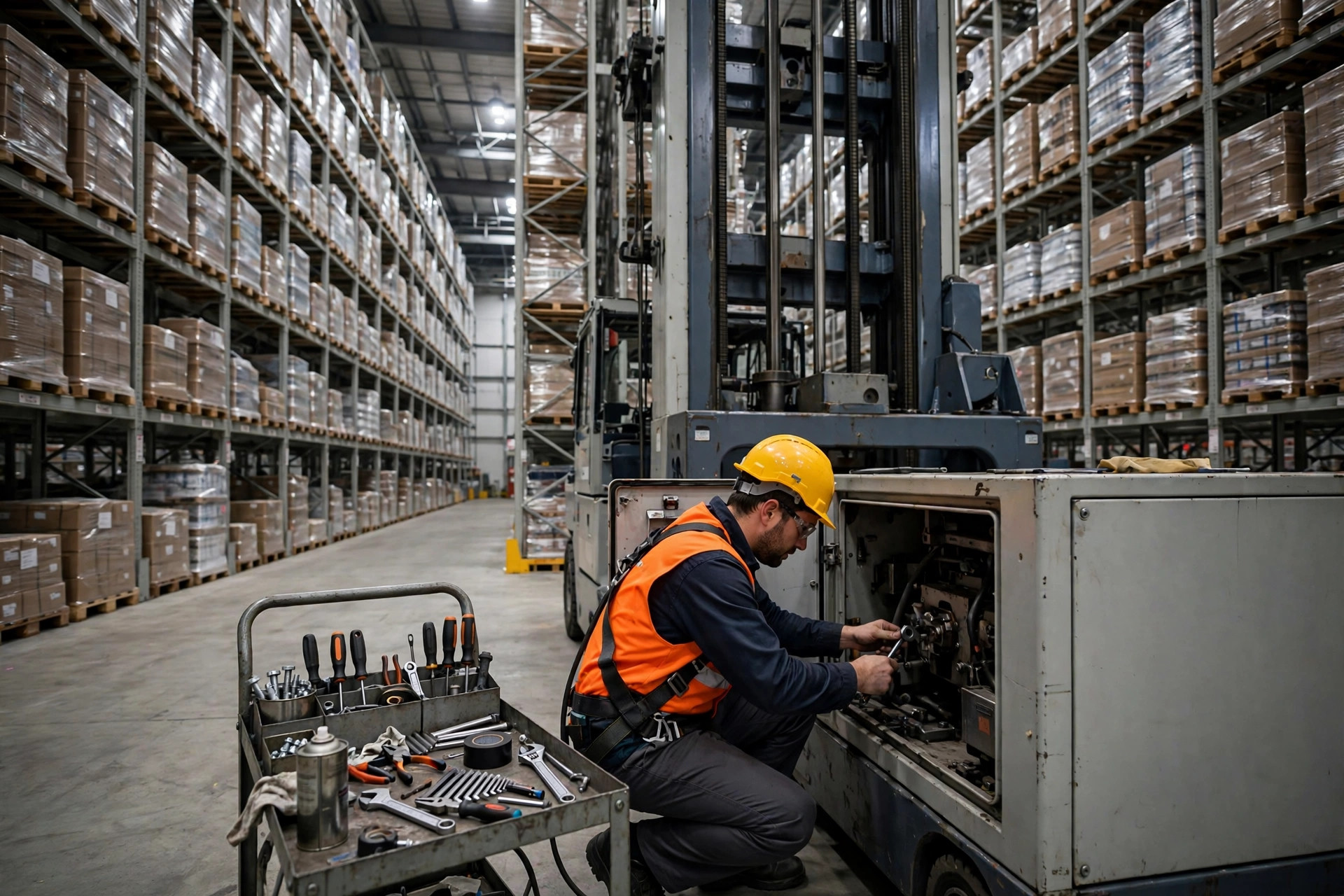
Three months before the warranty expired, the OEM's renewal quote landed on the client's desk. One year of maintenance, priced at a few percent of what the system originally cost. The industry rule of thumb, cited by systems integrators, is to budget 1 to 3 percent of installed CAPEX per year for ASRS maintenance: preventive contracts, spares, emergency service. On a system that cost several million dollars, that is real money. The client called me: renew, or go third-party?
My answer started with cold water: there is no standard answer, but there is a standard way to do the math. Let's break it down.
Start with what you are insuring. Integrator MTLI's 2026 cost data puts a mini-load system at $1 million to $5 million and a unit-load installation at $5 million and up, with installation and commissioning adding another 20 to 30 percent on top of hardware. The annual maintenance budget is then sized as 1 to 3 percent of that total. And the stakes are not abstract: industry calculations put unplanned downtime at roughly $10,000 per hour for a 750,000-square-foot warehouse. Whatever you decide, you are protecting against that number.
What the OEM quote actually pays for
An OEM renewal typically splits four ways: scheduled preventive visits, spare parts, software support, and emergency response.
Preventive visits are the base: a few on-site inspections a year covering crane rails, chain tension, sensors, electrical cabinets. Spares come in two flavors, consumables and critical spares, and the contract language matters enormously. Many quotes exclude big-ticket spares, so when a crane motor actually dies, that is a separate invoice.
Software support is the OEM's real moat. WCS version upgrades, PLC firmware patches, interface adjustments for a new WMS, third parties generally cannot get these. The control software is tied to the hardware; once the OEM cuts off software support, the system freezes in place.
Emergency response is about the SLA: how many hours to boots on site, how many hours to spares on the dock. The OEM's edge is the parts depot and factory-trained engineers. The downside is price, and SLAs that read beautifully in the contract and flex in practice when the schedule is full.
My verdict on fit: single-site operations where the ASRS is the heartbeat of the business and downtime is not an option should renew with the OEM. At a $10,000-an-hour burn rate, the savings from cheaper maintenance do not survive a single serious incident.
Third-party: where it is cheaper, where it hurts
Third-party maintenance usually quotes well below the OEM. The savings come from lower labor costs, compatible spares, and negotiable visit frequency. Many third-party shops are ex-OEM engineers who went independent. Their hands are good, and routine inspections, consumable swaps, and common faults are well within their range.
The risks need a line-by-line look.
First, parts. Discontinued boards, proprietary sensors, custom crane components, third-party supply channels are uneven. Available today, gone tomorrow. Before signing, make them list critical-spares inventory and sourcing channels. Whatever they cannot show you, the risk sits with you.
Second, response. Third parties are usually regional teams with a handful of engineers. When several clients break down in peak season, the schedule stretches and you are the one waiting. The SLA can say anything; execution depends on actual headcount.
Third, the ceiling on technical depth. Day-to-day maintenance is fine, but control-logic changes, system expansions, and the weird faults nobody has seen before often end up back at the OEM anyway. An industry survey found about 58% of companies struggle to find technicians with the skills to maintain automated systems. In that labor market, verify a third party's bench carefully.
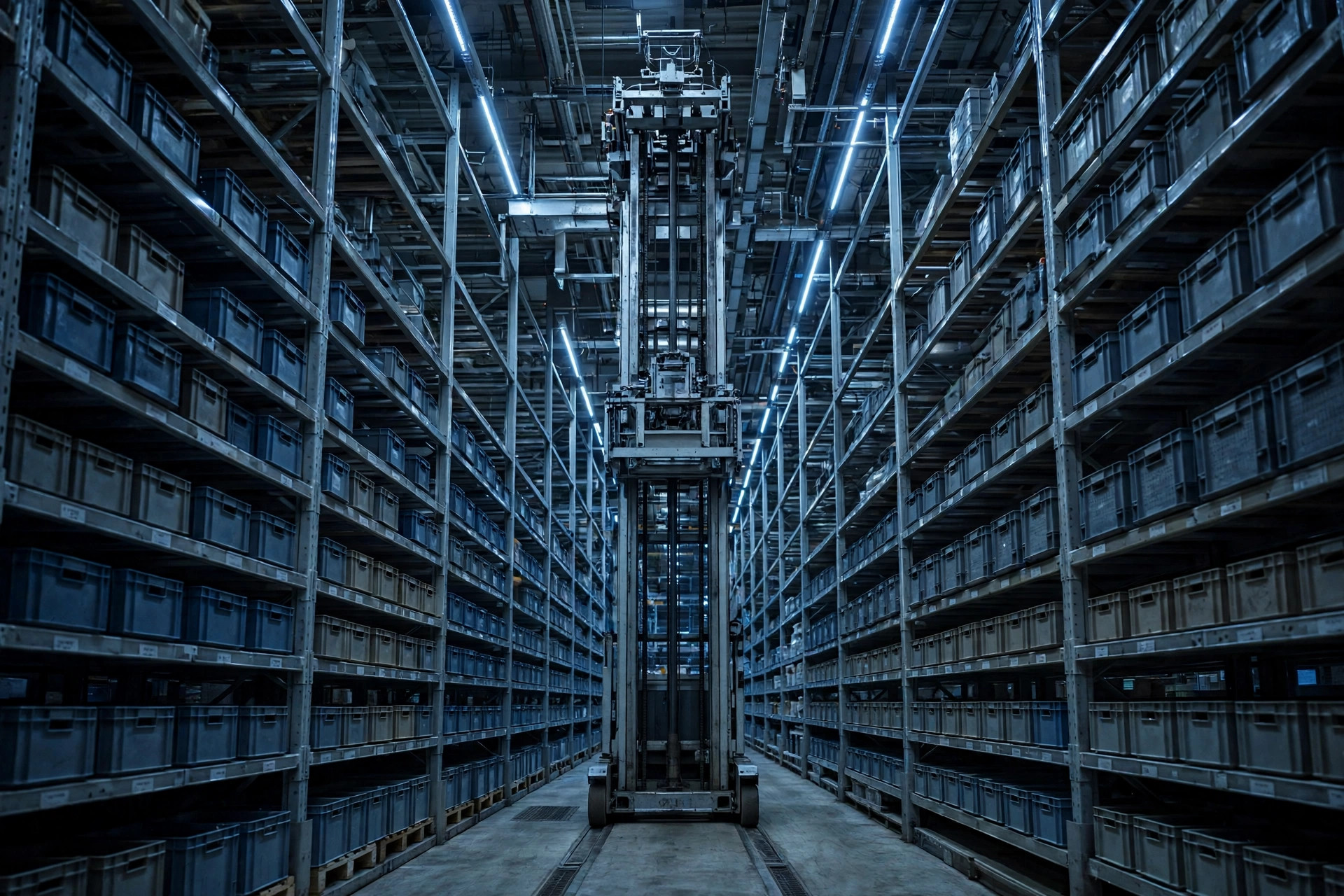
So the right use of third-party is the settled system: past its fast-evolution phase, running stable, every failure mode already seen. Use them for routine care and bank part of the savings as a spares reserve. Anyone expecting a third party to handle everything eventually calls the OEM back.
Building your own crew: the break-even question
The third option is an in-house team. How does the math work?
Put three numbers side by side: the fully loaded annual cost of an automation technician who can independently troubleshoot a crane, the OEM's annual contract, and the third party's. In-house wins only when your equipment base keeps that person fed. One or two cranes at a single site almost never justifies a dedicated hire. He will sit idle most of the year and his skills will go stale.
Two situations flip the math. The first is multi-site: stack the cranes across three or four warehouses and a two-to-three-person crew doing rounds costs less per site than individual OEM contracts, and response time is yours, which is the fastest SLA there is. The second is the 24/7 operation: when something breaks at 2 a.m., even the prettiest OEM SLA involves waiting. Your own person on shift contains it first.
Most operations land on the hybrid: one or two in-house people for routine inspections and first response, plus a downgraded remote-support-and-spares contract with the OEM or a third party. You handle the small stuff; big failures escalate. It costs less than a full-service contract without leaving you exposed.
Before you sign: the clauses that matter
Whichever route you pick, these clauses get scrutinized. Anything left vague becomes a trap.
Response SLA by severity: hours to site per fault class, and the penalty for missing it. Spares terms: are critical spares included, and is delivery time written down. Software: does the contract include WCS version upgrades and firmware patches, because many third-party contracts quietly exclude them. Price escalation: is there a cap on annual renewal increases. CPI-linked escalators are common now, and uncapped ones bite in year two. Exit terms: notice period for termination, and what happens to spares and software licenses after you leave.
One clause most people miss: data and access. The maintenance provider gets remote access to your WCS. Spell out account permissions, operation logs, and confidentiality. The crane control network touches production; do not get casual about security.
Running the numbers, my advice splits three ways.
One: single site, cannot afford downtime, no automation tech on staff. Renew with the OEM. Expensive, but you are buying certainty, and the hourly cost of downtime justifies it.
Two: multi-site, technically capable team, stable equipment. Third-party for routine care plus one or two in-house people, and keep your own critical spares. The savings are real, but own the parts and response risk with open eyes.
Three: big 24/7 facility. In-house crew plus a downgraded support contract. Night-shift failures cannot wait for anyone.
And one hard rule regardless of route: do not let the system run naked. Warranty expired, no contract, no spares, nobody who can fix it. That is the most expensive way to save money I have ever seen. One major repair wipes out years of saved maintenance fees in a single invoice. These systems run 20-plus years when maintained properly, with uptime in the 97 to 99 percent range; neglected, they start falling apart in five. This is lifecycle math, not a one-year quote comparison.