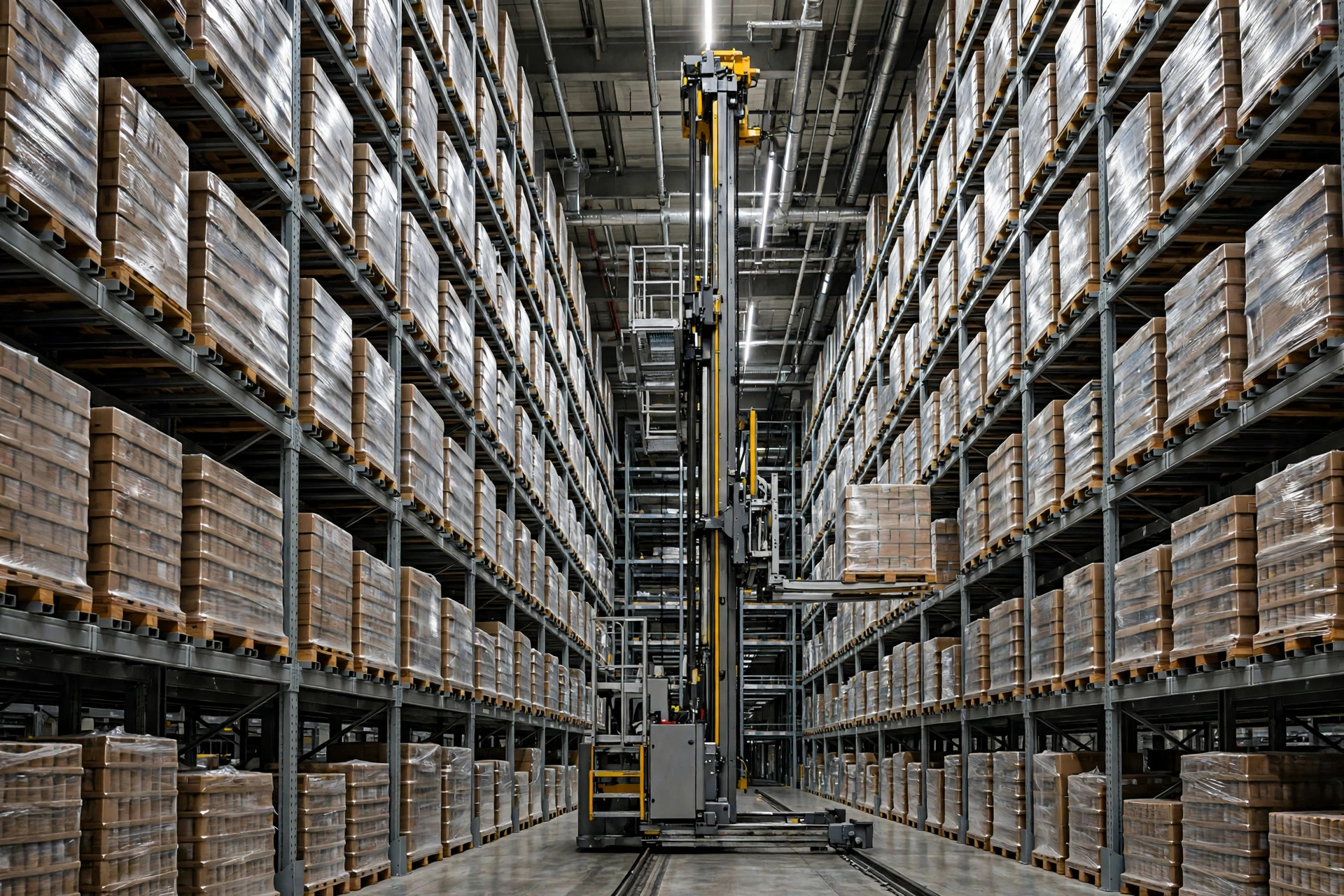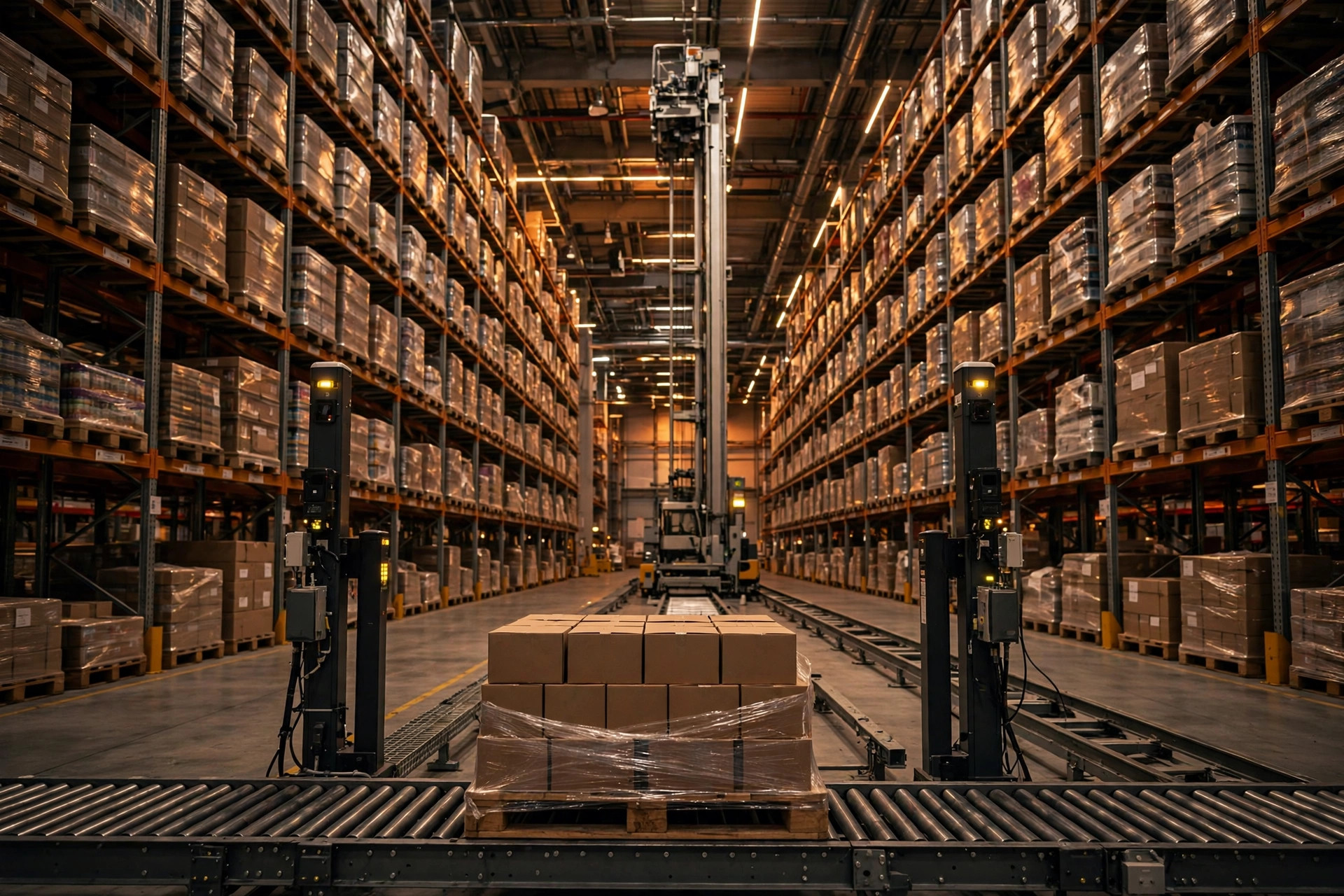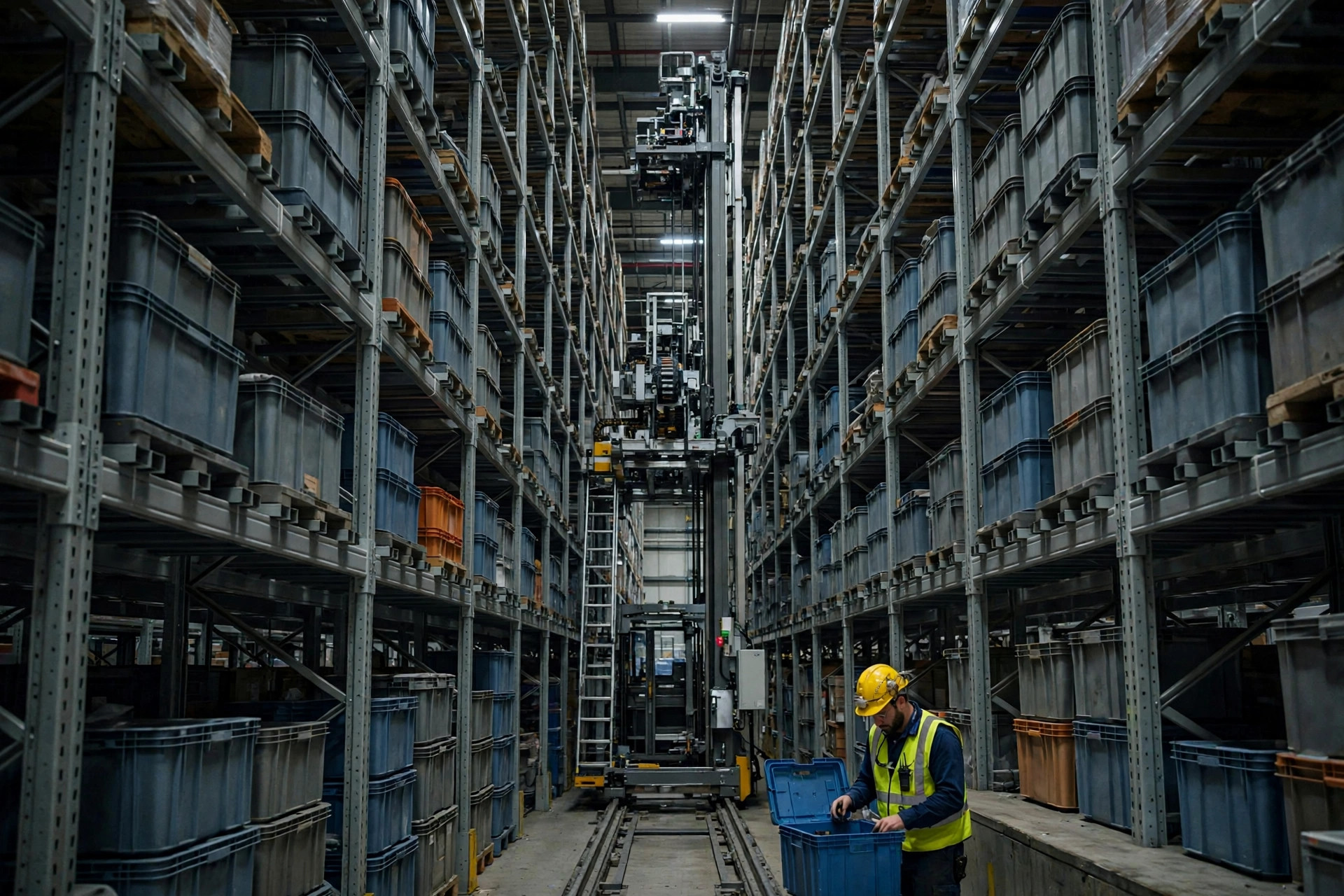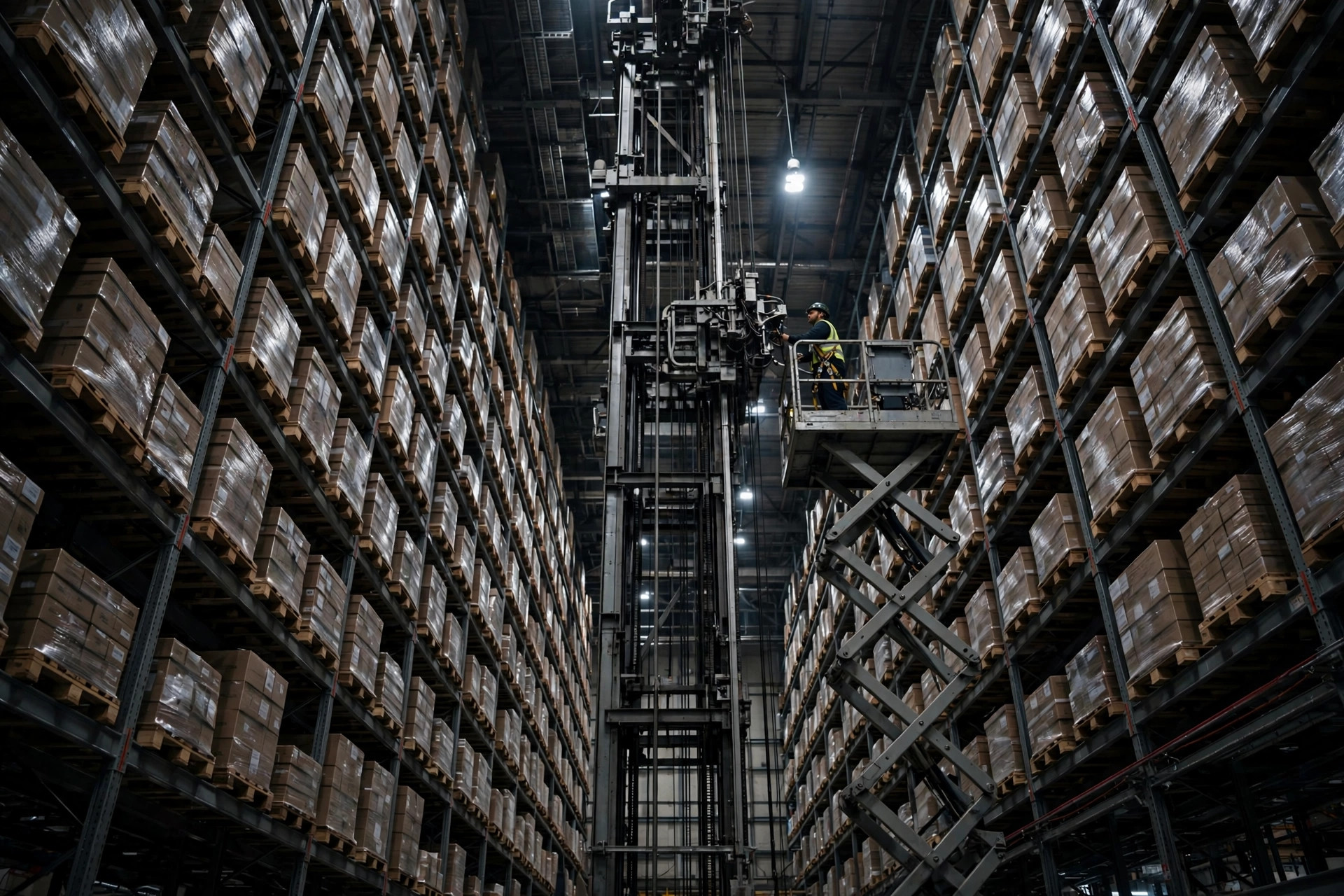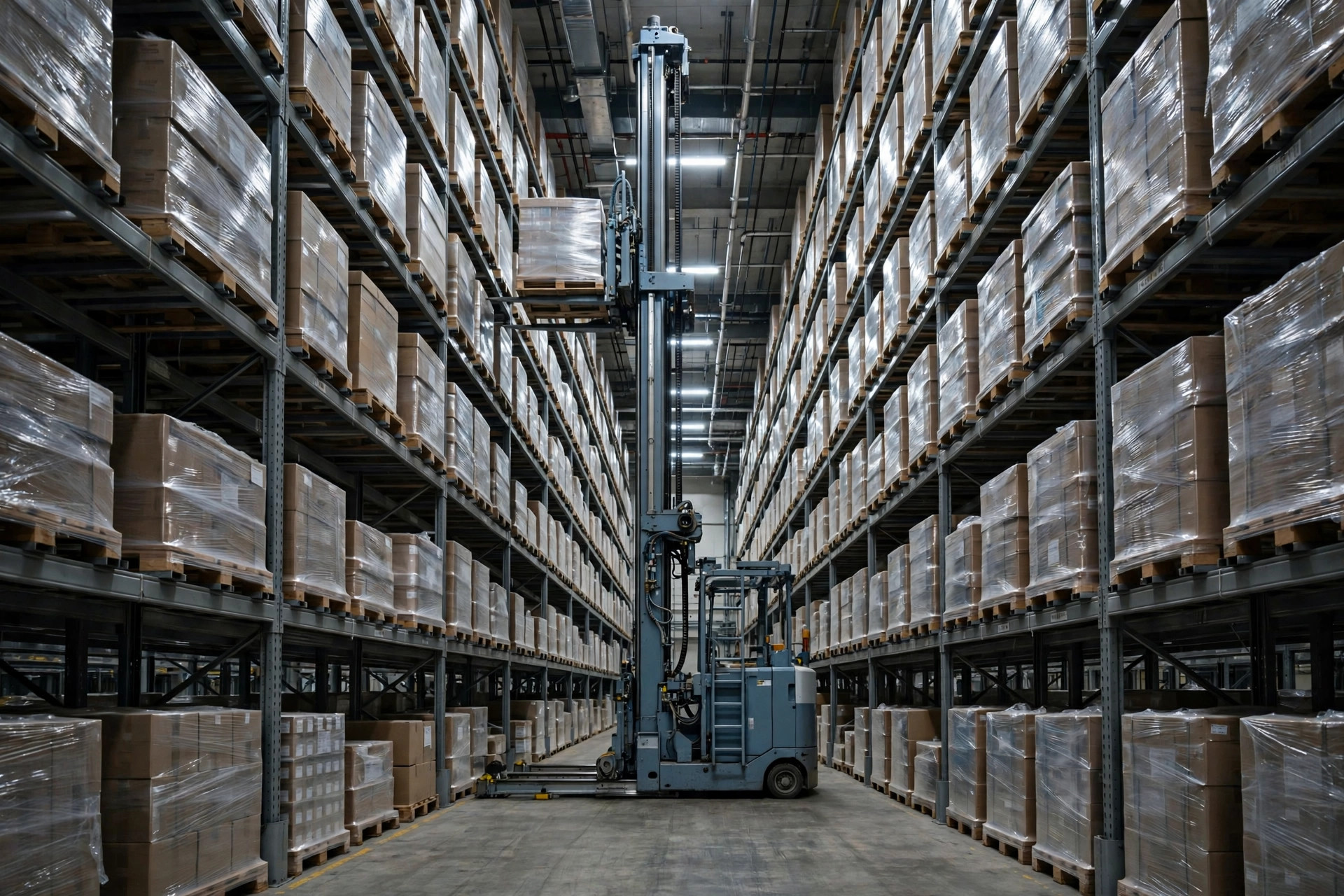
Full disclosure: my warehouse can't afford an ASRS. Not the stacker crane, not the sixty-foot racks — I'm fairly sure we can't even afford the tires on the stacker crane. A fully automated storage and retrieval system runs into the millions of dollars, and my little 30,000-square-foot operation is not burning that kind of money.
But last month, I talked my way into a tour of a big automated distribution center through a friend. I went to gawk at the stacker cranes flying down aisles of racks so tall you couldn't see the top. I expected a free lunch and some cool photos. What I got instead was one sentence from their facilities manager that rearranged my brain: "The thing we're least afraid of in this ASRS is the electronics and the software. What keeps me up at night is the racking. A rack nobody has looked at in ten years — that's the real killer."
I came home and translated their annual inspection playbook into a plain-English ASRS rack inspection checklist. You can't buy an ASRS either? Doesn't matter. The logic — racks bend, rails wear, inspections aren't optional — applies just as well to the six rows of beam racking in your small warehouse.
The Biggest Risk Isn't the Controls. It's the Racks Nobody Looks At
Here's the counterintuitive take: the biggest risk in an ASRS is not the control system.
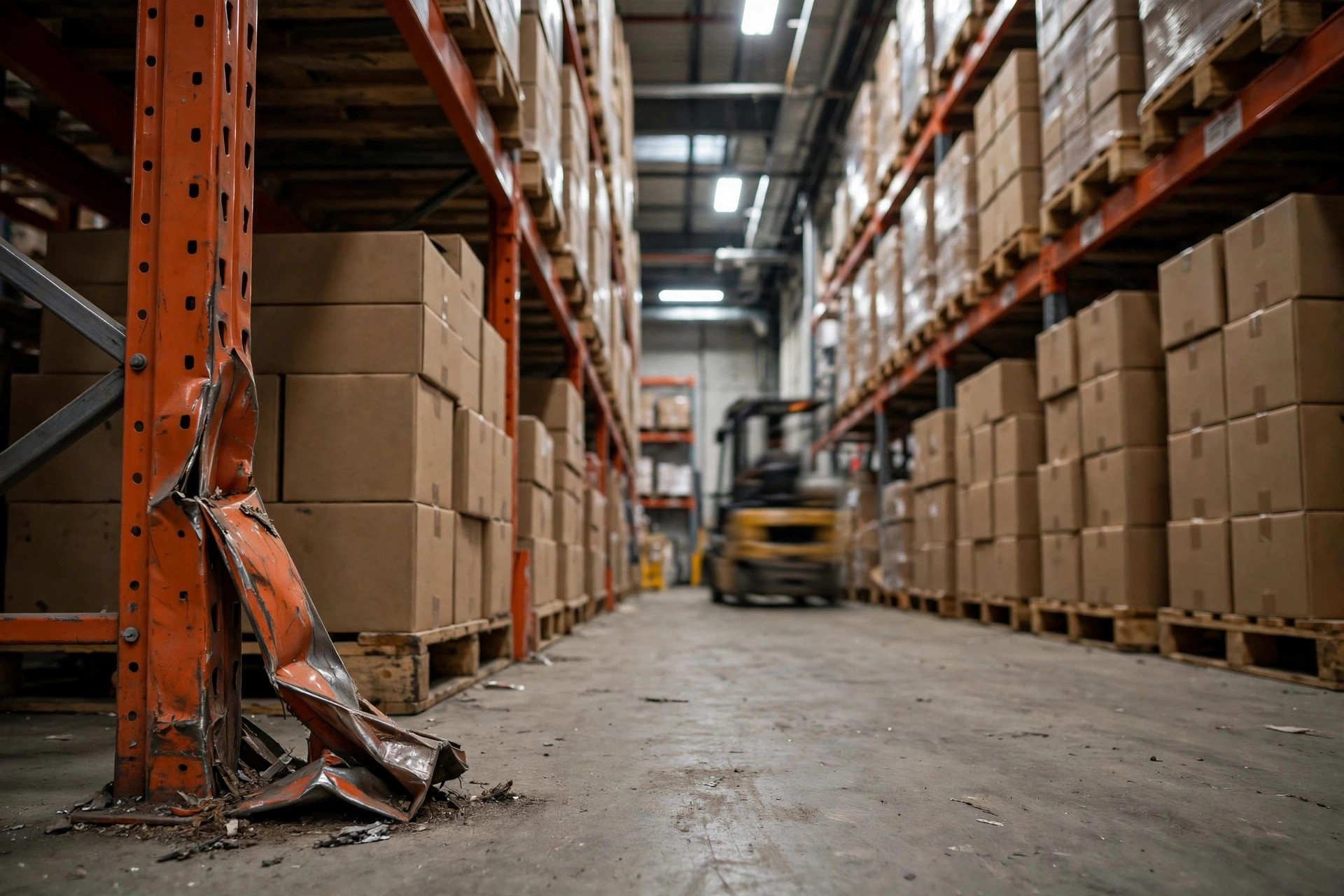
Everyone pictures an automated warehouse and thinks "high tech" — control cabinets, scheduling software, the crane itself — so the risk must live in the clever stuff. Wrong. Clever things complain. When the controls crash, the system stops, somebody reboots it or swaps a part, and you're back up in half a day. Racking is dumb. Dumb things never complain. An upright grazed out of plumb is a matter of millimeters. Guide rail wear is invisible to a daily glance. By the time you can see it with your naked eye, it may already be too late. A rack "alarms" exactly once, at the very end, and the bill is more than you can pay.
The facilities manager walked me through his own numbers: their ASRS has been running for over a decade, and in all that time the controls have crashed exactly twice. Reboot, done, less than half a day of production lost in total. But every single annual inspection turns up racking problems — uprights grazed by the crane, beam safety pins gone missing, rail joints misaligned. One year they found an entire rail section worn past tolerance, and the stacker crane's travel wheels had already started chewing into the rail. They caught it early: one rail section plus four wheels, problem solved. His exact words: "Give it six more months, and we'd have been down a whole aisle for a major rebuild. That's a different order of magnitude."
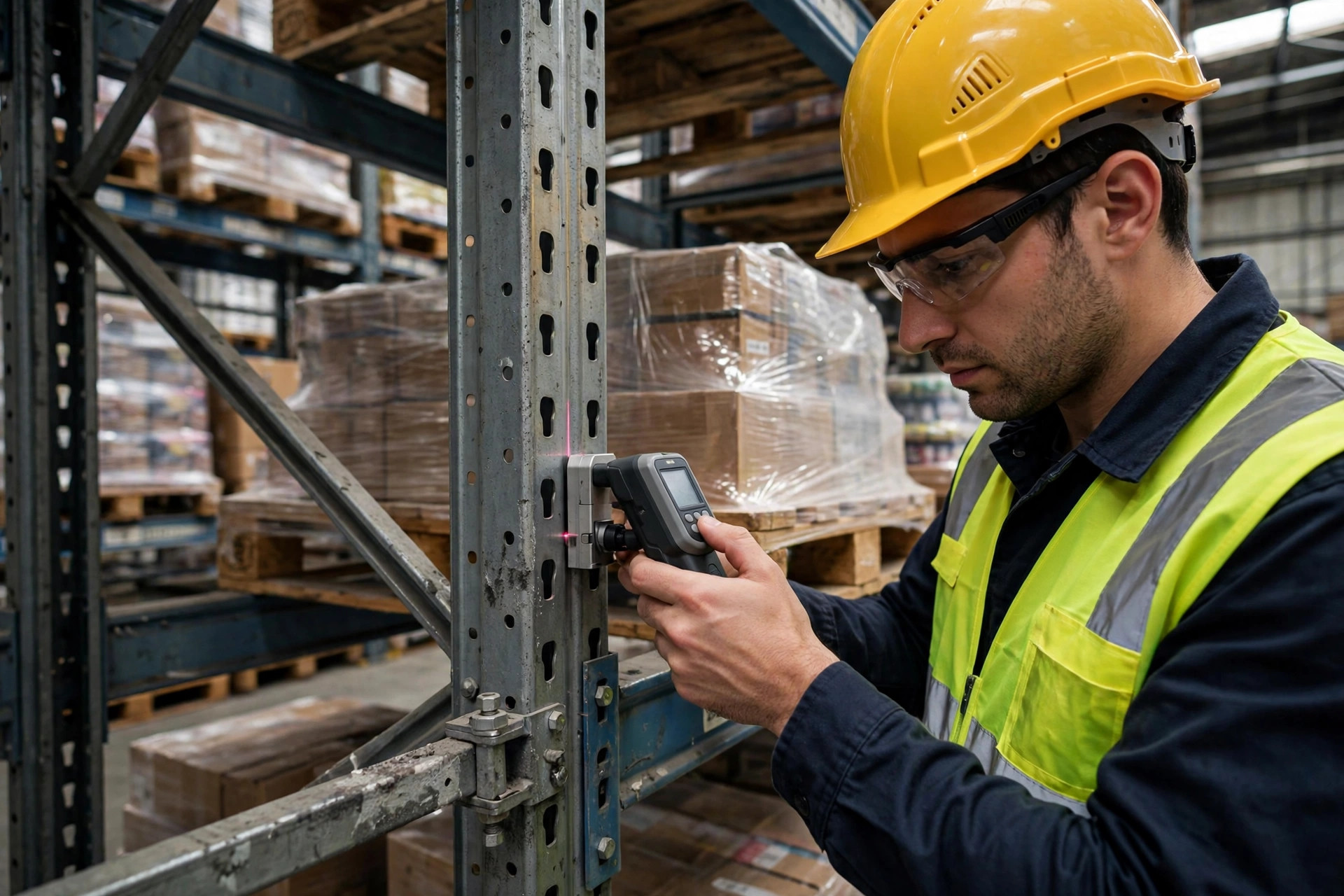
Think about it: the control system has a thousand sensors watching it. What watches the racking? Nothing — except a human being, once a year. That's why on every annual checklist, racking and guide rails sit above the electronics.
My ASRS Rack Inspection Checklist, Translated into Plain English
Here's the core of the big DC's annual inspection, translated out of engineer-speak. What to check, how to check it (scrappy methods count), and what to do when something fails:
| Check item | How to check | How often | If it's out of spec |
|---|---|---|---|
| Upright plumb and deformation | Plumb line + tape measure to check deviation at the top; shine a flashlight along uprights for dents and cracks | Full check annually; quarterly for zones hit by forklifts or cranes | Clear product from that bay and the levels above/below, take the row out of service, call the rack manufacturer for assessment. Never hammer it back yourself |
| Beam safety pins and connectors | Check every level: pins present and seated, bolts tight and rust-free | Full check annually; glance during routine walkthroughs | Replace missing pins with the same spec immediately; re-torque loose bolts to the manufacturer's spec |
| Guide rail straightness and surface wear | Walk the rail: look for joint misalignment and surface flaking; listen for abnormal noise while the crane runs | Annually | Replace worn rail sections and inspect the travel wheels at the same time. No running on damaged rail |
| Crane travel and guide wheels | Check wheel surfaces for wear and cracks; replace when wear hits the manufacturer's lower limit | Annually | Replace wheels and re-align on installation |
| Anchor bolts and column protectors | Spot-check bolt tightness with a wrench; check protectors for impact damage | Annually | Re-torque or replace protectors |
| Fire sprinklers and alarm linkage | Check heads for blockage or damage; test alarm linkage together with your fire maintenance visit | Annually | Fix per fire code. This one never waits |
One honest caveat: out-of-spec thresholds differ by rack manufacturer. Treat the numbers in your rack manual or local code as gospel, and don't invent your own. What this checklist gives you is the logic — what to look at and how — and the thresholds come from whoever sold you the rack. They know best.
Do the Math: One Inspection vs. One Collapse
Time for the least Xiao-Ma-like section of this article — an actual cost comparison. But somebody has to do it.
From what I've been quoted, a full third-party annual inspection of an ASRS runs in the low thousands to low tens of thousands of dollars, depending on your aisle count and rack height. Spread that over 365 days and it's tens of dollars a day — less than buying lunch for the whole crew.
Now the other side of the ledger. One partial rack collapse: product damage, line downtime, insurance spikes, and heaven forbid someone gets hurt. That easily wipes out decades of inspection budgets — not counting the customers you lose and the reputation you can't rebuild. It's arithmetic a fifth grader could do, and yet people skip it every year. Why? Because an inspection is a certain expense and a collapse is an uncertain risk, and human nature loves to gamble on "we've been fine for ten years."
An annual inspection isn't a cost. It's the cheapest insurance you can buy. A few thousand certain dollars to retire an uncertain catastrophe — if you won't take that deal, what deal will you take?
What My Little Warehouse Stole from the Playbook
Back to our reality. No ASRS here — but the half-dozen rows of beam racking in my 30,000-square-foot warehouse follow exactly the same physics. Racking doesn't go easy on you just because you're small.
Our scrappy version has four moves, and none of them cost real money. First, monthly plumb-line sampling: pick a few rows each month, hang a plumb line, see if the uprights have drifted. Total cost: one plumb line and half an hour of labor. Second, phone-photo records: take an "ID photo" of every row of uprights, then compare six months later. Deformation jumps right out — more intuitive than any instrument. Third, our "report every hit" rule: if a forklift driver clips a rack, they must report it. No punishment — in fact, a small reward for reporting. Sounds backwards? Punish once and nobody ever reports again, and every hazard stays buried. That's the expensive option. Fourth, the simplest one: when a safety pin goes missing, buy a new one. Don't improvise with wire. It costs pennies. Don't save money there.
The results? This past March, our very first plumb-line round found an upright knocked crooked by a forklift. Invisible to the naked eye — but the plumb line showed it off by nearly a finger's width, with two tons of product sitting above it. We moved the freight and replaced the upright on the spot. My back went cold thinking about it. Six months in: three hazards found, zero incidents. I now tell everyone: that plumb line is the best investment this warehouse ever made.
So here's my advice for fellow small-warehouse owners: don't wait until "things slow down." This month, take half an hour, grab a plumb line, and walk your racking rows. The big guys have an inspection crew; we have a plumb line and a phone. They check rail straightness; we check whether the uprights lean. Different tools, same truth: racks don't talk, but they do bend. Ignore them, and they'll make their point with a collapse.
Small warehouses have their own way of surviving — and ours is this: save where you can, inspect what you must.
By Xiao Ma, Small Warehouse Owner