We had a client, an importer of household goods, who learned an expensive lesson on his first entry into Antananarivo, the capital of Madagascar. His logic sounded airtight: his cargo landed at the port of Toamasina, so the closer his warehouse sat to the port, the less he would spend on transport. He signed a nicely priced lease near the port and waited for the savings to roll in. Instead, his first replenishments into Antananarivo's supermarkets kept arriving half a beat late, and when a promotion window opened, his product was still on the road. The buyer on the phone asked him a question he could not answer: if your warehouse is right at the port, why is the capital out of stock? We eventually moved his stock to a suburban warehouse outside Antananarivo, keeping the port site only as a transit buffer, and the whole operation finally settled down.
That is the first lesson of setting up warehousing in an island capital: in Antananarivo, the best location is not the one closest to the port. It is the one closest to your customers, with the most reliable replenishment. Port, suburb, and inland distribution are three separate calculations, and if you blur them into one negotiation, the contract will cost you no matter how good the rent looks.
Antananarivo Warehousing Starts With Three Freight Flows
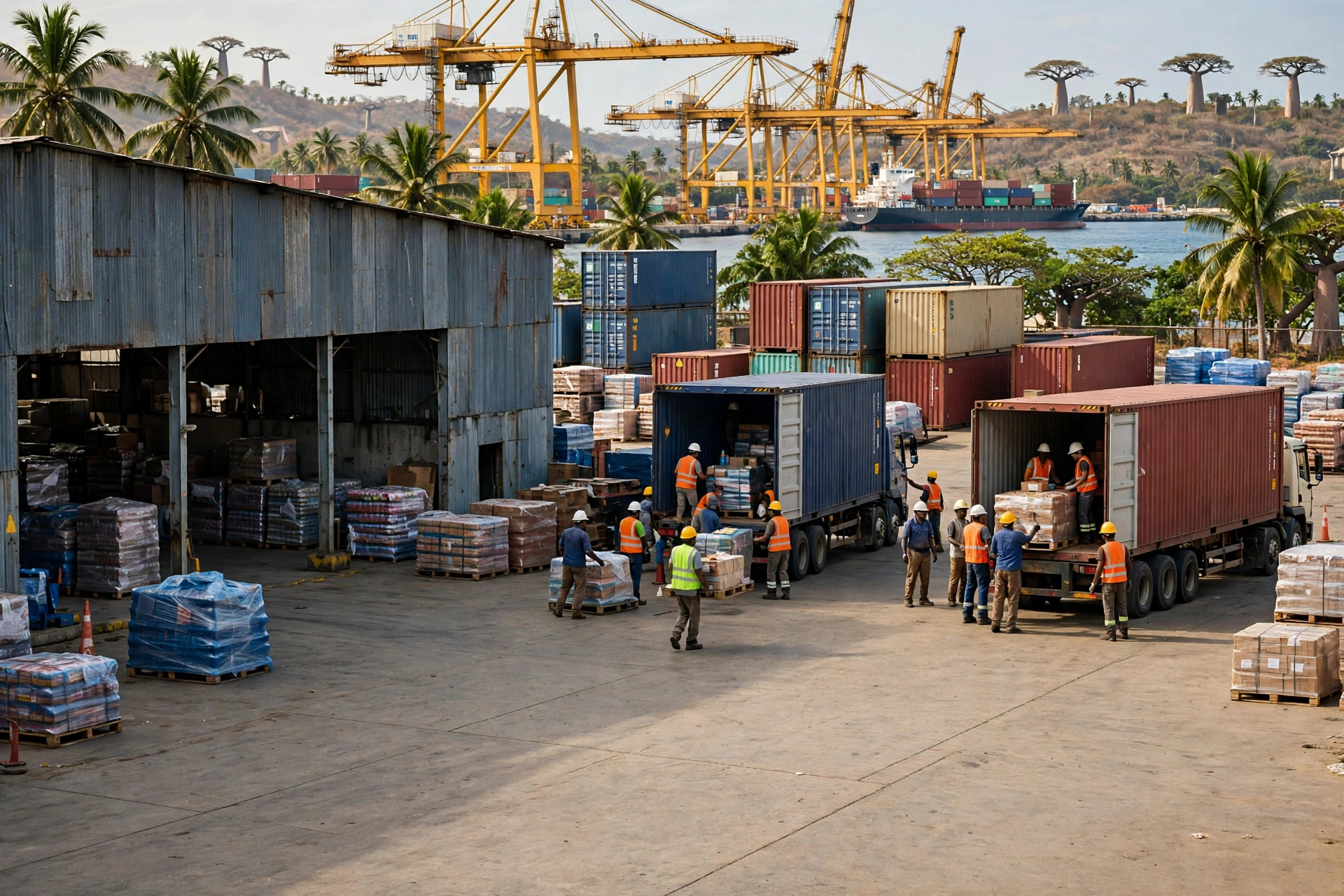
Madagascar is an island, so nearly everything inbound arrives by sea. Toamasina, on the east coast, is the main gateway, and from there cargo travels several hundred kilometres overland to reach Antananarivo. That inland leg is the lifeline of the whole chain. Road conditions, the rainy season, and truck availability can each stall a shipment, and when any of them does, shelves in the capital feel it within days. I have watched too many clients negotiate hard over the ocean leg and treat the inland leg as an afterthought, only to discover, with a truck stuck halfway, that their contract says nothing about who bears delay costs or detention charges.
A second client tells the opposite story. He exported agricultural and specialty products, collecting from inland producing areas into a warehouse around Antananarivo for sorting and packing before sending goods out through Toamasina. His first warehouse sat on the edge of the city, chosen because it was close to suppliers and easy to staff. But large trucks faced restricted access in the city, loading queues built up during the day, and in peak season packing ran past midnight, with labour and overtime costs climbing all the while. Moving the sorting operation to the suburbs, and keeping only a small city cross-dock for urgent top-ups, brought his costs back down. Same city, completely different warehouse logic. It all depends on whether your freight flows into the capital or out toward the port.
So before you talk about Antananarivo at all, draw your own freight flow: where does the cargo come from, where is it going, and who cannot afford to wait? For an importer distributing into the capital, the priority is replenishment speed to supermarkets and channels, so the warehouse should hug Antananarivo. For an exporter consolidating cargo, the priority is the handoff between producing areas and the port, so the warehouse should sit on a suburban arterial road with room to sort and stage. Get the direction wrong, and whatever you saved on rent will be handed straight back in freight and stockouts.
Antananarivo Suburban Warehouses: Three Contract Traps
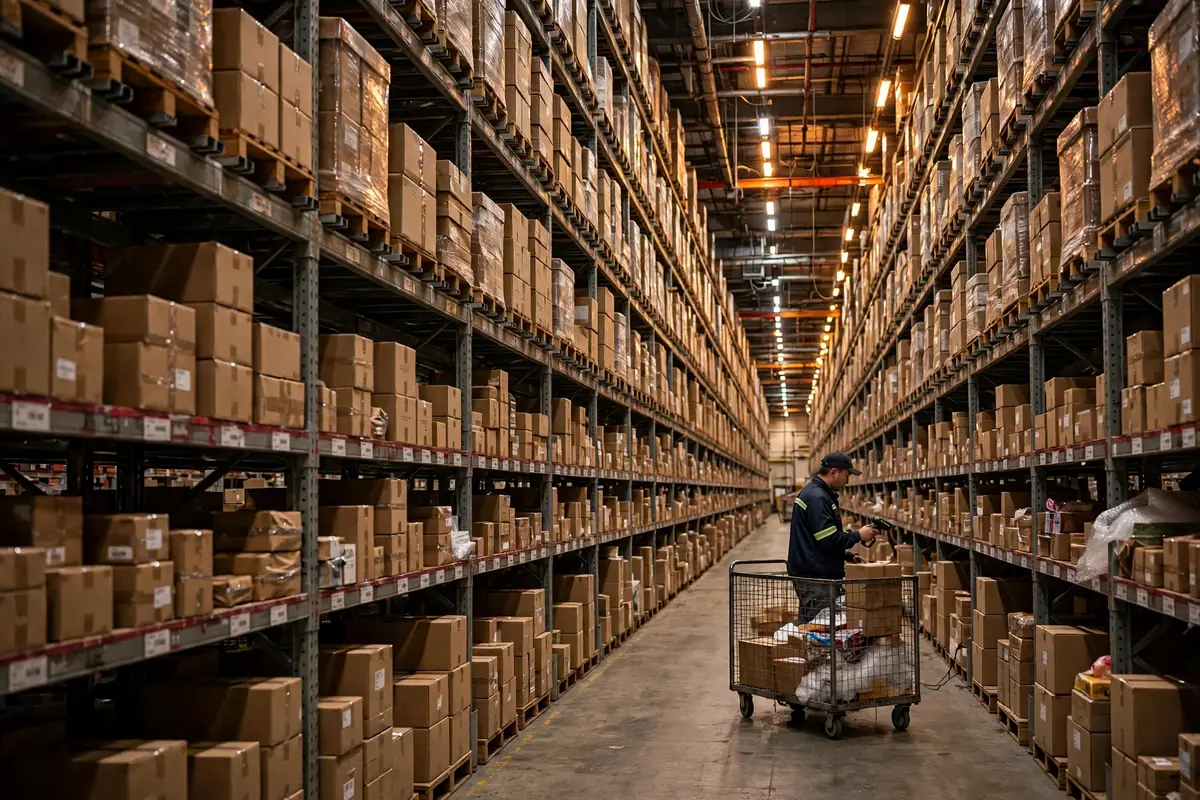
A suburban warehouse outside Antananarivo is where most clients end up: land is easier to find than in the city, large trucks can come and go, and capital customers are still within reach. But suburban contracts are where I see the most traps. The first is space and expansion. Many clients sign for just enough space for their first shipments, then find, when peak season arrives, that the neighbouring unit is already let. They end up splitting stock across two sites, running two sets of books and two crews, and management costs double. Before signing, ask whether you hold a right of first refusal on adjacent space, and whether expansion pricing is fixed to your contract rate or reset to market.
The second trap is scope of services. Warehouse quotations in island markets often cover only the space and basic handling, while receiving checks, sorting, labelling, and returns processing are all charged separately. A client signs what looks like a bargain, then discovers three months in that the fiddly services are where the real money goes. When you negotiate, do not compare the monthly rent line alone. Lay out the full annual service list and go through it item by item: what is included, what is charged per job, and within what price range. Exact rates should always be confirmed against the supplier's current quotation and local policy at the time, but what is included and what is not must be written into the contract. A verbal promise is worth nothing when the invoice arrives.
The third trap is the exit clause. Madagascar's market is seasonal, and channel expansion does not always succeed on the first attempt. A contract with no clear early-termination terms and notice period leaves you either carrying the remaining term or paying a termination fee that only appears at the negotiating table. My advice is that you can trade a longer term for a better rate, but always keep a break window and a notice period. Spend two extra rounds negotiating now rather than locking yourself into a market you have not yet proven.
The Antananarivo Trade-Off: Never Bet Replenishment Against Rent
Here is how I usually lay out the three location options for a client:
| Location | Rent level | Replenishment speed | Distribution reach | Best for | | Near the port | Relatively low | Slow into the capital, exposed to inland road volatility | Transit and export consolidation | High-volume, low-urgency transit cargo | | Antananarivo suburbs | Mid-range | Closest reliable service to capital customers | The capital and surrounding towns | Import distribution focused on capital channels | | Small city warehouse | Relatively high | Fastest within the city | City only | Urgent top-ups and frequent small batches |
That table holds a counterintuitive truth: the cheapest rent is often the most expensive total cost. A port warehouse looks like a saving until you add one stockout, one missed promotion window, and one lost piece of channel trust. A suburban warehouse costs a notch more in rent, but replenishment holds, returns are handled cleanly, and channels give you better shelf space. The total bill is what matters, and insiders know the real price is never just the rent line: it is rent plus freight plus service charges plus the hidden cost of stockouts and rework. Negotiating on rent alone is like reading only the first line of a quotation.
Inland distribution deserves its own note. Towns south and north of Antananarivo are small and scattered, and the right approach is usually a capital hub with small inland transfer points, expanding town by town as volume proves itself. Do not open a warehouse in every town on day one. Verify which towns genuinely move volume, then decide whether to add staff and stock locally. Island markets move at a slower rhythm than mainland ones, and your contracts and inventory policy should leave room for that slower pace.
So here is the sales-director's version of the whole story: before you ask about rent, ask three questions. First, does my freight flow into the capital or out to the port? Second, can I afford a single stockout? Third, are the service list, expansion rights, and exit terms actually written down? Answer those three, and your Antananarivo warehouse negotiation is already halfway won.
Next time you negotiate a contract, ask these three questions: what is included in the service list, and what is not? Do I hold expansion priority, and at what price? What is the break window and notice period for early termination? Ask all three before you sign, and you will not lose the island-capital game on the contract.
By Susan, 3PL Sales Director