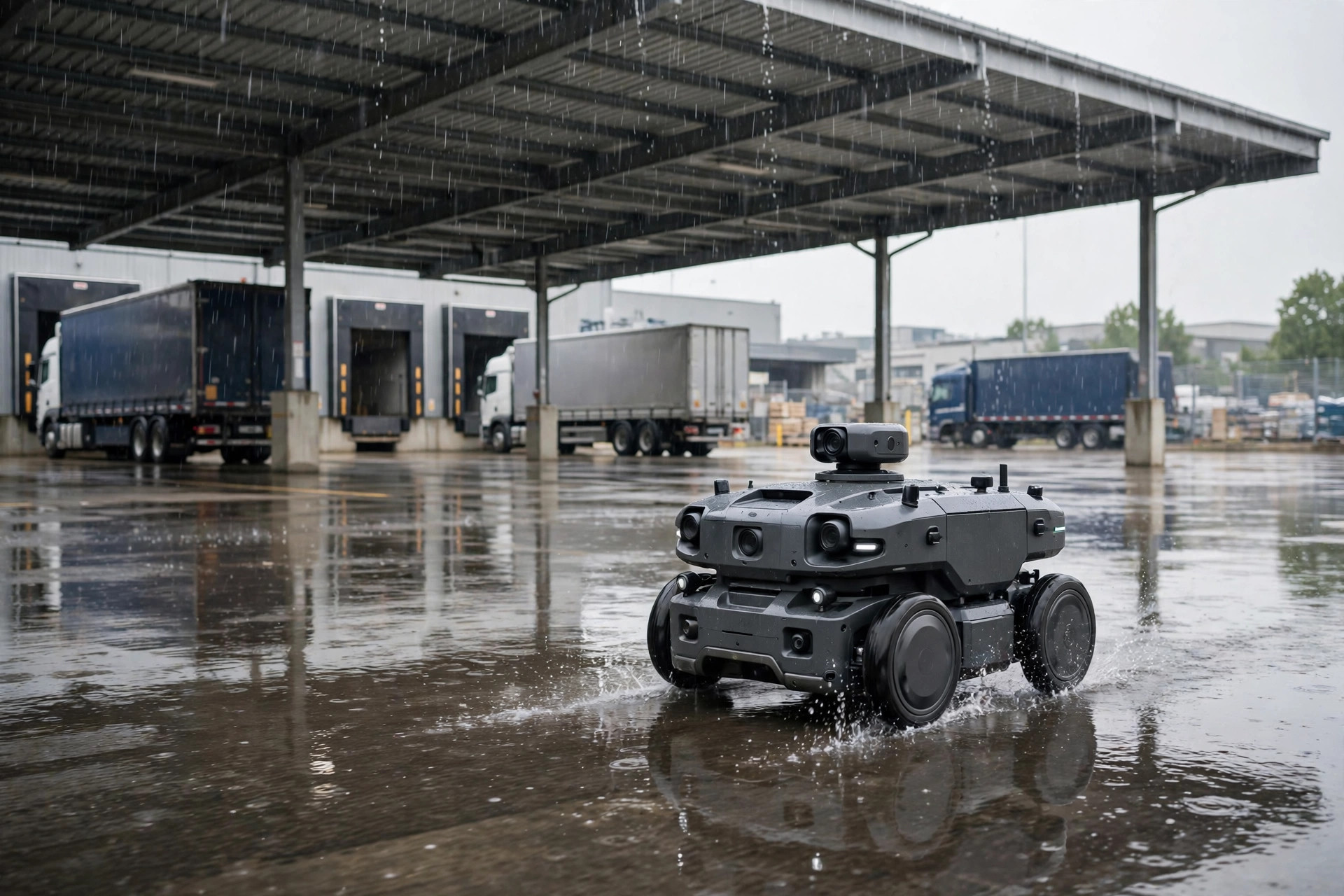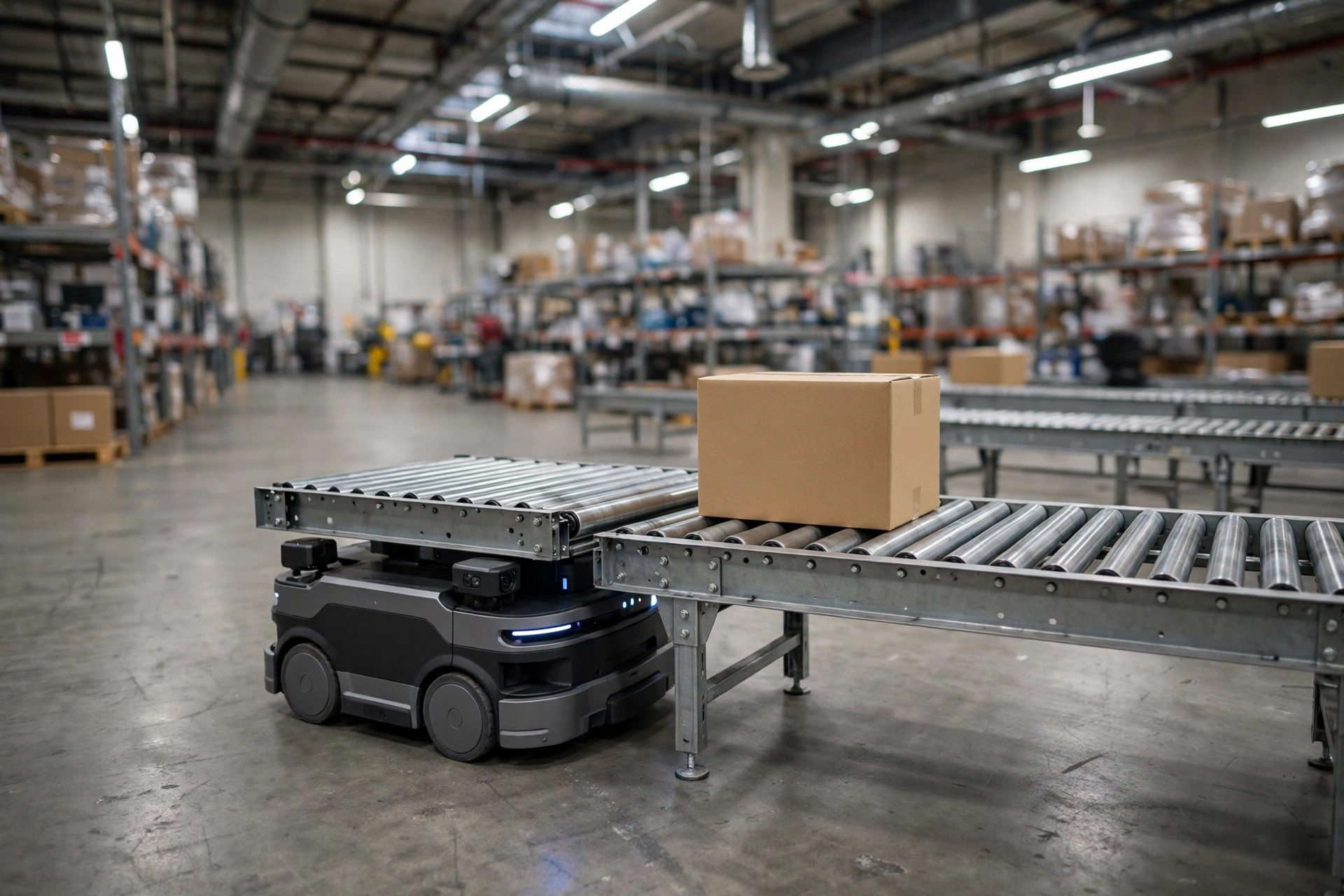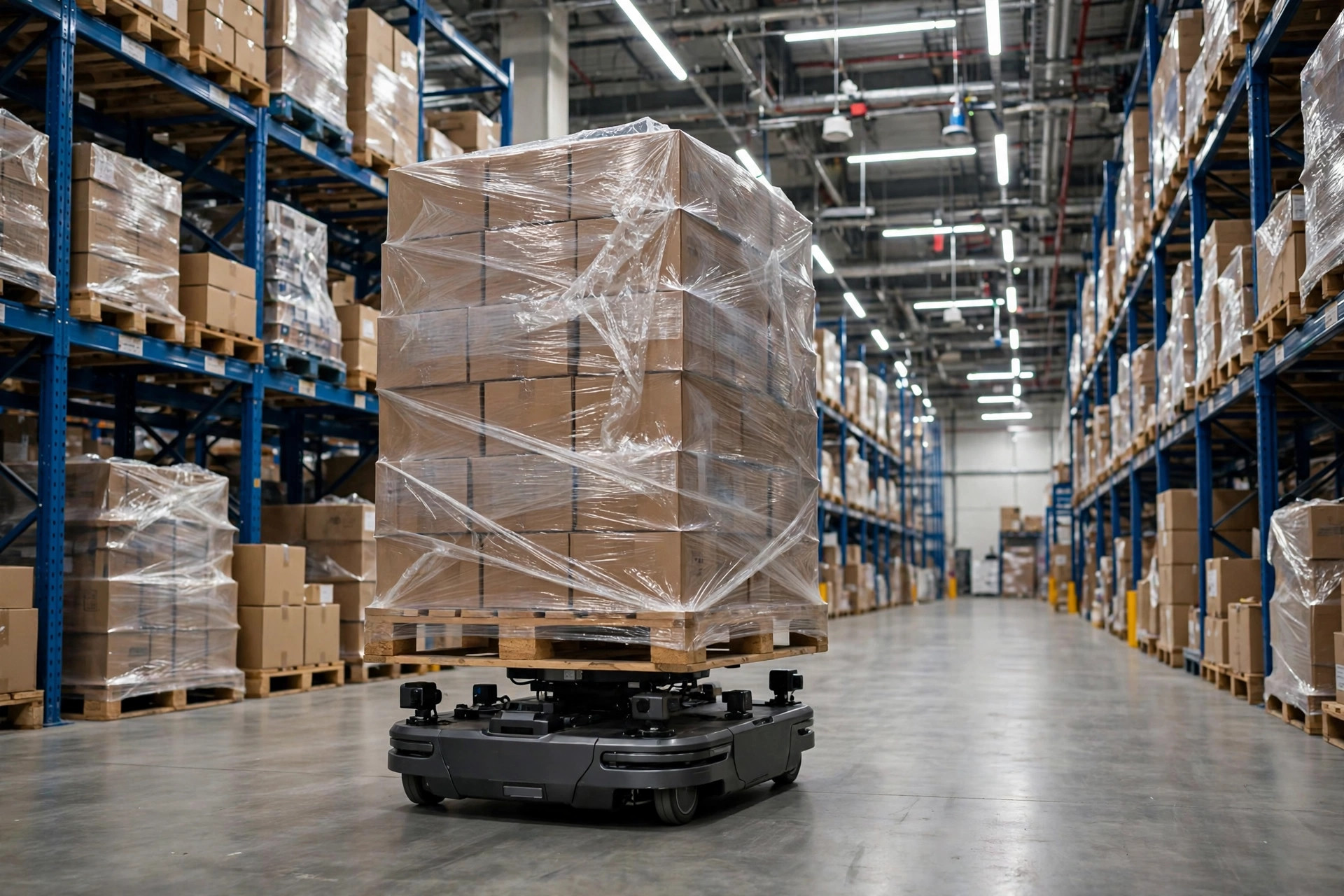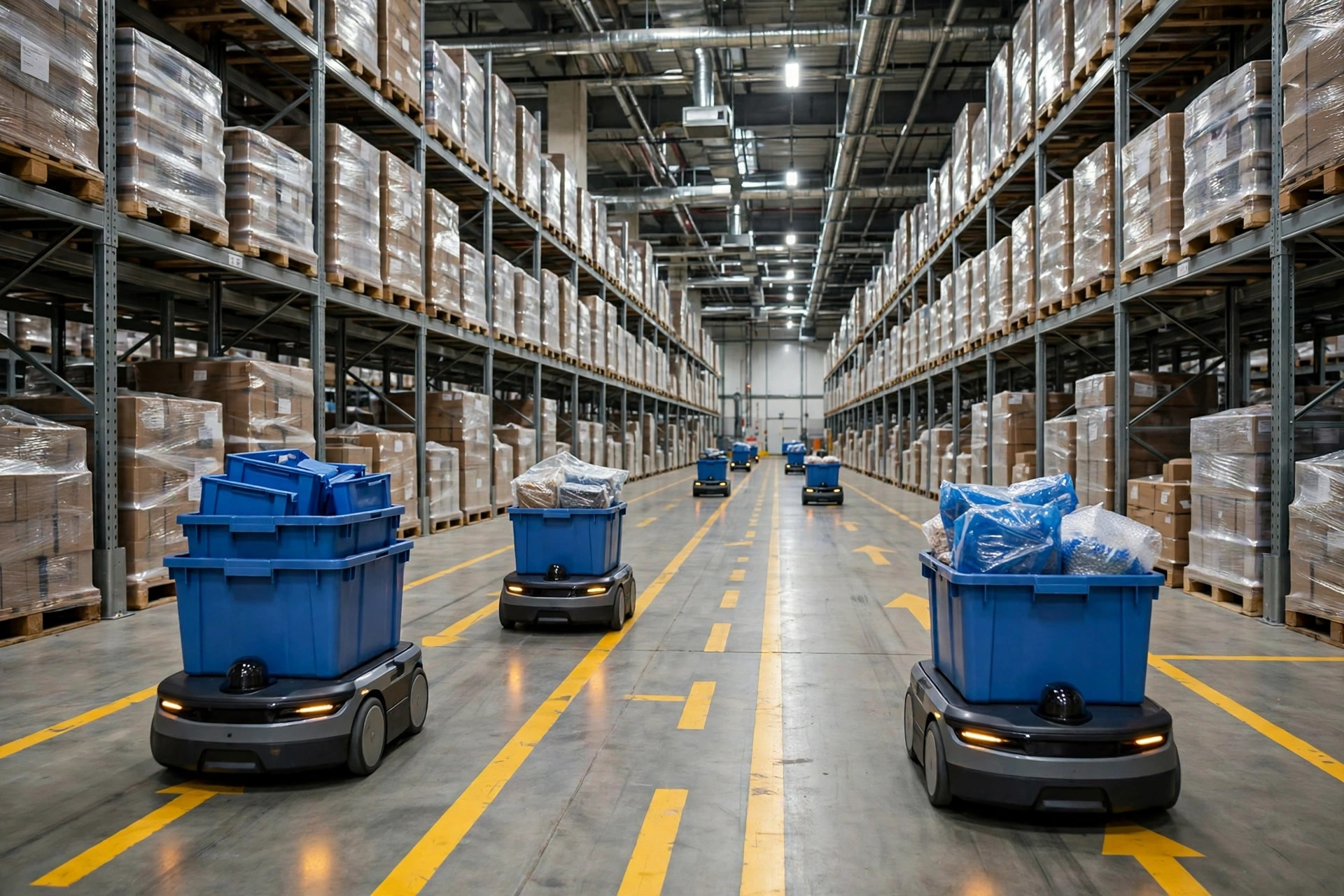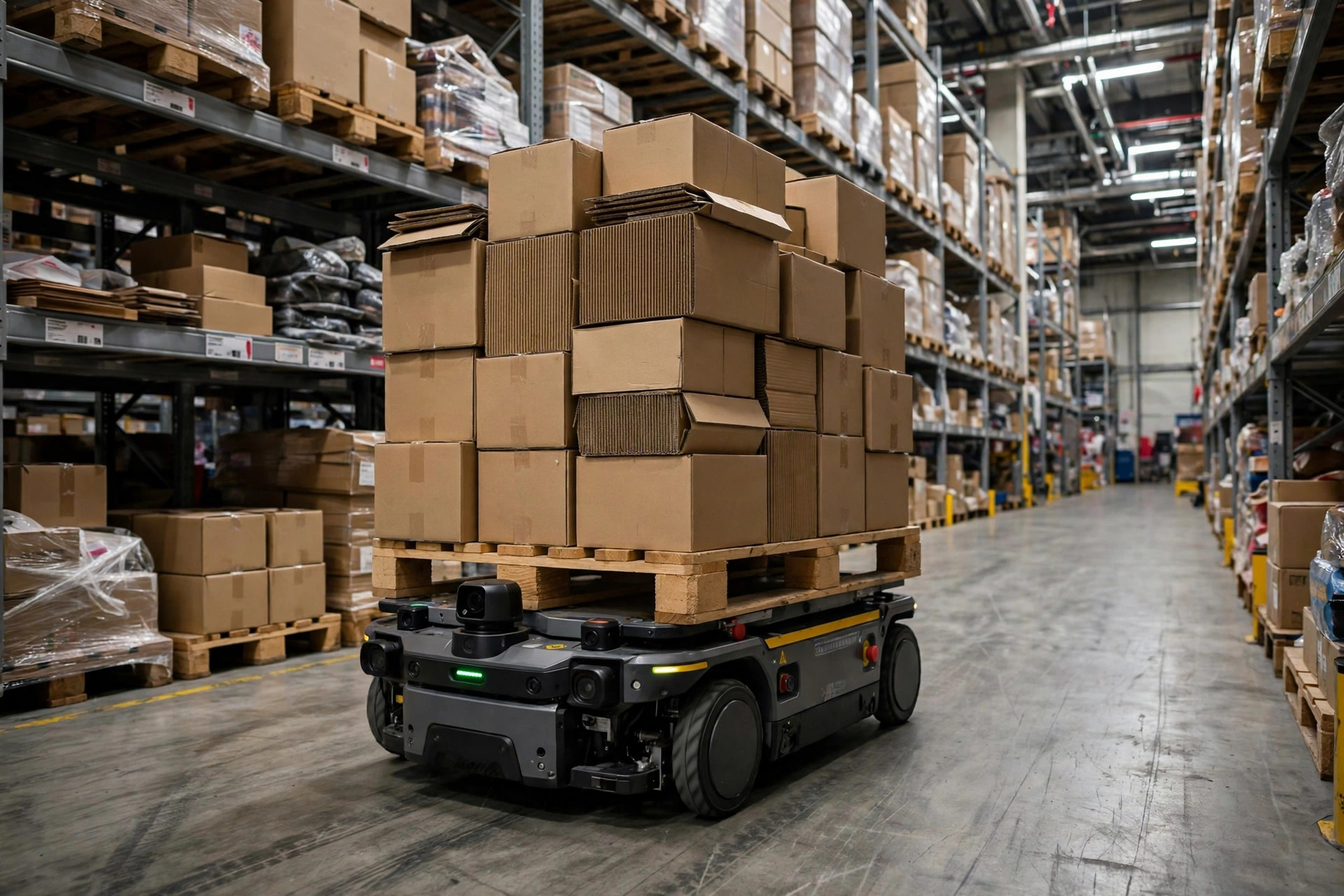
Let me tell you something. Fifteen years behind the wheel teaches you one skill: you learn to read a spec sheet and guess, on sight, what fraction of it survives contact with reality. Last fall I was dropping a load at a beverage distributor out in the Inland Empire, waiting on the dock for my unload, when an AMR vendor rolled in for a live demo. Little robot hauling a pallet of bottled water around the floor, and the sales kid is patting it like a show dog: "Rated one ton. It'll pull anything."
I had to laugh. I'd heard that exact pat-the-hood pitch when I bought my first tractor — from a guy swearing up and down about the fuel mileage. The sticker mileage and my real mileage running I-10? Off by nearly a third.
Third lap of the demo, the warehouse manager says, "Add more weight." They stacked it up to a bit over 600 kilos, and you could see the speed bleed off. Then it hit the speed bump by the dock door, rocked, threw a warning light, and just... stopped. The sales kid's smile got a little stiff. "The pallet's center of gravity is high," he said. The manager didn't miss a beat: "Our freight never has a low center of gravity."
Here's the thing: it's not exactly lying
Now, I'm not saying every vendor is running a scam. After all these years on the road, I know the truth: there's a whole real world sitting between the paper number and the floor number.
AMR payload ratings work just like truck fuel-economy ratings — measured under the rosiest lab conditions you can imagine. Floor flat as glass, battery at a hundred percent, slow and steady speed, pallet stacked low and dead center. Pull a ton under those conditions, print it in the brochure. Legal. Accurate. And completely useless to you.
How many of those conditions exist in your warehouse? Your floor has expansion joints and little pits chewed in by forklifts. Batteries are down to thirty percent by the back half of the shift. Pallets get stacked tall and crooked. There's a ramp by the door. Every one of those conditions shaves a little off that one ton. Shave enough, and 600 kilos triggers an overload alarm. No surprise at all.
So the real issue isn't "fake ratings." It's that the rating is a ceiling and buyers treat it like the daily average. Every trucker gets this: the top speed on the sticker isn't the speed you run all day. Same deal.
What happened at that beverage warehouse
That distributor genuinely wanted to buy. Peak season, short on hands, they wanted the little machines to run the long hauls — staging area to shipping, call it 200 meters a trip, dozens of trips a day.
Their pallets of drinks run about 700 to 800 kilos each. Against a one-ton rating, that's plenty of headroom, right? But after the demo-day embarrassment, the warehouse manager got smart. He didn't sign. He made a demand: run it with our freight, on our pallets, for a full shift. Pass or fail, no excuses.
And the full-shift test exposed everything. Fresh battery in the morning? The 700-kilo pallets cruised fine. By three, four in the afternoon, battery under thirty percent, the robot started getting picky — heavier pallets, it would slow down mid-route, and the system threw overload warnings out of nowhere. Worse, their building has a gentle ramp, maybe two percent grade. Empty robot, no problem. With 700 kilos on its back, it quit halfway up.
How'd they fix it? I heard about it on a later delivery run. They bought the 1.5-ton model instead. Cost a good chunk more, but with 800 kilos on top it ran steady, and a year-plus later, no drama. The manager put it plain: "Buy too small and you're annoyed every day. Buy one size up — it stings once, then you're at peace."
Crude, but dead right. Payload works like horsepower on a truck: if you haul heavy every day, don't buy at the bottom of the range. Headroom isn't waste. It's insurance.
The verification checklist — run every item before you buy
Don't take the sales pitch at face value. Get your hands on it. I pieced this checklist together from conversations with warehouse managers and integration engineers. Walk through it before signing and you'll dodge ninety percent of the traps:
| What to verify | How | Pass bar |
|---|---|---|
| Full-shift loaded run | Your freight, your pallets, a full shift | No slowdown, no alarms in the second half |
| Ramp test | Steepest ramp in your building, loaded, both directions | No slipping, no quitting |
| E-stop test | Loaded, at speed, then a hard stop | Load stays put, robot stays connected |
| Off-center loads | Stack a pallet deliberately crooked, like real life | Alarm threshold sane — not stopping at every wobble |
| Low-battery behavior | Run loaded at under 30% charge | Performance drop stays acceptable |
| Floor reality | Expansion joints, speed bumps, small pits | No getting stuck, no phantom obstacle alerts |
Two more contract tricks the sales team won't volunteer:
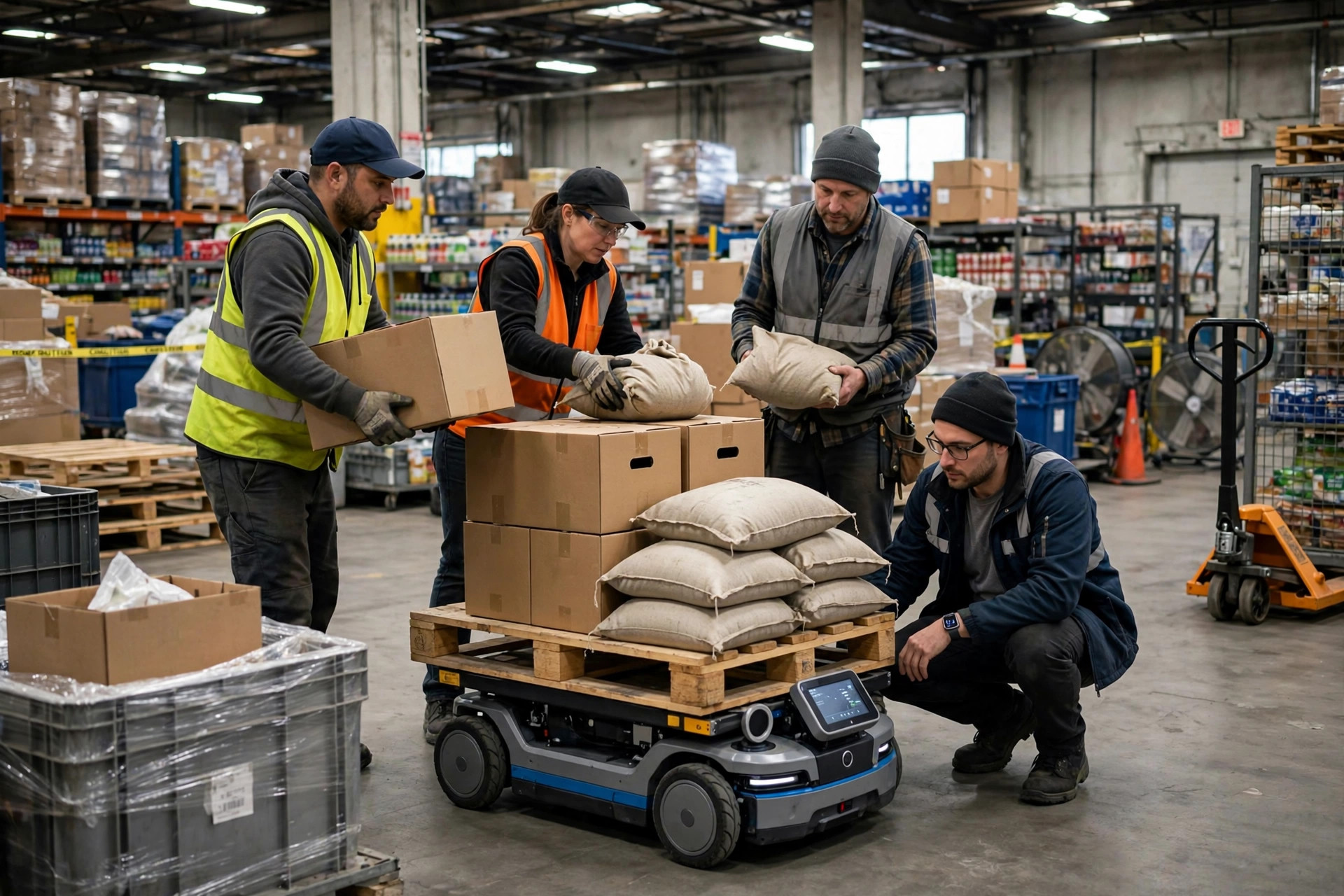
First, write the acceptance criteria into the contract. Not "payload: 1 ton." Write: "in our facility, with our pallets and freight, running 8 continuous hours at X kilos with zero faults." Ink on paper beats a handshake when things go sideways.
Second, demand the derating curve. Ask for the load-vs-speed-vs-grade table: at this weight, on this slope, how fast. Serious vendors have that table. One that can't produce it basically only ever tested on a flat floor.
The counterintuitive part: don't max out, but never buy at the limit
Here's a trade-off most people get backwards. Bigger-payload robots cost more, run bigger, turn wider, and drink more juice — in a tight small warehouse they're actually clumsier. So don't just buy the biggest. Take your heaviest regular pallet and add thirty to forty percent headroom.
Say your heaviest pallet is 600 kilos. Don't buy the 650-kilo unit. Buy in the 800-kilo to one-ton band. The headroom absorbs the real-world losses — ramps, battery fade, off-center stacking. What's left is your true everyday payload.
And here's the upside nobody talks about: inflated ratings are almost a favor to the buyer. They force you to run a real verification before signing. Buyers who did a full-shift loaded test almost never end up in a fight with the vendor later. Buyers who skipped it? Nine out of ten end up arguing about why the robot keeps getting slower.
There's an old saying where I come from: to know a mule, take it for a walk. That "one ton" on the brochure? Walk it around the block and you'll know if it's real. Don't buy an AMR on somebody's word. Buy it on a scale — stack your heaviest freight on top, run it a full shift. Pass is pass, fail is fail. Simple as that.
By Shifu Zhao, Trucking Veteran (15 yrs)