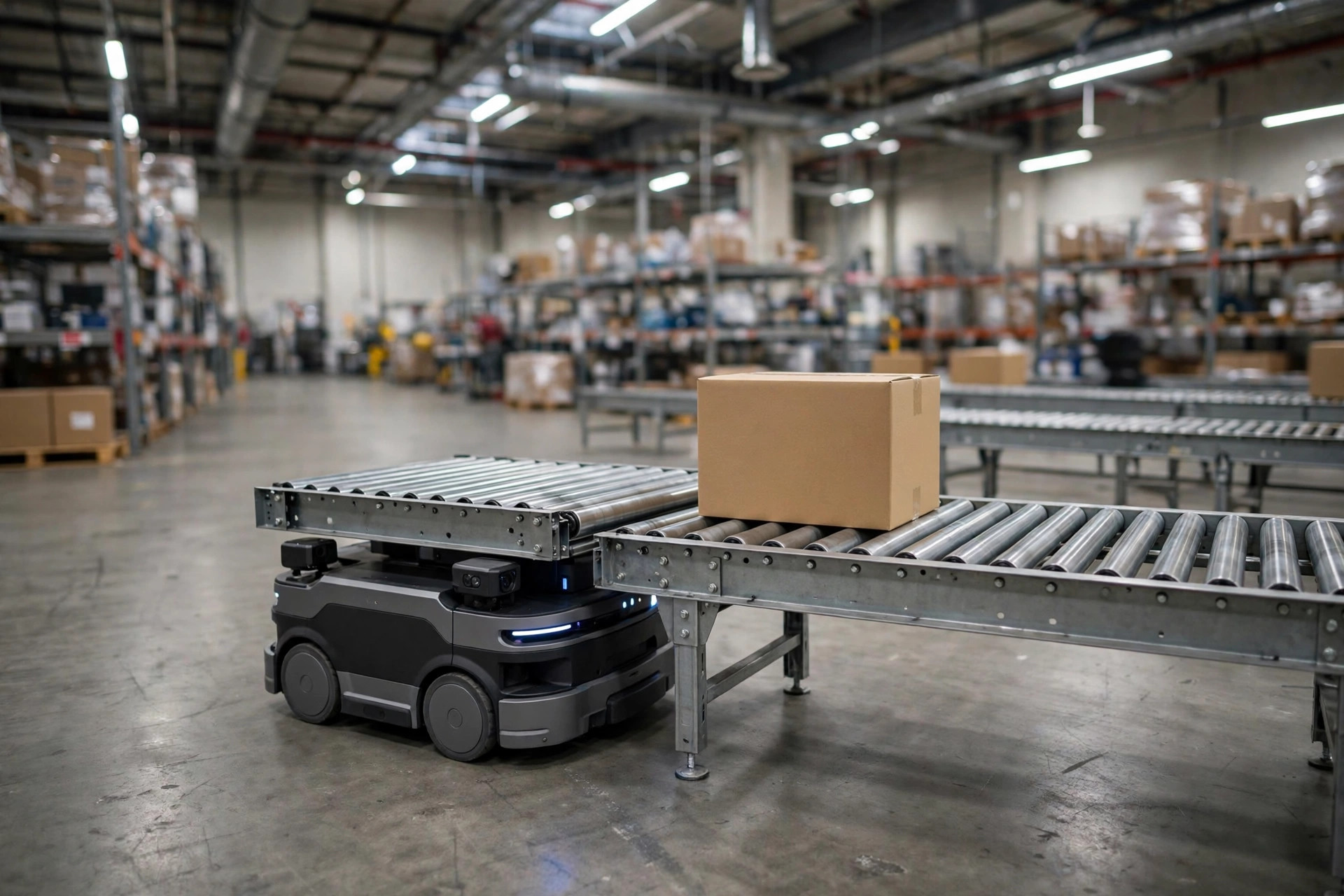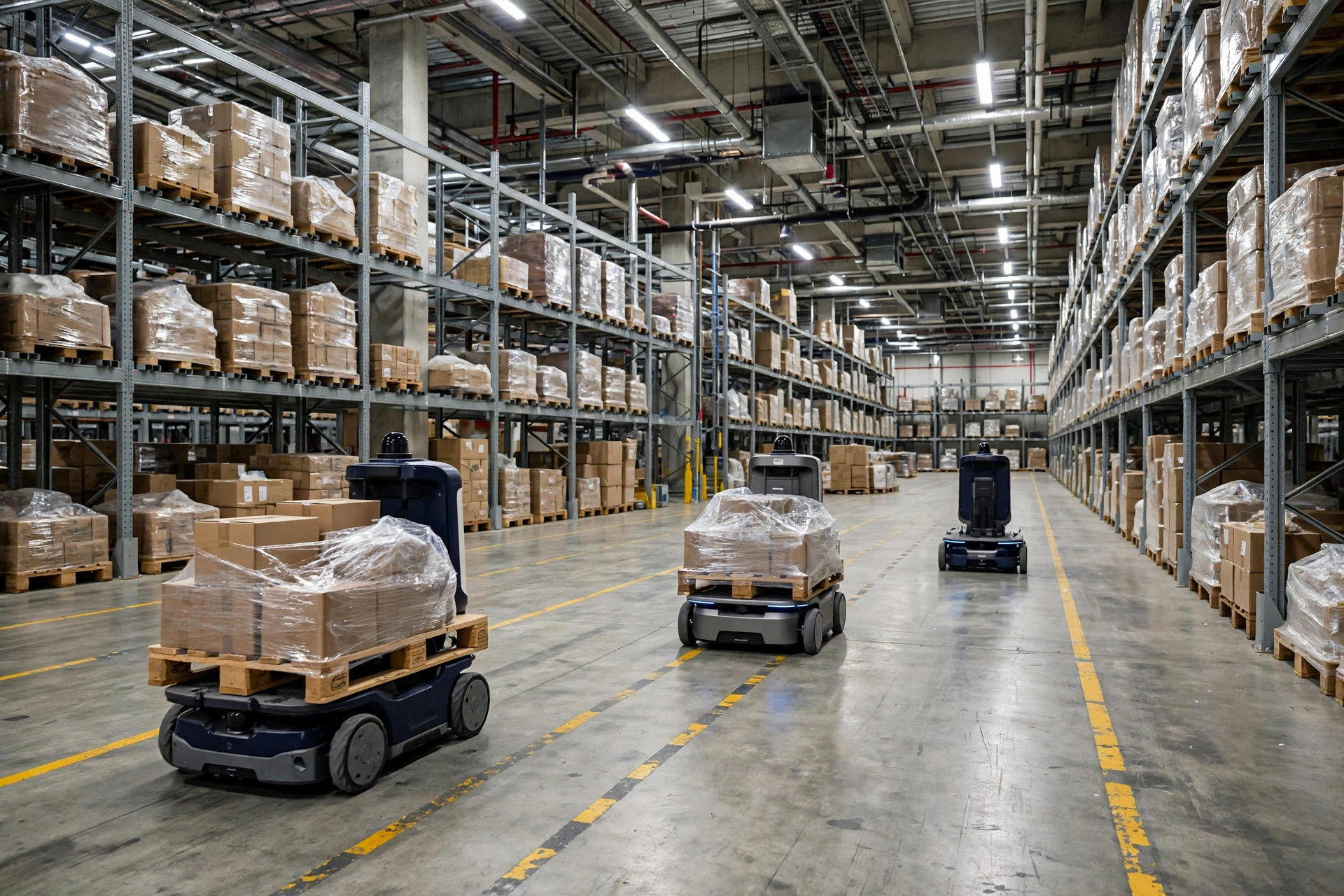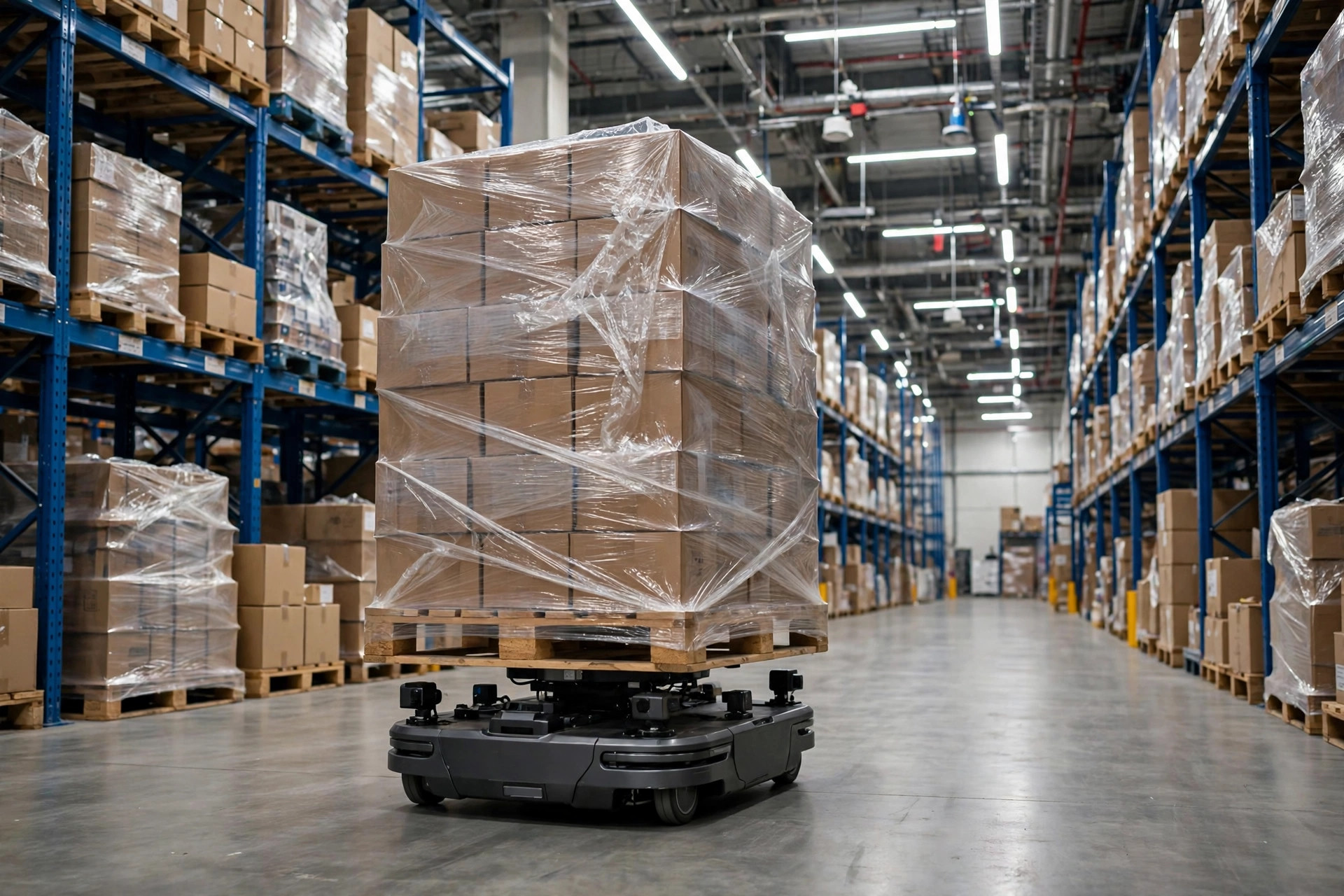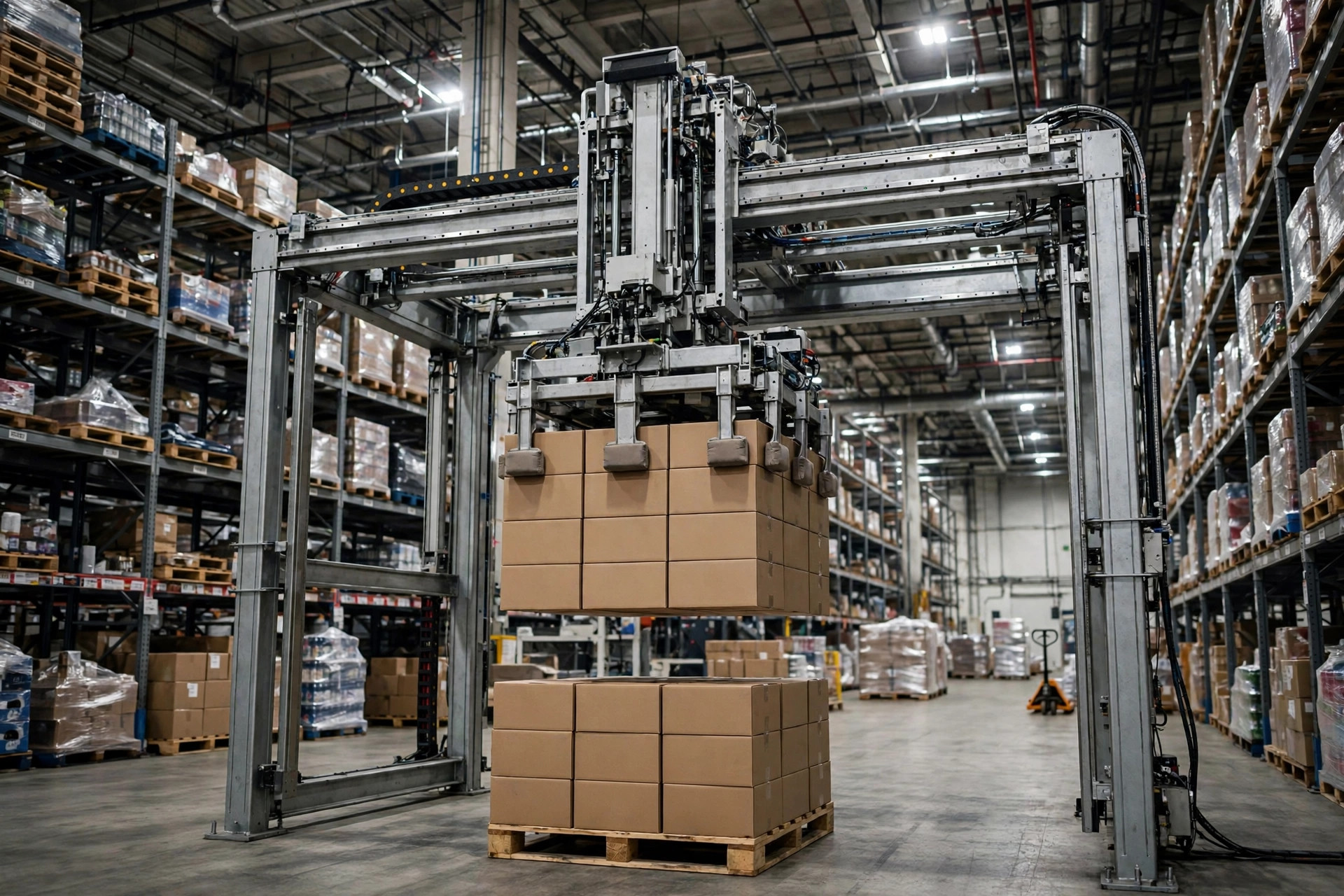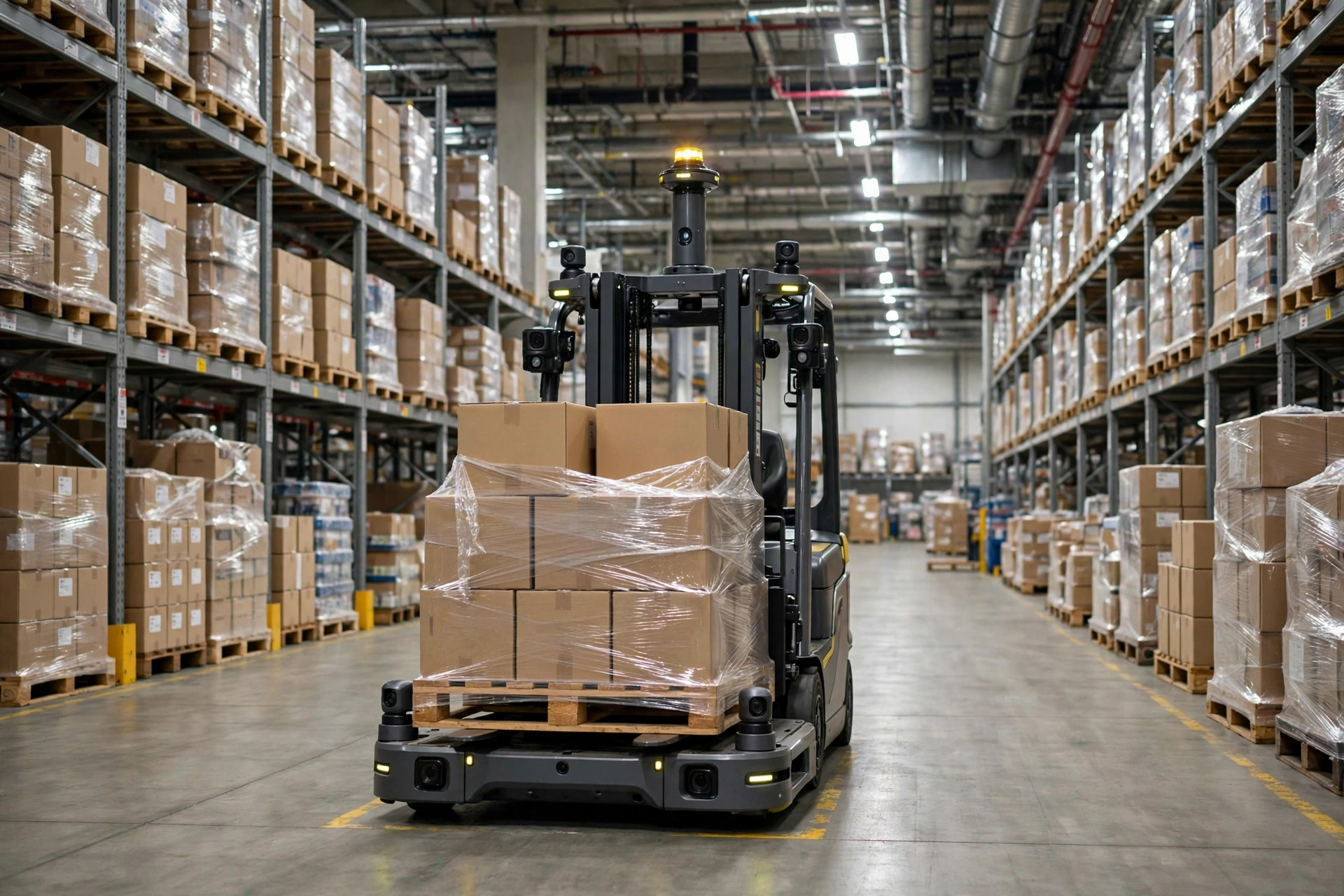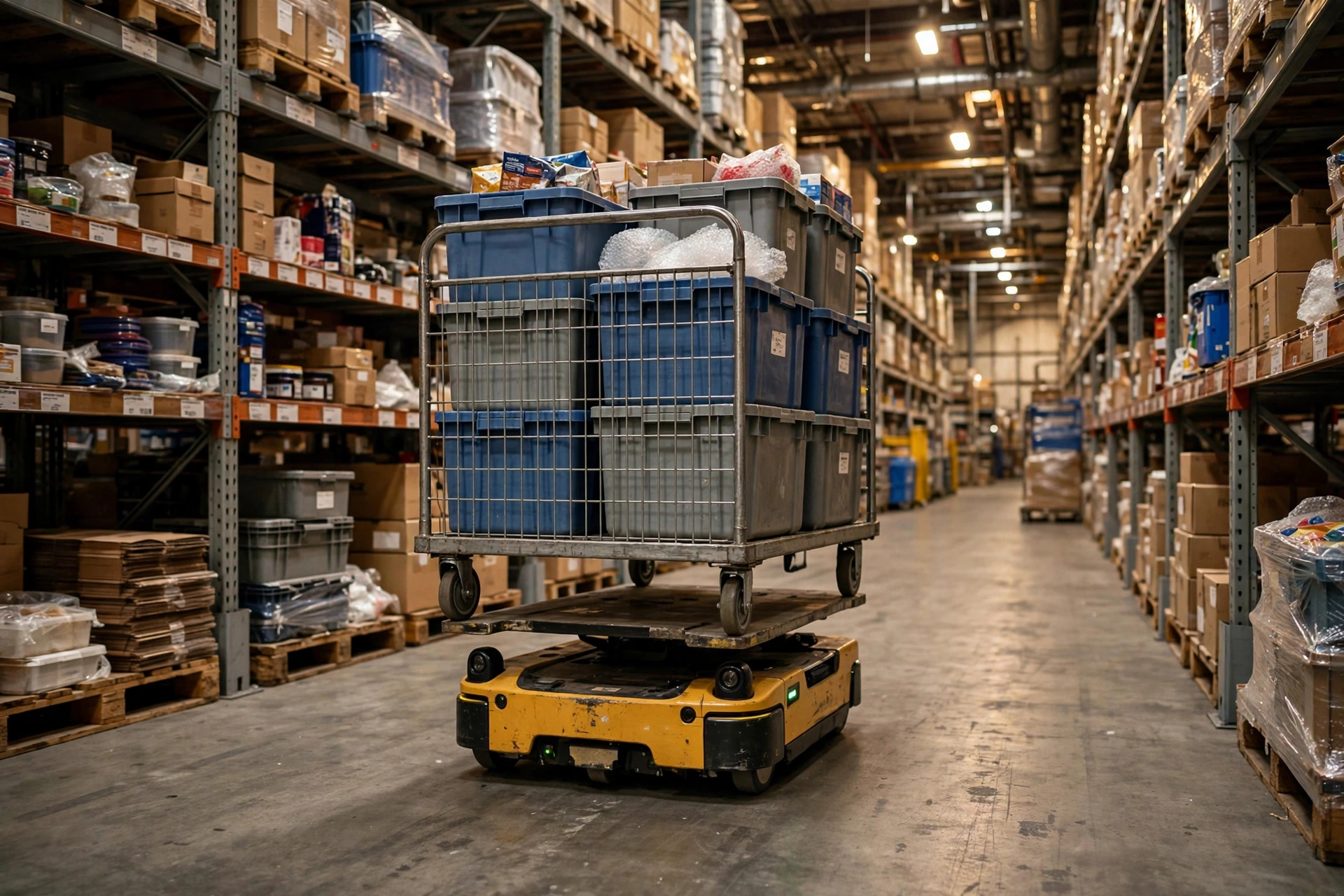
A 3PL owner in Fontana called me last spring with two quotes on his desk. One for top-lift AMRs, one for forklift-style AMRs. The forklift quote was cheaper, so his question was simple: "Is there any reason not to take the cheaper one?" There was. His building ran a mix of customer pallets — some decent, some held together by hope. I told him the cheaper quote would end up being the expensive one. He didn't believe me until the pilot.
Top-lift and forklift AMRs look like the same animal: a robot that moves stuff around on its own. They aren't. A top-lift unit drives under a cart or rack, jacks the whole thing up, and carries it. A forklift unit slides its forks into pallet pockets and lifts the pallet. One carries the cart, the other carries the pallet. Pick the wrong one and the pain doesn't show up on the invoice — it shows up in everything you have to change to accommodate the machine.
The Pallet Is the Real Spec Sheet
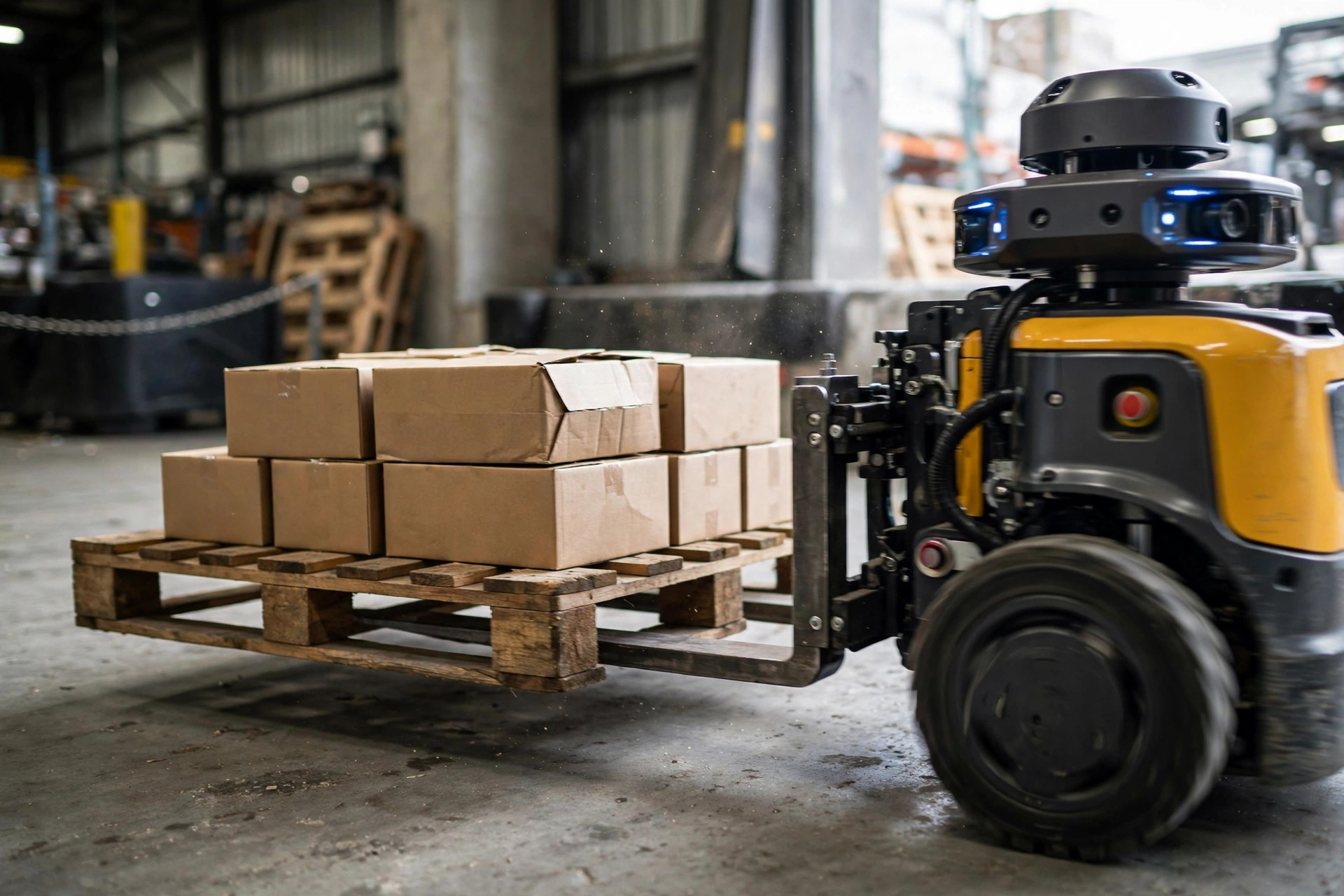
The forklift AMR lives or dies by the fork pocket. Three-stringer pallets with full four-way entry are its best friend. Block pallets with low, tight openings are annoying. Nine-leg plastic pallets with no real side entry? Many forklift units simply refuse. In the US, the standard 48-by-40 GMA pallet is usually fine, and the European 1200-by-800 EUR pallet works too — the trouble starts when your building runs a mix.
And 3PL buildings always run a mix. Customer freight arrives on whatever pallets it arrives on: used ones, repaired ones, ones with fork pockets crushed by a careless forklift driver. A human driver sees a crushed pocket and tries a different angle. A robot sees it and throws an alarm, parks itself in the aisle, and waits for rescue. During the Fontana pilot, the forklift units averaged dozens of alarms a day, almost all of them pallet-related. The site ended up assigning someone full-time to walk the floor "rescuing" robots. The pallet standardization project that followed cost more than the price gap between the two quotes.
So before you sign anything, do something low-tech: grab a tape measure. Measure fork pocket height and width. Check whether the pallet base is three-stringer or block style. Count how many pallet types are actually circulating in your building. Then send the vendor a photo of your worst pallet and ask, "Can your unit pick this up?" That question is worth more than a hundred pages of brochure.
If your pallets are a mess, my advice runs in reverse: standardize the pallets first, then talk about robots. Buy one spec in volume, retire the old ones in batches. Pallet standardization is always cheaper than rework. And don't believe "our vision system handles any pallet" — the recognition rates in the brochure were measured on good pallets.
One practical note on buying pallets: the cheapest used pallets on the market are cheap for a reason. If you go the used route, inspect fork pockets specifically — that's the dimension the robot cares about, not the deck boards. A pallet that looks fine to a forklift driver can be unusable to a forklift AMR. Budget for a higher rejection rate than your forklift operation ever needed.
What a Top-Lift Robot Demands From Your Building
Top-lift units don't care about pallets, but they are picky about carts and floors. First, the cart: is there enough clearance underneath for the robot to drive in, is the clearance height sufficient, and is the cart chassis rigid? The lift mechanism raises the entire loaded cart — a bent chassis lifts crooked and drives crooked. Second, the floor. Once lifted, the center of gravity moves up, and every dip or slope in the concrete gets amplified. Older buildings should get a floor flatness assessment before committing. Third, docking precision. A top-lift robot has to center itself exactly under the cart, which means it leans hard on floor QR codes or reflectors. If carts are parked a few inches off every time, docking success drops — and somebody on your team has to own marker maintenance, because worn QR codes and knocked-over reflectors are a classic cause of dead robots.
Here's a trap I've seen more than once: a building running three cart sizes, bought in different years. The vendor tuned docking parameters for the largest cart during commissioning, and the smaller carts never docked reliably. The fix was replacing the whole cart fleet with one size. More money, after the project was supposedly done. Count your cart types during selection, not during commissioning.
One more dimension people miss: investment pacing. Top-lift deployments need carts, floor markers, and positioning infrastructure up front — heavy initial spend, but adding robots later is cheap. Forklift units can start as a two-or-three-unit pilot and scale once the concept proves out, which suits tight cash flow. For a small warehouse with decent pallets, starting small with forklift units is the steadier play. For a large site doing full-floor planning, top-lift's scale economics look better. Either way, run a pilot on your real pallets and your real floor for a month before ordering dozens. A month of real data beats any proposal deck.
Some buildings have both worlds — pallets at receiving, carts on the production floor — and then the answer isn't either-or, it's a mixed fleet. That works, but only if one fleet manager can orchestrate both types. I've seen sites buy two kinds of robots and end up with two dispatch systems, with a human in the middle relaying tasks between them. Settle the software question before you settle the hardware one.
So which one wins? Neither, in the abstract. Freight on good standard pallets points to forklift units. Freight on standardized carts and racks points to top-lift. Freight on pallets of every shape and quality means you fix the pallets first — in that order, no exceptions. And any vendor who says "no problem" without looking at your pallets and carts is telling you what you want to hear.
If you walked your floor with a tape measure today and checked twenty random pallets, how many different kinds would you find? Answer that honestly, and the robot question mostly answers itself.