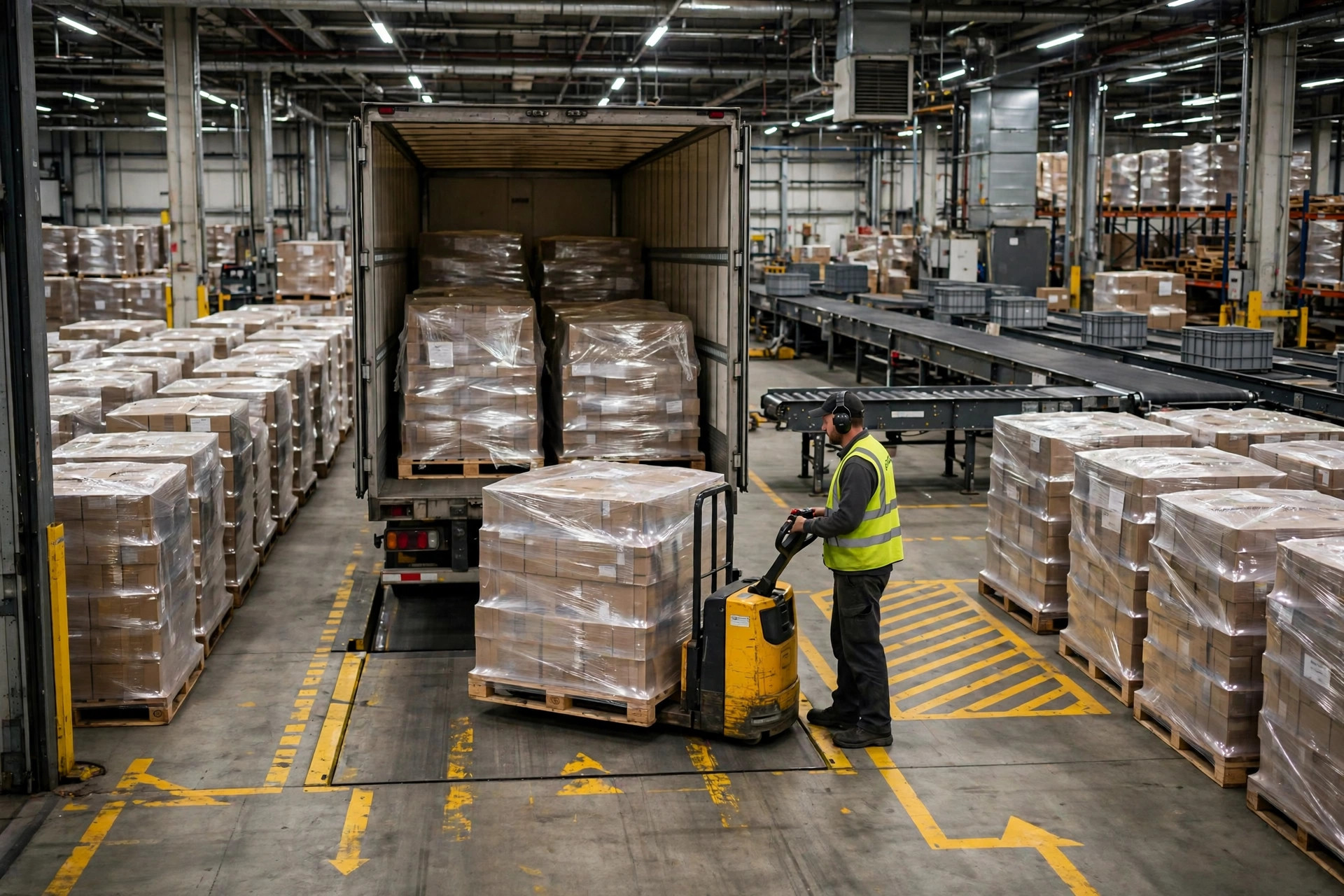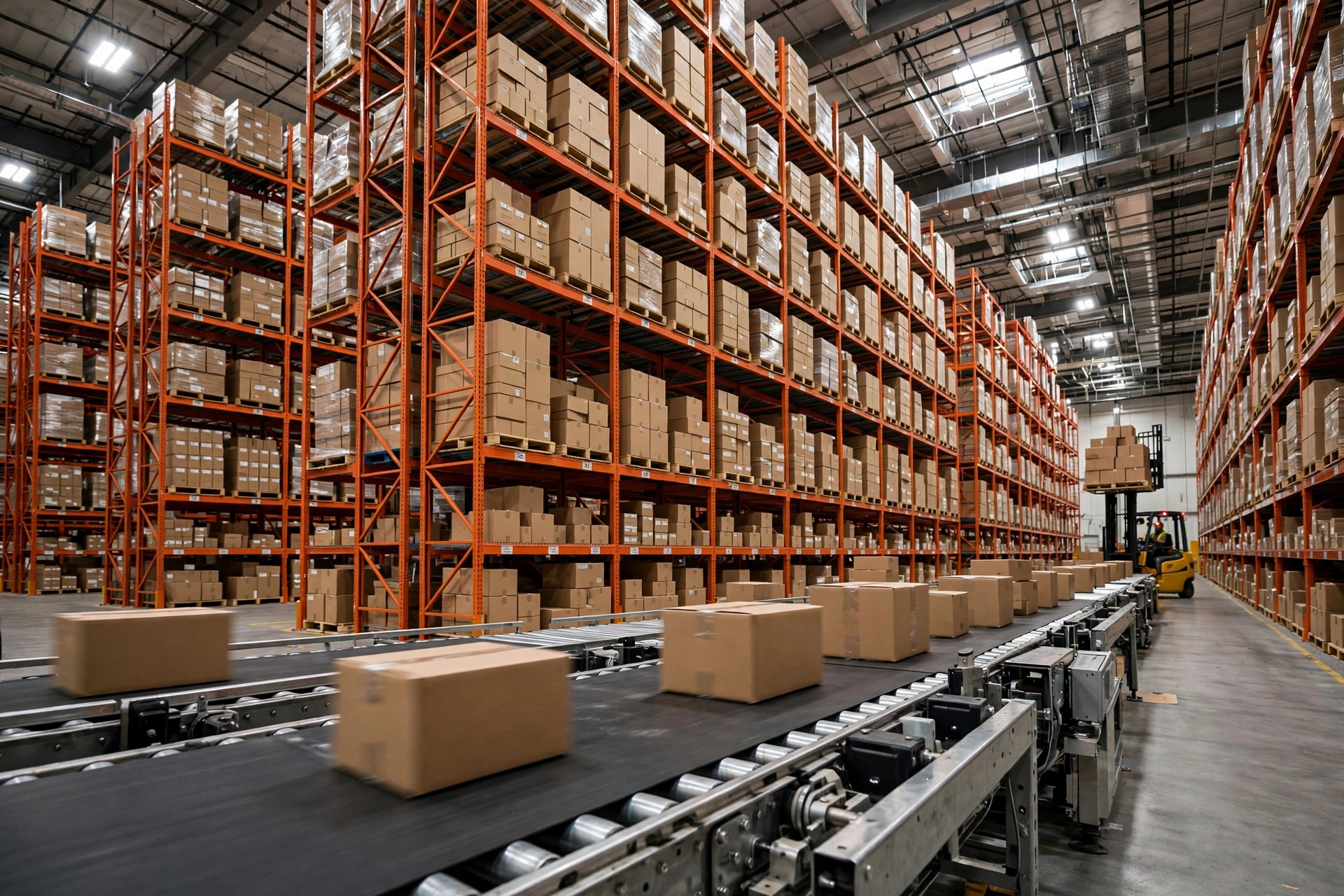
I'm Xiao Ma, and I run a 3,000-square-meter small warehouse. Sellers' problems aren't technically my business — but my seller friends keep wailing in our group chat: "Amazon capped my capacity again!" After hearing it enough times, I noticed something: most sellers only watch their IPI score. They think anything above 400 means smooth sailing, then get blocked the moment they try to ship. Here's the thing about amazon storage limits — the IPI score is just the first gate. Let me walk you through the other three hidden ceilings, small-warehouse-owner style, plus the scrappy tricks we use to help sellers dodge them.
Hidden Ceiling #1: The Capacity Manager — A Good IPI Doesn't Guarantee You Can Ship
Back in October 2025, a kitchen-gadget seller named Chen in Ontario, California had an IPI score above 560. Feeling confident, he tried to send a big restock ahead of Black Friday — and the system flat-out refused: restock limit exceeded. Chen was stunned. "But my IPI is fine!"
That's hidden ceiling number one. Since 2024, Amazon has run FBA capacity as a monthly quota system: your storage isn't "send whatever you want" anymore. Every month you get a cubic-foot allowance per storage type (standard-size, oversize, apparel, footwear). IPI is just the entry ticket — score below the threshold (currently 400, though Amazon adjusts it quarterly; check Seller Central for the latest) and you get restricted. But passing the threshold only means you qualify. How much you can actually send depends on your sales velocity, sales history, and how tight Amazon's network capacity is overall. When the whole network is bursting at the seams during peak season, quotas get slashed regardless of your score.
The real sting: his quota was being eaten by his own slow movers. A 2024 storage-box SKU just wouldn't sell — over 300 cubic feet sitting in Amazon's warehouses for the better part of a year. That dead stock occupied quota his bestsellers needed. Amazon's logic is brutally simple: if your space is full of stuff nobody buys, why should you get more room?
Here's the scrappy fix. Chen pulled that dead storage-box inventory out of Amazon overnight and stacked it in a corner of my little warehouse for a few hundred bucks a month. The freed-up quota went entirely to his Black Friday winners. That week, one air-fryer accessory sold over 400 units in a single day, his IPI actually went up, and his January quota jumped. The slow movers? He cleared them out gradually from my place — far cheaper than paying Amazon's storage fees.
What sellers can actually do:
- Check the FBA Capacity Manager in Seller Central every month. Know next month's quota per storage type before you plan shipments.
- Start clearing slow movers 2–3 months before peak season — removal, markdowns, liquidation, pick one. Don't let them squat on your quota.
- If you truly need more, Capacity Manager lets you reserve extra capacity in advance (there's a reservation fee, refundable if you use it all — check Amazon's latest policy for details). But remember: clear dead stock before you pay for capacity. Free quota beats paid quota every time.
Hidden Ceiling #2: ASIN-Level Restock Limits — Your Bestseller Can't Always Ship More
The second ceiling is sneakier — it hides inside every single ASIN. Amazon's restock limits don't just cap your total shipments; they cap each product. Every ASIN gets its own restock cap based on that ASIN's past sales performance. Translation: proven sellers get more room; products with no history get the cheap seats.
In March 2026, a seller named Zhao in Dallas, Texas — outdoor lighting, oversize stuff — came to me venting. His new patio light tested great, so he wanted to send 800 units for the first shipment. The system let him send 200. New product, no sales history — Amazon doesn't care about your "gut feeling," only data. Zhao was pulling his hair out: by the time those 200 sell through, ocean freight takes another month-plus, the listing goes out of stock mid-ramp, and all that ranking momentum evaporates.
This is exactly where our little warehouse earns its keep: we act as the ammo depot. Zhao shipped all 800 units by sea to my place, sent 200 into Amazon per his quota, and the rest waited on standby with me. The 200 sold like crazy, his quota grew naturally, and the second and third batches followed without a single stockout. That light became one of his top sellers.
Counterintuitive take: don't fight Amazon over new-product quotas — quotas are earned, not argued over. It's really risk management: nobody knows if your new SKU will sell, so why would Amazon hold space for it? Ship small, ship often, and let sales grow your quota. We small warehouses can't afford to burn money — we only believe in trading data for space.
What sellers can actually do:
- Don't get greedy on the first shipment of a new product. Ship the quota amount; keep the rest in a small 3PL or overseas buffer warehouse.
- Quotas move dynamically — check weekly as sales pick up, and top up when allowed.
- Oversize and seasonal products swing the most; a buffer warehouse is practically mandatory for them.

Hidden Ceiling #3: Peak-Season Storage Fees + the Aged Inventory Surcharge — The Financial Ceiling
The third ceiling isn't about whether you can ship — it's about whether shipping pays. Amazon's monthly storage fees are seasonal: October–December rates run dramatically higher than January–September (exact rates change; always check Amazon's latest published fee schedule). Worse, the Aged Inventory Surcharge kicks in for inventory sitting over 181 days, climbing through higher tiers the longer it ages — past 365 days it's brutal.
Here's the math. A product at 0.5 cubic feet per unit, 1,000 units in — 500 cubic feet total. If that batch sits into its seventh month, you're paying storage plus the aging surcharge, both barrels. Flip it: keep 600 units at a small warehouse like mine (a few hundred bucks a month per pallet), send 400 into Amazon to test the waters, and replenish when they sell. What you save isn't just storage fees — it's quota and IPI too.
Here's a comparison framework; run your own numbers through it:
| Cost item | All-in at FBA | Small-warehouse buffer + staged inbound |
|---|---|---|
| Peak-season storage fees | Full hit at peak rates | Only on what's actually in Amazon |
| Aged-inventory surcharge risk | Slow movers get punished, worse over time | Slow movers sit at the small warehouse, zero surcharge |
| Quota usage | Dead stock squats on quota long-term | Quota reserved for movers; bestsellers stay in stock |
| Replenishment flexibility | Bound by ASIN-level caps | Buffer ships anytime; high maneuverability |
| Extra cost | None | Small-warehouse rent + second-leg freight |
And the counterintuitive punchline: shipping less during peak season can make you more money. Amazon's fee structure tells you plainly: it doesn't want you using its warehouses as a free parking lot. Over-ship and under-sell, and storage fees, aging surcharges, and squandered quota hit you from three sides until your margin is gone. Every dollar saved is profit.
What sellers can actually do:
- Pull an inventory age report every quarter. 181 days is the cliff — deal with anything approaching it.
- Use a "70-20-10 rule" for peak-season stocking: 70% based on historical sales, 20% held at a buffer warehouse, 10% decided later. Never go all-in blind.
- For oversize and highly seasonal products, a buffer warehouse is close to non-negotiable — Amazon's oversize storage rates hurt.
The Small-Warehouse Summary: Don't Arm-Wrestle Amazon, Flank It
At the end of the day, amazon storage limits are a combination punch: IPI is the entry ticket, the monthly quota is the total ceiling, ASIN-level caps are the per-product ceiling, and peak-season rates plus the aging surcharge are the financial ceiling. Watching only your IPI is like reading just the first page of a medical report — the problems hiding on the later pages are the ones that'll get you.
Our small-warehouse way of life is simple: we can't afford the big companies' polished playbook, so we play scrappy — shuffle, buffer, stage, and count every penny. Same for sellers: pull the slow movers out, stage the winners in batches, don't go all-in during peak season, and use a third-party warehouse when it makes sense. Amazon's rules are fixed; your inventory isn't. When capacity runs short, use your head to make up the difference.
Small warehouses have their way of surviving — and sellers have theirs. No arm-wrestling the platform; we flank it, and the business thrives just the same.
By Xiao Ma, Small Warehouse Owner