
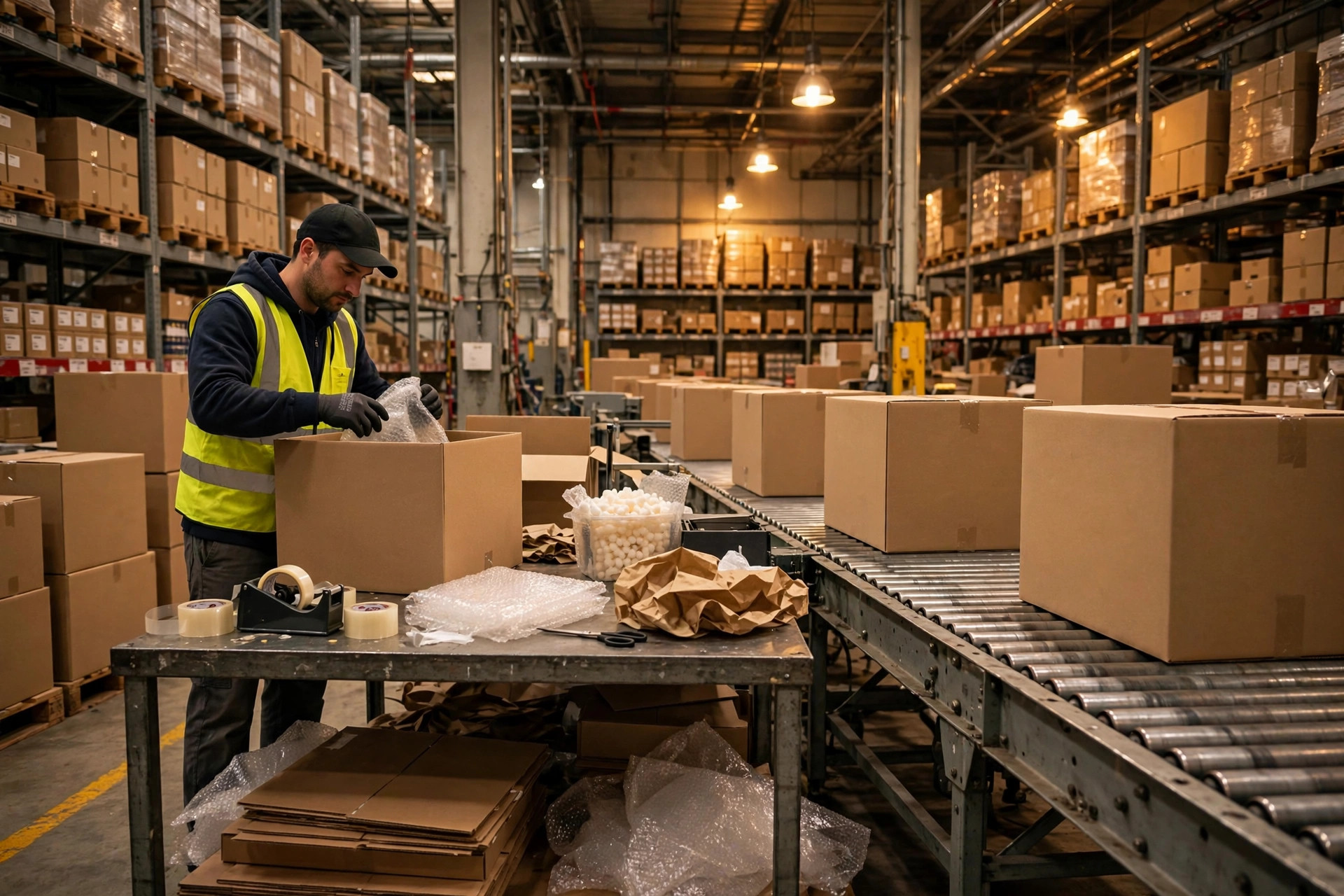
"Amazon Business? That's just a side channel Amazon bolted on. How much volume can it really do?"
That was me two years ago. Then in March 2024, a single order landed on one of my storage bin listings: 800 units, shipping to a school district in Texas. Double the ticket size of my consumer orders. Zero returns. That one order made more profit than two weeks of my regular B2C sales.
That's when it clicked: Amazon Business isn't a supplement to B2C. It's a different business. The buyer doesn't care how pretty your main image is. They care whether you have the stock, whether you can ship in bulk on time, and whether your invoices and tax-exemption paperwork are in order. The whole warehouse playbook changes.
How I rebuilt my warehouse for B2B
Bottom line first: B2B and B2C orders run on two different assembly lines in the warehouse.
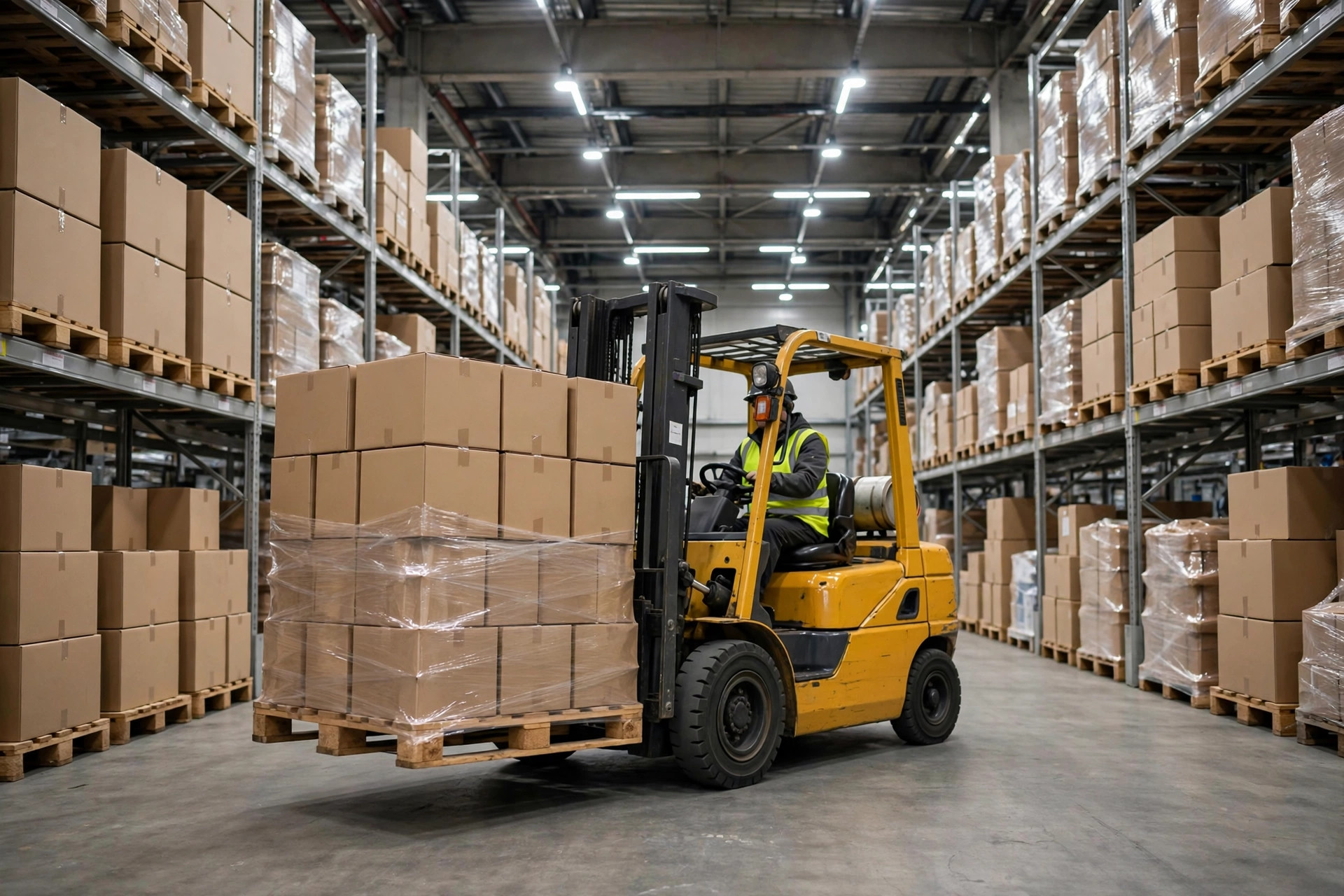
B2C is pick-and-pack: one unit at a time, and speed of picking wins. B2B is case-and-pallet: ship by the box or by the pallet, and what wins is inventory depth plus full-pallet fulfillment capability. In June 2024 I carved out a dedicated zone in my warehouse for my Amazon Business bestsellers — stacked by the pallet, no broken-case picking. That one change cut my B2B outbound time from two days to same-day.
The math tells the story best:
| Dimension | B2C single orders | Amazon Business bulk orders |
|---|---|---|
| Units per order | 1–3 | 20–800 |
| Pack time per order | 3–5 minutes | ~30 minutes for a full pallet |
| Return rate | 5%–12% (varies by category) | Under 1% in my experience |
| Bad-review risk | High — one damaged item, one star | Minimal — you're dealing with a procurement officer, not a consumer |
| Inventory requirement | Rolling replenishment works | Must carry safety stock; a big order with no stock on hand is dead |
| Shipping | Parcel carriers | Pallet or full case, FBA or self-fulfilled |
See the pattern? Per-unit fulfillment cost on B2B is actually lower. The real expense is the cash tied up in inventory — you have to sit on stock waiting for an order that might arrive any day.
Two true stories: one jackpot, one near-disaster
The jackpot: that Texas school district order.
March 2024. 800 folding storage bins, going to a school district's central warehouse near Austin. I happened to have three pallets of full-case stock on hand — because this SKU was also a B2C bestseller and I always stocked it by the pallet. Before ordering, the buyer messaged me one question: "800 units — can you deliver within 5 business days?" I said yes, palletized the same day, sent it through FBA's palletized inbound flow the next day (check the latest inbound appointment rules on the official site), and it was received on day four.
I ran the numbers afterward: no 800 rounds of single-unit packing labor, freight moving as full pallets — per-unit fulfillment cost came in nearly half of my B2C cost. Even better, that district now reorders every semester before school starts. A standing repeat customer.
The near-disaster: 200 commercial water purifiers.
November 2024. An office-leasing company wanted 200 units, plus a proper invoice and tax-exemption documentation. I was so excited about the ticket size that I said yes to everything — then hit two walls. First, tax-exempt B2B purchases need exemption paperwork processed upfront, which I had never set up; the documents went back and forth for two weeks. Second, 200 bulky purifiers needed pallet positions I hadn't reserved, and scrambling for space cost me three extra days. The buyer almost canceled.
Lesson in one sentence: in B2B, the traps aren't in logistics — they're in compliance paperwork and advance stocking. Invoice templates, W-9s, exemption workflows, purchase-order templates — get all of that ready before your first big order, not when the buyer asks.
The counterintuitive part: don't chase the whales
Most people assume Amazon Business means hunting big corporations and institutions. Wrong.
My experience: orders of 10–50 units from small and mid-size businesses are the real goldmine for small sellers. A dental clinic buying 30 storage cabinets. A coffee chain ordering 40 sealing machines. These orders close fast (the owner decides on the spot), don't squeeze you on payment terms, and reorder reliably. Big-institution orders look juicy, but their procurement cycles run 30–60 days, sometimes with formal bidding — a cash-flow killer for a small seller.
Another counterintuitive one: B2B prices don't need to be the lowest, but they must be stable. On B2C you can drop 5% today and raise it back tomorrow — nobody tracks it. In B2B, once a buyer builds your price into their annual budget, a mid-year hike is a reason to switch suppliers. I run a separate pricing structure for Amazon Business, fully isolated from my B2C promotions. During Prime Day 2025 I cut B2C prices 20% — and didn't lose a single Business customer, because they never cared about that 20%. They care that you don't run out of stock and don't raise prices. Tested this myself, and it works.
The pitfall checklist (every item paid for in tuition)
- Plan safety stock on B2B rhythm, not B2C. 30 days of cover is fine for consumer SKUs; I carry 60–90 days for my Business bestsellers. A big order lands and you're waiting on an ocean shipment? 30+ days at sea, buyer needs it in five. Nobody can save you.
- Isolate business pricing from consumer promos. Amazon Business has its own quantity-discount pricing settings — keep them separate from B2C coupons, or a Business buyer spotting a lower consumer price will decide your pricing is a joke.
- A stockout is a death sentence in B2B. B2C stockout costs you ranking. B2B stockout costs you the customer — they buy against a procurement plan, and one miss sends them to your competitor. Double the safety stock on bestsellers.
- Prep the paperwork kit early. Invoice template, W-9, exemption handling flow — one folder, ready before the first order.
- Only promise what you can deliver. Business buyers tolerate delays far less than consumers. Promise five days, deliver in five. I'd rather quote seven with buffer than miss five.
Honest closing thought: Amazon keeps squeezing B2C — ad costs rising faster than rent. Meanwhile most sellers still won't give Amazon Business a serious look. That's the opening. You don't need to be brilliant. You just need to build the B2B warehouse playbook six months before your competitors do.
Tested this myself, and it works.
By Ah K, E-commerce Seller (5 yrs)


