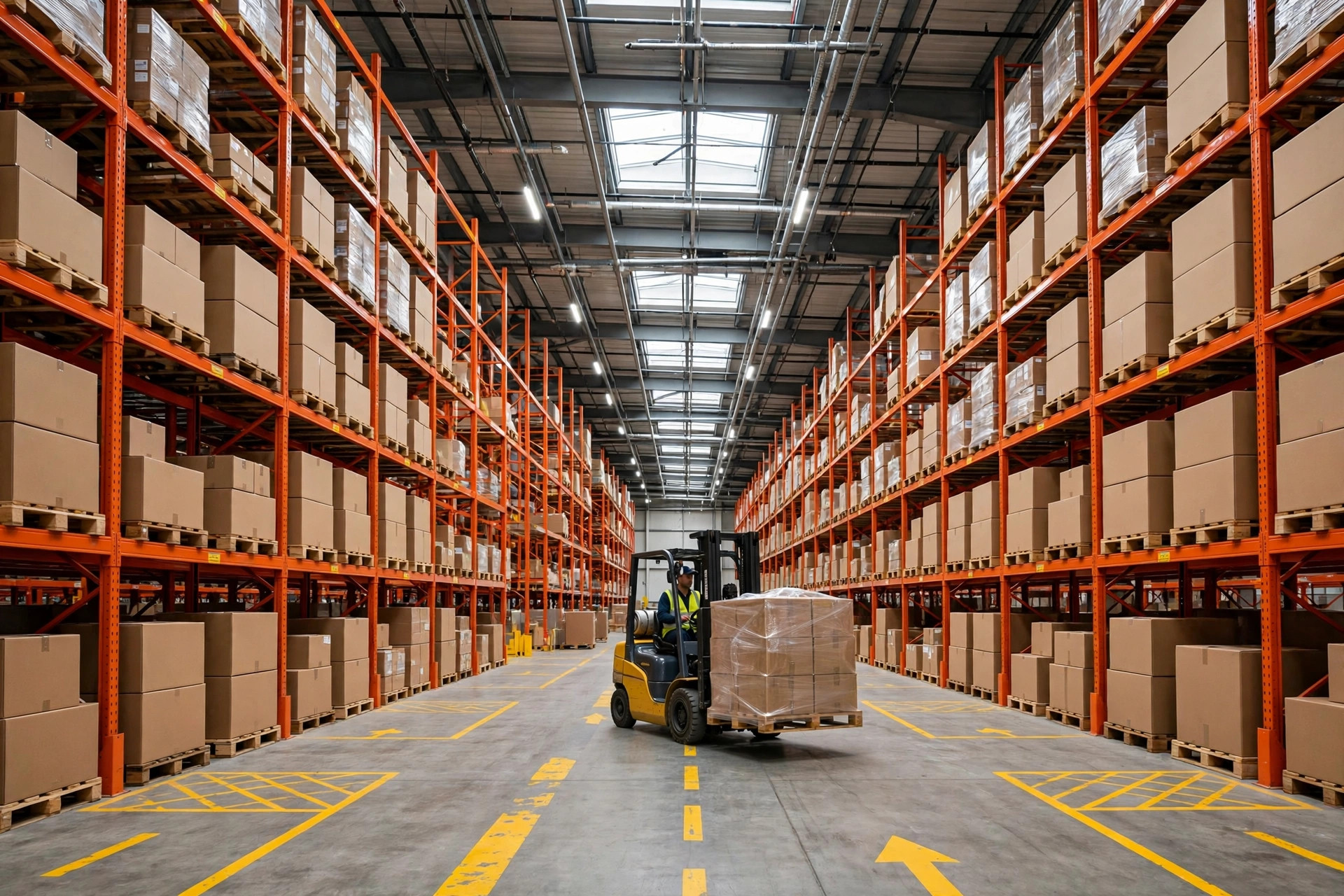
Send the same inventory two ways — straight into FBA, or staged in Amazon Warehousing and Distribution (AWD) and auto-replenished into FBA — and the annual storage bill can differ by tens of thousands of dollars. But only if your products are dense enough to deserve it. Ship light, bulky goods through AWD and the math can flip against you. My verdict up front: if Q4 stockouts keep you up at night, AWD is probably worth a serious look. If your catalog is small-volume and steady year-round, you're likely just paying for an extra hop.
What AWD actually is
AWD is Amazon's upstream bulk storage network sitting in front of FBA. Think of it as a reservoir: you ship full pallets directly into AWD, Amazon holds them, and as your FBA listings run low, inventory flows downstream automatically. No manual shipment plans, no babysitting FBA inbound capacity limits, no guessing six weeks ahead how much each fulfillment center will need.
Enrollment is free. You pay as you go, across three buckets.
The three fees that matter
Storage: on the 2026 public rate card, roughly $0.57 per cubic foot per month in the West region and about $0.48 elsewhere. Let Amazon manage replenishment and you get discounts — around 10% off with Smart Storage, 20% with Amazon-managed replenishment. Verify the current numbers in Seller Central; these rates took a hike of roughly 19–22% in early 2026.
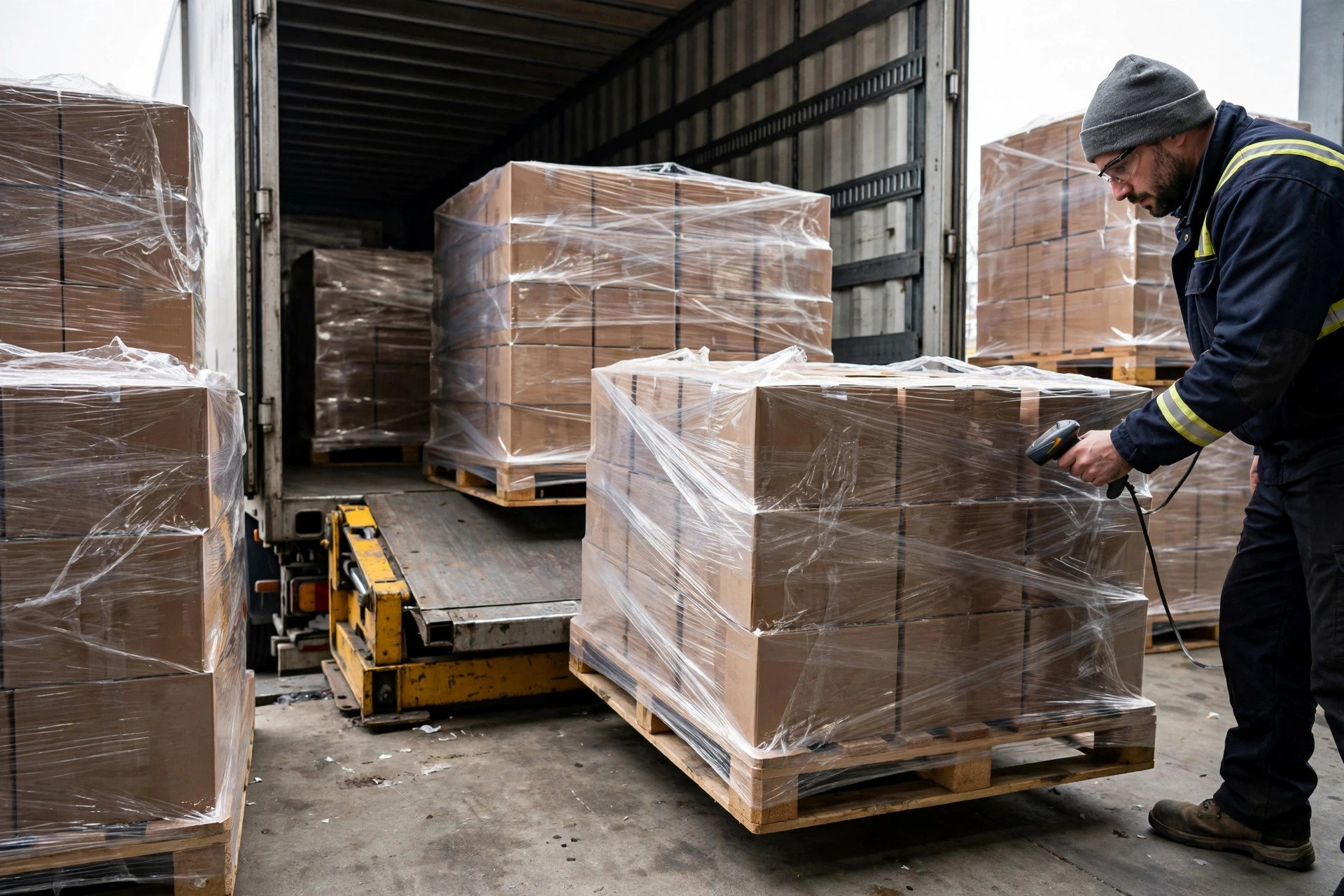
Processing: $1.40 per box inbound, another $1.40 per box when it leaves for FBA. Per box, not per unit. A case holding 24 units costs the same to process as a case holding 6 — which means your case pack density directly sets your per-unit cost here.
Transportation: about $1.40 per cubic foot to move inventory from AWD into FBA (roughly 10% less on the Amazon-managed tier). Charged on cube, so low-density products bleed here.
A quick word on the two discount tiers, because sellers mix them up constantly. Smart Storage keeps replenishment decisions with you — Amazon advises, you decide — and storage drops about 10%. Amazon-managed hands the replenishment rhythm to Amazon's algorithm entirely: 20% off storage and 10% off transportation. The catch is control. The algorithm replenishes when it thinks it should, and ahead of peak it can be more aggressive than you would be. If cash flow is tight, start with Smart Storage, run a quarter of data, then decide whether to hand over the keys.
Two dates to tattoo on your Q4 2026 calendar. Peak fulfillment surcharges run October 15 through January 14. Sellers on automatic replenishment keep off-peak AWD storage rates through October 31. And the AWD inventory cutoff for Black Friday Week and Cyber Monday is October 14 — a full two weeks before the standard FBA cutoff. Plan ocean freight and inbound backwards from that date, or watch peak traffic slip through your fingers.
Where it beats direct FBA — and where it doesn't
FBA standard storage runs about $0.78 per cubic foot per month off-peak and climbs to roughly $2.40 in Q4, per third-party rate compilations — always confirm against official figures. AWD storage is flat year-round. No peak surcharge. That spread is the entire economic case for AWD. Sellers on automatic replenishment even keep off-peak monthly rates through the end of October.
In 2024 I ran the numbers for a small-appliance seller operating a 30,000-square-foot warehouse outside Los Angeles. His habit was pushing four months of inventory into FBA ahead of peak — nearly $30,000 in Q4 storage alone. Switching to AWD as the upstream buffer with only 3–4 weeks of safety stock in FBA cut his peak storage spend by more than 40%. But his products were dense countertop appliances, 24 units to a case, so processing amortized to pennies per unit. Run pillows or storage bins through the same model and the transportation line eats the storage savings whole.
There's a quieter benefit too: FBA inbound capacity. Restock limits have tightened noticeably in recent peak seasons, and plenty of sellers don't have an inventory problem — they have a can't-get-inventory-in problem. AWD stock sits outside FBA capacity constraints, which is effectively a second door into the network. Amazon claims AWD sellers cut out-of-stock days by over 30% in Q4 2025. That's Amazon grading its own homework, so take it with salt — but the mechanism is real.
How does it stack up against a 3PL? That's the question I get most, and the honest answer is: on headline storage rates alone, plenty of 3PLs undercut AWD, especially the big 100,000-square-foot-plus facilities in Southern California where pallet rents are brutally competitive. But a 3PL quote has to be fully loaded — inbound handling, outbound handling, trucking into FBA, the labor of systems integration. Once everything's in, the gap narrows fast. AWD's real competitor isn't "cheap," it's "hands-off": inventory moving inside Amazon's system means no cross-system finger-pointing when something goes missing or arrives damaged. My rule of thumb is simple. Do you have someone on staff whose job is logistics? Yes — a 3PL's negotiating room is worth exploring. No — AWD's automation fits you better.
Who it's for, and who should walk away
Good fits: first, private-label sellers where one stockout torpedoes ranking — AWD is stockout insurance. Second, anyone chronically throttled by FBA restock limits. Third, tight catalogs with uniform case sizes and fast turns, where the fee structure is kindest.
Bad fits: seasonal or slow-moving goods. Inventory flows one direction only — AWD into FBA, never back. If it doesn't sell, your exit is a removal order, which is its own bill. Multi-channel sellers, since AWD serves the Amazon ecosystem and nothing else. And anyone needing labeling, kitting, or custom prep — AWD is a standard pipeline, not a white-glove 3PL.
Four traps in the onboarding
First, case density. Processing is per box, so max out units per case before your first inbound shipment. I've seen sellers ship 8-unit cases for convenience and end up paying more in processing than in storage.
Second, transportation on bulky goods. Run the $1.40-per-cubic-foot math on your actual cube before committing. For airy products this can be the single biggest line item.
Third, eligibility. Not every ASIN qualifies — hazmat, oversize, and certain categories are restricted. Check eligibility in Seller Central before freight leaves your dock, not after a rejection.
Fourth, rates move. AWD storage and transportation both jumped around 20% for 2026. Pull the current rate card and rebuild your model before every peak season; last year's blog post is not a budget.
The honest summary: AWD isn't really the "cheap warehouse." It's the "don't-think-about-it warehouse." Its value stacks up as continuity first, convenience second, savings third. If you're chasing savings, model the three fees against your product cube and density. If you're chasing an uninterrupted Q4, check your ASIN eligibility now — the mid-October cutoff for Black Friday and Cyber Monday inventory doesn't wait for anyone.